
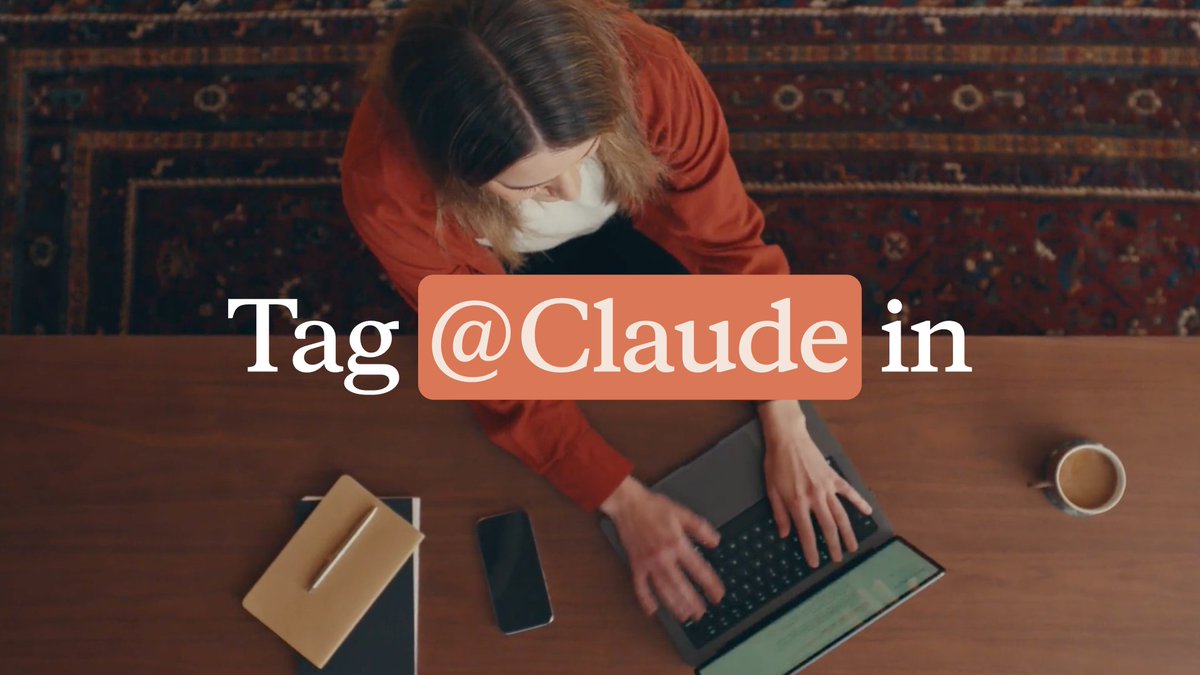
Anthropic has introduced Claude Tag, a system that places one of its current AI models inside Slack workspaces as a shared participant teams can address directly. The beta release, available to Enterprise and Team customers, replaces the company’s earlier Slack app and lets any member of a channel mention the AI to assign tasks such as drafting code changes, pulling data, or running analysis. The model then breaks the request into steps, uses approved tools and data sources, and posts results back in the thread.
The setup differs from most previous AI additions to messaging platforms in a few practical ways. A single instance operates across the channel rather than creating separate copies for each person, so colleagues can see ongoing work and continue from where others left off. The system retains context from prior exchanges in that channel, which reduces repeated explanations. When ambient monitoring is turned on, it can surface information from watched discussions or connected tools without a direct prompt and can keep working on longer projects across hours or days. These behaviors depend on administrator choices about which channels and tools receive access.
Administrators handle initial configuration by connecting the workspace, selecting permitted tools and data, setting spending caps at the organization or channel level, and defining separate instances for different teams or functions. Memory and permissions stay isolated between those instances. Every action and the user who requested it is logged, which may assist organizations that need audit trails for compliance or internal review. Migration from the prior Slack integration requires an administrator decision within 30 days.
The company has said that a comparable internal setup now accounts for a large share of code written by its own product teams and supports certain support and analysis channels. This follows earlier Slack connections and agent infrastructure updates rolled out over the past year, including expanded tool integrations and managed agent capabilities.
Slack has become a focal point for several AI providers. Its owner has added more agent-style functions to its own bot, while other firms have introduced agents that can operate across Slack and additional business applications. The underlying driver is the number of separate tools most organizations maintain and the time employees spend moving context between them. An AI that remains present in the primary discussion space can accumulate institutional detail that makes it harder to swap out later.
Enterprises evaluating Claude Tag will face several considerations. Reliance on one provider for accumulating team memory and ongoing channel access creates switching costs that grow over time. Proactive monitoring introduces questions about what information the system should surface and under what oversight. Token consumption for continuous operation and memory building may differ from patterns seen with on-demand queries. Service continuity also matters more when the system is positioned as an always-available participant rather than a tool called only when needed.
The broader pattern points to AI systems that maintain a standing role in daily coordination rather than serving as occasional assistants. How organizations choose to bound that role, audit its outputs, and balance convenience against accumulated dependence will shape whether these integrations deliver sustained value or simply add another layer of complexity to already crowded tool environments.