


TL;DR: Disclosure Day is Steven Spielberg’s electrifying sci-fi masterpiece, packed with pulse-pounding chases, standout turns from Emily Blunt, Josh O’Connor, Colin Firth, and Colman Domingo, and a heartfelt message about embracing truth and wonder over fear. A thrilling, optimistic blockbuster that feels both fresh and timeless—pure cinematic joy that reminds us why we love movies.
Disclosure Day
Steven Spielberg returns to the director’s chair with a triumphant roar that echoes across the galaxies, delivering Disclosure Day as a breathtaking symphony of spectacle, heart, and hard-won hope that feels destined to become a cornerstone of modern sci-fi lore. This isn’t merely a movie about aliens crashing into our lives—it’s a full-throated celebration of humanity’s capacity to stare into the abyss and choose connection over chaos. From the very first frame, Spielberg sweeps us into a whirlwind of secrets, chases, and revelations that crack open the universe in ways both exhilarating and profoundly intimate. As a lifelong devotee of his work, watching Disclosure Day felt like reuniting with an old friend who has aged into something even more magnificent: wiser, bolder, and utterly unafraid to blend jaw-dropping thrills with the kind of emotional depth that lingers in your soul long after the screen fades to black. In an age of jaded blockbusters chasing trends, this film stands tall as a passionate reminder that cinema can still transport us, challenge us, and leave us believing in something greater than ourselves.
The story ignites with unrelenting momentum, thrusting audiences straight into the heart of a conspiracy that’s been simmering for decades. We follow mathematician Daniel Kellner, brought to vivid, everyman life by Josh O’Connor’s magnetic performance, as he races across the country clutching evidence that could shatter everything we think we know about our place in the cosmos. Hot on his heels is the icy, calculating Noah Scanlon, embodied with chilling charisma by Colin Firth, a man who wields power like a shield against the unknown. Their cat-and-mouse game explodes into high-octane sequences that had me gripping the armrest—think screeching tires, improvised weapons, and desperate alliances formed in the heat of pursuit. Yet what makes these moments sing isn’t just the adrenaline; it’s the way Spielberg weaves in raw human vulnerability. Daniel isn’t some indestructible action hero but a flawed thinker whose mathematical precision clashes beautifully with the unpredictable chaos unfolding around him, turning every escape into a pulse-pounding testament to ingenuity and sheer willpower.
The Stellar Ensemble That Lights Up the Screen
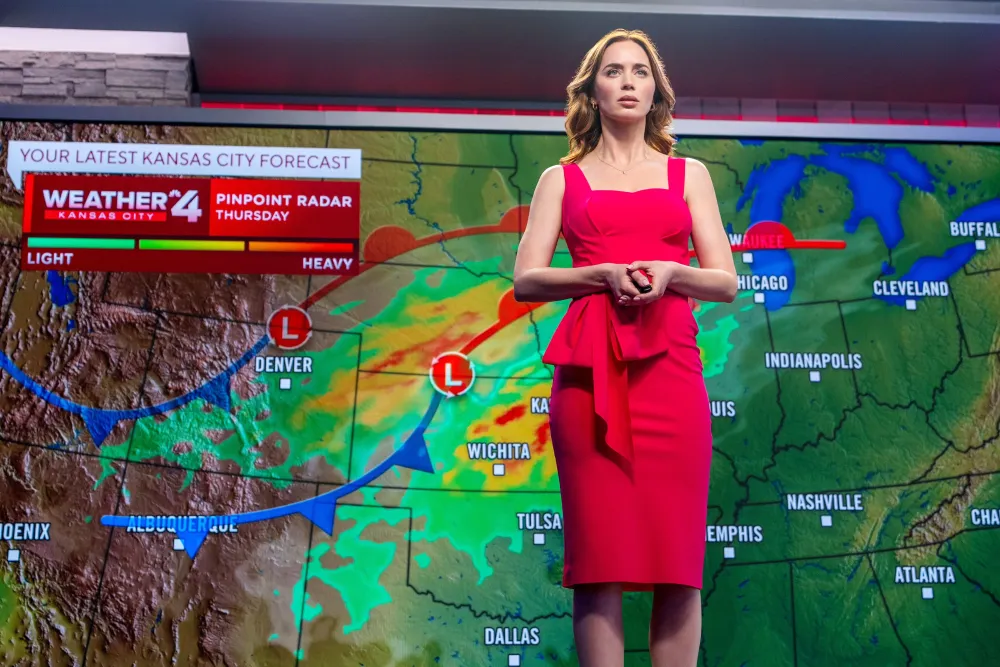
At the center of this cosmic storm stands Emily Blunt as Margaret Fairchild, a weather presenter whose ordinary Kansas City existence erupts into something extraordinary when otherworldly forces awaken hidden gifts within her. Blunt delivers a powerhouse portrayal layered with fierce determination, wide-eyed awe, and quiet resilience that makes Margaret feel like the relatable anchor we all need in such an epic tale. Her chemistry with O’Connor crackles with authenticity, their unlikely partnership evolving from wary strangers to unbreakable allies through shared wonder and mounting danger. Throw in Wyatt Russell as Margaret’s bewildered musician boyfriend, whose hilarious fish-out-of-water reactions inject perfectly timed levity amid the tension, and you’ve got a cast that elevates every scene into pure cinematic gold. Colman Domingo, meanwhile, commands the screen as a charismatic advocate for transparency, his performance radiating warmth and moral conviction that serves as the film’s beating heart—reminding us that the real battle isn’t just against shadowy forces but against our own fears of the unknown.

Spielberg masterfully orchestrates these characters like pieces on a grand chessboard spanning continents and ideologies, creating conflicts that feel both intimately personal and universally resonant. Firth’s antagonist isn’t a mustache-twirling villain but a compelling figure shaped by decades of institutional caution, forcing audiences to grapple with the uncomfortable question of whether some truths are too heavy for humanity to bear. As the narrative hurtles forward through dusty backroads, tense hideouts, and explosive confrontations, the film never loses sight of the smaller, tender moments: late-night conversations under starlit skies, the quiet panic of loved ones left behind, and the spark of hope that flickers even in the darkest hours. These beats ground the spectacle, transforming Disclosure Day from a mere thrill ride into an immersive journey that explores faith, identity, and the fragile bonds that define us as a species.
Epic Set Pieces and Visual Poetry That Redefine Blockbuster Magic
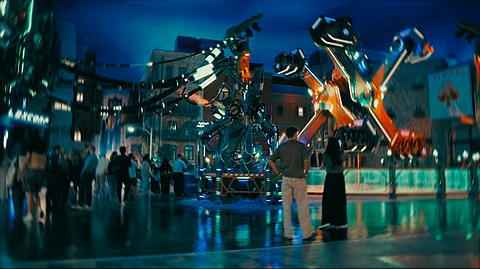
Buckle up, because Disclosure Day unleashes some of the most electrifying action sequences Spielberg has crafted in years, each one bursting with inventive flair and emotional weight that leaves you breathless. Picture a heart-stopping train heist gone sideways, where a dangling vehicle, roaring gunfire, and split-second decisions collide in a symphony of practical effects and masterful choreography that harkens back to the director’s glory days while pushing boundaries into fresh territory. Every explosion, every narrow escape, pulses with tangible stakes because we’ve come to care so deeply for these characters—their triumphs feel earned, their close calls viscerally real. Spielberg’s camera dances with kinetic energy, capturing the raw terror and exhilaration of ordinary people thrust into extraordinary circumstances, all while bathing key moments in that signature golden-hour glow that makes the impossible feel achingly beautiful.
Visually, the film is a feast for the senses, blending sleek, shadowy government intrigue with bursts of luminous alien wonder that evoke the very best of Spielberg’s extraterrestrial legacy. The production design shines in its seamless fusion of the mundane and the majestic: weather studios humming with everyday normalcy suddenly pierced by prophetic visions, wrestling arenas transformed into battlegrounds of ideology, and vast open landscapes where the stars themselves seem to lean in closer. John Williams’ score—soaring strings and triumphant horns—swells at precisely the right moments, lifting the narrative into mythic realms without ever overpowering the human drama at its core. This is blockbuster filmmaking at its most alive, where spectacle serves story and every frame invites you deeper into a world where the line between science and spirituality blurs into something profoundly moving.
What truly sets Disclosure Day apart is its fearless dive into the philosophical undercurrents swirling beneath the thrills. Spielberg doesn’t shy away from the big questions: How do we reconcile ancient beliefs with cosmic realities? What happens when the truth we’ve been denied finally breaks free? Through heated debates and quiet revelations, the film champions empathy as our ultimate superpower, arguing passionately that openness and understanding aren’t weaknesses but the keys to our evolution as a people. In today’s fractured world, this message lands like a rallying cry, urging us to look beyond our differences—whether earthly or interstellar—and embrace the shared wonder that binds us. It’s optimistic without being naive, acknowledging the messiness of disclosure while betting everything on humanity’s better angels.
Disclosure Day Feels Like Spielberg’s Ultimate Love Letter to Humanity
As the story builds to its climactic convergence of forces, Spielberg unleashes a crescendo of pure cinematic magic—faces illuminated by unearthly light, collective gasps of awe rippling through crowds, and a finale that redefines what it means to truly “meet” the unknown. Without veering into spoilers, these sequences deliver cathartic payoffs that had me cheering and tearing up in equal measure, a testament to the film’s ability to balance epic scale with intimate resonance. It’s Spielberg doing what he does best: turning potential apocalypse into a story of unity, where the forgotten voices, the skeptics, and the dreamers all find their place under the vast cosmic canopy. This evolution from his earlier works feels natural and deeply satisfying, like watching a master craftsman refine his lifelong themes into something sharper and more inclusive than ever before.
The film’s humor sparkles throughout, emerging organically from character clashes and absurd situations that remind us even in the face of world-altering events, we’re still delightfully, messily human. Russell’s comedic timing provides welcome breathers, while the ensemble’s banter crackles with wit that keeps the energy buoyant. Yet beneath the laughs lies a thoughtful exploration of power, secrecy, and trust that feels ripped from the headlines yet timeless in its execution. Disclosure Day trusts its audience to engage with these ideas, rewarding repeat viewings with layers of nuance and emotional richness that deepen with every cosmic insight.
In the end, this is more than a movie—it’s an experience that reignites that childlike spark of curiosity we all carry, urging us to question, connect, and dream bigger. Spielberg has poured his soul into crafting a narrative that doesn’t just entertain but inspires, proving once again why he’s the undisputed king of wonder on screen. For fans of thoughtful sci-fi that packs both punch and poetry, Disclosure Day is an absolute triumph that deserves to be celebrated, discussed, and rewatched for generations.
Verdict
Steven Spielberg’s Disclosure Day explodes onto the screen as a masterful blend of heart-racing action, stellar performances, and uplifting themes that capture the thrill of discovery and the power of human connection. It’s a bold, exhilarating return to form that rekindles our sense of awe in the stars and in each other, standing as one of the year’s most unforgettable cinematic adventures. Flawed only by the occasional leap of faith in its plotting, its emotional core and visionary scope make it a must-watch epic for geeks and dreamers alike.