
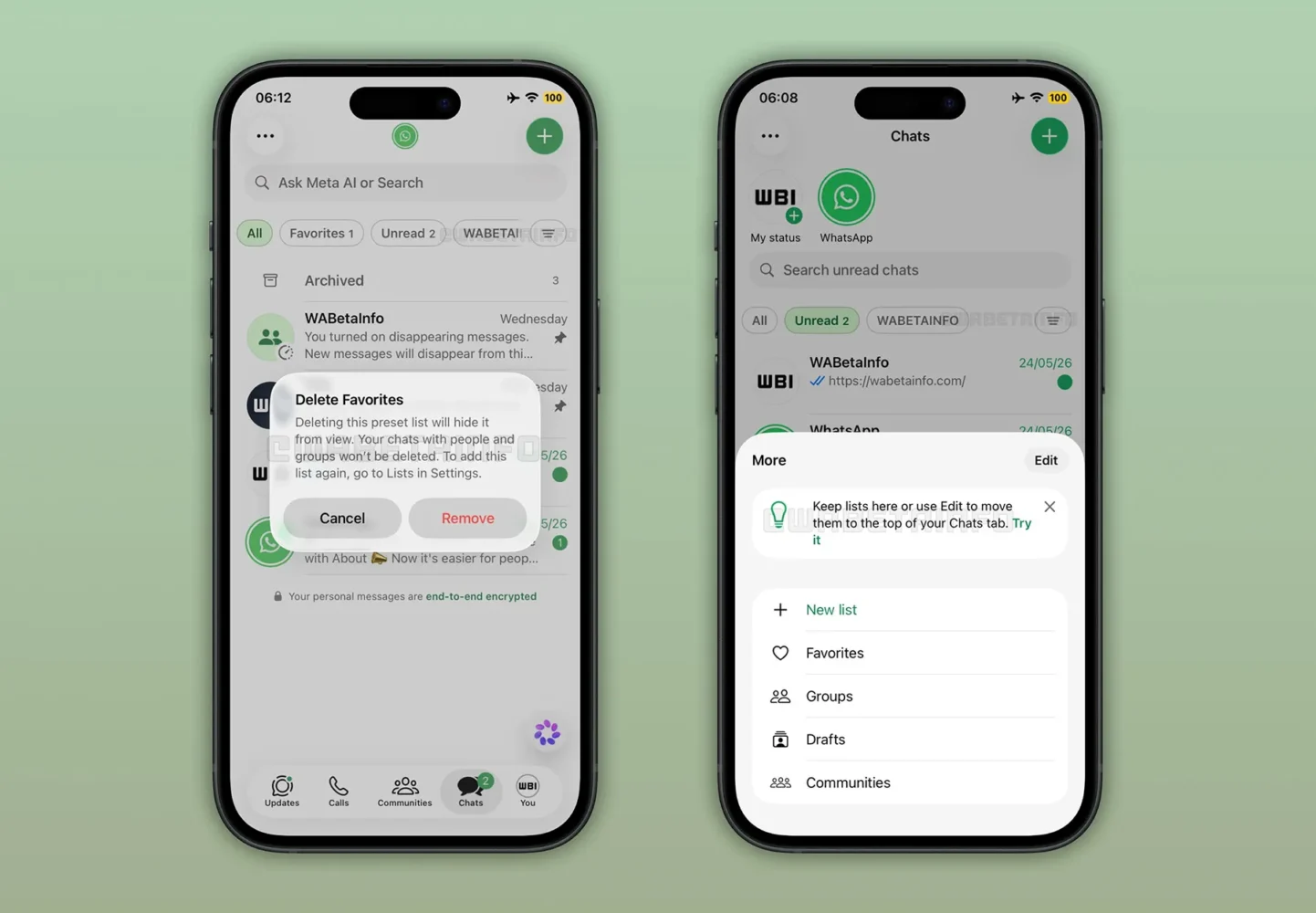
WhatsApp is gradually introducing a refreshed chat lists interface for iPhone users, offering more practical ways to organize and navigate conversations in a platform that now hosts billions of daily messages. The update, spotted in version 26.21.74 available on the App Store, follows a similar change that reached Android users earlier. It lets people prioritize their most frequently used chat lists at the top while tucking others into a secondary filter menu, addressing the clutter that built up when every default and custom category appeared in a single horizontal row.
The system includes standard filters such as Favorites, Unread, Groups, and Communities, alongside user-created lists that group specific conversations based on personal needs. A new addition, the Drafts list, automatically collects chats where users have started typing a message but not yet sent it. This kind of organizational tweak reflects how messaging habits have evolved. What started as simple text exchanges has grown into sprawling networks of family groups, work threads, community discussions, and automated alerts. For users managing dozens or hundreds of chats, the previous layout could quickly feel overwhelming, forcing constant scrolling or mental sorting.
The rollout appears on both stable App Store and TestFlight versions simultaneously, though WhatsApp’s famously deliberate pace means wider availability will likely stretch over several weeks. Such staggered releases are common for the Meta-owned service, allowing time to monitor stability across diverse devices and user behaviors. While the change improves day-to-day management, it also highlights ongoing limitations in how messaging apps handle scale. Features that sound straightforward on paper can introduce new layers of navigation that some users find more cumbersome than helpful, especially those who prefer minimal interfaces.
This update arrives against a backdrop of intense competition in mobile communication. Apps like Telegram and Signal have long emphasized customizable folders and advanced filtering, pushing WhatsApp to refine its own tools to retain engagement. Yet Meta’s broader strategy often prioritizes features that boost time spent in-app or data collection over pure simplicity. The ability to hide less-used lists may reduce visual noise, but it risks burying important conversations for people who maintain complex social or professional networks. Privacy-conscious users might also note that better organization does not necessarily translate to stronger underlying data protections, an area where WhatsApp has faced criticism despite its end-to-end encryption claims.
Overall, the revamped chat lists represent an incremental but welcome adjustment for iOS users seeking better control over their messaging experience. In an era where people juggle multiple digital identities across apps, thoughtful interface refinements matter more than flashy additions. Still, the slow deployment and absence of an official timeline underscore WhatsApp’s cautious approach to changes that affect its massive global user base. As the feature spreads, it will be telling to see whether it genuinely streamlines daily use or simply adds another layer to an already busy digital routine.