
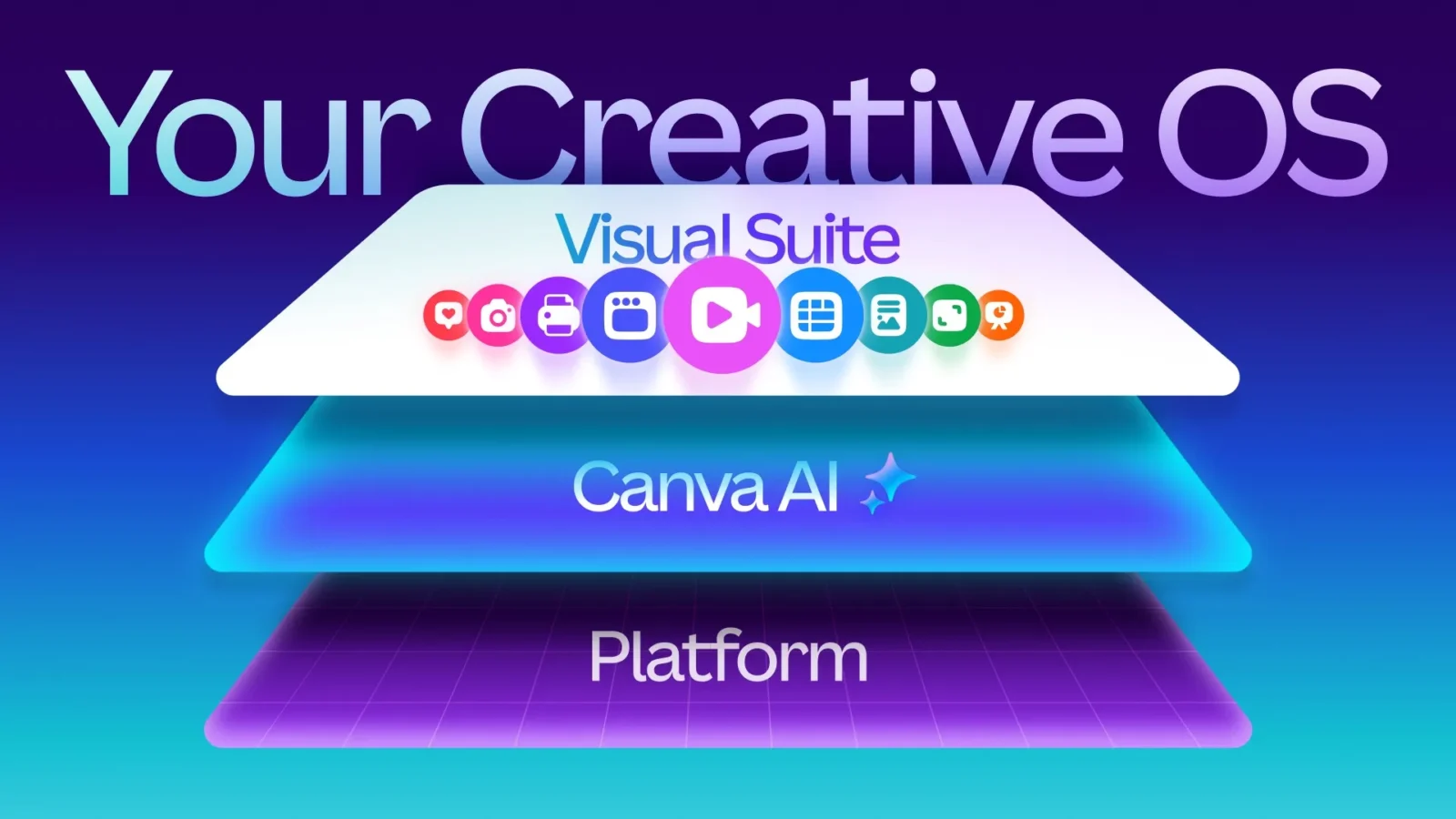
Canva has launched its own foundational design model, expanding its AI-driven creative suite with new tools that blend generative intelligence and professional design workflows. The model, announced Thursday, is built to understand design layers and editable elements rather than producing static, flat images—allowing users to modify layouts, objects, and text directly within Canva’s interface.
The company says its new model powers content creation across multiple formats, including social media graphics, presentations, whiteboards, and websites. Unlike earlier diffusion-based systems that generated fixed visuals, Canva’s model outputs fully editable compositions that preserve each design component. This structure gives users more flexibility to refine AI-generated results without starting over from scratch.
“We’ve learned that people want to use prompts to get started quickly, but also want to iterate directly within their designs,” said Robert Kawalsky, Canva’s global head of product. The new model aims to reduce the friction between AI assistance and human creativity, especially for non-designers who rely on the platform for marketing or social media content.
Alongside the model, Canva is expanding Canva AI, its chat-style assistant introduced earlier this year. The assistant now appears across the platform — including within the design and elements tabs — and can be mentioned in comments using “@” tags to generate text or media suggestions during collaborative projects. It also gains the ability to generate 3D objects and replicate the art style of existing designs for consistency across projects.
Canva has also linked two of its newer features — a spreadsheet tool and an app-builder — allowing users to turn data into interactive widgets for dashboards or visualizations. This capability adds a data-driven dimension to the platform’s traditionally visual focus.
The company is further expanding its marketing toolkit with Canva Grow, a new product that integrates AI-generated content with ad performance analytics. Built in part on its acquisition of MagicBrief, Canva Grow enables users to create, measure, and publish campaigns across platforms like Meta without leaving Canva.
Other updates include the introduction of form creation tools, giving users a built-in alternative to services like Google Forms, and new email design templates for creating brand-aligned marketing or transactional emails.
On the professional side, Canva is strengthening its integration with Affinity, the design suite it acquired last year as part of its effort to compete more directly with Adobe. The company announced that Affinity will now be free for all users and that its interface is being redesigned to unify vector, pixel, and layout tools. Affinity and Canva will also interoperate more seamlessly — objects designed in Affinity can be imported directly into Canva, and Canva AI features can be used from within Affinity itself.
Together, these changes reflect Canva’s push to position itself as a complete, AI-powered design ecosystem spanning casual creators and professional designers alike. By building its own foundational model and tightening integration between its creative and analytical tools, Canva appears to be aiming squarely at the territory traditionally dominated by Adobe Creative Cloud.