


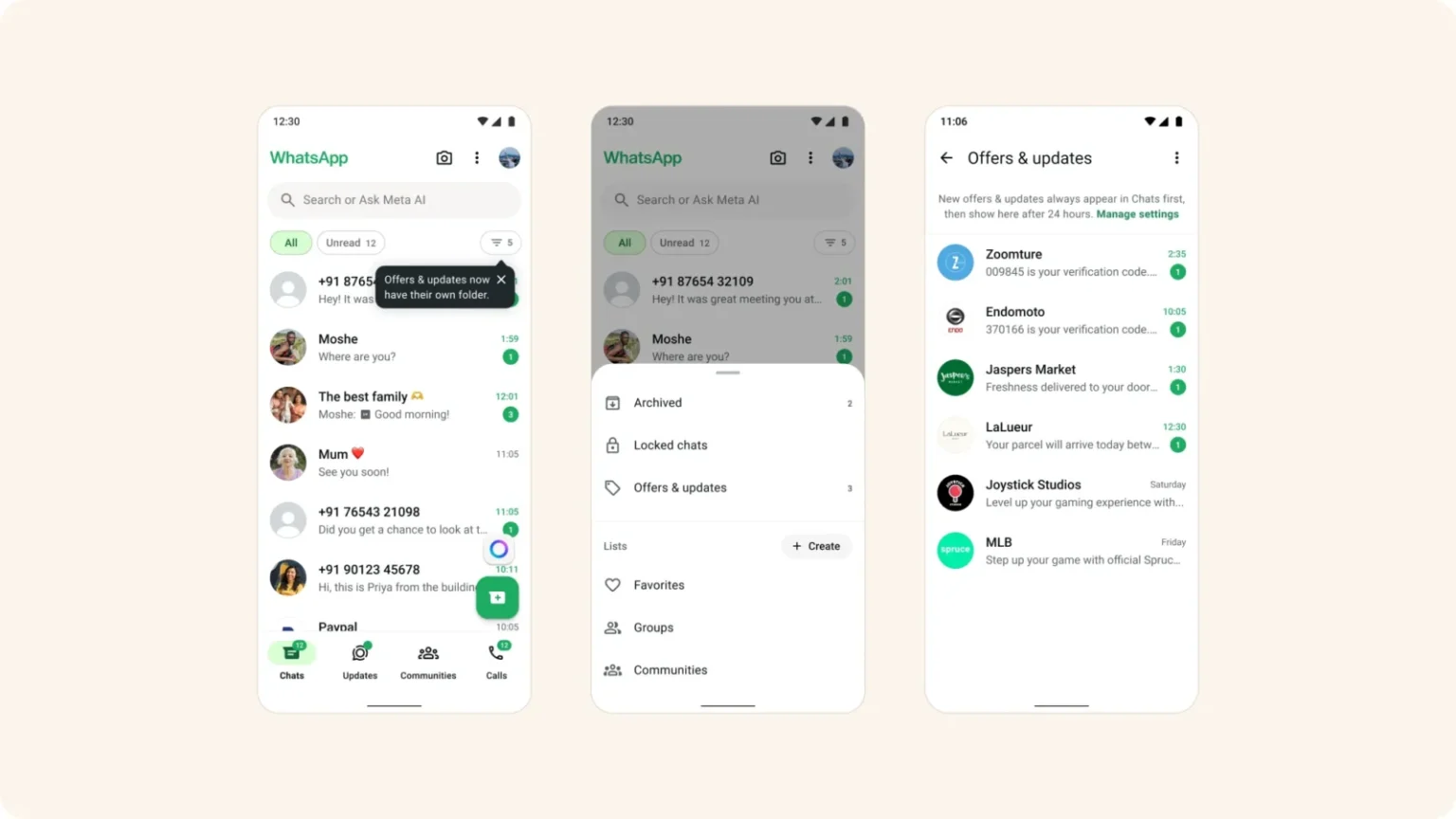
WhatsApp is testing a separate folder that automatically shifts messages from large businesses out of the main chat list after a set period. The feature, currently limited to select partners on the WhatsApp Business Platform, moves communications from banks, airlines, and similar organizations into an “Offers & Updates” section once a waiting window of up to 24 hours has passed. Users can disable the automatic sorting if they prefer everything to stay in the primary timeline, but they cannot choose the exact timing of the move.
The change arrives as paid messaging and subscriptions on WhatsApp help drive other revenue in Meta’s family of apps past the one-billion-dollar mark. More companies now treat the service as a direct channel for delivery notices, discount codes, and account updates, which has left many inboxes crowded with commercial traffic. Small businesses and individual accounts using the business app remain exempt for now, though the company has left open the possibility of expanding the filter later.
This is not the first attempt to rein in business volume. In 2024 WhatsApp introduced an unsubscribe option for marketing messages. The following year it capped the number of broadcast messages that could be sent in a given window. By October 2025 it further restricted how many messages a business could push without a user reply. Those measures have been rolled out or refined, yet the practical result for many people is still a steady stream of unread business chats that bury personal and group conversations.
A dedicated folder may offer temporary relief by parking promotional and transactional notes out of sight, but the design keeps control largely with the system rather than the recipient. Without finer tools to decide which senders belong in the main list and which do not, the clutter simply relocates. The same platform that now hosts more than a million AI business agents risks becoming a more efficient delivery mechanism for automated outreach, especially as companies experiment with sales, support, and marketing bots inside the chat interface.
The tension is familiar. Messaging apps that began as personal tools have gradually absorbed commercial traffic because the audience is already there. Sorting large-business messages into a side folder acknowledges the problem without fully resolving the underlying imbalance between private conversation and institutional volume. Whether the test expands, and whether users gain meaningful filters beyond a simple on-off switch, will determine if the main timeline regains clarity or merely shifts the noise one layer deeper.