

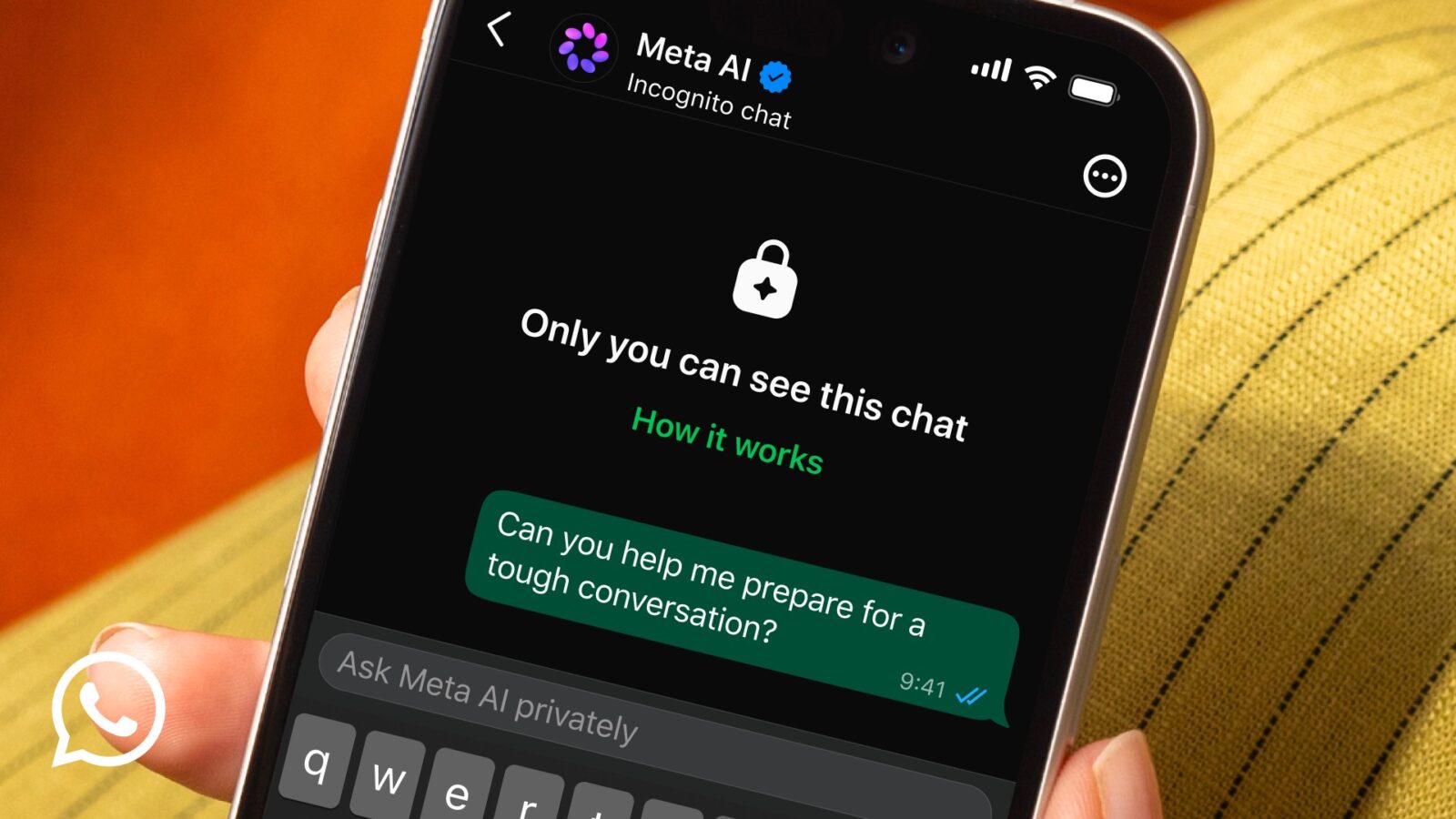
WhatsApp has introduced incognito chat with meta ai, a feature designed to let users hold private conversations with the company’s artificial intelligence without the usual visibility to the platform itself. The rollout builds on the messaging app’s long-standing emphasis on encryption, extending similar protections to interactions with ai tools at a time when people increasingly share sensitive personal, financial, or health details with chatbots.
The new capability relies on what WhatsApp calls private processing technology. Once activated, an incognito chat creates a temporary session visible only to the user. Messages are handled in a secure environment that Meta says even the company cannot access, and conversations are not stored by default. This setup aims to address a genuine gap: many users turn to ai for advice on private matters, yet most existing tools retain logs or allow some level of provider oversight.
In practice, the approach differs from standard incognito modes in other apps, which often still permit the service to view inputs and outputs. Here, the claim is stronger—end-to-end style privacy that shields the exchange from WhatsApp and Meta. Ten years after introducing end-to-end encryption for personal messages, the company is now applying comparable thinking to ai, reflecting how quickly conversational tools have moved from novelty to everyday necessity.
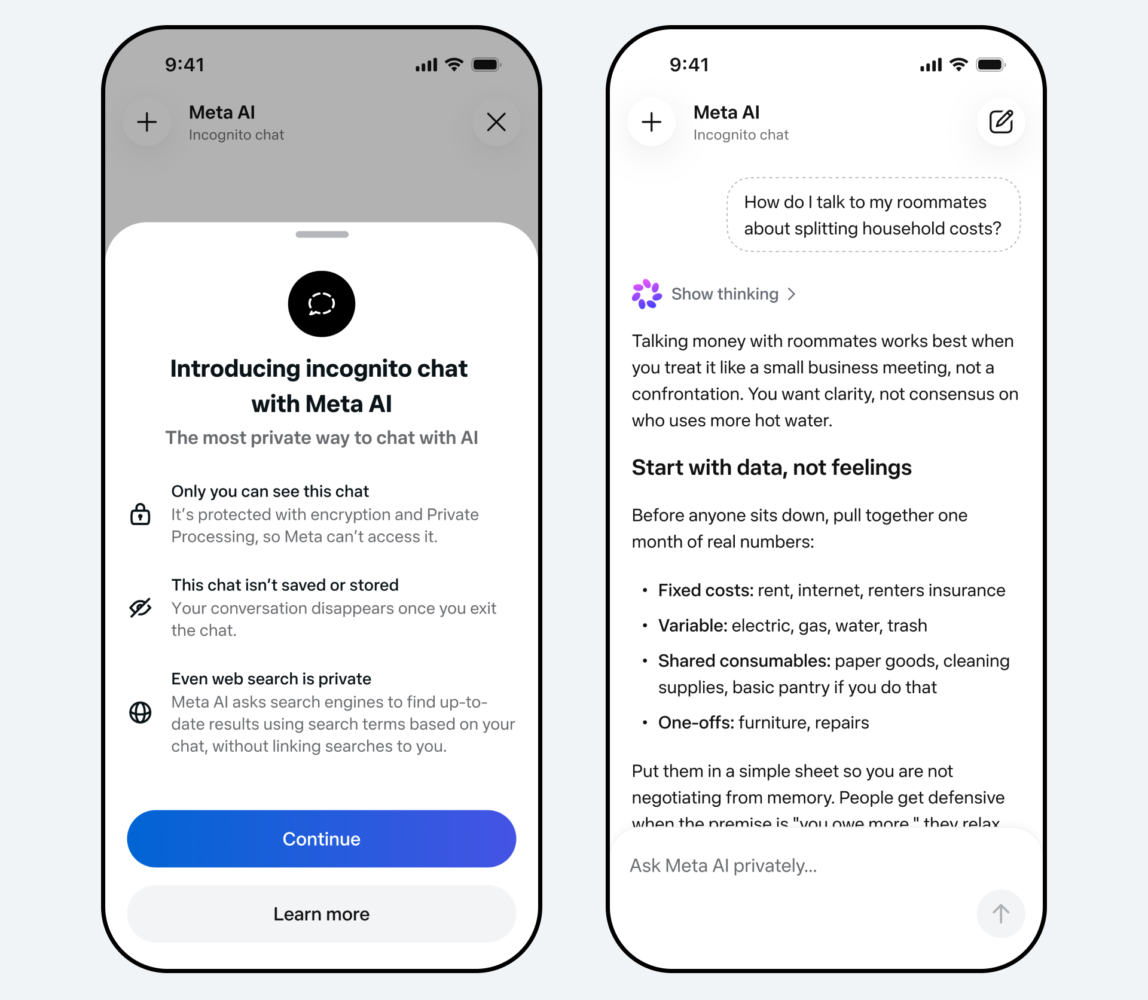
That said, the feature arrives amid broader questions about ai privacy. Tech platforms have faced repeated scrutiny over data handling, and Meta’s own history includes high-profile controversies around user information. While incognito chat limits retention and access, it remains an optional mode rather than the default for all ai interactions. Users will still need to choose it deliberately, and its temporary nature means it may not suit every context.
Looking ahead, WhatsApp plans to expand the private processing approach. A forthcoming side chat function would allow ai assistance within existing conversations while keeping that help isolated and context-aware, without mixing it into the main thread. Both features are expected to reach WhatsApp and the separate Meta AI app over the coming months.
The development highlights a growing tension in consumer technology. As ai assistants become more capable, the demand for confidentiality rises alongside them. Features like incognito chat respond to that reality, offering a more contained space for exploration. Yet they also underscore the limits of current systems: true privacy still depends on user vigilance and the platform’s willingness to forgo data collection, even when it could improve models or target ads.
For many, the appeal lies in practical control—asking candid questions without leaving a permanent record. Whether this proves sufficient in an era of sophisticated data practices will depend on implementation details and independent verification over time. For now, it gives users one additional layer of separation when chatting with ai inside one of the world’s most widely used messaging platforms.