

Spotify’s free tier is getting a potentially significant limitation in some markets, with new album releases being held back for three days unless listeners pay for Premium. But while Spotify will inevitably take much of the heat, the change appears to be driven by record-label licensing rather than a Spotify-only experiment.
The new system, described as “Premium Early Access,” has been spotted by free Spotify users in markets including India and Bangladesh. Instead of Premium subscribers receiving albums before their official release, the arrangement effectively means ad-supported listeners must wait 72 hours after release before gaining access.
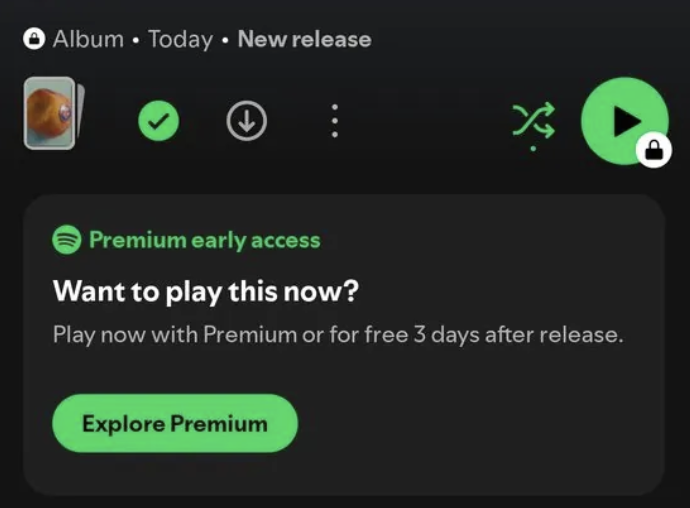
That distinction matters because the restriction reportedly originates further up the music industry chain. Universal Music Group introduced a 72-hour premium window for major releases in India, meaning the same basic limitation is expected to affect competing streaming platforms offering ad-supported listening, including YouTube Music and Amazon Music.
For listeners, though, who initiated the restriction probably matters considerably less than the end result. One of streaming music’s biggest conveniences has been immediate access: when an album drops, everyone can hear it, regardless of whether they’re paying monthly or listening between advertisements. A three-day window begins chipping away at that expectation.
It isn’t an entirely new idea. Spotify and Universal Music Group struck an agreement in 2017 that allowed certain albums to remain exclusive to Premium subscribers for as long as two weeks. Release windowing is also familiar elsewhere in digital entertainment, where paid subscribers can sometimes access television episodes and other content before free users.
The interesting question is whether a 72-hour delay will actually persuade people to subscribe. Free Spotify already comes with compromises intended to make Premium attractive, including advertising and restrictions around playback. Locking new releases temporarily adds another reason to upgrade, but it could equally encourage listeners to search elsewhere for music immediately after release.
Reaction reported from Spotify-focused Reddit communities has predictably included criticism, with some users arguing that additional restrictions make the free service less appealing and could push people toward unofficial alternatives. Others argue that paying subscribers should receive meaningful advantages over ad-supported listeners.
For now, the three-day restriction appears limited to selected markets rather than representing a worldwide Spotify policy. What happens next will be worth watching: if labels decide premium release windows successfully convert free listeners into paying customers, instant access to every new album could become another streaming feature users can no longer take for granted.