
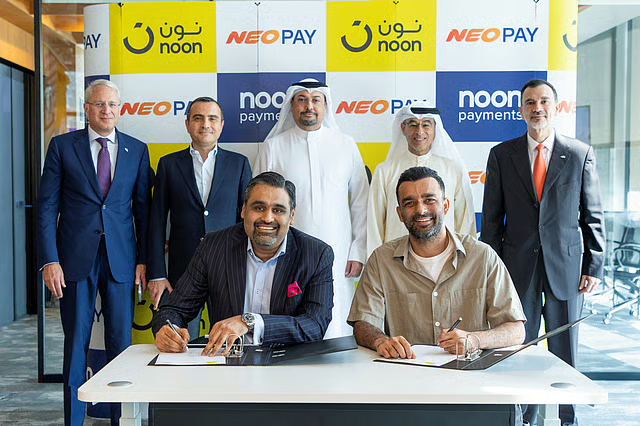
noon is handing control of its payments arm to a dedicated specialist. UAE-based NEOPAY has signed a definitive agreement to acquire a 65% controlling stake in noon payments, a deal that would give the merchant acquirer an immediate foothold in Saudi Arabia and Egypt. Financial terms have not been disclosed, and the transaction still needs regulatory and antitrust clearance before it closes.
The logic is fairly easy to follow. NEOPAY’s strength lies in the physical and omnichannel side of payments, including merchant acquiring, card processing, gateways and point-of-sale terminals, almost entirely within the UAE. noon payments brings the opposite profile, an online-first platform built around e-commerce checkout, embedded payments and a merchant base spanning the region’s three biggest digital retail markets. Put together, the combined business could, at least on paper, serve merchants across stores, apps and websites in multiple countries from a single provider.
For noon, the move reflects a broader pattern among regional tech platforms. Payments infrastructure is expensive to build and run, and is heavily regulated, so spinning it into a partnership with a specialist allows the parent to focus on its retail and marketplace business while still benefiting from the payments flowing through it. The deal was signed by NEOPAY CEO Vibhor Mundhada and noon CEO Faraz Khalid, with noon chairman Mohamed Alabbar overseeing the agreement.
NEOPAY itself has changed hands recently. It was launched by Mashreq in 2022 as a standalone payments company, before Arcapita and DgPays agreed in 2024 to buy a majority stake at a valuation of roughly $385 million. That sale completed in January 2025, with Mashreq keeping a significant minority interest. At the time, NEOPAY was handling more than 400 million transactions a year and serving over 10,000 UAE merchants, and absorbing noon payments looks like the first major step in the regional expansion its new owners promised.
Once complete, the company says the combined business will focus on faster merchant onboarding, stronger fraud tools, embedded financial services, wider support for alternative payment methods and instalment plans, and improved cross-border settlement. Those are sensible priorities in a market where buy now, pay later services and digital wallets have reshaped how people shop online, though how quickly any of them reach merchants remains to be seen.
The bigger challenge is competition. Merchant acquiring across the Gulf and Egypt is crowded with banks, global processors and well-funded fintech startups. Combining two networks gives NEOPAY scale, but whether that is enough to stand out in Saudi Arabia and Egypt, where it has never operated, will only become clear after regulators sign off.