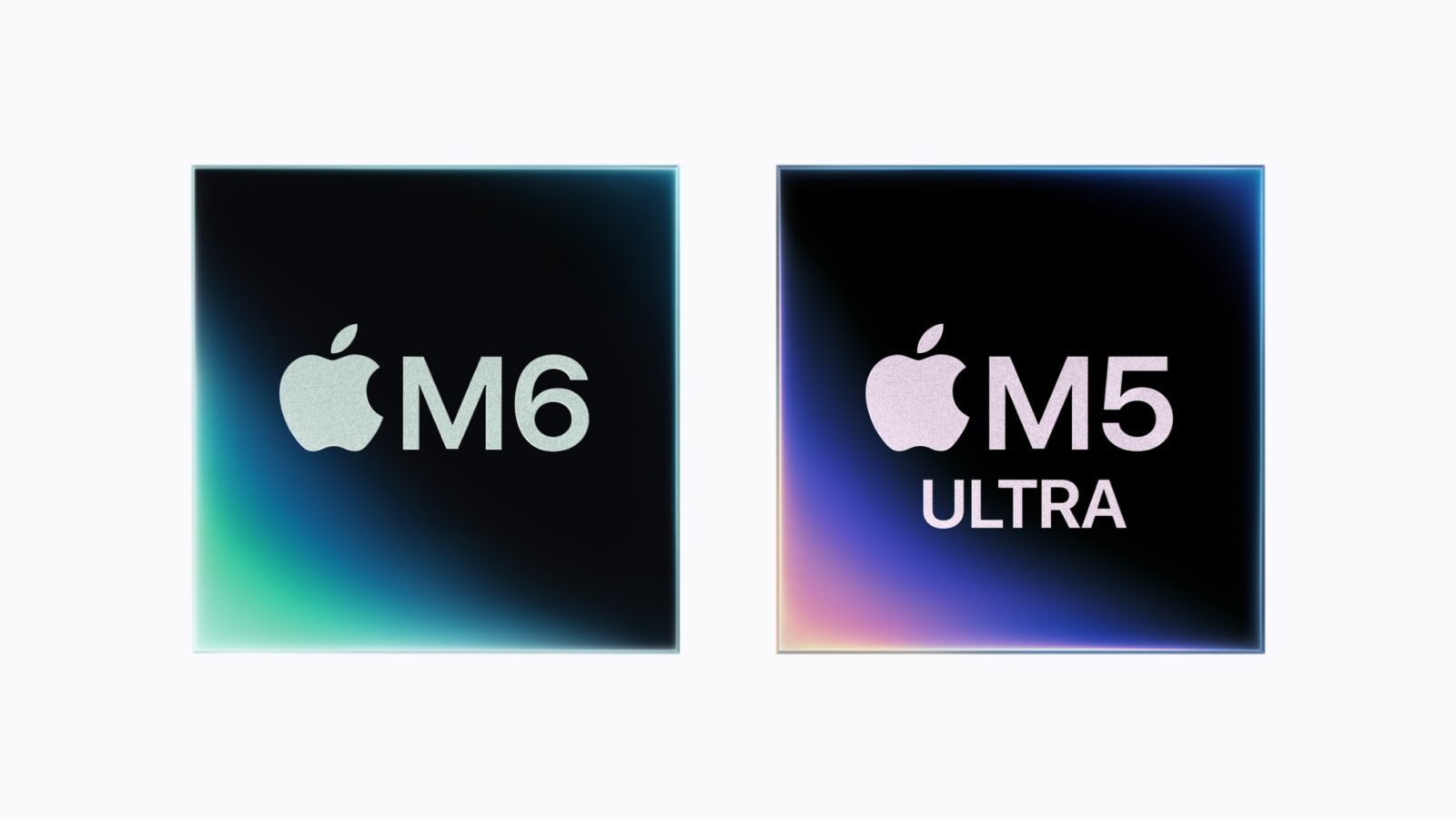


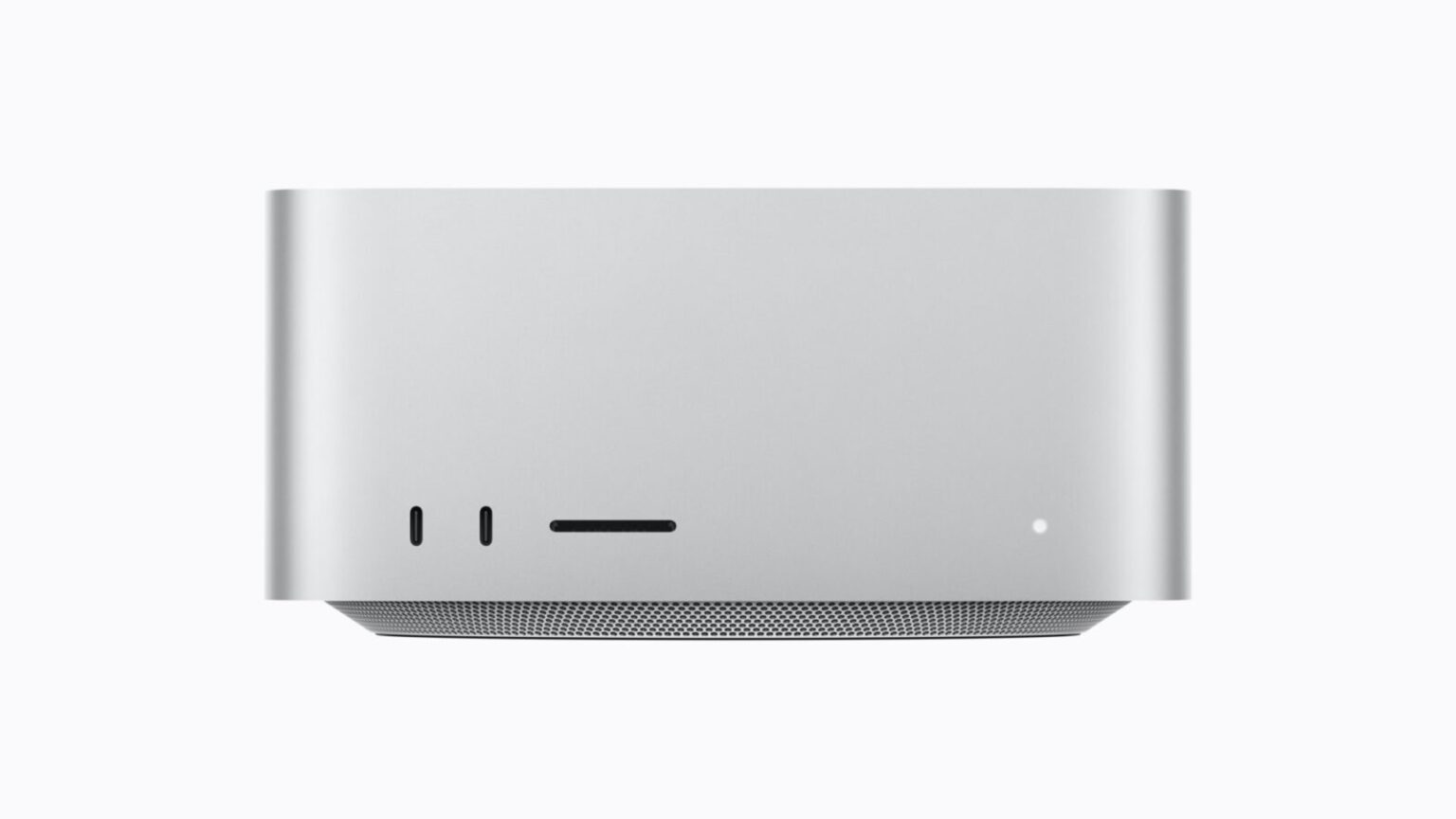
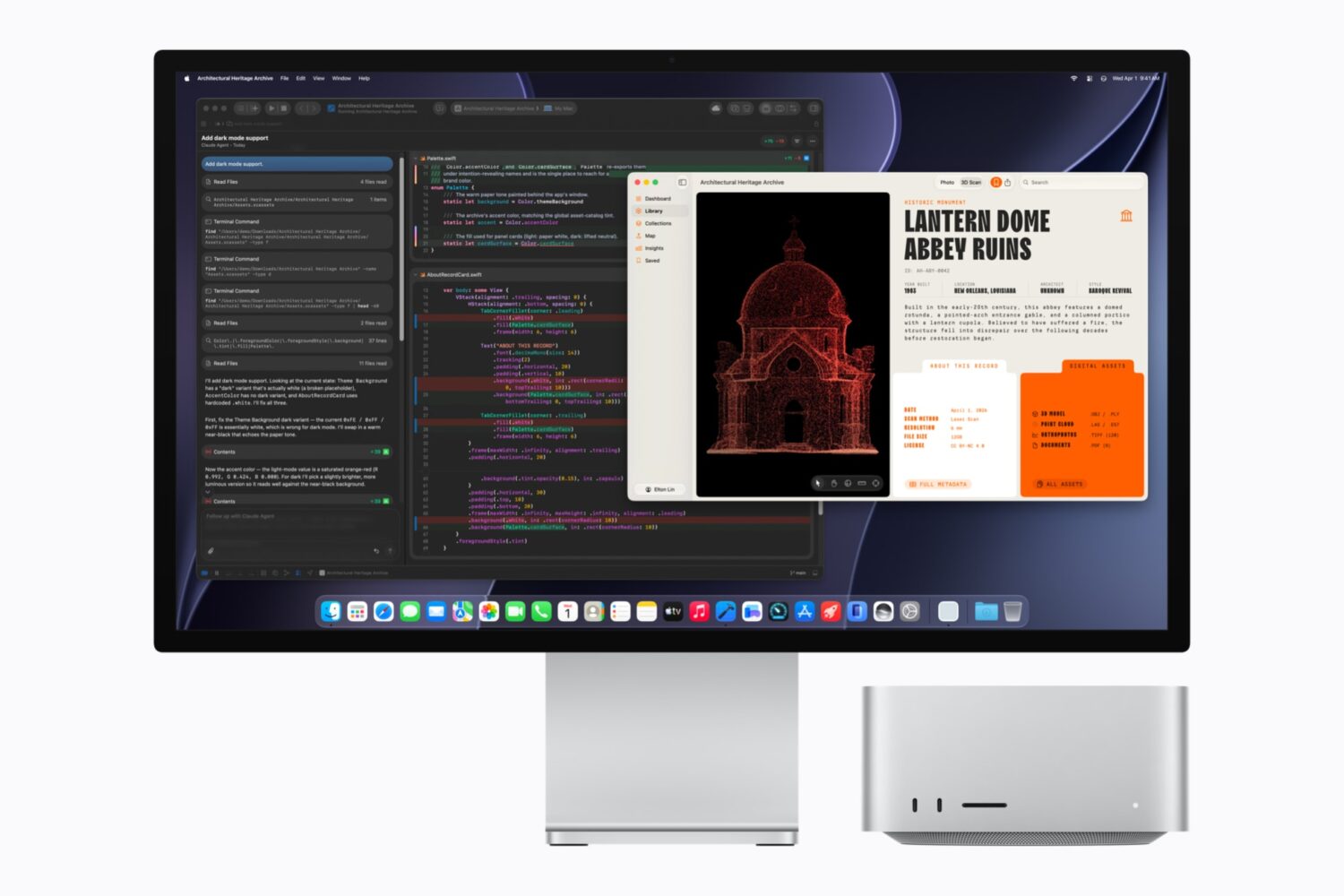
Apple is pushing the Mac Studio further into workstation territory with M5 Max and M5 Ultra, putting considerably more emphasis on local AI compute, memory capacity and multi-system scaling. The exterior remains familiar, but internally the 2026 Mac Studio represents a substantial increase in what Apple silicon can handle without turning to cloud infrastructure.
M5 Max forms the entry point, although its specifications are firmly aimed at professional workloads. It combines an 18-core CPU with up to a 40-core GPU, with Neural Accelerators integrated into every GPU core. Apple says GPU performance is up to 50 percent faster than the previous generation, while unified memory scales to 128GB with as much as 614GB/s of bandwidth.
Those Neural Accelerators are particularly important to Apple’s AI strategy. Rather than leaving machine-learning workloads primarily to the Neural Engine, Apple is increasingly using the GPU for large-model inference. The company claims M5 Max can process LLM prompts in LM Studio up to 3.9 times faster than M4 Max, alongside similar gains for image generation and other AI workloads. Those figures are based on Apple’s testing and will need independent benchmarking.
M5 Ultra takes the architecture considerably further. The chip offers up to a 36-core CPU and 80-core GPU, again with Neural Accelerators throughout the GPU. Apple claims up to 4.3 times the peak AI compute of M3 Ultra and 9.8 times that of M1 Ultra, while conventional graphics performance is rated at up to 1.8 times faster than the previous generation.
Arguably more significant than those headline performance numbers is memory. M5 Ultra supports up to 512GB of unified memory and 1.2TB/s of bandwidth, 50 percent more bandwidth than M3 Ultra. That gives the Mac Studio enough local memory for unusually large open-weight AI models and datasets that would normally require specialised workstation hardware or remote compute.
Apple is also addressing workloads that exceed a single machine. Thunderbolt 5 and RDMA support allow multiple Mac Studio systems to operate as a cluster and share AI workloads. Apple says a four-system configuration can deliver up to three times the inference performance of one Mac Studio. It is an interesting direction for Apple silicon, particularly for research teams that need substantial local compute but want to avoid conventional GPU servers.
The traditional workstation capabilities have not been ignored. M5 Ultra doubles the video encode and decode blocks of M5 Max and can, according to Apple, simultaneously play as many as 33 streams of 8K ProRes 422 at 30fps. Third-generation hardware ray tracing and updated shader cores target VFX, 3D rendering and other GPU-heavy production work.
Elsewhere, Mac Studio gains PCIe Gen 6-based storage that Apple says is up to twice as fast, alongside Wi-Fi 7, Bluetooth 6 and Thunderbolt 5. It arrives September 22, starting at AED 10,499 with M5 Max and AED 23,999 with M5 Ultra. The 512GB memory configuration follows in late October.
The hardware makes Apple’s priorities increasingly obvious. Mac Studio is still a compact creative workstation, but with M5 Ultra, 512GB of unified memory and support for clustered inference, Apple is making a much more deliberate play for developers and researchers who want serious AI compute sitting locally on a desk.