

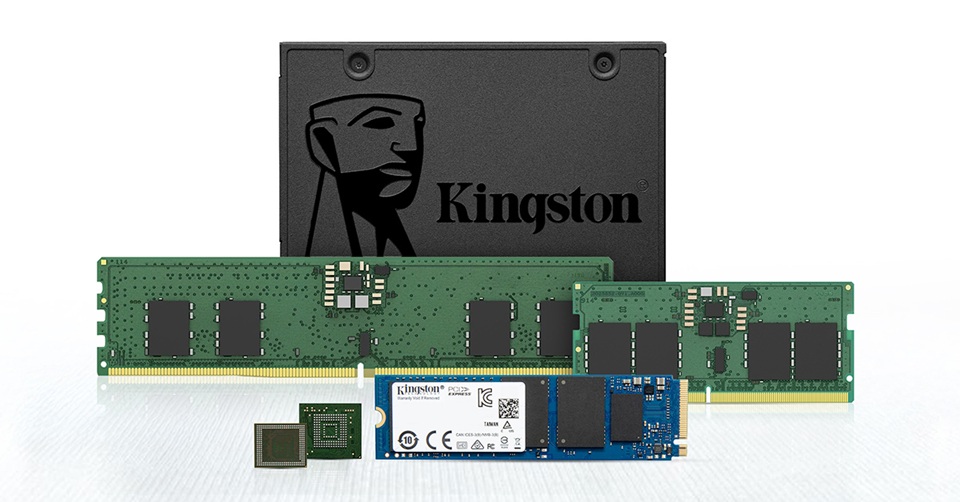
Kingston Technology is positioning its design-in memory, industrial SSD, and embedded solutions to address the growing needs of industrial PCs, edge systems, and embedded platforms. These components are increasingly central to automation, intelligent services, and mission-critical operations in advanced manufacturing, smart logistics, and expanding digital infrastructure. In such environments, reliability, extended product lifecycles, and dependable global supply matter more than raw specifications alone.
The company has expanded its portfolio with features like controlled bill of materials, lifecycle management, and a focus on long-term stability. This setup aims to help integrators and OEMs create systems that hold up under demanding conditions, where downtime carries real costs. Kingston’s approach draws from decades in the broader memory market, applying lessons from consumer and enterprise segments to these specialized areas. Yet in industrial applications, success often hinges on more than component quality—real-world endurance, consistent firmware, and supply predictability remain persistent challenges across the sector.
Kingston’s design-in DRAM modules follow JEDEC standards and are tested for consistent performance in fixed systems. The industrial SSD range includes SATA and PCIe NVMe options in various form factors, covering both commercial and wider temperature tolerances. These drives incorporate standard technologies such as wear-leveling, garbage collection, and 3D NAND, which support steady operation in harsh settings. Embedded offerings encompass eMMC, eMCP, ePoP, UFS, and discrete DRAM, suited for a variety of compact devices where space and power constraints are primary concerns.
Across these lines, Kingston emphasizes controlled BOM, firmware consistency, PCN notifications, and technical support to simplify integration and reduce variability for partners. This matters particularly in sectors like retail, transportation, logistics, surveillance, networking, and industrial automation, where systems may run for years with limited maintenance opportunities. The company’s nearly 40 years in memory production provide some foundation for claims of reliability, though the broader industry has seen periodic disruptions in supply chains and component longevity that test even established players.
Kingston also maintains its consumer-oriented lines, including FURY memory for gaming and content creation, alongside general SSDs, external storage, DRAM, USB drives, memory cards, and encrypted IronKey products. This dual focus allows the firm to leverage scale from high-volume markets while targeting niche industrial demands. In an era of rapid edge computing growth, such breadth can offer advantages, but it also requires careful management to avoid diluting specialization in rugged applications.
Overall, Kingston’s strategy reflects a pragmatic response to the maturation of industrial and embedded tech. While marketing often highlights seamless innovation, the real test lies in sustained field performance and adaptability to evolving standards. For system designers navigating these choices, evaluating long-term support and actual deployment data remains essential.