
Google is pushing deeper into personalization across Search, Discover and Google News, giving users more direct ways to influence which publishers, topics and stories appear in their feeds. The changes continue a broader shift away from entirely algorithmic recommendations toward systems that let people actively shape what they see.
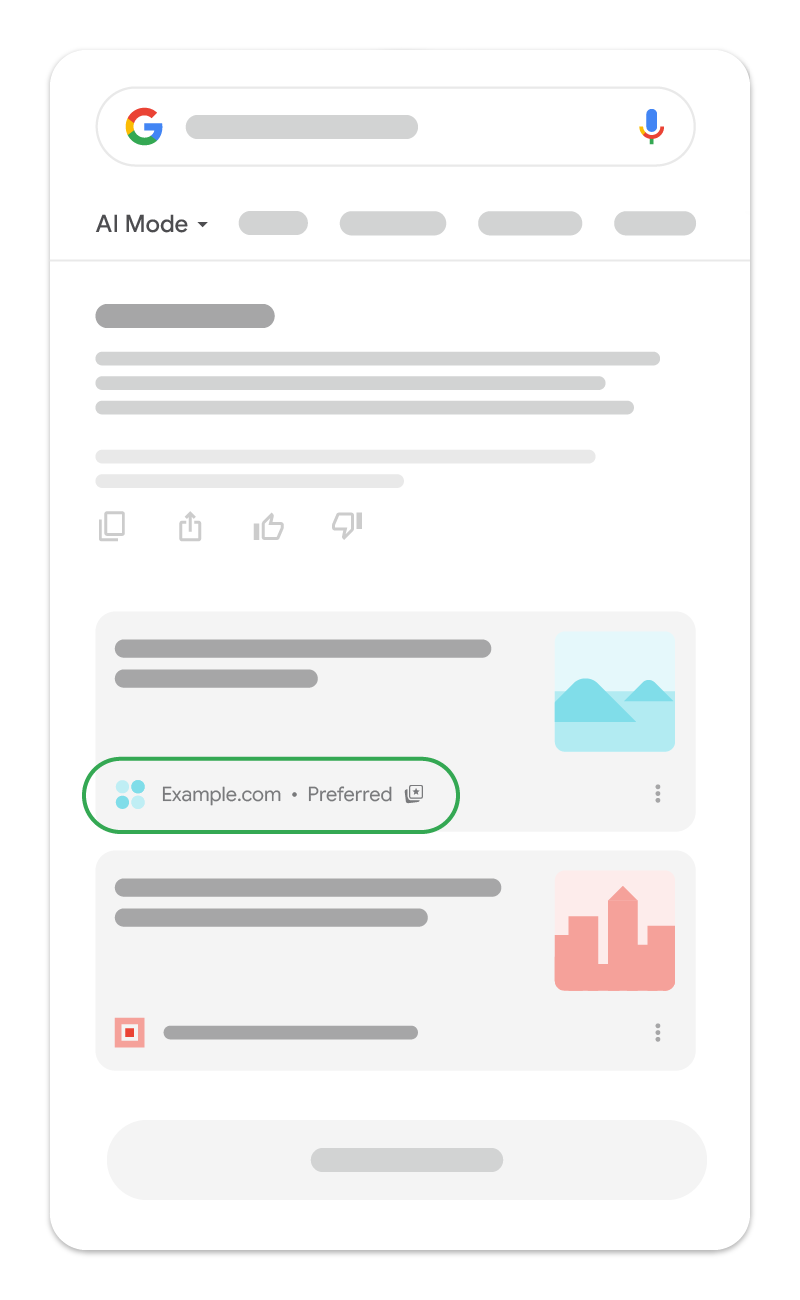
One of the more practical additions is an embeddable Preferred Sources button for publishers. Readers can use it to mark a website as a favored source, increasing the likelihood that content from that publication will appear in Top Stories and other parts of Google Search.
Preferred Sources itself is not new. Google introduced the feature earlier and later expanded it into AI Overviews and AI Mode. The company says users have now selected more than 600,000 individual sources. What is changing is how easily publishers can encourage readers to make that choice, with Google providing code that sites can add directly to their pages.
The move is notable because publishers have spent years trying to understand increasingly opaque recommendation and search systems. Giving readers a visible way to express preference could provide publications with another route to maintaining direct audience relationships, although Google still controls how those preferences are weighted against its ranking systems.
Discover is also getting more granular controls. Google plans to let users adjust their feed using natural-language instructions from the three-dot menu attached to individual recommendations. Instead of relying only on simple follow or unfollow actions, users will be able to describe combinations of interests and exclusions, such as asking for more content about a particular hobby while avoiding a related subtopic.
That sounds straightforward, but it reflects a wider change in how Google is using generative AI. Rather than limiting AI to answering questions, the company is increasingly applying conversational interfaces to settings and personalization. Describing a preferred feed in ordinary language is potentially more flexible than navigating layers of toggles, provided the system interprets those requests consistently.
Google News is receiving a similar adjustment on Android. Users will be able to customize daily audio briefings around selected topics while retaining source attribution and links to the full articles. Audio summaries are becoming another battleground for news aggregation, particularly as AI systems make it easier to generate spoken versions of large amounts of information.
The challenge for Google is balancing personalization with variety. A feed tuned too aggressively around existing interests can become repetitive, while publisher preferences could narrow the range of sources users encounter. The usefulness of these tools will therefore depend less on how many controls Google adds and more on how much influence those controls actually have over the algorithms underneath them.