
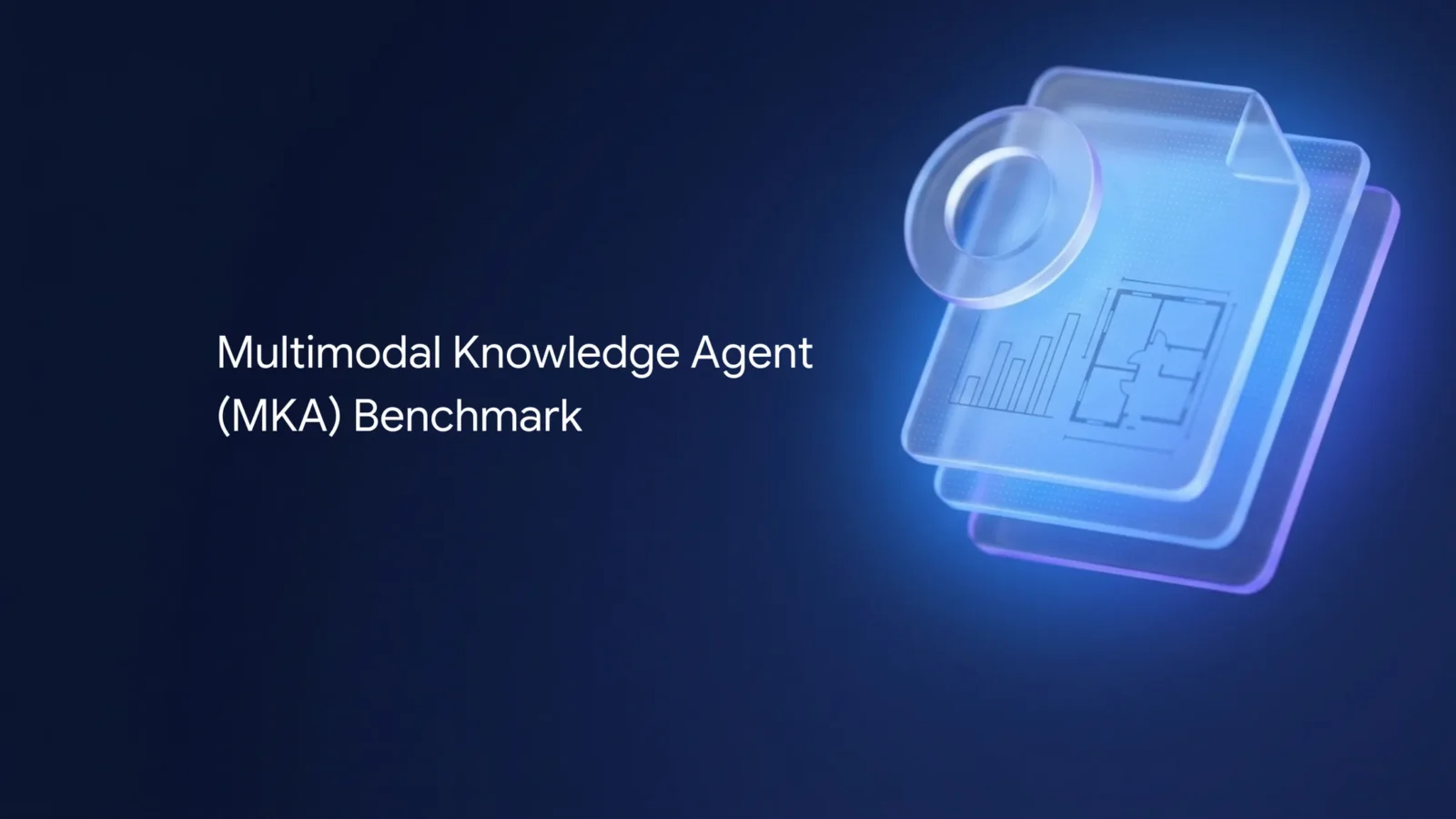
Google DeepMind has released a new AI benchmark called the Multimodal Knowledge Agent (MKA), built with independent analytics firm Artificial Analysis. It tests whether AI agents can handle office work that requires reading and producing visual material, not just text. Google’s own Gemini 4 Carbon ranks second on it rather than first, which is unusual for a benchmark a model maker helped design.
The idea addresses a real gap. Many AI benchmarks can be solved entirely through text, but professional work in many fields is visual. Architects read blueprints, engineers trace schematics, analysts turn findings into slide decks and spreadsheets where layout matters as much as numbers. MKA is meant to test whether agents can read that material and produce polished deliverables from it.
The benchmark includes 200 tasks built with domain experts across 10 sectors and 83 occupations, including construction, healthcare, finance, law, logistics and science. Google says each task represents three to eight hours of work for an experienced professional. Every task comes with a bundle of input files and a rubric of about 70 yes/no checks, weighted 75 percent on factual accuracy and 25 percent on visual design.
Several design choices aim to keep results credible. All models run in the same open-source agent harness, Stirrup, with identical tools, sandbox and turn limits. Grading is done by an AI evaluator built on a model from another company, which opens each file, renders the pages and inspects spreadsheet formulas. Google says its scores matched those of human experts 96 percent of the time. The full task set is held privately by Artificial Analysis to keep it out of training data, while 10 sample tasks are published on Hugging Face for anyone to inspect.
Google says the results show large differences in how models work: frontier models averaged anywhere from 30 to 130 steps per task. Removing image input caused performance to drop sharply, which supports the claim that the benchmark measures visual reasoning rather than text skills.
Google’s main pitch for Carbon is cost. The company says Carbon finished second in quality while costing about six times less on average than the top scorer. Google doesn’t name that top model in its announcement, which leaves readers without a full picture. Placing second on a benchmark you co-created is a modest result, and Google is emphasising cost-effectiveness rather than raw capability.
The broader question is whether the industry adopts MKA. A benchmark becomes useful when rival labs report their own scores on it, and so far only Google’s comparison is public.