
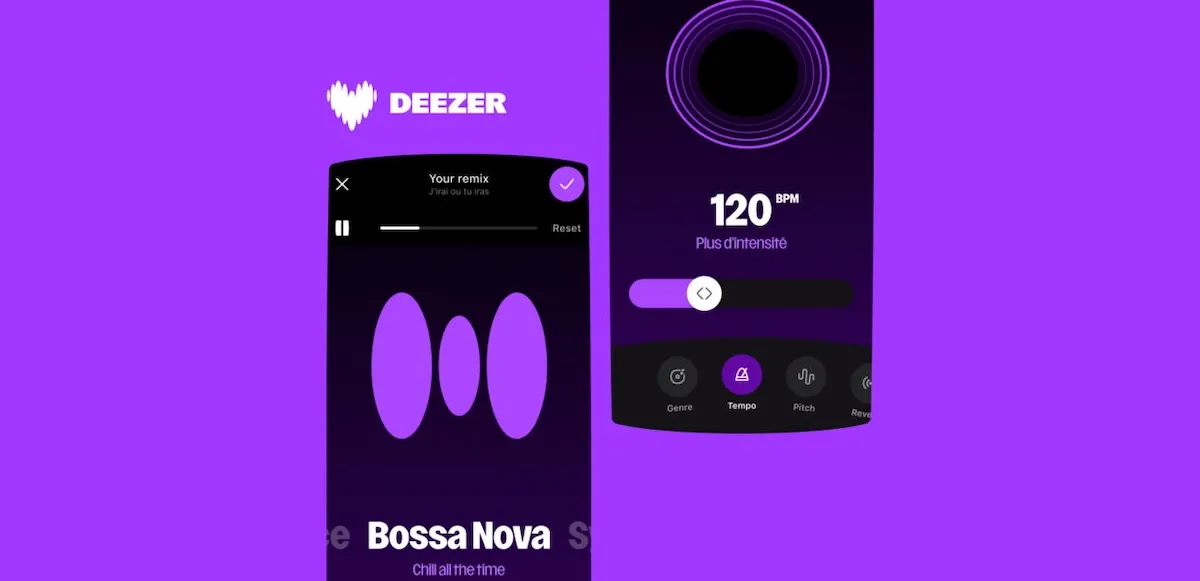
Deezer has introduced a new in-app feature called Remix Lab that lets users create variations of songs with explicit approval from the original artists and rights holders. The platform claims participating artists receive payment for streams of these remixed versions. Available initially on select artists’ pages in France, the tool focuses on manual adjustments such as tempo changes, added reverb, or shifts in musical genre and style rather than generative AI.
This approach stands apart from recent moves by competitors. YouTube offers AI-assisted remixing, while Spotify has partnered with Universal Music Group on AI-generated covers and remixes. Those developments have sparked debate about whether flooding platforms with machine-made content risks marginalizing human creators. Deezer, by contrast, has positioned itself against unchecked AI adoption in music. The service recently rolled out a detection tool that scans playlists from Spotify and Apple Music for AI-generated tracks and actively excludes them from its own recommendations and editorial playlists.
Remix Lab aims to deepen fan engagement by letting listeners participate in the creative process inside the Deezer app. Head of product Pierre Trochu described tools that range from basic effects to more substantial transformations. CEO Alexis Lanternier emphasized that the feature respects rights and seeks to maximize earnings for artists. Early examples include tracks from Céline Dion, Alain Souchon, Alonzo, Ronisia, Mosimann, Tiakola, and Zaho. Users can also enter contests through the Deezer Club, with winners featured in a dedicated playlist and awarded event tickets and merchandise.
The feature reflects broader tensions in the streaming industry. For years, platforms have grappled with fair compensation for artists amid declining per-stream payouts and the rise of algorithm-driven discovery. Fan-driven remixes could strengthen connections between listeners and musicians, potentially boosting catalog streams without displacing originals. Yet limiting the tool to approved artists and manual edits raises questions about scalability. If only select French acts are available at launch, with vague international expansion plans, adoption may remain modest until the catalog grows.
Historically, music streaming evolved from rigid radio-style playlists to personalized recommendations, but genuine interactivity has lagged. Features like this attempt to recapture some of the participatory spirit of earlier eras—think mixtapes or garage-band covers—while operating within modern licensing constraints. Success will depend on whether fans find the editing tools intuitive enough and whether enough artists opt in to make the experience compelling.
Critics might note that in-app remixing still operates inside a closed ecosystem, potentially limiting the wild experimentation found on social platforms or dedicated production software. At the same time, Deezer’s insistence on artist consent and payment offers a counterpoint to the faster, less regulated AI rush elsewhere. If Remix Lab gains traction, it could encourage other services to explore similar consent-focused models that prioritize human creativity over synthetic volume.
For now, the feature tests whether structured fan creativity can coexist with artist control in a market increasingly shaped by automation. Its early results may signal if this measured path provides a viable alternative to the industry’s dominant AI trajectory.