
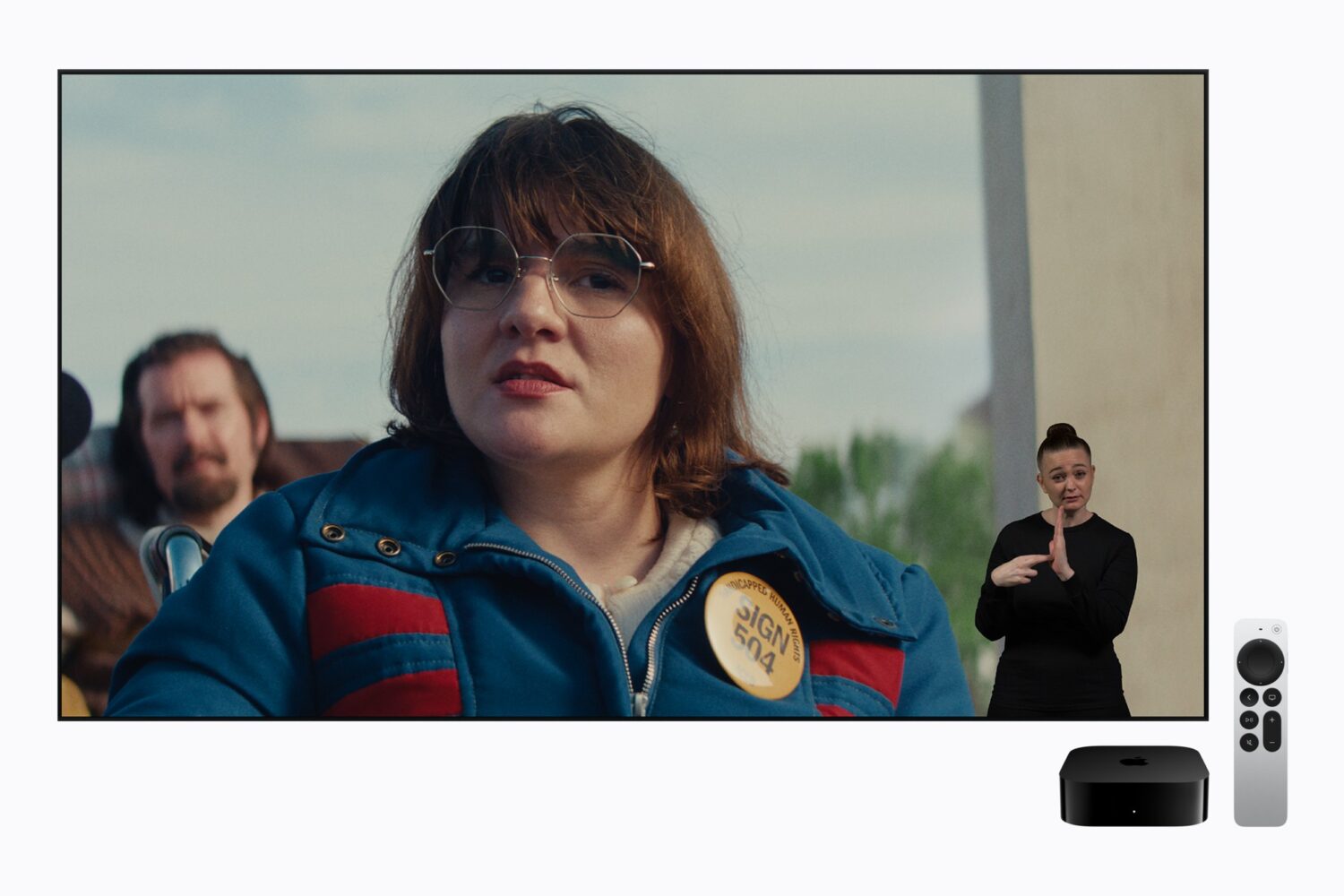
Apple is adding optional sign language interpretation to the Apple TV app, letting viewers watch an on-screen signer alongside supported films. The feature launches on November 13 with the streaming premiere of Being Heumann, and it’s a notable step for a streaming industry where Deaf viewers have mostly had to rely on closed captions.
Being Heumann is a fitting first title. The film, directed by Siân Heder and starring Ruth Madeley, tells the story of disability rights activist Judy Heumann, who died in 2023, and the 1977 San Francisco sit-in where she and more than 100 protesters occupied a federal building to demand disability rights protections. Heder previously directed CODA, the first film with a predominantly Deaf cast to win Best Picture. CODA actor Daniel Durant appears in Being Heumann and also directed the film’s sign language interpretation.
That involvement points to the main difference between Apple’s approach and a generic accessibility checkbox. Apple says each interpretation is designed and tested by Deaf and native signers and tailored to the specific film, rather than delivered as a flat, literal translation. Sign language carries tone, emotion and character through expression and movement, and a stiff interpreter in the corner can undercut the drama it is meant to convey. Viewers will have to judge whether the performances work as well as Apple says, but involving the Deaf community from the start is the right approach.
Beyond Being Heumann, the racing film F1 will also offer interpretation in both American Sign Language and British Sign Language, which suggests Apple is considering more than the US audience. Way of the Warrior Kid and Greyhound will get interpretation later this year, and Apple says more Apple Original titles will follow.
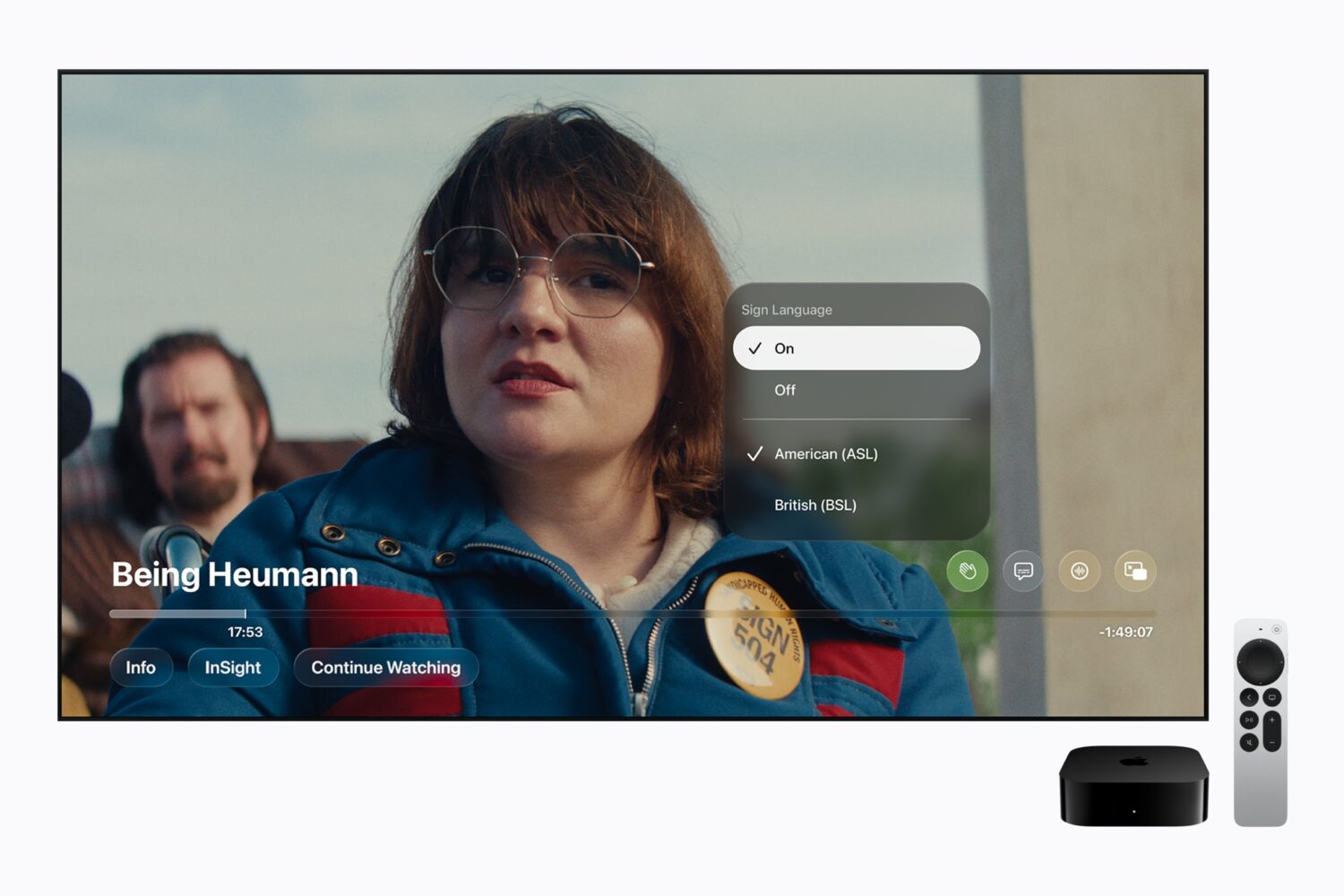
Using the feature requires turning it on in the Apple TV app settings, then pressing a Sign Language button during playback on titles marked with a dedicated icon. Searching for phrases like “with ASL” will surface supported titles, and a new collection gathers them in one place. The feature requires iOS 27.2, tvOS 27.2 or the equivalent macOS, iPadOS and visionOS versions. Apple says it also works on supported third-party devices running the latest version of the app.
The current catalogue is very small: a handful of films out of Apple’s growing library of original movies and series. Interpretation is also limited to Apple’s own productions, which makes sense since Apple controls those rights but limits how much of the service is covered. The bigger question is whether Apple will expand beyond ASL and BSL to other sign languages, including Arabic Sign Language, for its 170 markets.