

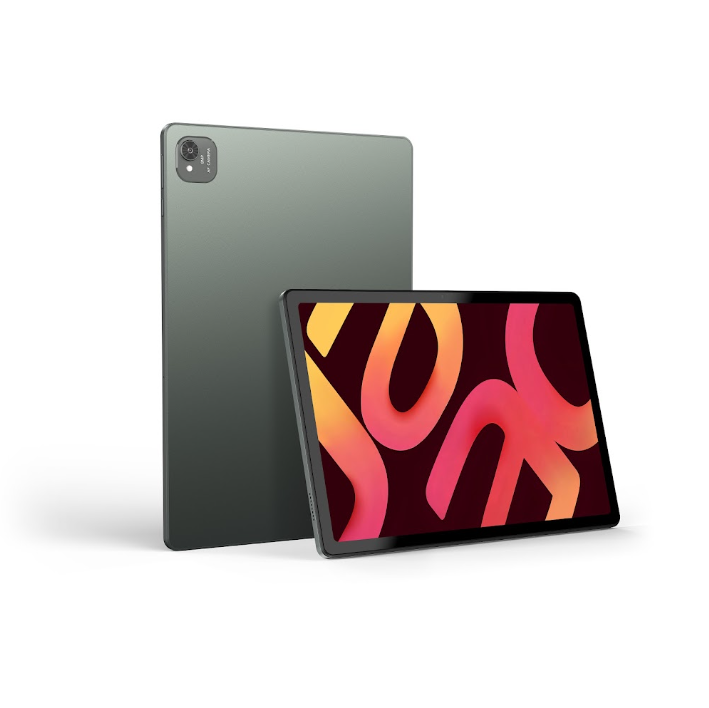
Acer is widening its mobile hardware portfolio with three new Android tablets alongside separate augmented reality and AI glasses, giving the company a broader presence in a category increasingly shaped by larger displays, accessories and wearable computing.
The new tablet range consists of the Iconia Duo S14, Iconia Duo S12 and the more affordable Iconia Duo D12. All three adopt a 3:2 display ratio, a format that provides more vertical space than the 16:10 screens commonly found on Android tablets. Acer is positioning the change around both entertainment and productivity, although its usefulness will depend heavily on the applications involved.
At the top of the range, the Iconia Duo S14 has a 14.2-inch OLED display with a 2,880 x 1,840 resolution, 120Hz refresh rate and claimed 100% DCI-P3 colour coverage. It runs Android 16 on MediaTek’s Dimensity 8300 platform and includes Wi-Fi 6E, four speakers and a fingerprint reader built into the power button.
Connectivity is unusually important here. Acer has equipped the S14 with DisplayPort input and output alongside two USB-C connections, allowing the tablet to double as a portable external display or connect to a larger screen. Cameras include a 13-megapixel main sensor and 5-megapixel macro camera.
The smaller Iconia Duo S12 keeps the 2.8K OLED approach but reduces the display to 12.2 inches. It offers up to 600 nits of brightness, nano-texture glass intended to reduce reflections and fingerprints, and an aluminium-alloy body. Performance steps down to a MediaTek Dimensity 7400, again paired with Android 16.
Acer’s Iconia Duo D12 targets the lower end of the range. Its 12.2-inch, 3:2 display uses a 2,400 x 1,600 resolution and 90Hz refresh rate, while processing comes from the older MediaTek Helio G99 with 8GB of RAM. All three tablets support microSD cards of up to 1TB, while Acer quotes battery life of up to 10 hours depending on configuration and usage. An active stylus, magnetic kickstand and keyboard are offered as optional accessories.
The more unusual additions are Acer’s two sets of glasses. The AR Vision GR0 connects by cable to compatible Android, iOS and Windows devices and uses dual Full HD micro-OLED displays. Acer says the resulting virtual image is comparable to viewing a 172-inch display from six metres away. The 69-gram glasses can display 2D and 3D content and include integrated speakers.
The GI0 takes a different approach. Rather than placing a display in front of the wearer, Acer’s AI glasses connect wirelessly to a phone through the AspireSync app and use Google Gemini for voice-based assistance. Features include image analysis, translation, voice recording and hands-free photo and video capture through an integrated camera. Android and iOS devices are supported.
Acer has not provided pricing or regional availability details with the announcement, which makes it difficult to judge how competitive the hardware will be. The specifications nevertheless show Acer exploring two increasingly crowded areas at once: Android tablets designed to behave more like portable workstations, and smart glasses attempting to move AI interactions away from the phone screen.