
There is a strange problem with modern electric cars: the better they get, the more similar they start to feel.
Most are brutally quick, eerily quiet and loaded with technology. Huge screens, panoramic roofs, flush door handles and instant torque have become so common that even very good EVs can blur together after a while.
That is why the XPENG G9 AWD Performance stood out to me.
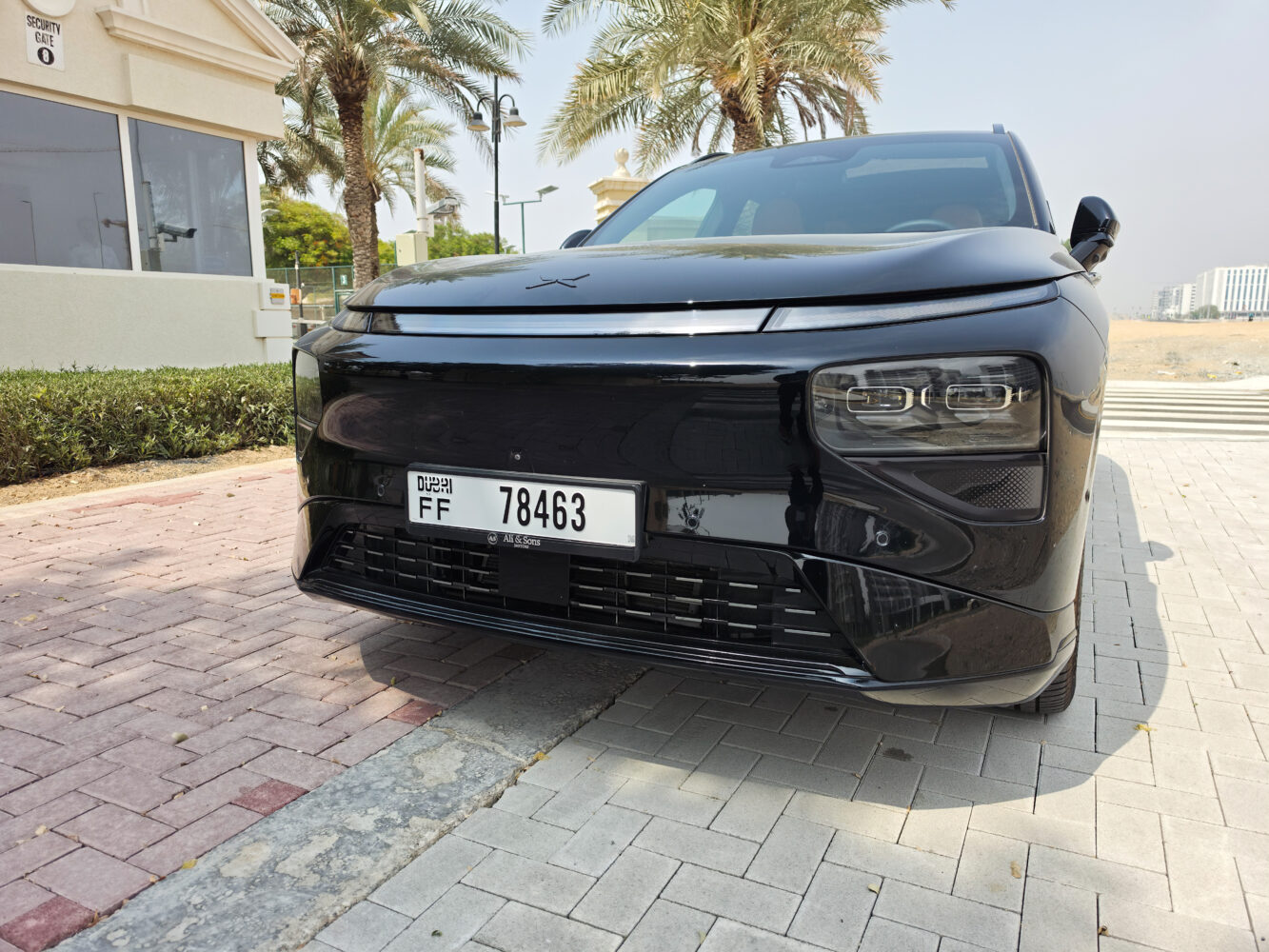
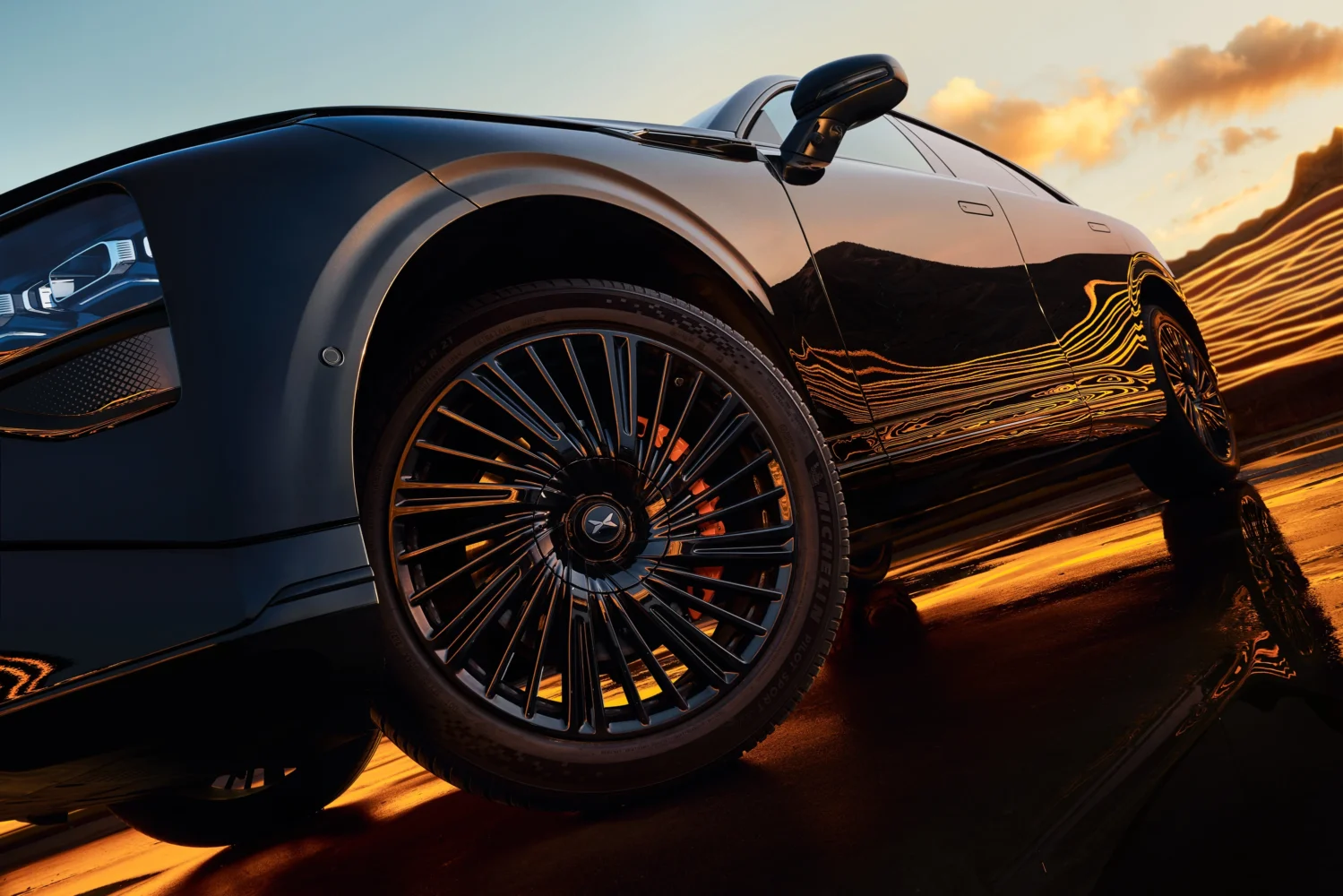
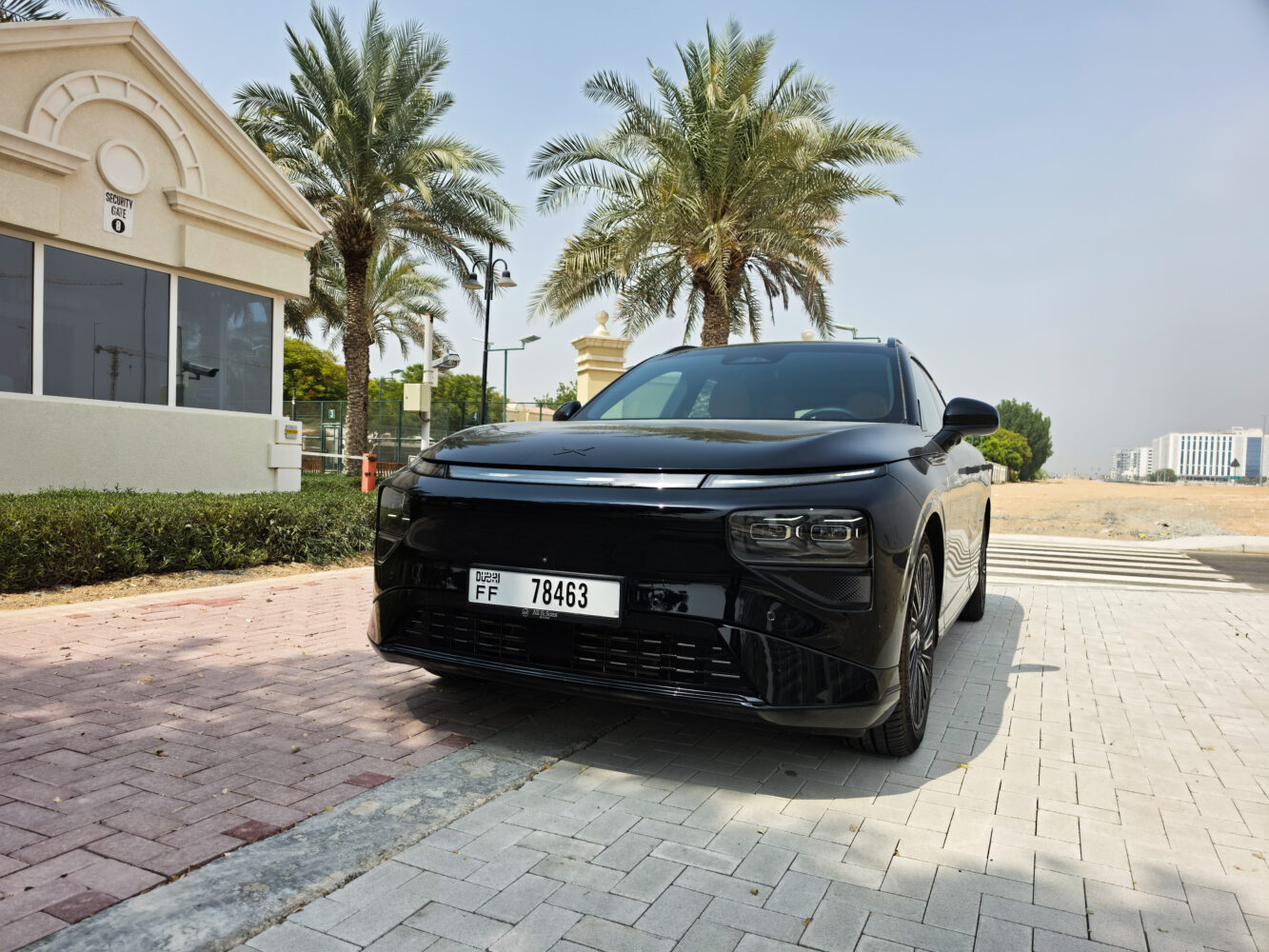
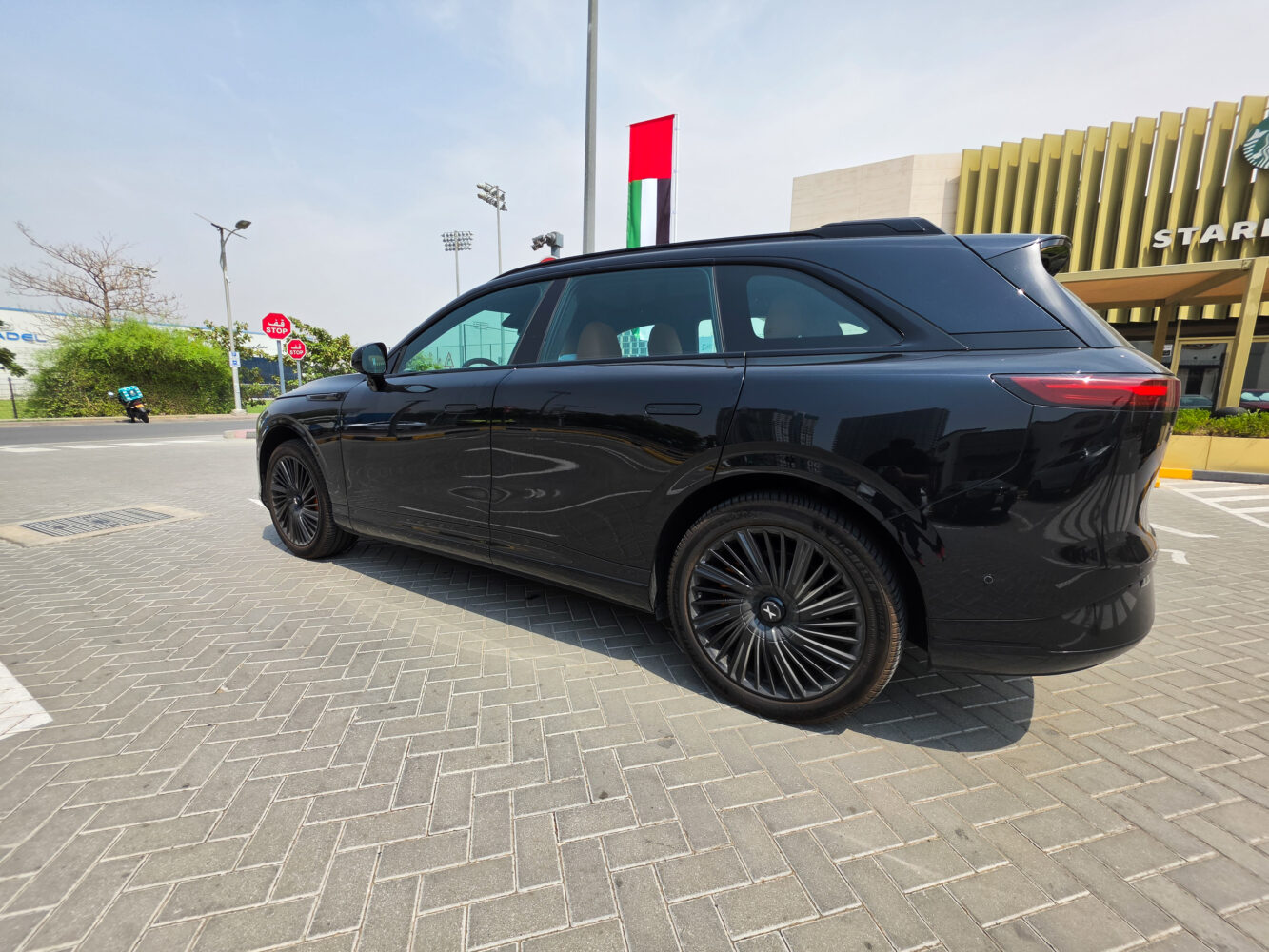
I spent a weekend with the car, finished in Midnight Black, and while it uses many of the same ingredients as other premium EVs, the execution feels more considered. This is XPENG’s flagship electric SUV, and the Performance version brings together serious power, strong comfort, ambitious charging technology and an assistance suite that occasionally makes you wonder if the car wants to help a little too much.
Charging, software and comfort have always been central to the G9. The current AWD Performance takes that formula much further, using a 93.1 kWh LFP battery, an 800-volt architecture and XPENG’s 5C charging technology.
Power stands at 423 kW, or around 575 PS, with 695 Nm of torque through a dual-motor all-wheel-drive system. XPENG quotes 0 to 100 km/h in 4.2 seconds and a WLTP range of 540 km.
Effortless Performance
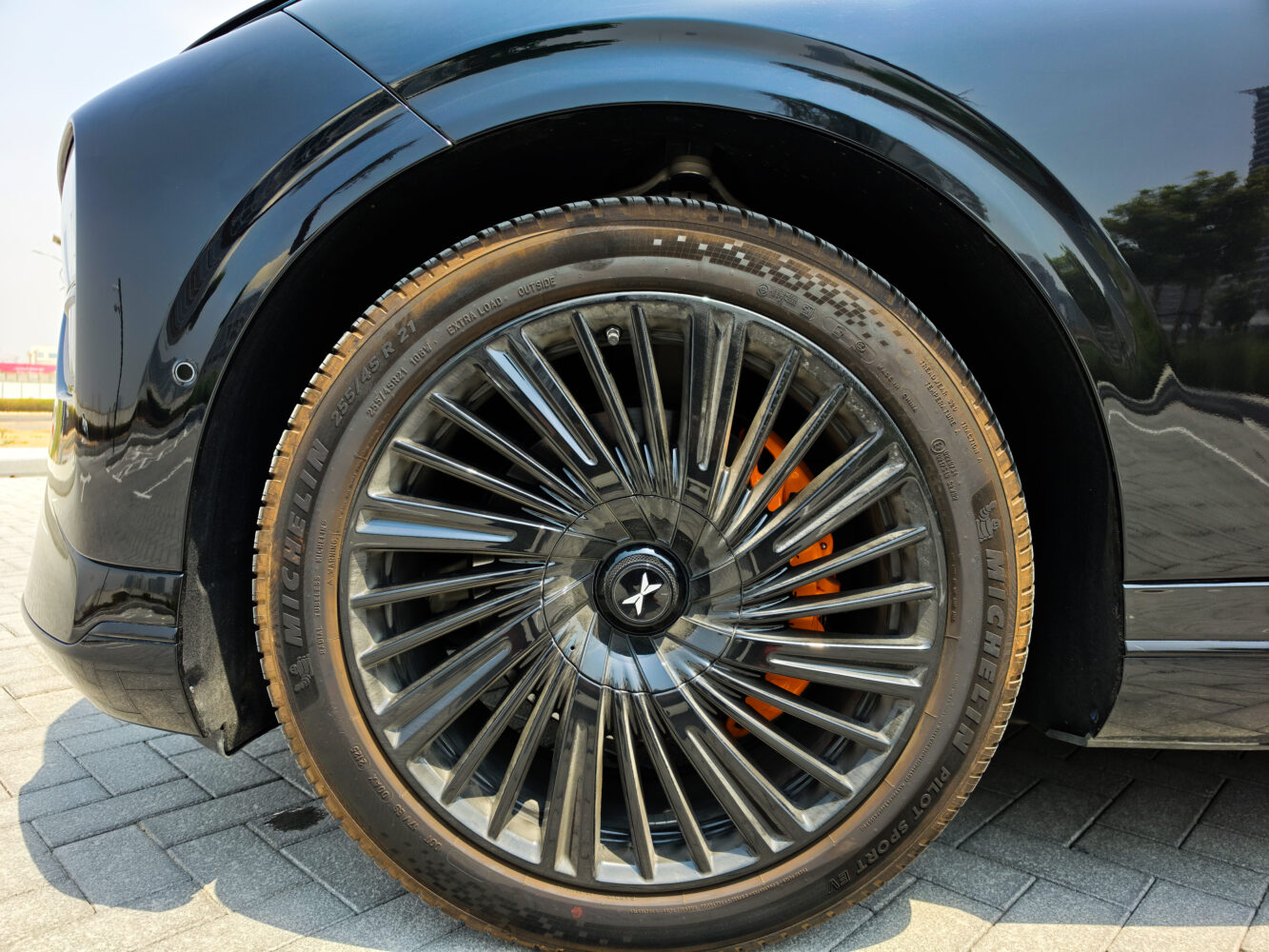
Put your foot down and the G9 moves with the sort of force we have almost become used to in powerful EVs. There is no gearbox hesitation and no build-up. Torque arrives immediately, and in a vehicle this large, the acceleration initially feels slightly absurd. Yet straight-line speed never felt like the defining characteristic.
The G9 has far more power than you realistically need, but after the novelty wears off, that performance becomes useful rather than theatrical. Overtaking is effortless and there always feels like another reserve of acceleration waiting underneath your right foot.
The Performance also gets adaptive dual-chamber air suspension, with a double-wishbone front setup and multilink rear suspension. This is arguably more important to the character of the car than its power figure.
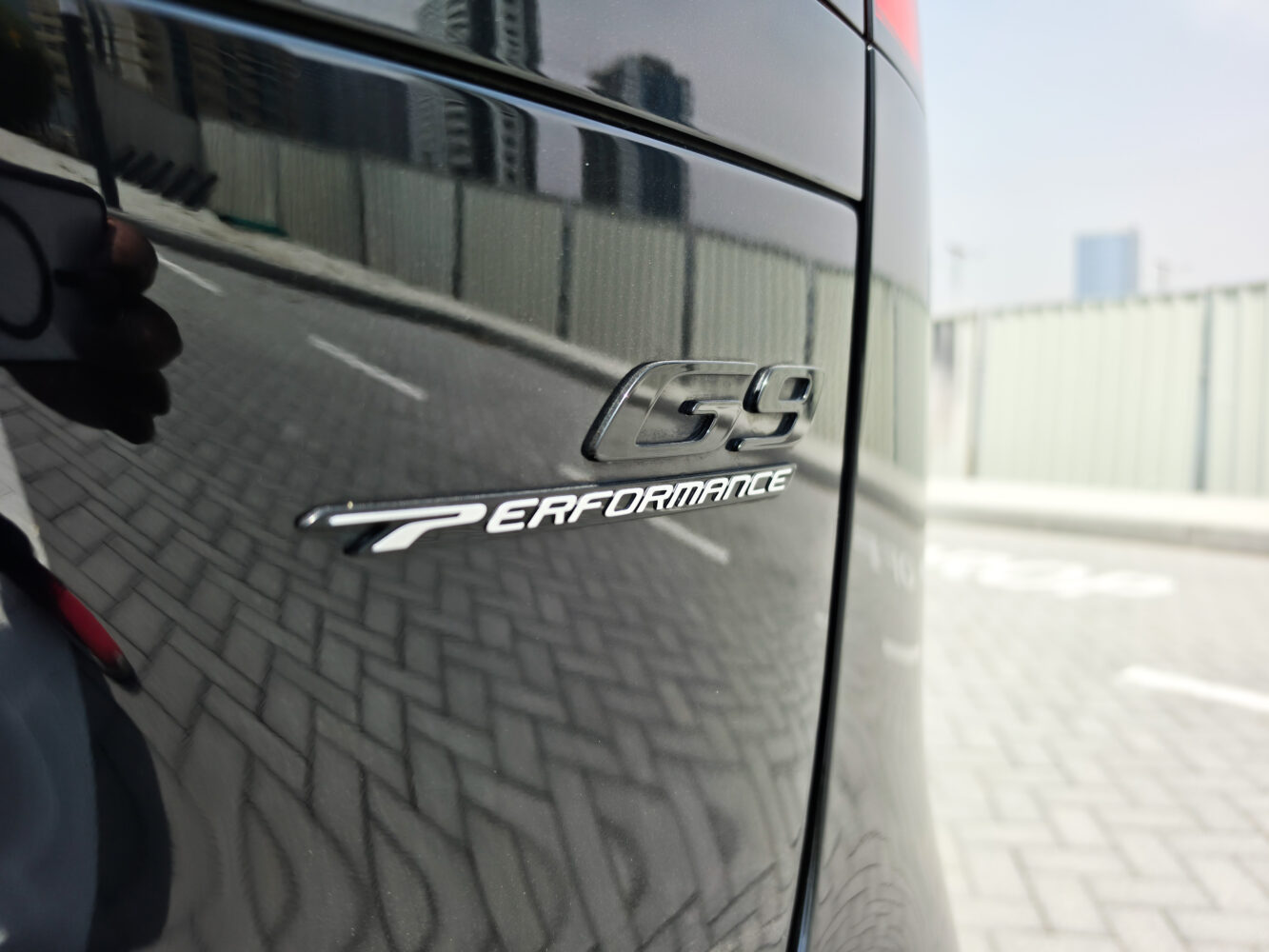
The suspension gives the G9 the plush ride you expect from a large luxury SUV while controlling its considerable weight surprisingly well. You still feel the mass when changing direction quickly, but XPENG has not compromised comfort in an attempt to make the G9 feel artificially sporty.
The result is closer to a fast luxury cruiser, which suits the car perfectly.
The Bigger Performance Number: 525 kW
The G9’s most impressive performance figure may actually be its charging speed.
XPENG claims a maximum DC rate of 525 kW, allowing the battery to charge from 10 to 80 percent in around 12 minutes under ideal conditions. This is where the 800-volt architecture and 5C battery become important. Together they allow the car to accept an enormous amount of energy in a very short period. Combined with a 540 km WLTP range, it makes the G9 a very convincing long-distance EV on paper.
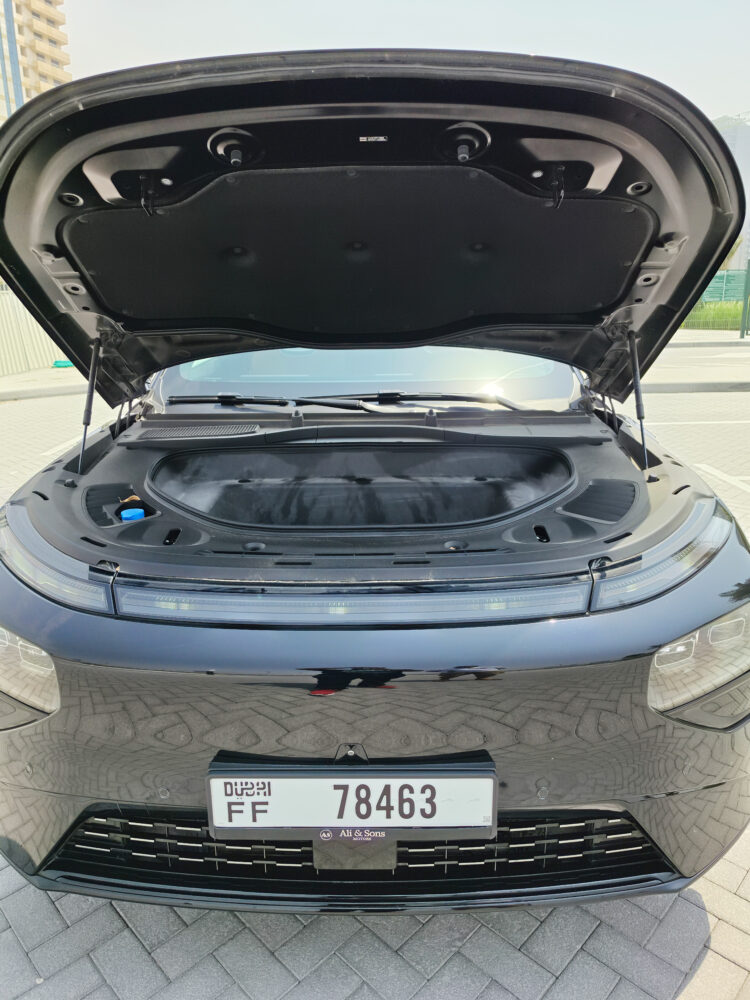
The obvious issue in the UAE is infrastructure. The G9 can accept 525 kW, but most public chargers cannot supply anything close to that. Plug it into a 150 kW charger and you still have a 150 kW charging session. That leaves the G9 ahead of the network around it, but I would rather have a car waiting for infrastructure to catch up than one whose charging hardware already feels close to its limit.
XPENG has also switched the latest G9 to LFP battery chemistry. LFP offers advantages in durability and thermal stability, which is particularly interesting in the UAE where extreme temperatures, air-conditioning demand and repeated fast charging create very different conditions. The G9 also uses XPENG’s X-HP intelligent thermal-management system. Ideally, it is the kind of technology you never have to think about.
Inside the G9
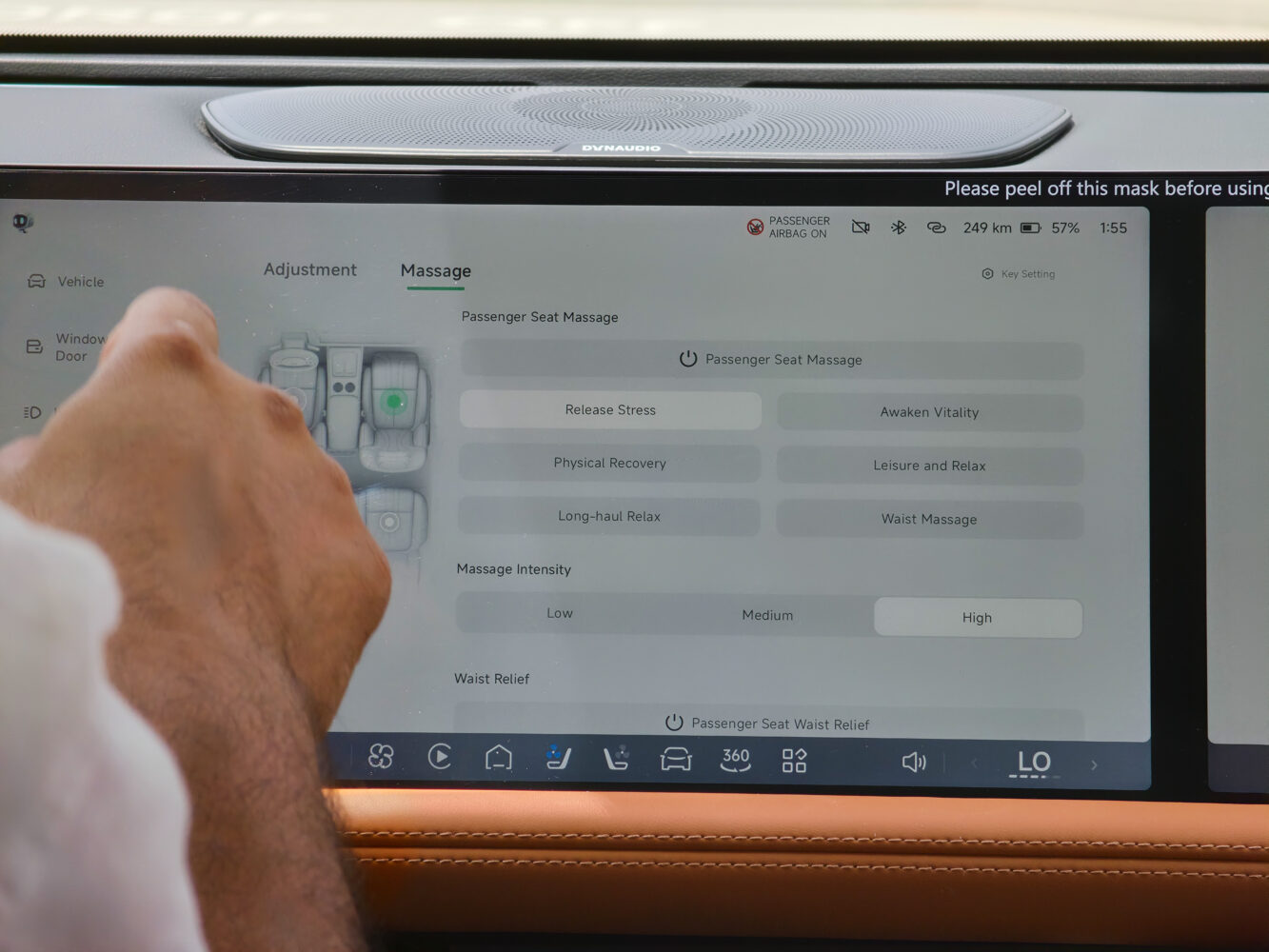
The cabin is where the G9 starts feeling properly flagship.
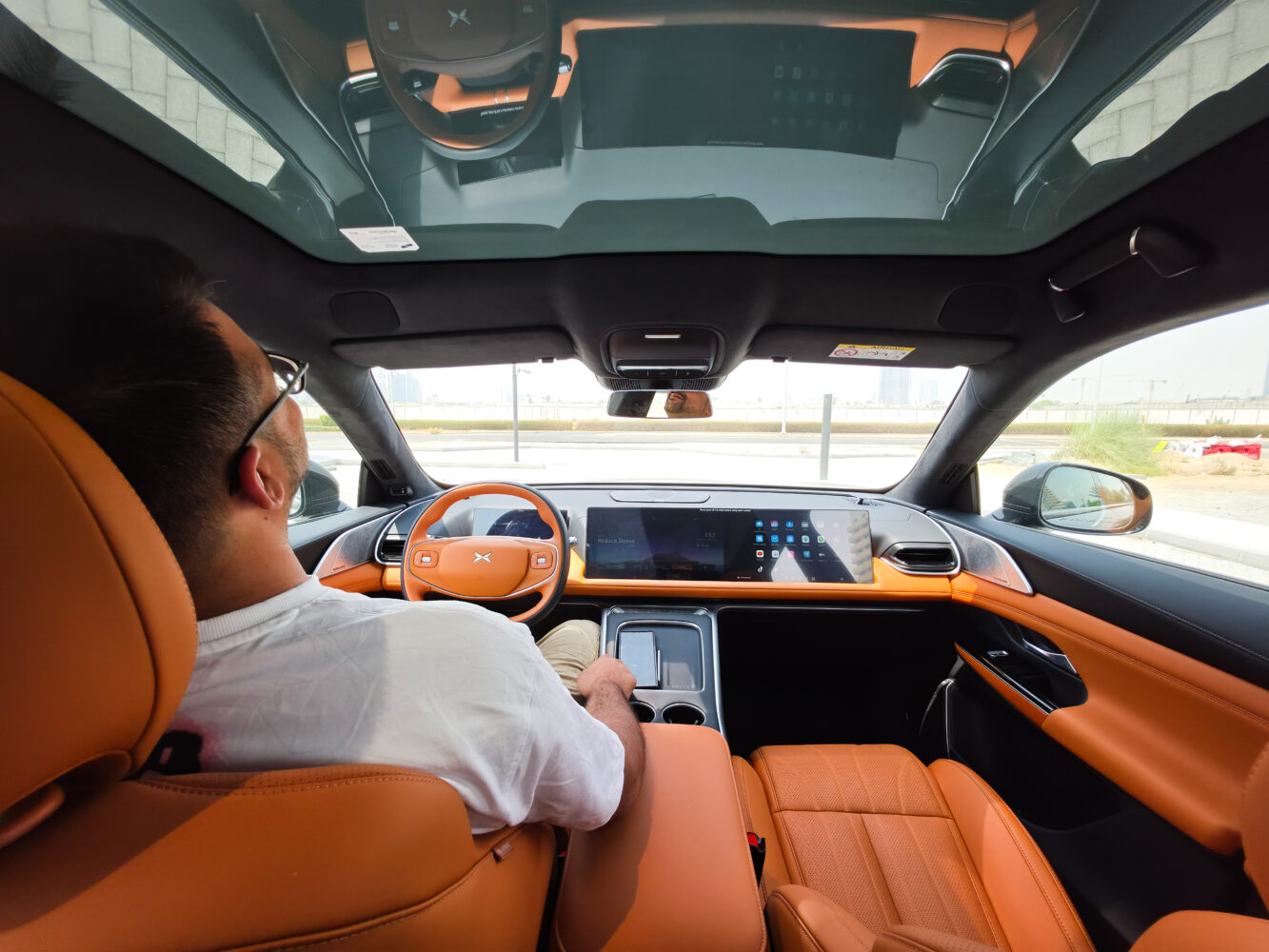
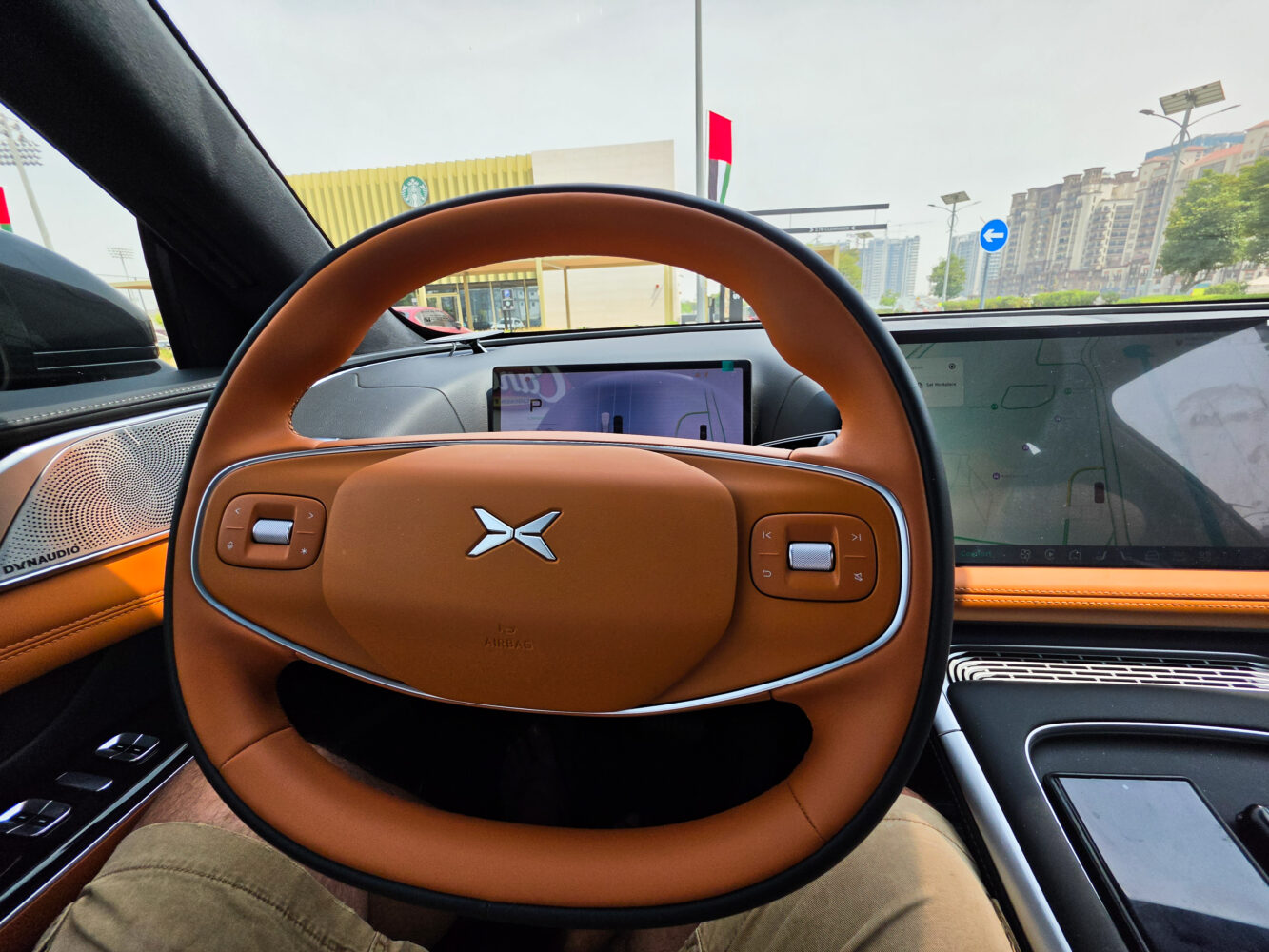
There is a 10.25-inch driver display, while two 14.96-inch screens dominate the centre and passenger side of the dashboard. Screens themselves are no longer exciting, but the dedicated passenger display is genuinely useful because it allows someone to interact with entertainment and vehicle functions without constantly reaching across to the central interface.
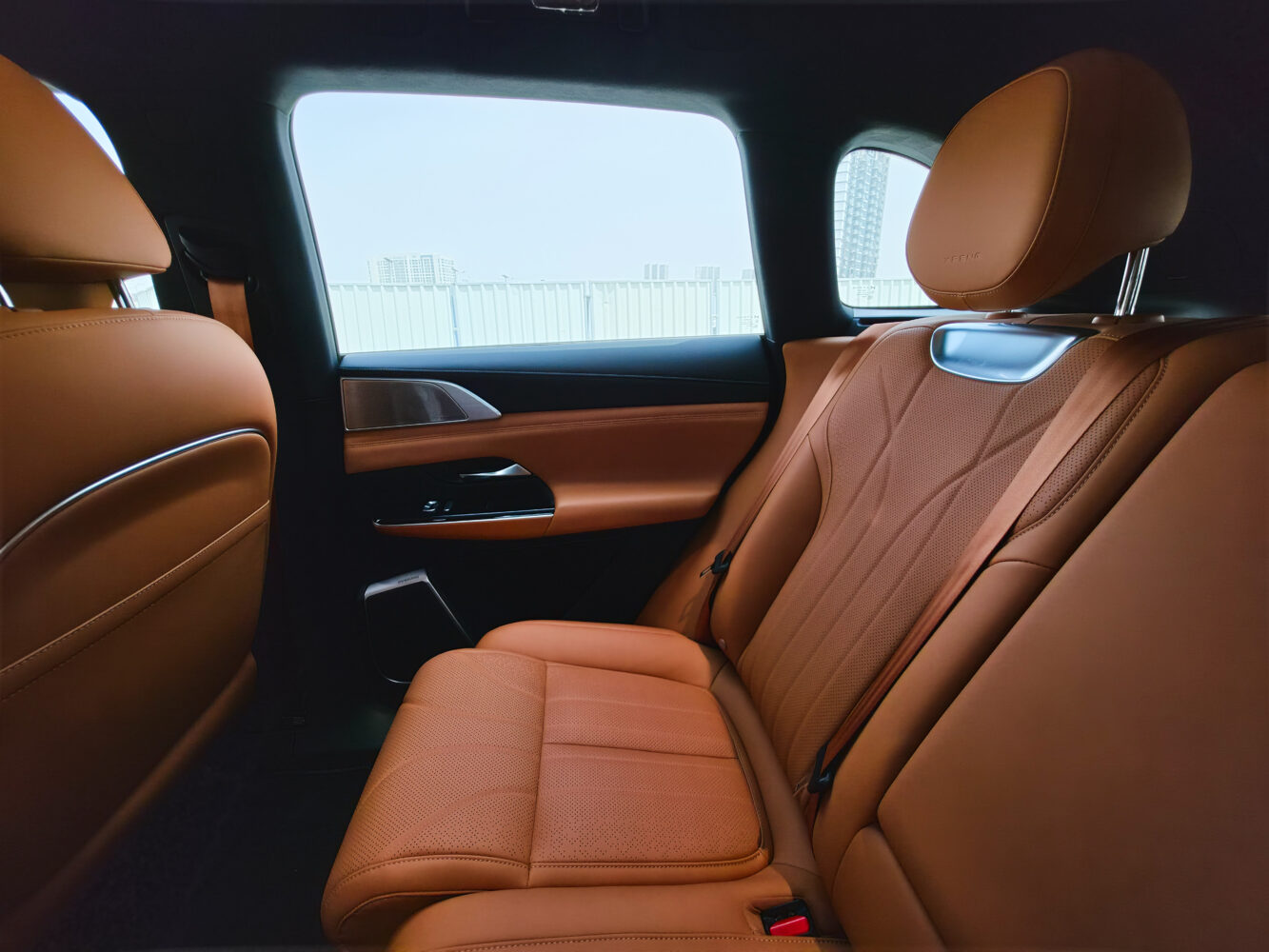
The passenger-focused approach continues with the seats. The G9 offers heating, ventilation, massage and extensive electric adjustment, while the rear seats can recline and store their positions. Comfort clearly matters here as much as technology.
The G9 measures 4,891 mm long with a 2,998 mm wheelbase, giving the second row plenty of space. Boot capacity stands at 660 litres, expanding to 1,576 litres with the rear seats folded, and V2L capability allows the battery to power external electrical equipment.
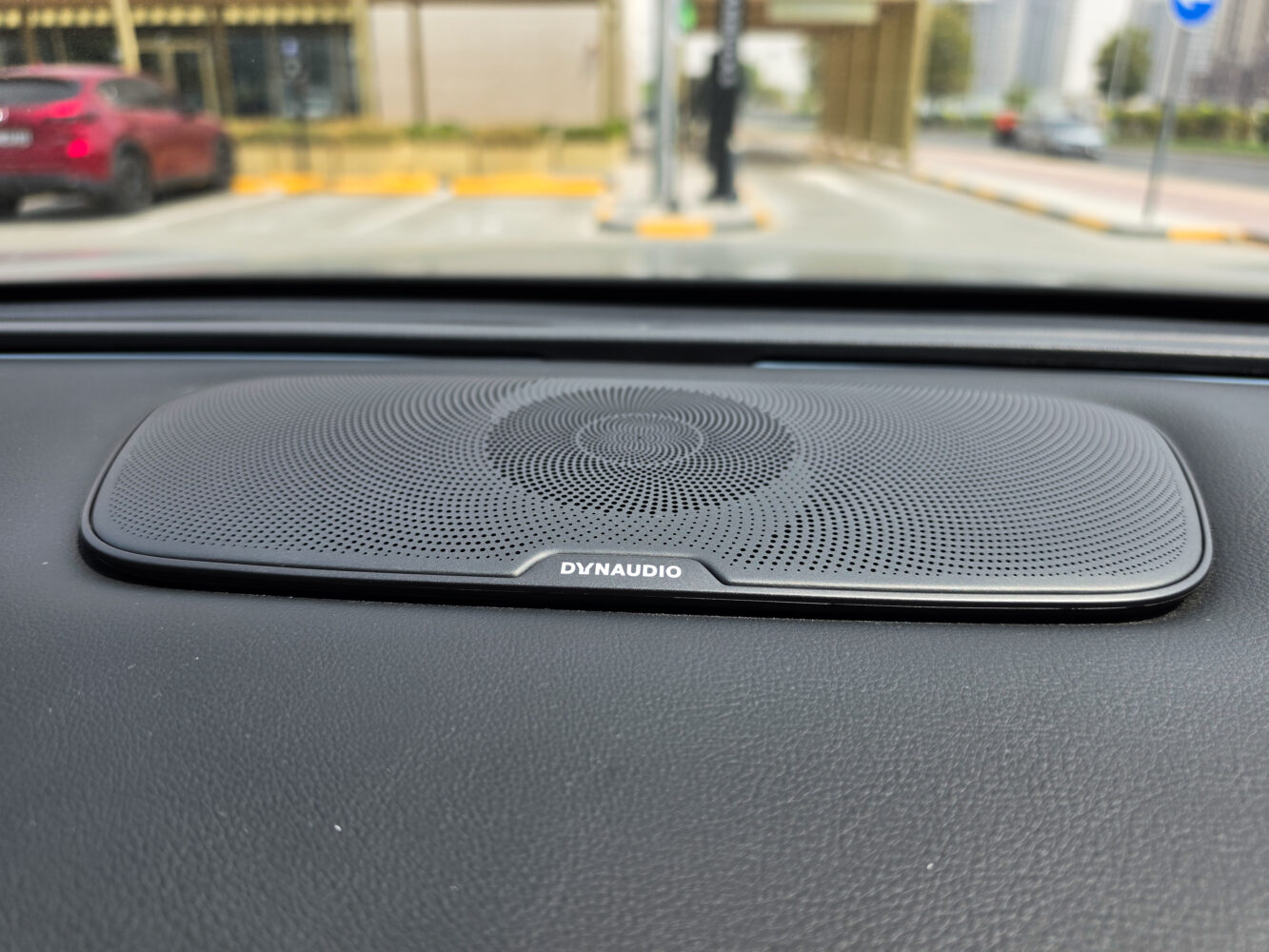
Underneath all the technology, this remains a practical large SUV.
Assistance Features
The G9 is constantly building a picture of what is happening around it.
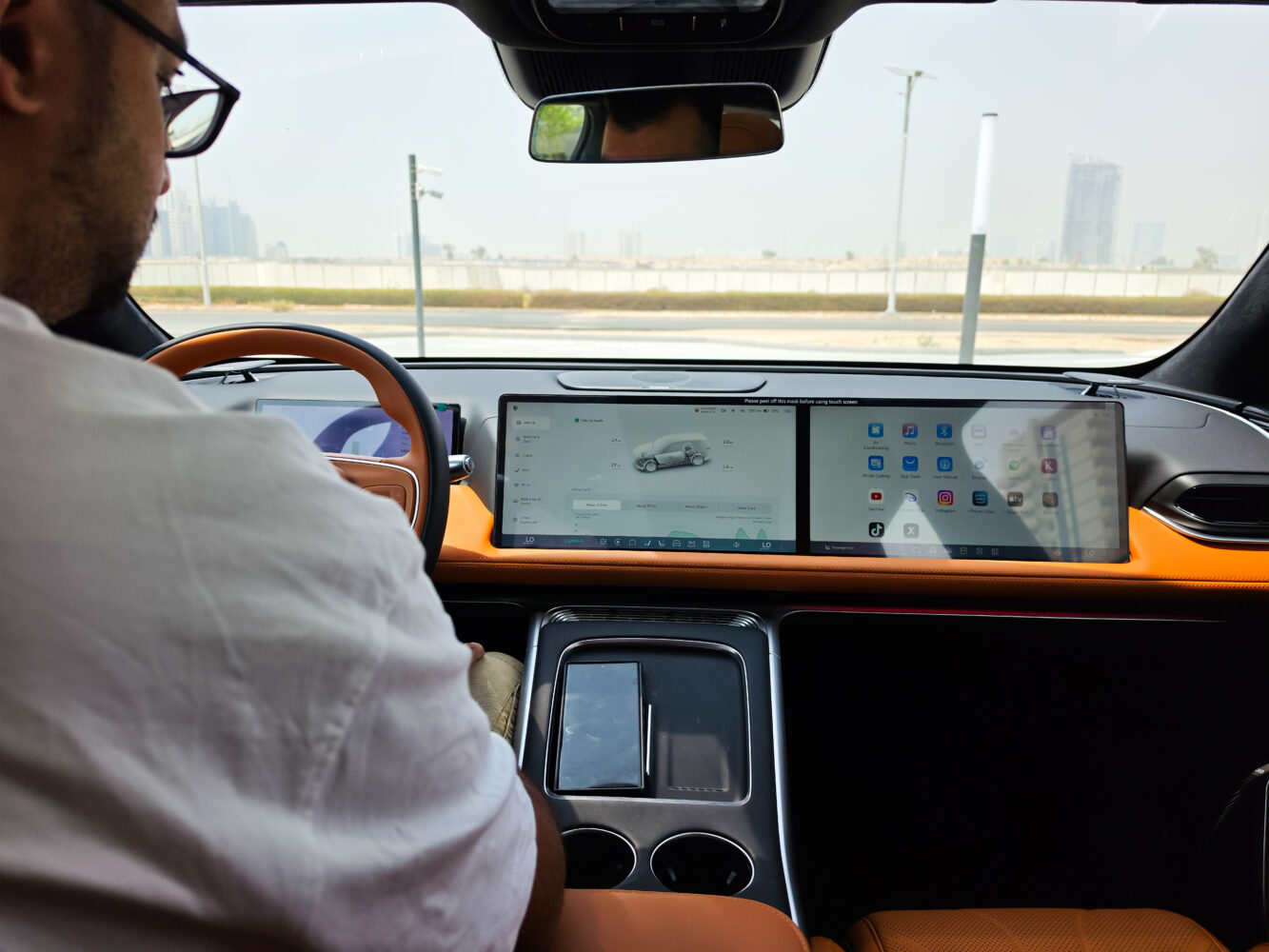
Adaptive cruise control manages the distance to traffic ahead, lane-centering assistance helps maintain road position, while blind-spot monitoring, automatic emergency braking and emergency lane-keeping operate in the background. XPENG says 14 advanced safety systems are working in real time, and for the most part they add a reassuring sense of awareness around the vehicle.
One of the most useful features is Lane Centering Control, or LCC. On the right road, it works extremely well. Combine it with adaptive cruise control and the G9 settles into motorway driving with very little effort. It maintains its lane, manages distance from the car ahead and reduces much of the repetitive work involved in a long journey.
The important caveat is that LCC depends heavily on how predictable the road is. Give it clearly marked lanes, consistent speed limits and a relatively straightforward motorway, and it can be genuinely relaxing. The problem is that UAE roads do not always offer that kind of environment.
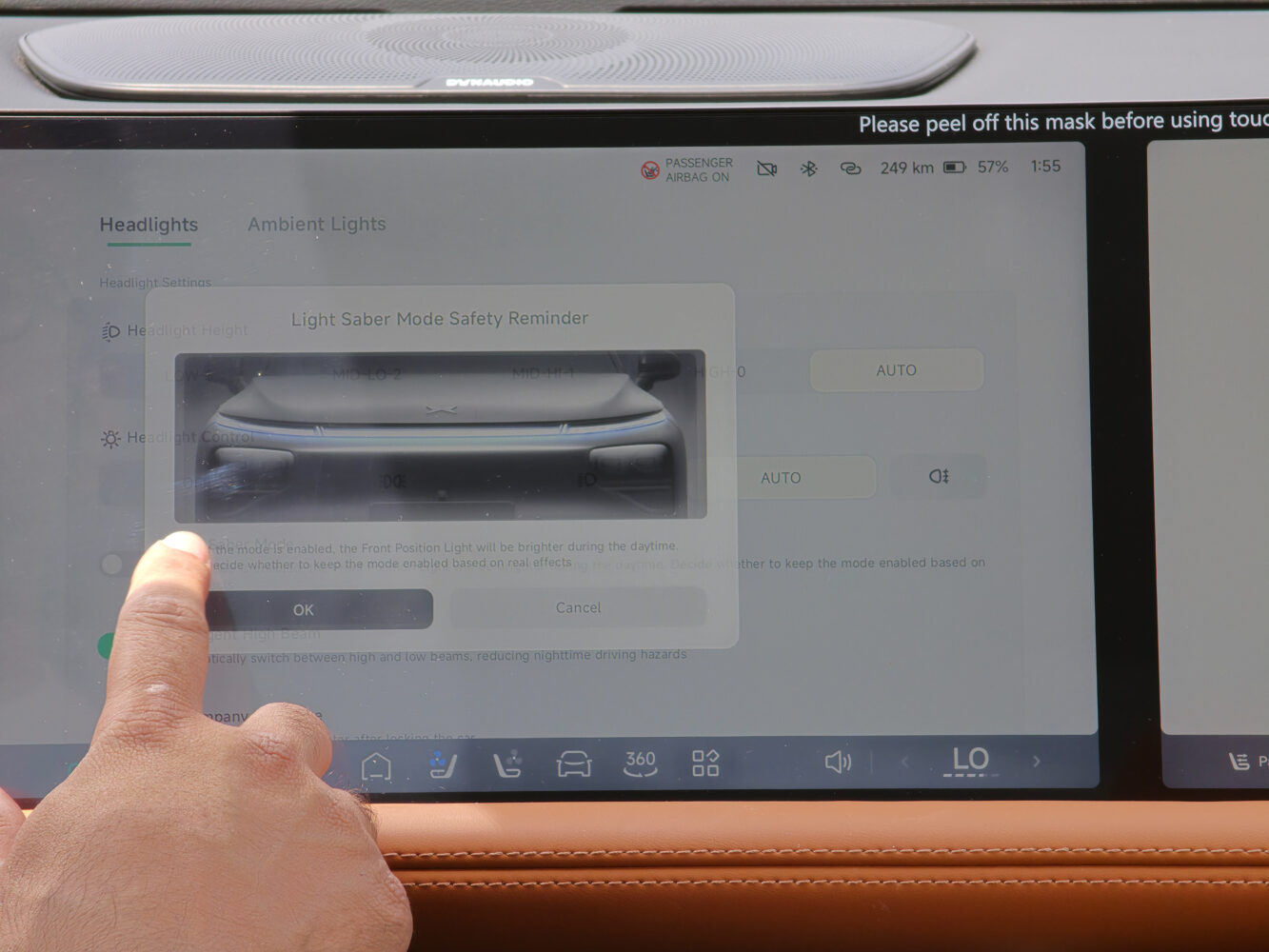
Lane markings can change around construction, roads can split or merge quickly, temporary layouts can appear, and speed limits can change several times over a relatively short distance. Add drivers making late lane changes for exits and the system suddenly has much more information to interpret. That is where I found myself relying on LCC less.
It is not necessarily that the system stops working. The road simply starts asking it to make more assumptions. A human driver familiar with UAE roads can look ahead and anticipate that several lanes are about to merge or that traffic is about to move sharply across for an exit.
For that reason, LCC makes much more sense on longer, clearer stretches of motorway where lane markings and speed limits remain consistent. In complicated interchanges or temporary road layouts, I preferred taking full control and allowing the G9’s other assistance systems to work quietly in the background.
Does It Help Too Much?
The broader assistance package can occasionally feel slightly overprotective.
The G9 monitors lane position, surrounding traffic, speed limits and driver engagement. Individually, these features make sense, but together they can sometimes become a little too vocal.
Speed-limit assistance is a good example. Limits can change frequently when moving between highways and urban roads, and the information available to the car does not always seem perfectly aligned with what is happening around you. The same applies to lane warnings. An alert that catches something you genuinely missed is invaluable. An alert telling you something you have already seen quickly becomes noise.
The G9 occasionally sits around that boundary. I never questioned the value of the underlying safety technology, but I occasionally questioned how loudly it needed to announce itself. That feels more like an issue of calibration than capability.
Verdict
The XPENG G9 AWD Performance currently retails at AED 232,000, while the RWD Standard Range sits at AED 192,500 and the RWD Long Range at AED 212,500.
For me, it comes back to how XPENG uses its technology.
There are faster electric SUVs and there are EVs with longer theoretical range, but the G9 AWD Performance brings its hardware together in a way that feels coherent. The air suspension gives the Performance version a reason to exist beyond horsepower. The 800-volt platform and 5C battery make charging speed a genuine part of the engineering.
The cabin gives passengers real attention, while XPILOT shows both how useful modern driver assistance can be and how difficult it is to decide when that assistance becomes too involved. That is where the G9 develops its own identity.
What stayed with me most was not the acceleration. It was the ride quality, the amount of space, the effortless performance and the charging hardware that feels prepared for infrastructure that has not fully arrived yet.
XPILOT is perhaps the most revealing part of the experience. When the assistance systems quietly support what you are already doing, the G9 feels genuinely intelligent. When they become too eager, you become aware of just how much the car is watching.
Finding that balance will become increasingly important as cars become more capable, and XPENG is already very close. When almost every EV is quick and packed with technology, specifications alone cannot give a car character. Execution does.
The G9 AWD Performance gets enough of those details right that once the acceleration stops being surprising and the screens stop feeling novel, there is still a very good luxury SUV underneath.