

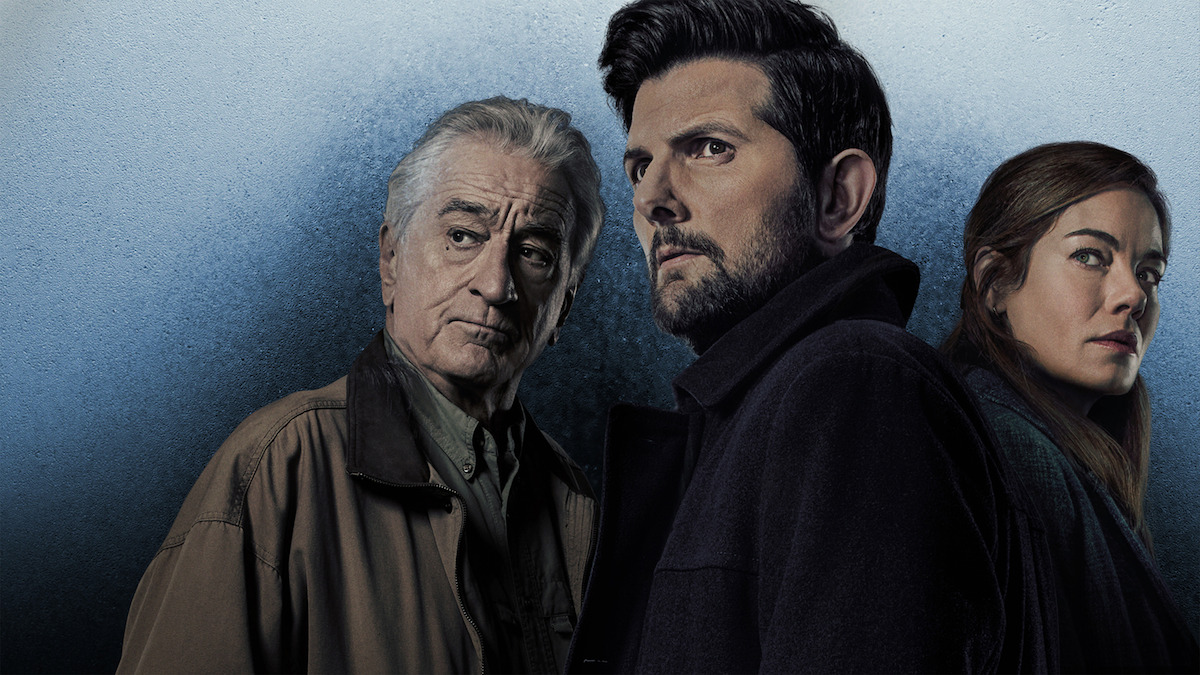
TL;DR: A strong cast, creepy atmosphere and disturbing premise keep The Whisper Man watchable, but predictable revelations, messy plotting and underdeveloped family drama stop Netflix’s thriller from becoming truly haunting.
Netflix’s The Whisper Man arrives with the sort of ingredients that should make turning off the lights afterward feel like a terrible life choice. Missing children, buried family trauma, an infamous killer, a creepy rhyme and a retired detective forced to confront a case that never really released its grip — that is premium nightmare fuel on paper. Add Robert De Niro, Adam Scott and Michelle Monaghan to the equation, and there is enough talent here to make any thriller fan immediately curious.
Unfortunately, The Whisper Man is much better at assembling disturbing ideas than turning them into a genuinely disturbing movie. Director James Ashcroft gives the material an appropriately sinister atmosphere, and the film moves quickly enough to remain watchable, but the screenplay keeps throwing new complications into a mystery whose emotional foundations desperately need more attention. What should feel like a suffocating descent into generational trauma instead becomes a busy thriller constantly searching for its next ominous thing.
The Whisper Man builds its horror around a damaged family
Adapted from Alex North’s novel, The Whisper Man centres on crime novelist Tom Kennedy (Adam Scott), a widower trying to raise his son Jake (Acston Luca Porto) while carrying a complicated relationship with his own father. That father happens to be Pete Willis (Robert De Niro), a retired detective whose past is tied to a horrifying series of child abductions and murders. When Jake disappears under circumstances resembling those old crimes, three generations of family pain suddenly collide with a nightmare everyone thought had been contained.
That setup gives the movie something more interesting to explore than simply catching a monster. Tom is dealing with fatherhood while his relationship with Pete carries the scars of abandonment, and Pete himself remains psychologically connected to the case that helped destroy his family. Detective Amanda Beck (Michelle Monaghan) becomes involved in the new investigation, pulling the past and present together as the search for Jake intensifies. There is an entire movie hiding inside that father-son dynamic, and arguably a stronger one than the mystery surrounding it.
The problem is that The Whisper Man never gives those relationships enough room to become as powerful as they should. Rather than digging deeper into what these men have inherited, lost and failed to communicate, the movie repeatedly diverts its attention toward additional characters, clues and narrative threads. It is like opening a skill tree in an RPG and spending one point in absolutely everything instead of actually completing a useful build.
Robert De Niro and Adam Scott deserved a sharper emotional mystery
The casting provides The Whisper Man with an immediate advantage. Adam Scott is well suited to characters whose outward normality masks considerable emotional strain, while Robert De Niro brings decades of screen history to the role of an older man haunted by choices that cannot simply be undone. Their relationship gives the story weight because this is not merely about solving a kidnapping; it is about whether a broken connection between father and son can survive being dragged back through its darkest history.
De Niro also brings authority to Pete without needing the film to constantly announce it. The character’s connection to the original investigation makes him essential to the story, but it is the psychological residue of that case that should make him fascinating. Scott, meanwhile, has to balance Tom’s fear as a parent with the unresolved anger of being someone’s son. Michelle Monaghan adds another capable presence as Beck, although the mechanics that bring characters together can occasionally feel more dictated by screenplay necessity than organic behaviour.
There are flashes where that heavyweight cast makes the material feel richer than it actually is. Unfortunately, performances can only compensate so much when the characters themselves are not being explored deeply enough. The emotional core is right there, practically flashing like a legendary loot drop, yet the screenplay keeps wandering toward side quests.
The mystery reveals its hand too early
A thriller built around a figure called the Whisper Man needs mystery to function like oxygen. The audience should constantly be reassessing what it knows, worrying about what it does not and feeling the uncomfortable possibility that seemingly disconnected details might suddenly snap together. The Whisper Man occasionally generates that tension, particularly when Ashcroft leans into unsettling imagery and recurring sounds rather than straightforward exposition.
But the larger mystery is easier to read than the film seems to realise. One of its most important revelations becomes apparent early enough that suspense gradually turns into waiting for the screenplay to officially confirm what viewers may already suspect. Foreshadowing is one thing; accidentally letting the audience get three checkpoints ahead of the protagonist is another.
The movie attempts to compensate with red herrings, detours and further complications, but these additions do not necessarily make the mystery smarter. Some coincidences become difficult to accept, while certain character decisions appear designed primarily to get everyone where the plot needs them. A great thriller makes its twists feel shocking in the moment and inevitable in retrospect. Here, some developments instead invite you to mentally inspect the screenplay for missing patches.
James Ashcroft finds creepiness the screenplay cannot sustain
There is still effective horror filmmaking scattered throughout The Whisper Man. Ashcroft understands that childhood imagery becomes particularly uncomfortable when something predatory corrupts it, and the film’s use of sound contributes considerably to its unease. The concept itself remains deeply disturbing because it attacks one of the most primal fears imaginable: a parent being unable to protect their child.
That is why the movie’s inability to fully exploit its premise is so frustrating. The material contains echoes of serial-killer procedurals, supernatural-flavoured psychological horror and child-abduction thrillers, with enough familiar genre DNA that seasoned horror viewers will recognise the territory. Familiarity is not automatically a weakness — horror has been remixing nightmares since someone first realised basements were apparently mandatory in creepy houses — but familiar ingredients need either exceptional execution or an unexpected perspective.
The Whisper Man rarely finds that distinctive identity. It often feels more comfortable deploying established thriller machinery than challenging it, and several late complications strain credibility instead of deepening the horror. The pacing helps enormously because the movie keeps moving, but momentum should not be confused with escalation. The film gets busier as it progresses without always becoming more frightening or emotionally involving.
Verdict
The Whisper Man has a killer premise, a seriously impressive cast and enough atmospheric craft to make it an easy Netflix watch for viewers craving a dark serial-killer thriller. Robert De Niro and Adam Scott give the movie an emotional foundation worth investing in, while James Ashcroft finds genuinely eerie moments within Alex North’s disturbing setup. The tragedy is that the movie never explores its damaged family relationships with the depth they deserve.
Instead, an overly complicated plot, conspicuous conveniences and a mystery that becomes readable too early prevent the film from delivering the knockout its setup promises. Horror newcomers or viewers simply looking for a brisk, grim weekend thriller may find enough here to enjoy, particularly if familiar genre conventions are part of the appeal. Anyone expecting an intricate mystery or something psychologically devastating, however, may find themselves several steps ahead of the movie. The Whisper Man can whisper effectively enough; it just never manages the scream.