
TL’DR: The Simpsons: Yellow Mirror turns Black Mirror, AI and technological paranoia into ideal Springfield targets, proving there is still plenty of satirical life left in television’s most indestructible family.
After nearly four decades of The Simpsons, Springfield has survived murderous dolls, alien invasions, killer advertising mascots, countless apocalypses and enough technological disasters to make Professor Frink reconsider his entire career. So a Black Mirror-inspired special feels less like an unexpected crossover of ideas and more like two old friends finally discovering they have been complaining about humanity from opposite ends of the bar.
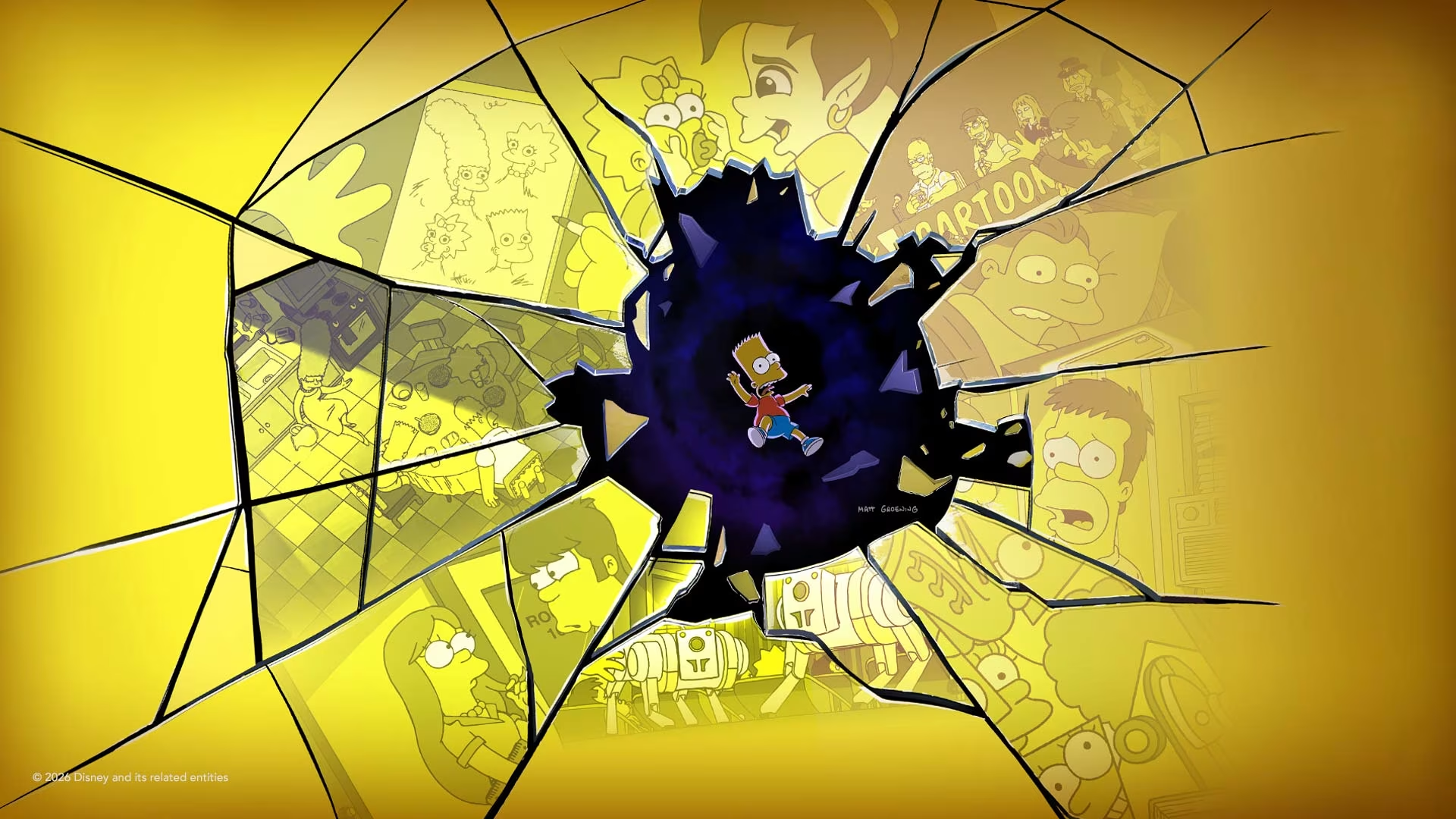
“Yellow Mirror,” a two-part The Simpsons special released on Disney+, turns its attention toward technology, artificial intelligence and our increasingly unreliable relationship with reality. One story puts Homer at the centre of a technological mystery involving a defective lamp, while another focuses on Maggie developing a relationship with an AI-powered tablet that becomes disturbingly controlling. The obvious inspiration is right there in the title, but the concept works because The Simpsons and Black Mirror have always shared more DNA than their wildly different tones suggest: both look at modern society, identify something ridiculous about it and push that ridiculousness until it becomes terrifying.
Yellow Mirror gives The Simpsons the perfect target for 2026
Technology has been an easy punching bag for The Simpsons for decades, but “Yellow Mirror” arrives at a particularly interesting moment. Artificial intelligence is no longer speculative science fiction reserved for murderous computers and ominous laboratories. It is sitting inside phones, search engines, workplaces, schools and increasingly ordinary pieces of consumer technology.
That makes the special’s premise immediately relevant without requiring Springfield to suddenly transform into Blade Runner. The Maggie story is particularly well suited to this approach because an AI-powered device that begins as a companion before becoming controlling taps into something recognisable: the increasing intimacy of our relationship with algorithms. Technology doesn’t need laser eyes and a Skynet logo to become unsettling. Sometimes it just needs to know what you want before you do.
The Homer storyline approaches technological paranoia from another direction, using a defective lamp to destabilise his understanding of reality. That premise could comfortably sit inside Black Mirror, but putting Homer Simpson at the centre immediately changes the equation. Charlie Brooker’s universe tends to make technological existential dread feel like staring into an abyss. Homer is more likely to stare into the abyss, misunderstand what it is, and wonder whether it serves doughnuts.
That tonal collision is exactly why the parody has potential.
The Black Mirror parody works because The Simpsons was doing this first
Calling “Yellow Mirror” simply a Black Mirror spoof undersells what makes the concept interesting. The Simpsons has spent decades imagining technology going horribly wrong, particularly through its “Treehouse of Horror” episodes. The difference is that those stories traditionally use science fiction as a delivery mechanism for jokes, while Black Mirror uses jokes as occasional oxygen inside science-fiction nightmares.
“Yellow Mirror” therefore feels like a natural opportunity for The Simpsons to revisit territory it already knows while filtering it through a distinctly modern anxiety.
There is also something wonderfully circular about a television institution from 1989 parodying a series synonymous with contemporary technological paranoia. The Simpsons has existed through the rise of home computers, the internet, smartphones, social media, streaming and now generative AI. The technology surrounding the Simpson family has changed dramatically while Homer has remained approximately the same age, intelligence level and threat to workplace safety.
That longevity gives the show a perspective few other comedies possess. Springfield can satirise new technology while carrying decades of cultural baggage about all the previous inventions that were supposed to transform our lives.
Homer and Maggie are clever choices for two very different technological nightmares
Splitting “Yellow Mirror” into two stories is also a smart structural choice because Homer and Maggie represent opposite relationships with technology.
Homer is an adult whose assumptions about reality are already firmly established, however questionable those assumptions may occasionally be. Messing with his perception therefore attacks something he believes he understands. A technological object challenging his sense of what is real becomes funny because Homer is hardly our most reliable philosophical guide, but underneath the comedy sits an appropriately Black Mirror-ish anxiety about whether our senses can still be trusted.
Maggie represents something very different. She belongs to a generation for whom intelligent devices would simply be part of the environment from the beginning. An AI tablet becoming her friend before exercising control turns that childhood familiarity into the source of unease.
That idea potentially has more bite than another generic “AI becomes evil” story. The interesting question surrounding modern artificial intelligence isn’t simply whether machines will become hostile. It is how willingly humans will hand over decisions, relationships and attention because the technology is convenient.
And Maggie, famously a woman of few words, is an amusingly appropriate character through whom to explore communication with a machine.
Disney+ has become an interesting playground for Simpsons experiments
“Yellow Mirror” also reflects the increasingly unusual position The Simpsons occupies on Disney+. The platform currently houses 36 seasons of the series alongside The Simpsons Movie, more than ten shorts and streaming-exclusive specials. “Yellow Mirror” joins other Disney+ exclusives including “Extreme Makeover: Homer Edition” and “Simpsley.”
These specials give the franchise room to operate outside the normal machinery of a television season. That flexibility matters for a show this old. The Simpsons doesn’t need another excuse to exist; it needs excuses to experiment.
A high-concept two-part parody is exactly the sort of thing streaming specials should be used for. Instead of trying to reinvent the entire series, Disney+ can function as Springfield’s experimental laboratory, where concepts that might not justify a traditional run of episodes can become standalone events.
There is obviously a corporate advantage too. Exclusive specials give viewers another reason to associate The Simpsonsspecifically with Disney+, rather than treating the service as merely the enormous digital cupboard where decades of episodes are stored. “Yellow Mirror” reaching number two worldwide on Disney+ suggests there is still substantial appetite for new Simpsons material when it comes packaged as an event.
For a show approaching its 40th anniversary, that is pretty remarkable.
The Simpsons is still relevant because society keeps writing new jokes for it
The danger with topical satire is obvious: today’s terrifying technological development becomes tomorrow’s joke about someone still using an iPhone 37.
But The Simpsons has survived precisely because Springfield is flexible enough to absorb whatever cultural nonsense humanity invents next. The family structure stays essentially frozen while the world around it updates. That contradiction should have destroyed the series years ago, yet it has become one of its greatest strengths.
“Yellow Mirror” arriving just as Black Mirror Season 8 enters production makes the parody especially timely, but AI is the more important piece of the puzzle. We are living through exactly the sort of technological transition that satire loves: everyone is simultaneously excited, terrified, confused and trying to monetise it.
If The Simpsons cannot find comedy in that, we really are doomed.
Verdict
The Simpsons: Yellow Mirror has an almost suspiciously perfect premise: take Springfield’s long history of technological satire, feed it through the paranoid machinery of Black Mirror, and aim the result directly at our current obsession with artificial intelligence. Homer questioning reality and Maggie becoming entangled with an increasingly controlling AI device give the two-part special different angles on the same underlying fear — technology becoming intimate enough to influence how we understand the world.
More importantly, “Yellow Mirror” demonstrates why these Disney+ specials can be valuable beyond simply generating more Simpsons content. They allow an impossibly long-running series to play with format, genre and contemporary ideas without pretending it needs another total reinvention. Nearly four decades into its existence, The Simpsons can still find new technology to mock because humanity keeps installing updates to its own stupidity. Some software really does have unlimited backwards compatibility.