
TL;DR: Michelle Keegan leads a gripping police thriller where corruption, misogyny and murder collide. The Blame occasionally races through its twists too quickly, but strong performances and constant uncertainty make it seriously bingeable.
There is something uniquely stressful about a murder investigation where the people wearing the badges might be just as suspicious as everyone being questioned. The Blame, ITV’s six-part crime thriller starring Michelle Keegan and Douglas Booth, understands that paranoia is considerably more interesting when it infects the investigators themselves. What begins with the murder of a teenage girl in Wakestead develops into a wider examination of police corruption, misogyny, loyalty and the compromises people make to survive inside broken institutions. It occasionally attacks those themes with the subtlety of a shotgun breach, but a gripping mystery and a particularly strong Keegan make this one dangerously easy to binge.
The Blame turns a murder investigation against the police
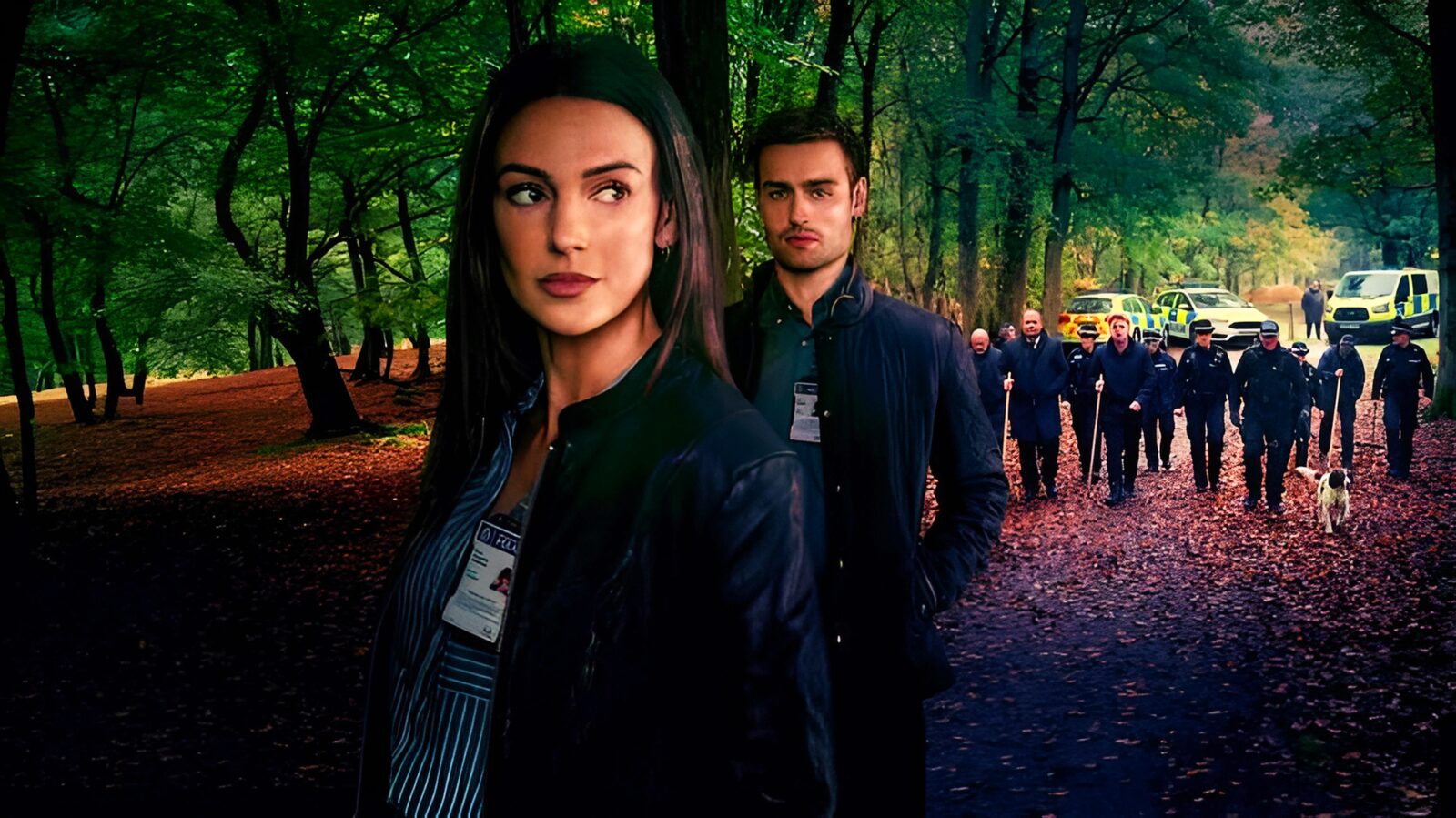
Keegan plays DI Emma Crane, who investigates the death of a local teenager alongside DI Tom Radley, played by Douglas Booth. Following the victim’s final movements should theoretically lead them towards a killer. Instead, their investigation begins pointing uncomfortably close to home as suspicion falls upon their own department and the possibility of police corruption enters the equation.
That immediately gives The Blame a stronger engine than another straightforward small-town whodunnit. Every piece of evidence potentially carries two questions: what does it reveal about the murder, and can the people investigating it actually be trusted? The series keeps redirecting suspicion as new developments emerge, creating the wonderfully unhealthy desire to watch “just one more episode” at midnight. Unfortunately, its eagerness to keep that momentum going sometimes becomes its biggest weakness.
Michelle Keegan gives Emma Crane more than standard detective baggage
Emma is particularly interesting because she occupies a position of authority without ever being allowed to forget that she is one of relatively few women working within a male-dominated environment. She can command an investigation and still find herself calculating when to confront misogyny, when to absorb it and when fighting back might cost more professionally than remaining silent. The Blame does not present institutional sexism as an abstract concept sitting somewhere in the background; it makes that pressure part of Emma’s everyday existence.
The writing can be heavy-handed when illustrating the hostility she faces, occasionally underlining a point that was already perfectly clear. Yet there is value in how the series explores the exhausting mathematics behind Emma’s responses. Silence does not necessarily mean weakness, just as confrontation does not automatically mean victory. She is constantly choosing battles while attempting to retain enough influence to change the environment around her, and that tension gives Keegan much richer material than generic tortured-detective angst.
Nathan Mensah adds another dimension to The Blame’s police culture
One of the more interesting parallels emerges through DC Lewis Brimah, played by Nathan Mensah. As the only Black man within the Wakestead police team, Lewis occupies his own complicated position within its culture. The series draws connections between his experience and Emma’s without pretending that racism and sexism are interchangeable problems.
Their developing relationship benefits from patience. Trust inside this department cannot simply be assumed because two characters occupy positions outside its dominant culture, so the gradual evolution between Emma and Lewis feels more convincing than an instant alliance would. It also expands The Blame beyond a story about one woman facing misogynistic colleagues. The institution itself becomes the subject, with different characters revealing how belonging, exclusion and power function inside it.
Michelle Keegan and Douglas Booth make a compelling detective pairing
Keegan gets some of the series’ most emotionally demanding material as the investigation forces Emma to question both professional loyalties and her own moral boundaries. Her performance works because determination and vulnerability are allowed to coexist. Emma does not need to become an invulnerable super-cop to command the screen; watching her maintain control while things become increasingly personal is considerably more interesting.
Booth’s Tom Radley provides an effective counterweight. Their chemistry carries an intriguing instability, as though their partnership has enough history to feel established but still contains emotional territory neither fully understands. Tom’s circumstances give Booth room to explore competing impulses involving loyalty, fear, affection and self-preservation. In a thriller where suspicion keeps migrating between characters, that uncertainty becomes extremely useful.
The mystery moves fast — sometimes much too fast
Speed is both The Blame’s superpower and its kryptonite. The investigation keeps evolving, information arrives quickly and the focus shifts often enough that settling comfortably on one theory is difficult. As pure binge television, that momentum is brutally effective. ITV clearly understands the dark art of ending an episode precisely when responsible adults should be going to bed.
But mystery stories also need silence. Part of the pleasure of a whodunnit comes from being given enough space to process evidence, distrust somebody and construct an elaborate theory that the next episode can gleefully destroy. The Blame occasionally races towards its next development before the previous one has generated its full tension. The plot keeps moving, but faster is not always more suspenseful; sometimes letting suspicion marinate is what makes the eventual reveal hurt.
The Blame works best when corruption becomes personal
The murder provides the narrative engine, but the series becomes more compelling when Emma’s investigation begins colliding with her understanding of the people around her. Police corruption stories depend on this intimacy. Discovering that some anonymous officer is compromised is one thing; confronting the possibility that your assumptions about colleagues, partners or an entire professional culture might be wrong creates much more interesting drama.
That is ultimately why The Blame rises above its more conventional thriller ingredients. The show is interested in what happens when doing the right thing threatens someone’s career, relationships or place within a group. Its thematic execution can be blunt, and its plotting could occasionally afford to drop from hyperspace, but there is enough moral uncertainty beneath the murder mystery to keep the investigation from becoming disposable.
Verdict
The Blame combines an addictive murder mystery with a darker examination of corruption, misogyny and institutional loyalty inside the police. Michelle Keegan delivers a convincing performance as DI Emma Crane, finding vulnerability beneath the character’s determination, while Douglas Booth and Nathan Mensah add valuable complexity to a department where trust becomes increasingly expensive.
Its biggest problem is impatience. Plot developments sometimes arrive before previous revelations have been allowed to breathe, weakening the armchair-detective fun that should be one of the genre’s greatest pleasures. Yet that same relentless pace makes the six-part series incredibly bingeable. If you like British police thrillers where the investigation becomes almost as suspicious as the crime, The Blame deserves a place on the case board.