
TL;DR: Netflix’s The Altruists turns the FTX meltdown into an uncomfortable character study of Sam Bankman-Fried and Caroline Ellison. Julia Garner is outstanding, the timeline jumps hit hard, but clunky exposition and a narrow scope hold it back.
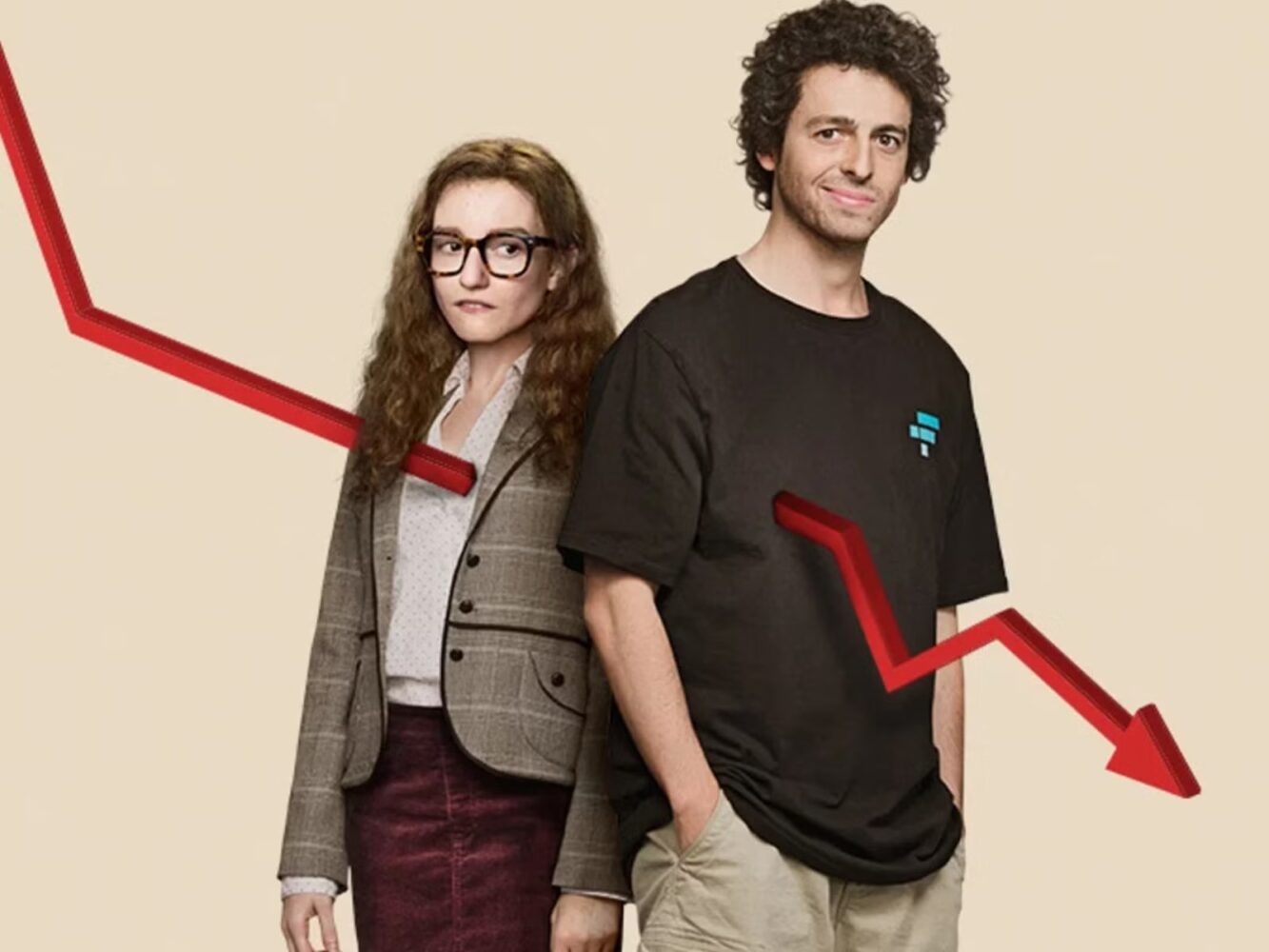
The collapse of FTX had everything a prestige drama could want. There was a boy-genius founder in cargo shorts, a sister trading firm quietly using customer deposits as a personal piggy bank, and roughly $8 billion that turned out not to be where anyone thought it was. The Altruists, Netflix’s new eight-episode series, could have tried to cram all of that into a sprawling financial thriller. Instead, creator Graham Moore, the Oscar-winning writer of The Imitation Game, makes a narrower and smarter bet. He treats the rise and implosion of Sam Bankman-Fried and Caroline Ellison as a relationship drama first and a crypto story second, and that choice explains most of what works here and most of what doesn’t.
The series opens at the very end, with Anthony Boyle’s Bankman-Fried moments from arrest, staring at an incoming call from Ellison while news audio about the scandal plays underneath. Then it rewinds to 2016, when he was a quant trader at Jane Street rehearsing human facial expressions in a mirror. That cold open sets the tone quickly. This isn’t a show asking whether these people are guilty, since history already answered that. It wants to show how two very smart, very strange people talked themselves into one of the biggest frauds of the decade.
A fractured timeline that actually earns its jumps
Non-linear storytelling is usually a crutch in streaming dramas, a way to fake momentum when the middle episodes sag. Here it does real work. Cutting between the early, almost giddy startup days and the panicked final stretch before the collapse turns the whole series into a before-and-after comparison. You watch idealism and ambition curdle in real time, scene against scene, and the contrast does more damage than any monologue could. It’s like watching a speedrun and its crash compilation playing side by side.
The trade-off is scope. By staying so close to its two leads, The Altruists mostly skips the wider media circus, the celebrity endorsements and the sheer cultural reach FTX had at its peak. Bankman-Fried’s Met Gala invitations and political friendships hover at the edges, and the scale of the empire mostly comes through in yachts and lavish Bahamas villas rather than in any sense of how many ordinary people were caught up in it. If you’re after a definitive account of the crypto bubble, this isn’t it. If you want the psychological autopsy of the two people at the center of it, the focus pays off.
Effective altruism as a glitchy moral cheat code
The show’s title points to its most interesting thread. Effective altruism, as the series presents it, comes down to earning as much money as possible so you can give it away to worthy causes. That sounds noble until you notice how neatly it excuses almost anything along the way. The Altruists clearly understands this and uses the philosophy as a kind of moral exploit, the equivalent of a game mechanic that lets you skip consequences as long as the end-of-level score looks good enough. Watching Bankman-Fried and Ellison justify each new shortcut with the language of doing good is the most quietly unsettling part of the series.
What I appreciate is that the show never pretends either of them is a misunderstood hero. Bankman-Fried, the man the press once crowned crypto’s answer to Warren Buffett, comes across as awkward and oddly hollow. He plays League of Legends through high-stakes meetings, and his best ideas seem borrowed from the people around him. Ellison is blunt, brilliant and openly unconventional, and the series doesn’t soften her any more than it softens him. The occasional push toward sentimentality, where the show seems to want sympathy for the pair, is where it wobbles most.
Julia Garner steals the show from behind the prosthetics
Both leads commit completely, including deliberately abrasive vocal affectations that will test some viewers’ patience. That’s clearly the point, since these are not people you’re meant to enjoy spending time with, and both actors stay inside that discomfort instead of winking at the audience. Boyle captures Bankman-Fried’s detached, slightly alien rhythm well, making him feel like someone running social interactions as a background process. Their chemistry is uncomfortable in the right way, and the push-and-pull between them gives the series its engine.
Julia Garner is the real reason to watch, though. Buried under prosthetics, a wig and fake teeth, she’s almost unrecognizable, and within an episode or two the makeup stops reading as makeup at all. It’s an especially fun turn given that she already played a famous con artist in Netflix’s Inventing Anna, and this performance is far stranger and more internal. Garner finds the self-awareness and self-deception living side by side in Ellison, which makes her the most compelling person on screen. If this series gets awards attention, it’ll most likely land on her.
The exposition problem nobody has solved yet
The script’s biggest weakness is one that nearly every finance drama struggles with. The Altruists has to explain trading concepts and economic theory to a broad streaming audience, and it does so in a clunky, repetitive way. Two characters, both supposedly geniuses, will raise an idea like the prisoner’s dilemma. One insists they already know what it is, and the other explains it anyway. It happens often enough to become noticeable, and it occasionally makes these supposed masterminds sound like they’re reading from a study guide.
To be fair, there’s no elegant fix. The alternative is to bury viewers in jargon and trust they’ll keep up, which suits a niche audience but probably not Netflix’s. The Altruists clearly decided that people walking away understanding who these two were matters more than technical precision, and I think that’s the right priority. It just doesn’t make those scenes any less awkward to sit through.
Verdict
The Altruists is a sharp, well-acted and occasionally frustrating look at the FTX collapse that wisely puts its focus on the toxic partnership at the heart of the fraud. The time-jumping structure is used with purpose, the effective altruism angle gives the series real thematic bite, and Julia Garner delivers a transformative performance that lifts every scene she’s in. Against that, the narrow scope leaves the bigger picture underdrawn, the exposition is clumsy, and the show sometimes reaches for sympathy it hasn’t earned. True-crime fans, anyone who followed the FTX saga, and viewers who like their prestige dramas character-first will get plenty from it. Anyone hoping for a full anatomy of the crypto crash should keep their expectations in check.