TL;DR: An eight-episode anime expansion of the Visions shorts that lets emotion, spectacle, and classic Star Wars mythology coexist with surprising grace. Strong voice work, beautiful action, and a willingness to feel things make it one of the more rewarding recent entries in the galaxy.
Star Wars: Visions Presents – The Ninth Jedi
There is something electric about watching a galaxy far, far away get filtered through the wild, expressive lens of Japanese animation. Star Wars has always carried a quiet debt to samurai cinema and spiritual folklore, yet most of the live-action projects treat those roots like polite footnotes. The Ninth Jedi refuses that politeness. It leans all the way in, and the result feels like the franchise finally remembering how to breathe.
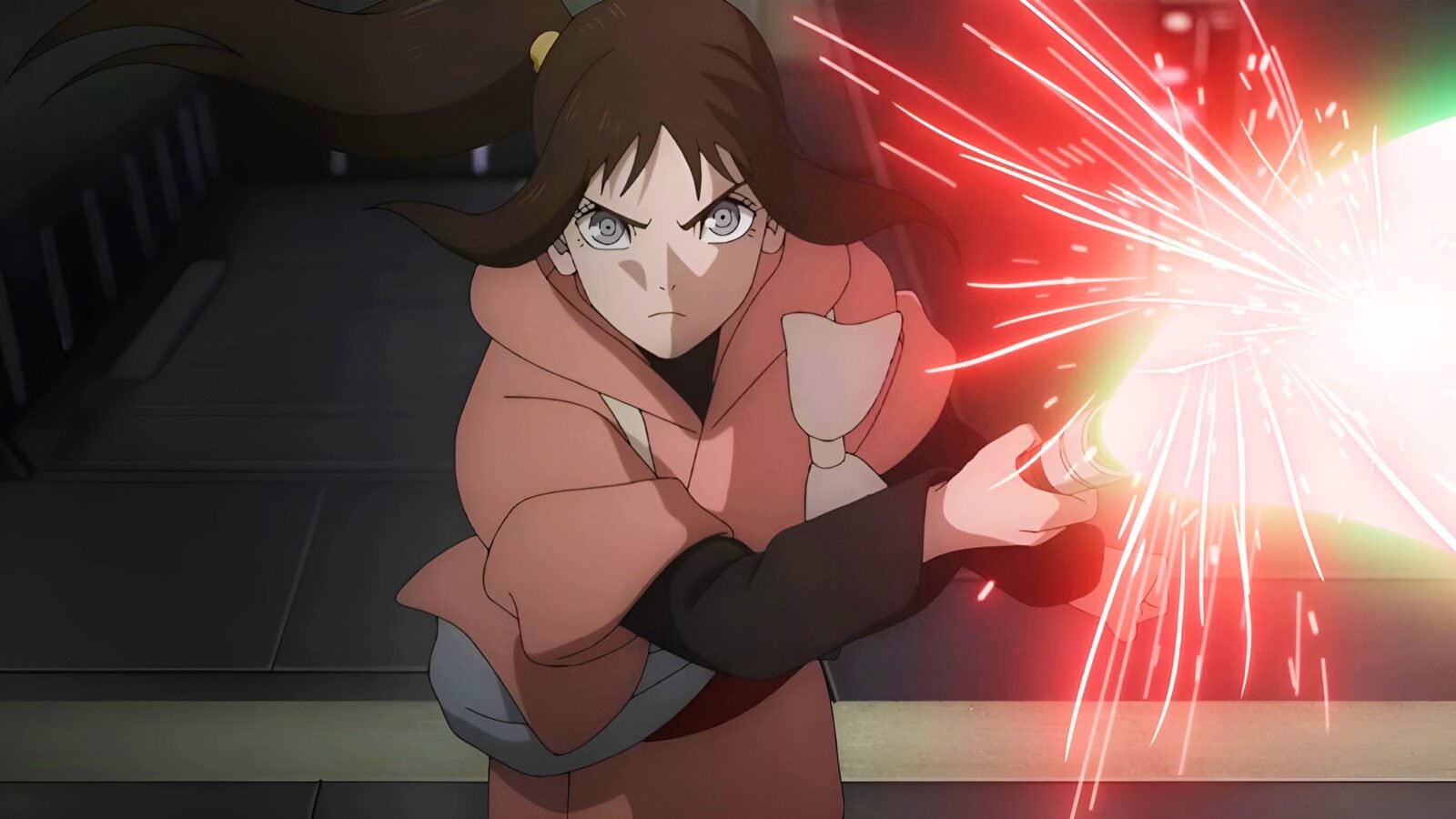
Kenji Kamiyama returns to the story he started in the Visions anthology and stretches it across eight episodes that actually have room to move. We follow Lah Kara, voiced with bright, restless energy by Kimiko Glenn, as she tries to master the Force under the steady guidance of Margrave Juro while her father, the galaxy’s last known lightsaber craftsman, remains in the hands of a very determined enemy. The setup could have stayed simple and nostalgic. Instead the series keeps pushing outward, introducing a Sith apprentice who will not quit, a pair of former Jedi who carry their own complicated histories, and two droids who somehow manage to be both useful and constantly annoying in the best possible way.
What struck me hardest was how willingly the show lets its characters feel things without flinching. American genre television has spent years treating open emotion like a liability, something to be undercut with a smirk or a one-liner. The Ninth Jedi does the opposite. It lets sincerity sit in the frame long enough to become powerful. That choice connects it more closely to the emotional honesty of Andor or the quieter seasons of Rebels than to the quip-heavy mainstream. When Kara wrestles with her growing power or questions the secrets her father left behind, the animation does not soft-pedal the weight of those moments. The lines around her eyes, the way her stance shifts, the sudden quiet in the score all do the heavy lifting that dialogue alone never could.
Kamiyama and his team also understand spectacle in a way that pure live-action budgets rarely achieve without looking expensive for the sake of looking expensive. Lightsaber duels here feel kinetic and personal rather than choreographed set pieces. Planetary vistas open up with the kind of painterly freedom that only animation can deliver. There is a sequence involving a massive weapon on the galactic fringe that could have been pure nostalgia bait, yet the way it is framed and the personal stakes tied to it make the familiar shape feel newly dangerous. The show knows it is playing with classic Star Wars architecture. It just refuses to treat that architecture as sacred.
Voice work carries a surprising amount of the emotional load. Glenn gives Kara a mixture of determination and vulnerability that never tips into cartoonish. Simu Liu and Young Mazino, both working with richer material than most live-action Star Wars roles have offered them lately, deliver performances that feel lived-in rather than performed. Even the supporting players, especially the droids, land their comic timing without ever breaking the larger tone. The English cast understands that this is not a parody of anime intensity; it is an attempt to meet that intensity halfway and make it feel native to the Star Wars universe.
Of course the series is not immune to the gravitational pull of the original 1977 film. A masked figure with personal ties to the hero, a mysterious past waiting to be uncovered, the sense that one young Force user might tip the balance of everything. Those echoes are present. What keeps them from becoming dead weight is Kamiyama’s willingness to twist the expected outcomes. The show treats the classic beats as starting points rather than destinations, and that small shift in attitude makes a noticeable difference by the later episodes.
I kept thinking about how rare it is for Star Wars to feel this unburdened. The mainline films and series carry the weight of decades of continuity and audience expectation. Visions has always been the place where creators could experiment, but most of those experiments stayed short. Giving this particular story eight full episodes lets the emotional and visual ideas actually develop instead of simply announcing themselves. The result is the closest the franchise has come in years to feeling like pure possibility again.
There is also a quiet cultural conversation happening under the surface. The series leans into themes of connection, selflessness, and the cost of isolation in ways that feel closer to classic Japanese storytelling than to the individual-hero myth that dominates so much Western space opera. Watching it, I found myself remembering why the original Star Wars felt so fresh in 1977. It borrowed freely from other traditions and made them feel like they had always belonged in this galaxy. The Ninth Jedi does the same thing with confidence and style.
By the time the final credits rolled I felt the same mixture of satisfaction and mild frustration I get after any genuinely good limited series. Satisfaction because the story lands with real emotional weight and visual flair. Mild frustration because I immediately wanted more. That, in the end, is the highest compliment I can give a Star Wars project these days. It left me hungry rather than full and slightly exhausted.
Verdict
The Ninth Jedi proves that Star Wars still has unexplored creative territory when it stops treating animation as a side dish and starts treating it as a main course. Kamiyama and his collaborators have delivered a series that feels both familiar and startlingly fresh, emotionally open without becoming soft, and visually ambitious without losing its characters in the spectacle. It is the kind of project that makes the rest of the franchise look a little safer by comparison, and that is exactly what Visions was always meant to do.