TL;DR: The ROG Xbox Ally X20 Bundle pairs a gorgeous 7.4-inch OLED handheld with immersive XREAL R1 AR glasses, a Pelican case and a dbrand skin. Battery life is good, controls are excellent and the experience is genuinely fun, but AED 10,999 makes it a premium treat for collectors and travellers.
ROG has spent two decades proving that excess can be a feature, and the ROG Xbox Ally X20 Bundle is about as loud a birthday party as the brand could throw itself. This isn’t just a refreshed handheld in a fancy box. It’s a full travel kit that pairs an upgraded Xbox Ally X with the ROG XREAL R1 Edition 20 AR glasses, a Pelican Protector Case and a dbrand Killswitch, all dressed in a translucent black-and-gold theme. The price is AED 10,999, and there’s no avoiding that number in any honest conversation about this thing. The standard ROG Xbox Ally X sits at AED 4,199, so this bundle asks for well over double the money. The question I kept asking myself while living with it was simple: is this a genuinely better way to play, or just gold paint and cake?
After spending time with it, my answer is more positive than I expected going in. The upgrades here aren’t cosmetic filler. The new OLED display, the refined controls and especially the glasses change how the whole thing feels to use, and the result is one of the most immersive and plain fun portable gaming setups I’ve tried. That said, the core silicon is the same as the regular Ally X, so this is a premium refinement with a lot of extras attached rather than a leap in raw power.
The see-through design is pure ROG theatre, and it works
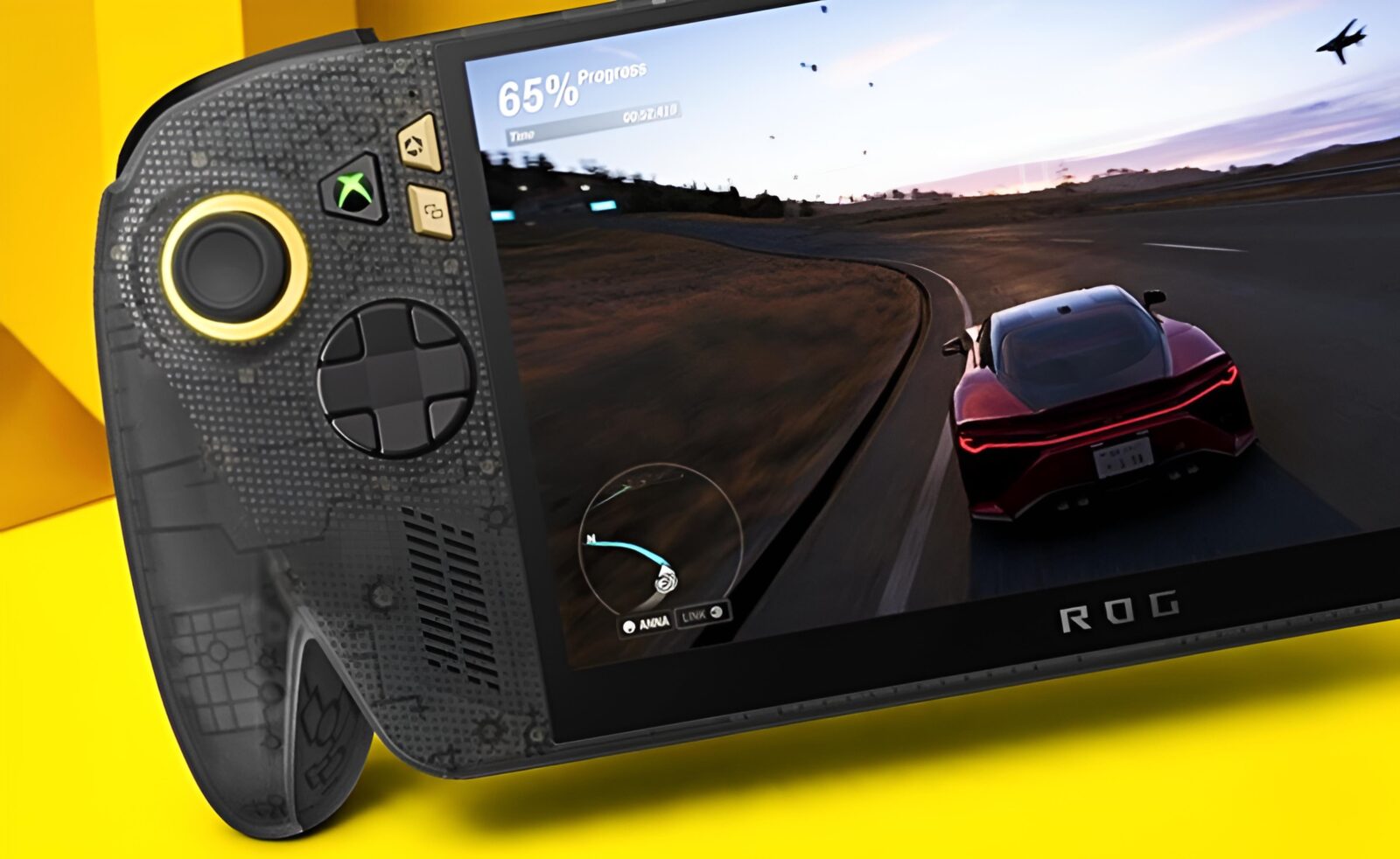
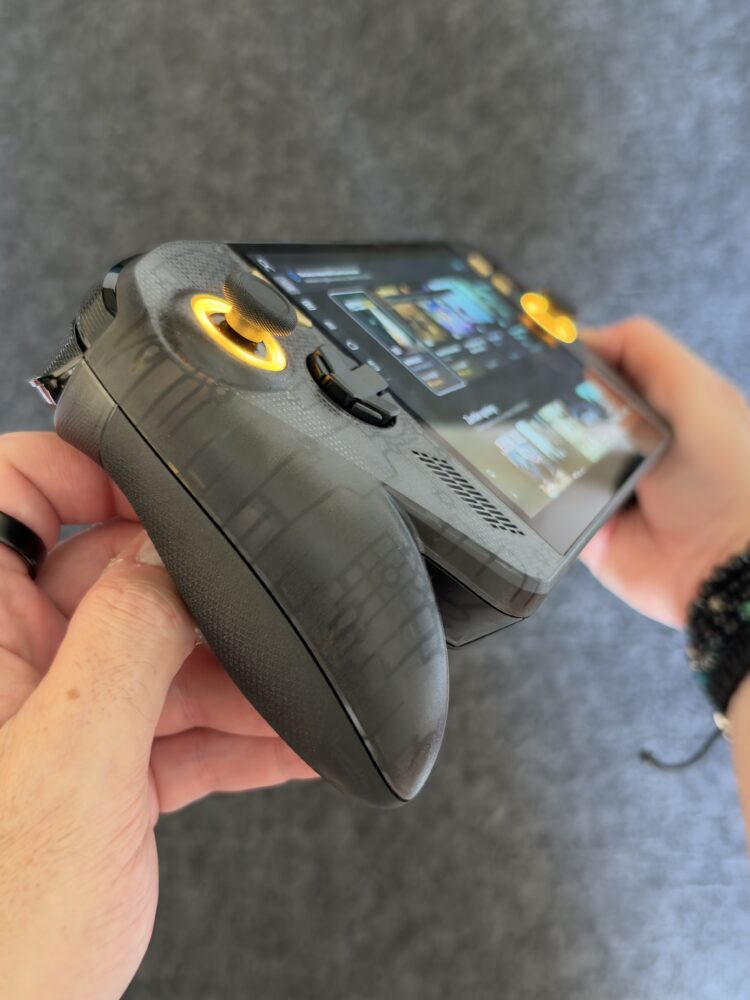
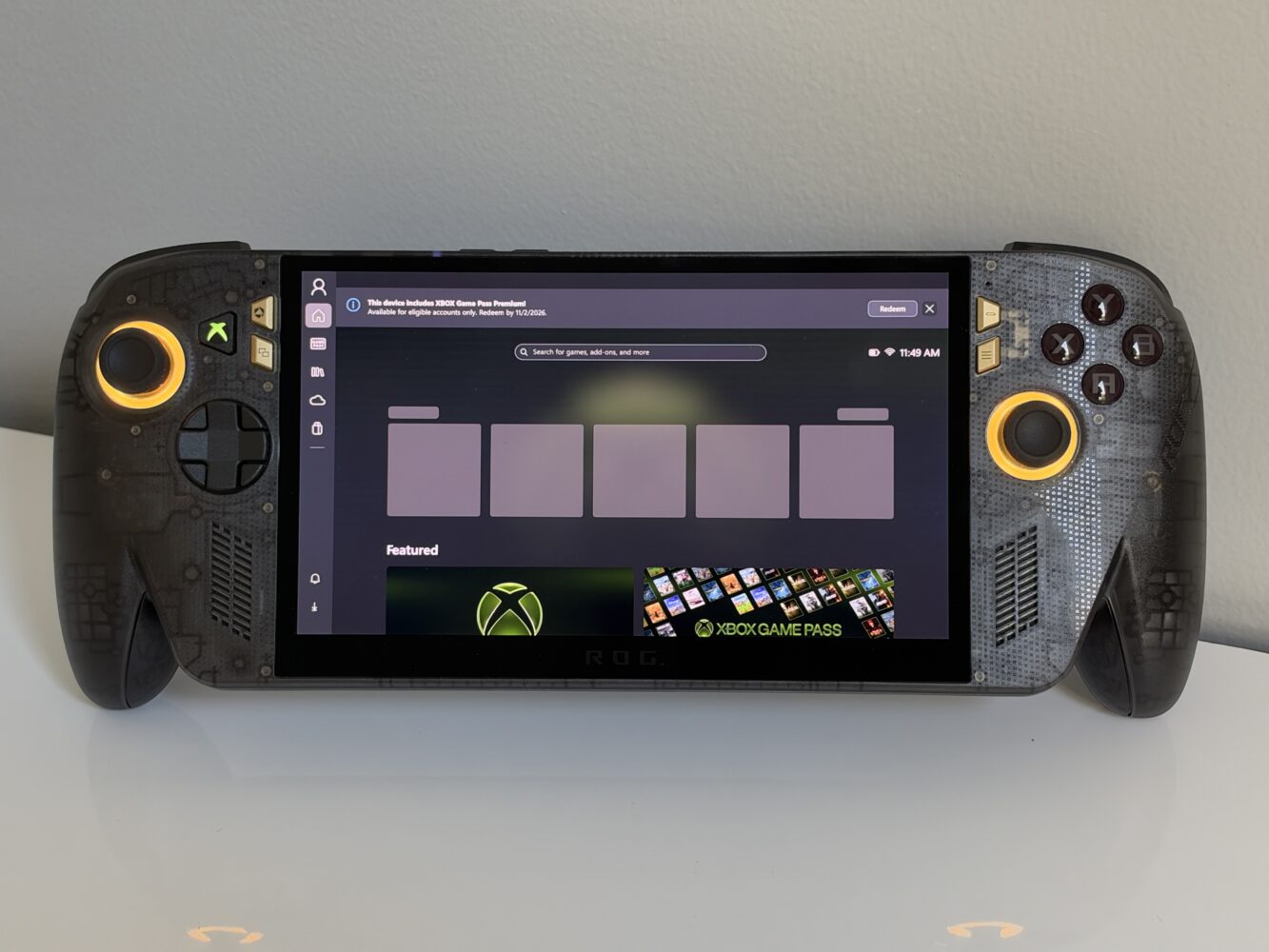
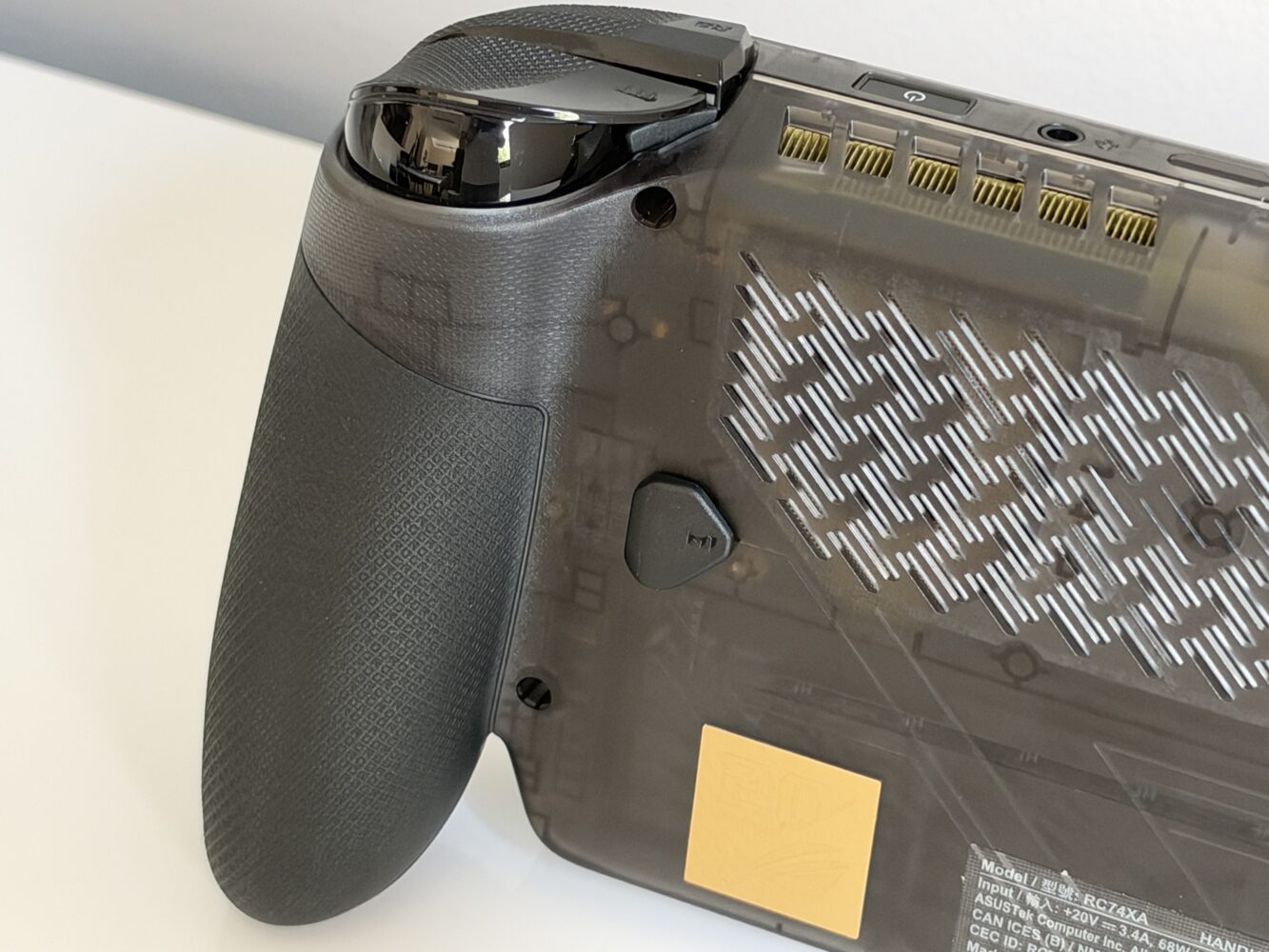
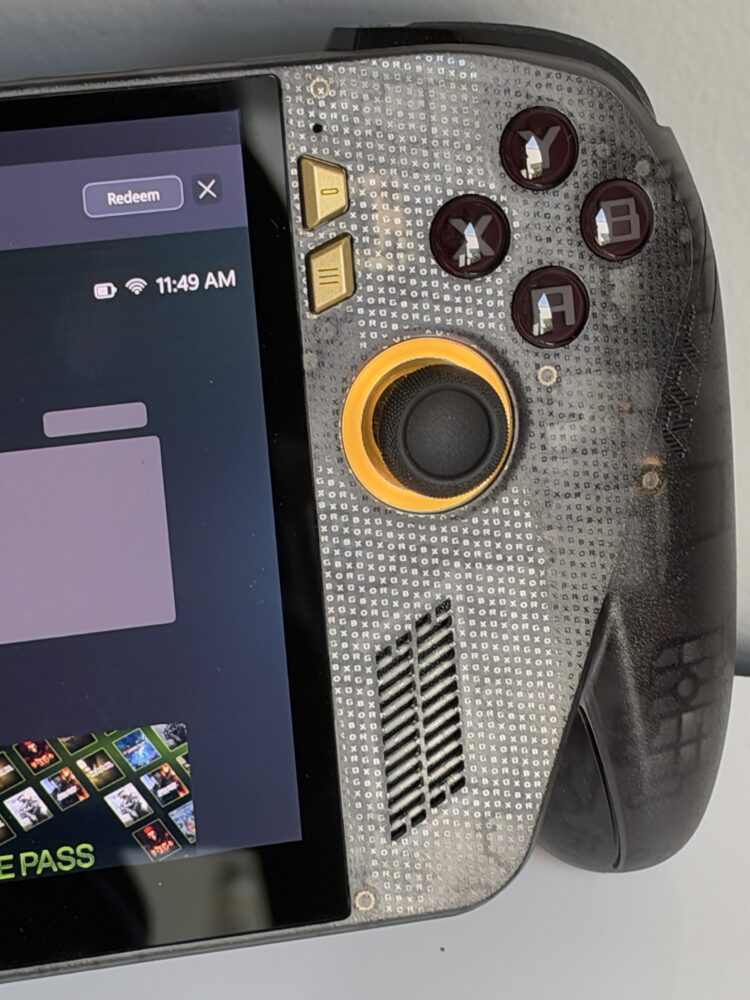
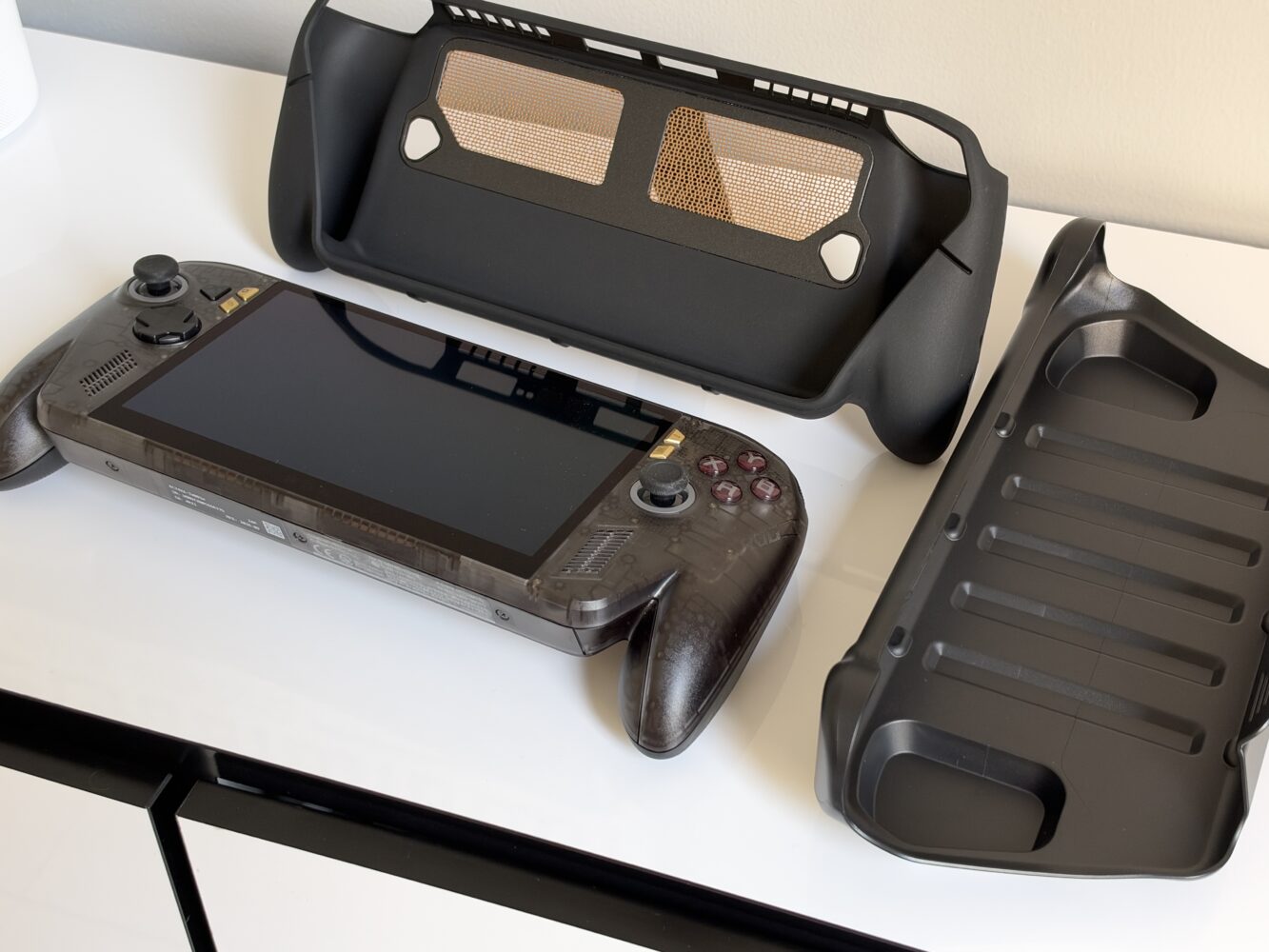
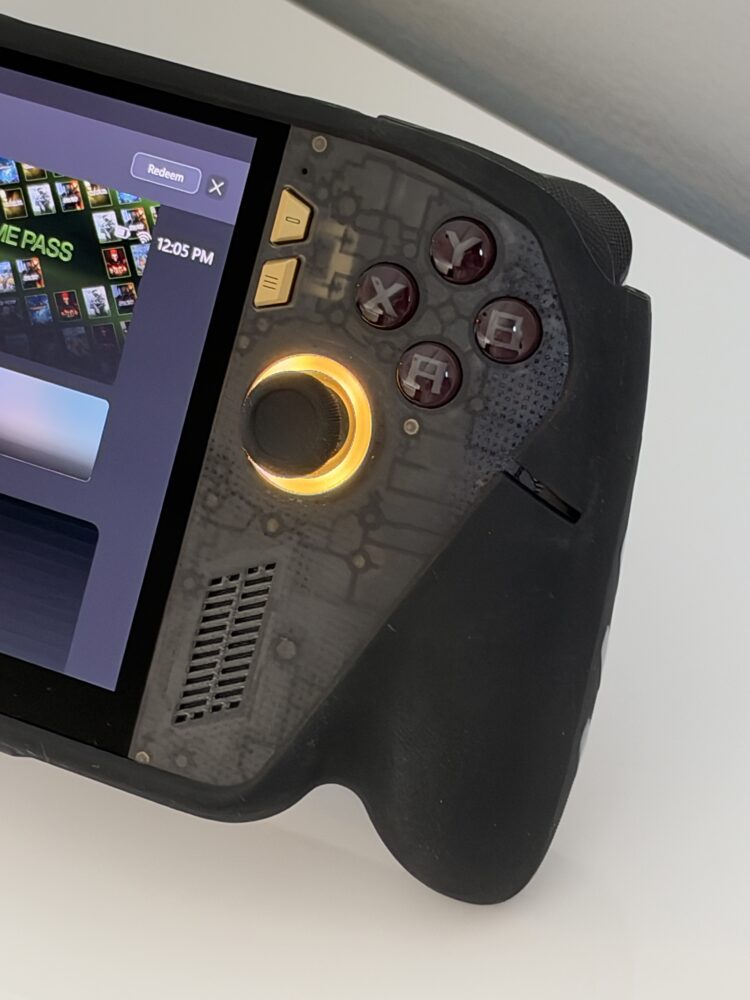
The first thing that hits you is the look. The translucent black shell shows off a gold internal frame and gold-accented fans, the RGB rings around the sticks glow away, and a 20th Anniversary badge sits on the back. Clear gaming hardware has a long nostalgic streak, from see-through Game Boy Colors to the transparent controllers of the late nineties, but this goes further because the internals were clearly styled to be seen. It looks like something that escaped from the Tron grid and wandered into a jewellery store, and I mean that as a compliment. People noticed it every time I took it out.
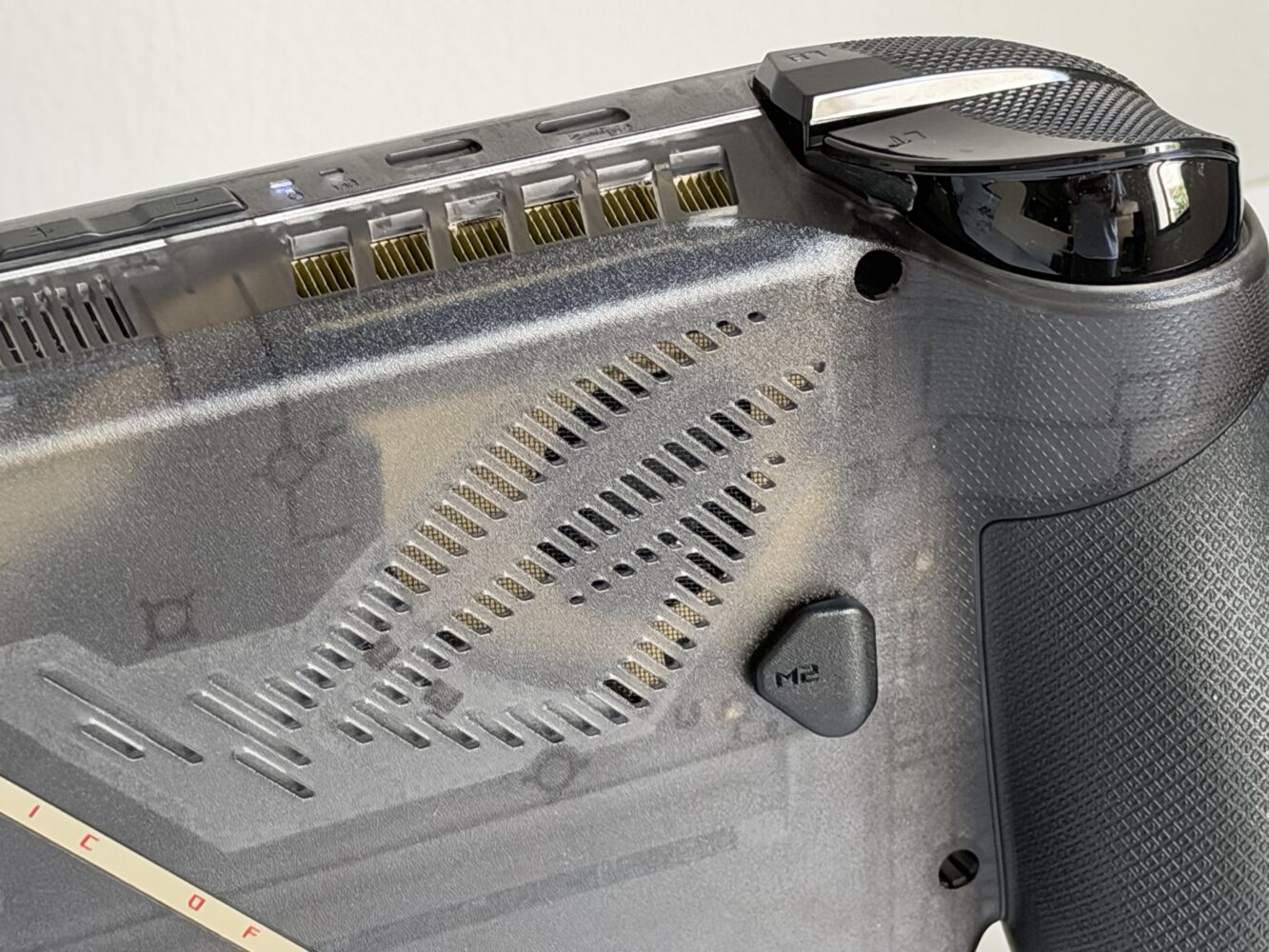
It’s not a small device, though. At 756g, it has real heft, and you feel it during long sessions. The saving grace is the asymmetrical, controller-style grip shape carried over from the Xbox Ally X, which spreads the weight across your palms instead of your fingertips. In practice it sits comfortably for long stretches, far more than a flat slab of the same weight would, but this is still not a device you’ll forget you’re holding.
The 7.4-inch OLED display is the upgrade that actually matters
If one change justifies the X20 beyond its anniversary badge, it’s the screen. The top bezel has been slimmed to fit a 7.4-inch 1080p OLED panel running at 120Hz with FreeSync Premium Pro, and it is gorgeous. Blacks are properly black, colours pop without looking cartoonish, and HDR content has a punch that the older IPS-based Ally models simply couldn’t deliver. Dark games in particular feel transformed, with shadowy corridors and night scenes finally looking moody instead of washed out and grey.
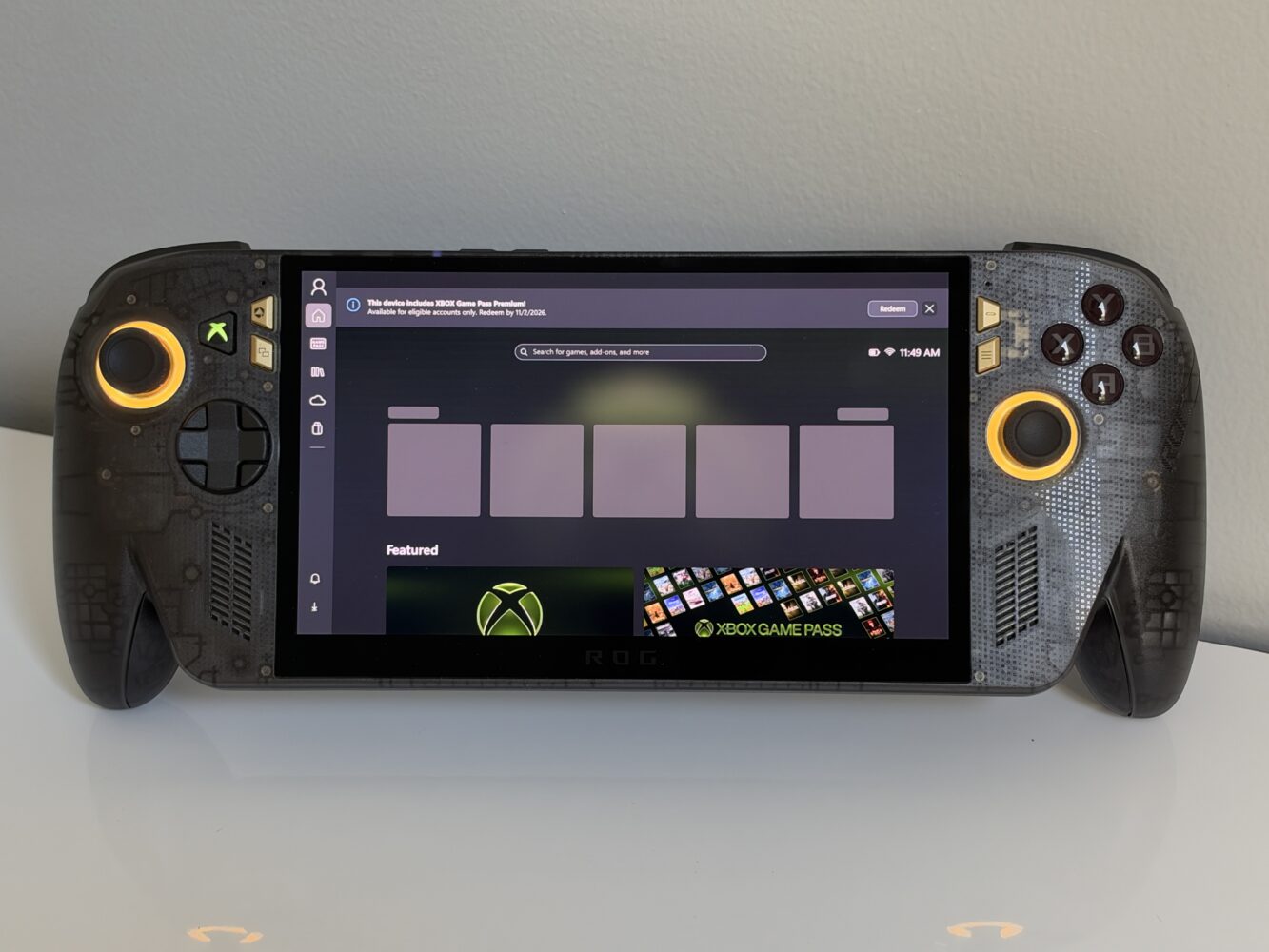
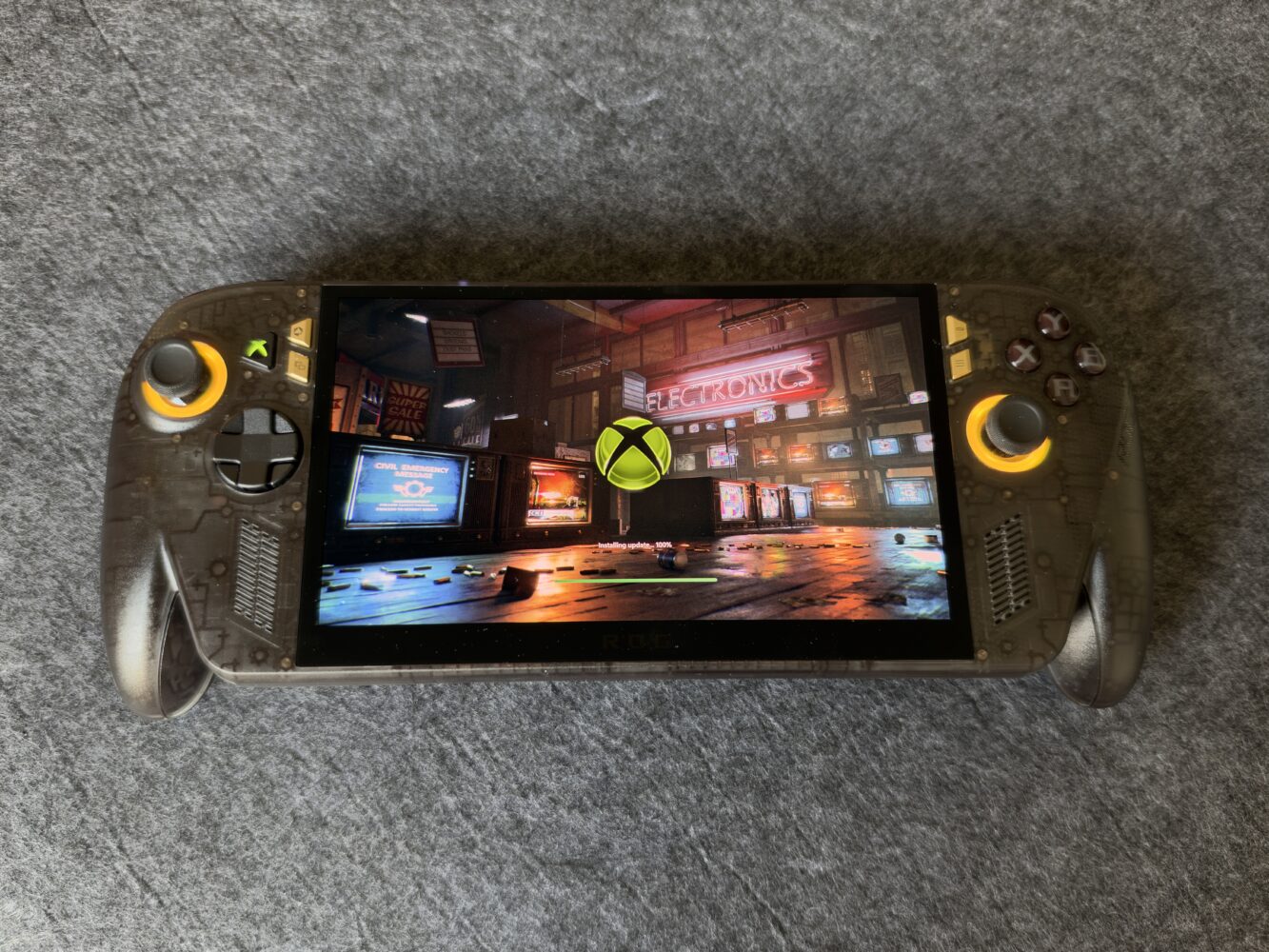
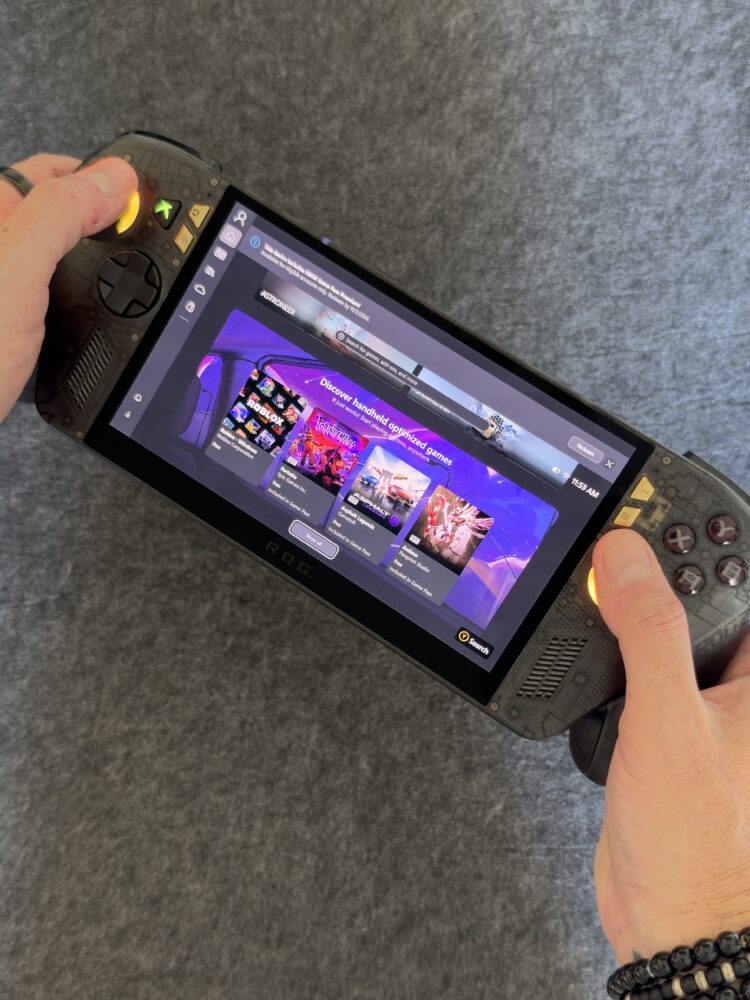
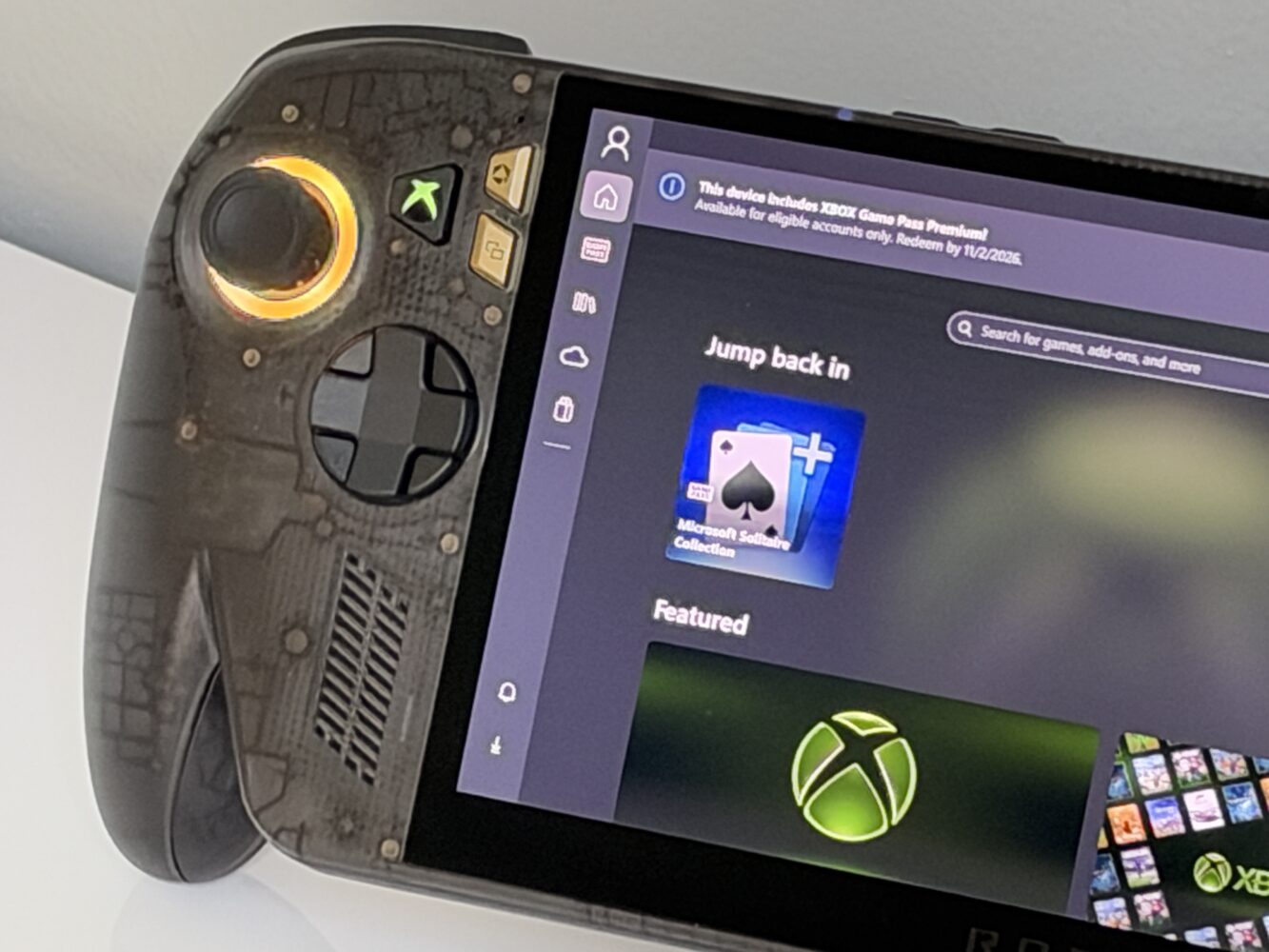
Variable refresh is a quiet hero here. PC games on handheld silicon rarely sit locked at a perfect frame rate, and FreeSync smooths over the dips so play stays fluid instead of juddery. The 1080p resolution feels like the right call at this size, sharp enough for Windows text and menus without forcing the chip to chase pixels it can’t push. The anti-reflection coating also earns its keep, making the screen much easier to live with under bright lights than the usual glossy handheld mirror.
Same Ryzen AI Z2 Extreme heart means familiar but strong performance
Inside is the AMD Ryzen AI Z2 Extreme, an 8-core, 16-thread chip that boosts up to 5.0GHz, paired with 24GB of LPDDR5X memory and a 1TB PCIe 4.0 SSD. If you’ve used the regular Xbox Ally X, you know what to expect, and that’s a good thing, because it remains one of the strongest combinations you can fit into a handheld right now. Games run smoothly at sensible settings, the system feels snappy jumping between launchers, stores and apps, and multitasking never felt like it was dragging its feet. The generous memory is the unsung hero here, since the integrated graphics share system RAM, and having 24GB to play with gives modern games room to breathe instead of fighting Windows for scraps. It’s a capable, confident machine rather than a surprising one, and in a category where stutters and compromises are common, that consistency counts for a lot.
What I appreciated most is how well the performance pairs with the new screen. With FreeSync Premium Pro smoothing out frame rate fluctuations, the Z2 Extreme doesn’t need to hold a perfect lock to feel fluid, so I found myself chasing better visuals rather than obsessing over frame counters. Lighter indies and older titles fly, while bigger releases are best enjoyed with a bit of settings tuning, which is simply the reality of PC gaming on a handheld. Under sustained load, the gold-accented fans are clearly doing their job, and the machine stays comfortable to hold through long sessions rather than turning into a hand warmer.
The full-size M.2 2280 SSD slot is a smart long-term choice, since it makes upgrading storage cheaper and easier than the shorter drives many handhelds use, and 1TB fills up quickly once modern game installs start piling in. The NPU is a different story. It’s there, it’s fast, and it rarely makes itself felt during actual gaming, so it feels like a feature waiting for software to give it a real job.
Controls get the kind of upgrades enthusiasts actually ask for
The control upgrades are where you can tell ROG listens to its players. The TMR joysticks feel precise and are built to resist drift, which is the kind of invisible improvement you appreciate more in year two than on day one. The Hall effect triggers with impulse rumble feel great in racing and shooting games, the HD haptics add a nice layer of feedback, and the two assignable grip buttons are genuinely useful once you map them.
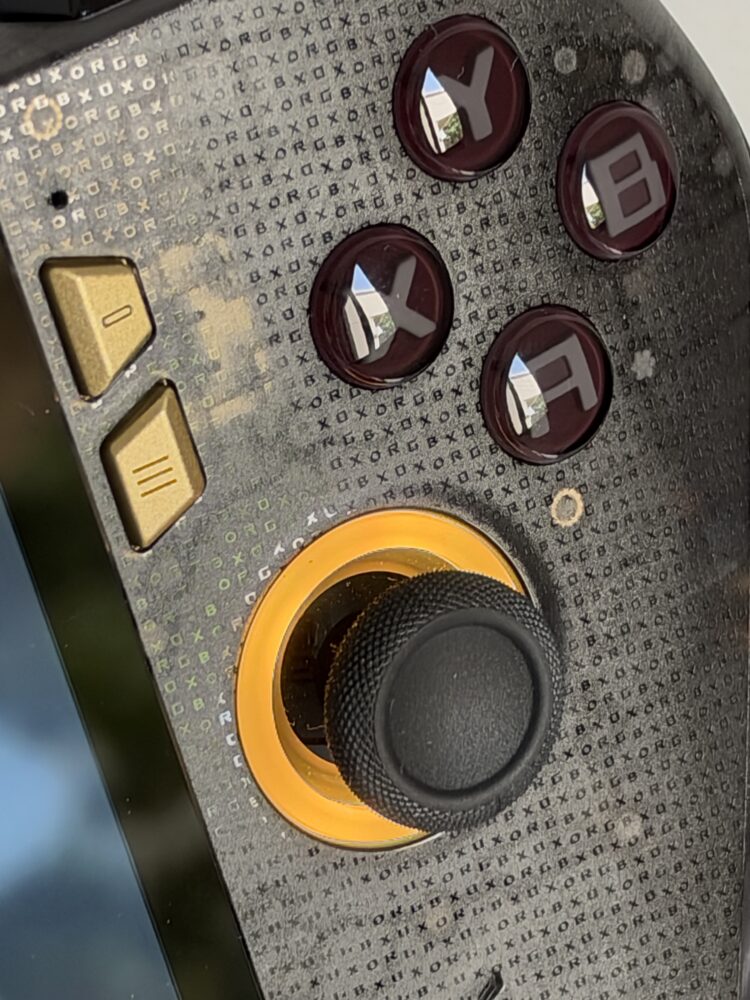
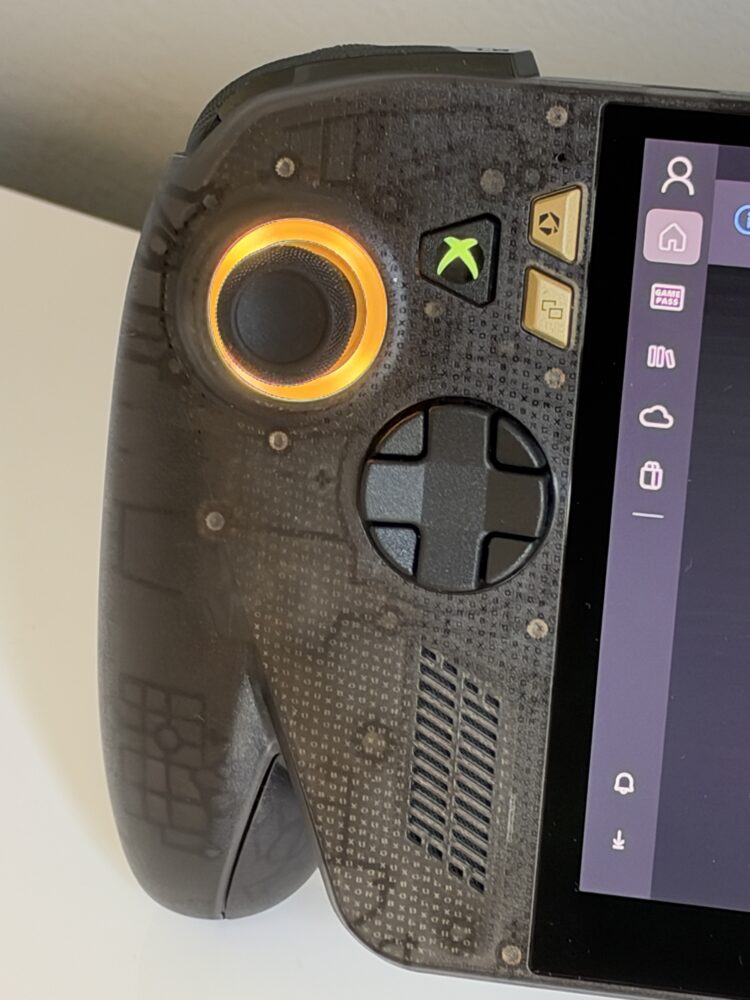
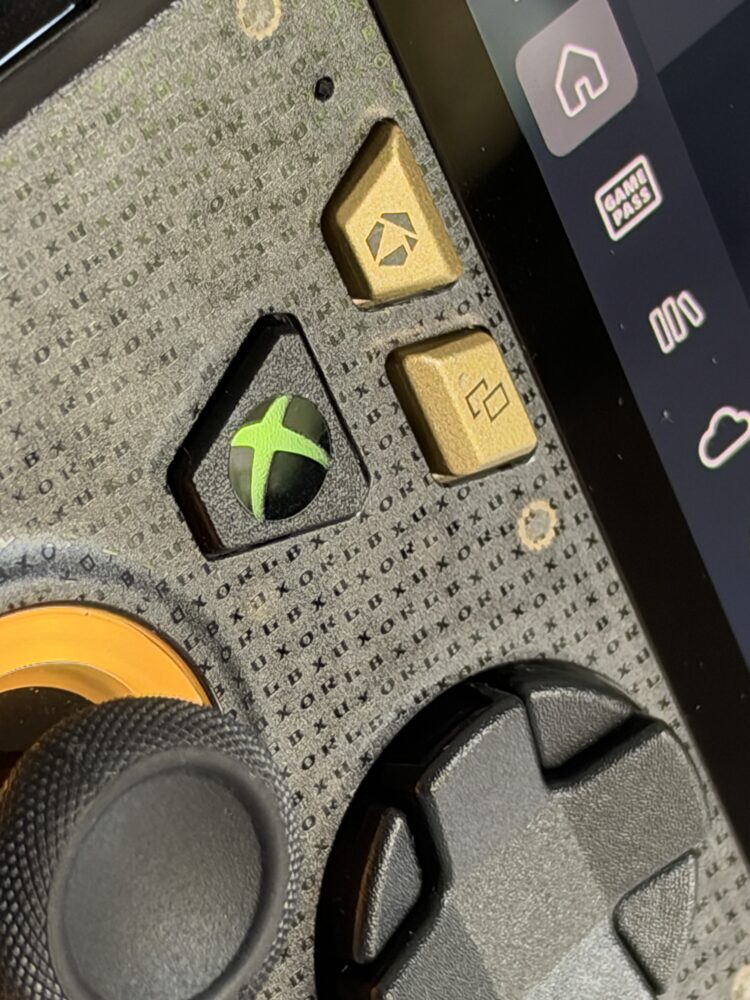
Two details won me over. The face buttons sit flush with the casing when pressed, so your thumb glides across them without catching, which makes fighting game inputs noticeably cleaner. The transforming D-pad switches between 4-way and smooth 8-way modes, and for fighting games and retro titles where diagonals matter, it’s a real upgrade. These are the touches that separate a device built for spec sheets from one built for people who actually play.
Battery life is solid for a Windows handheld
The 80Wh battery is as big as this category gets, and it shows. Battery life was good throughout my time with it, more or less in line with what you’d hope for from a handheld with this capacity, and it holds up well for a Windows gaming machine. Demanding games at high power settings still drain it faster, as they do on every handheld running this class of chip, but lighter titles and sensible power profiles stretch it comfortably. The OLED helps in darker scenes, though cranking HDR brightness pulls things the other way.
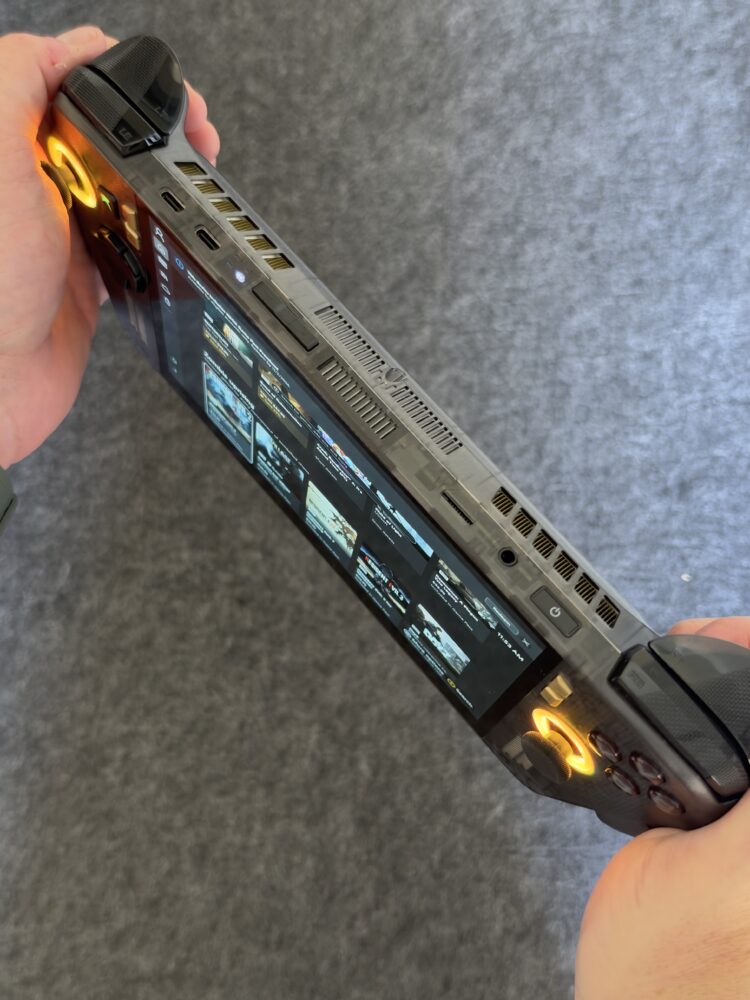
Charging runs over USB-C at 68W, which means you can share chargers with your laptop or phone when travelling. That’s a small but welcome convenience for a device clearly built to go places. With two USB-C ports, you can also charge while the glasses are plugged in, which matters more than it sounds once you start using them on longer sessions.
Connectivity and storage punch well above typical handhelds
Port selection is excellent. You get a USB4 port that’s Thunderbolt 4 compliant with DisplayPort 2.1, a second USB 3.2 Gen 2 USB-C port with DisplayPort and power delivery, a 3.5mm headphone jack and a microSD Express reader. That USB4 port opens the door to proper docking, fast external storage and even external GPUs, letting the Ally double as a desk machine. The microSD Express slot supports much faster new-generation cards while still accepting your old microSD cards at standard speeds.
Wi-Fi 6E and Bluetooth 5.4 handle wireless duties well, and the fingerprint sensor makes logging into Windows painless. The two speakers with Dolby Atmos sound fuller than you’d expect from something this size, though headphones are still the way to go for immersion. Security updates are promised until the end of 2030, which is reassuring when you’re spending this kind of money.
The XREAL R1 glasses are the reason this bundle feels special
The headline extra is the ROG XREAL R1 Edition 20, a pair of gold-accented AR glasses that tether to the Ally over USB-C and throw up a virtual 171-inch screen at up to 240Hz. I expected a gimmick and came away genuinely impressed. Putting them on and seeing your game float in front of you at cinema scale is immersive in a way the handheld screen alone can’t match, and it’s honestly a lot of fun. It turns a cramped seat or a hotel bed into a private big-screen setup, and suddenly playing on the go stops feeling like a compromise.
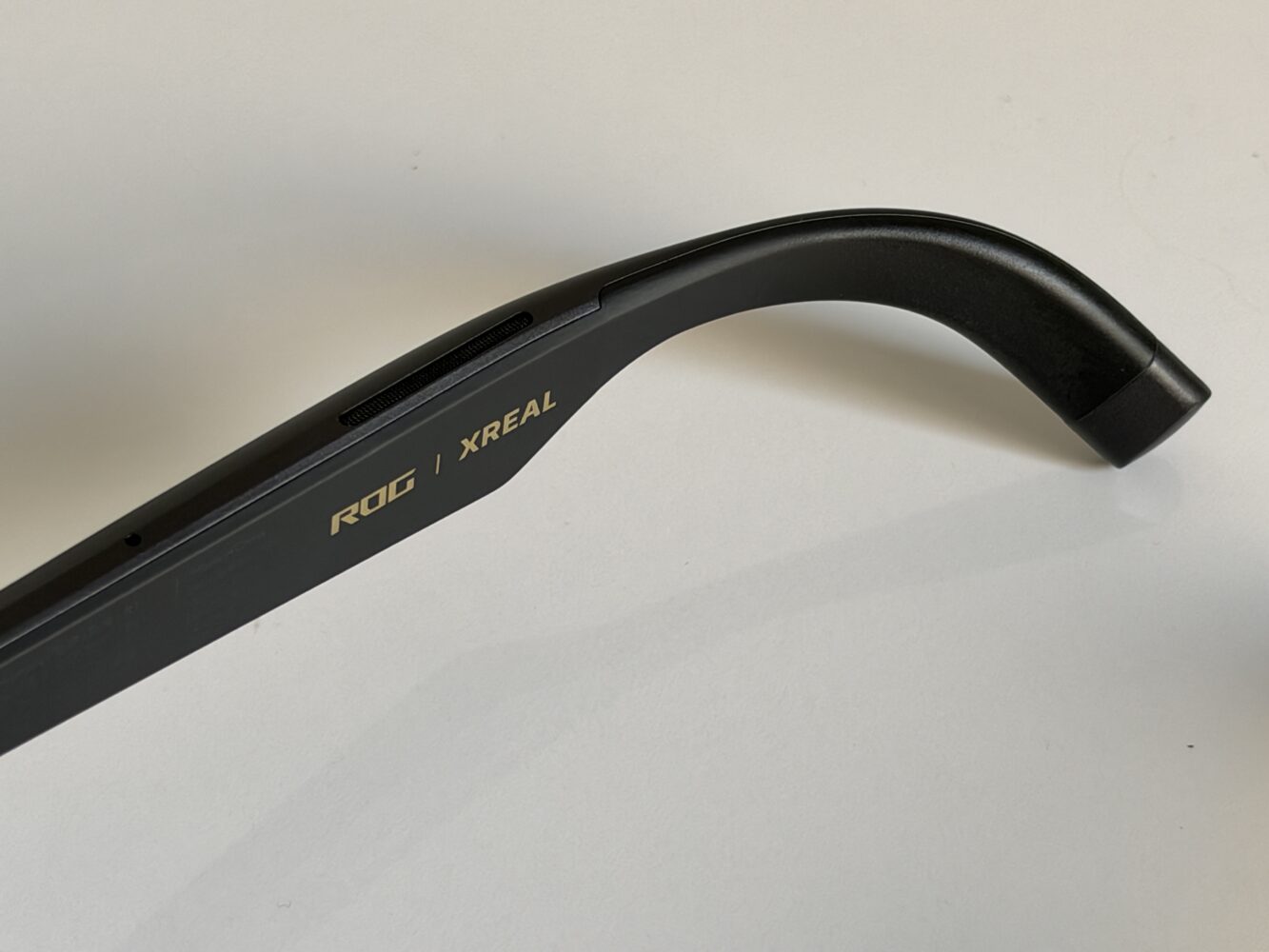
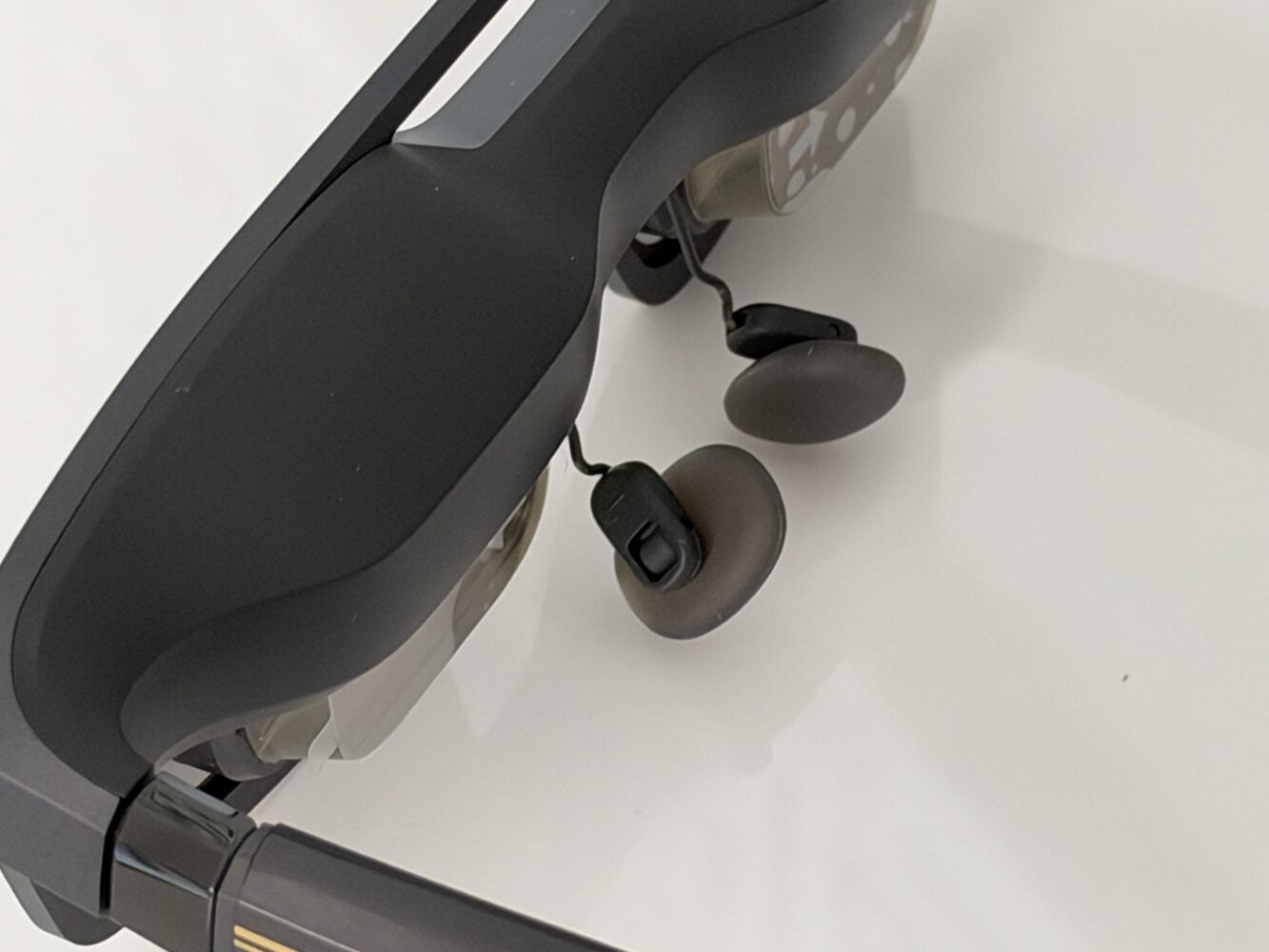
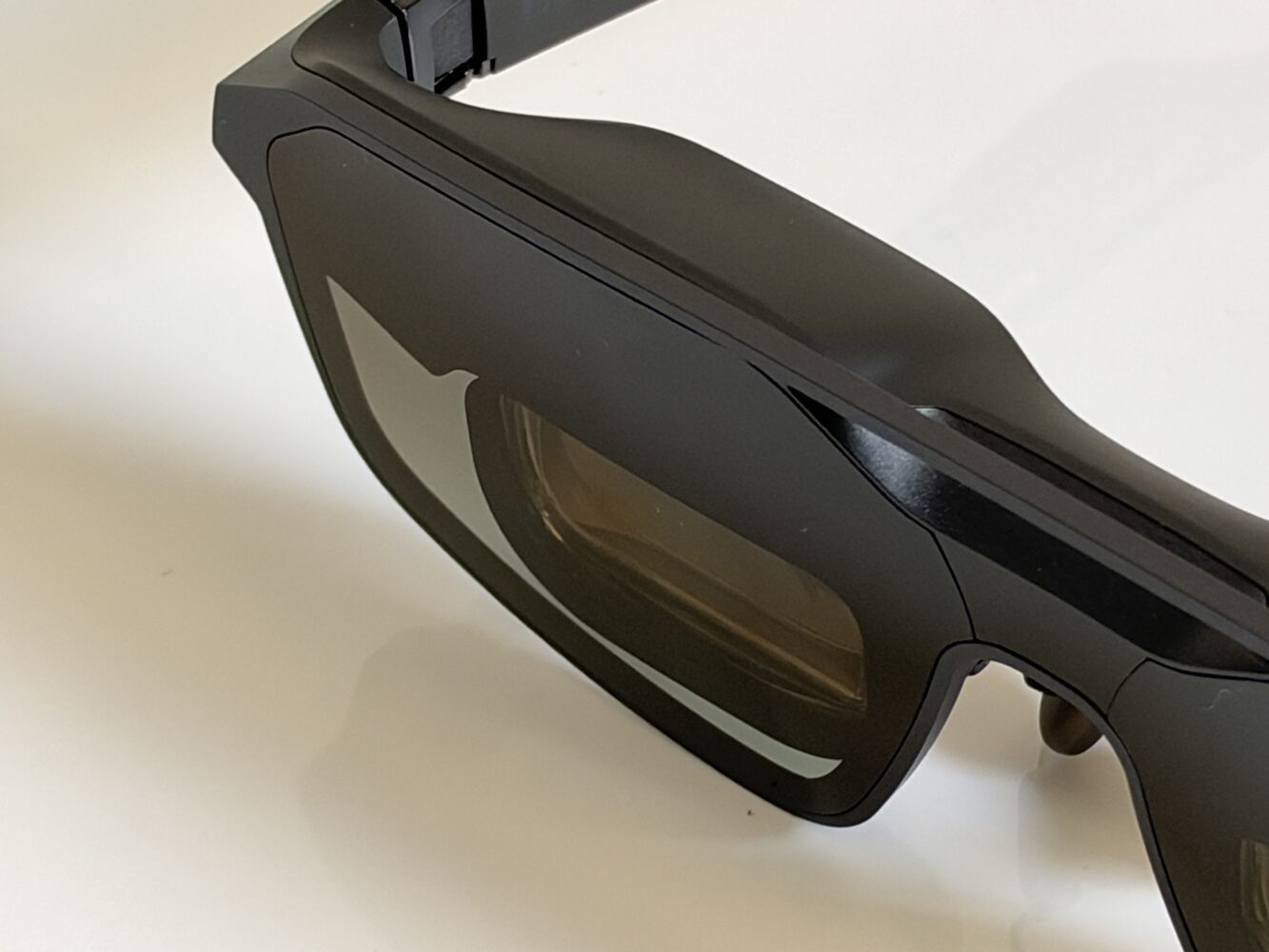
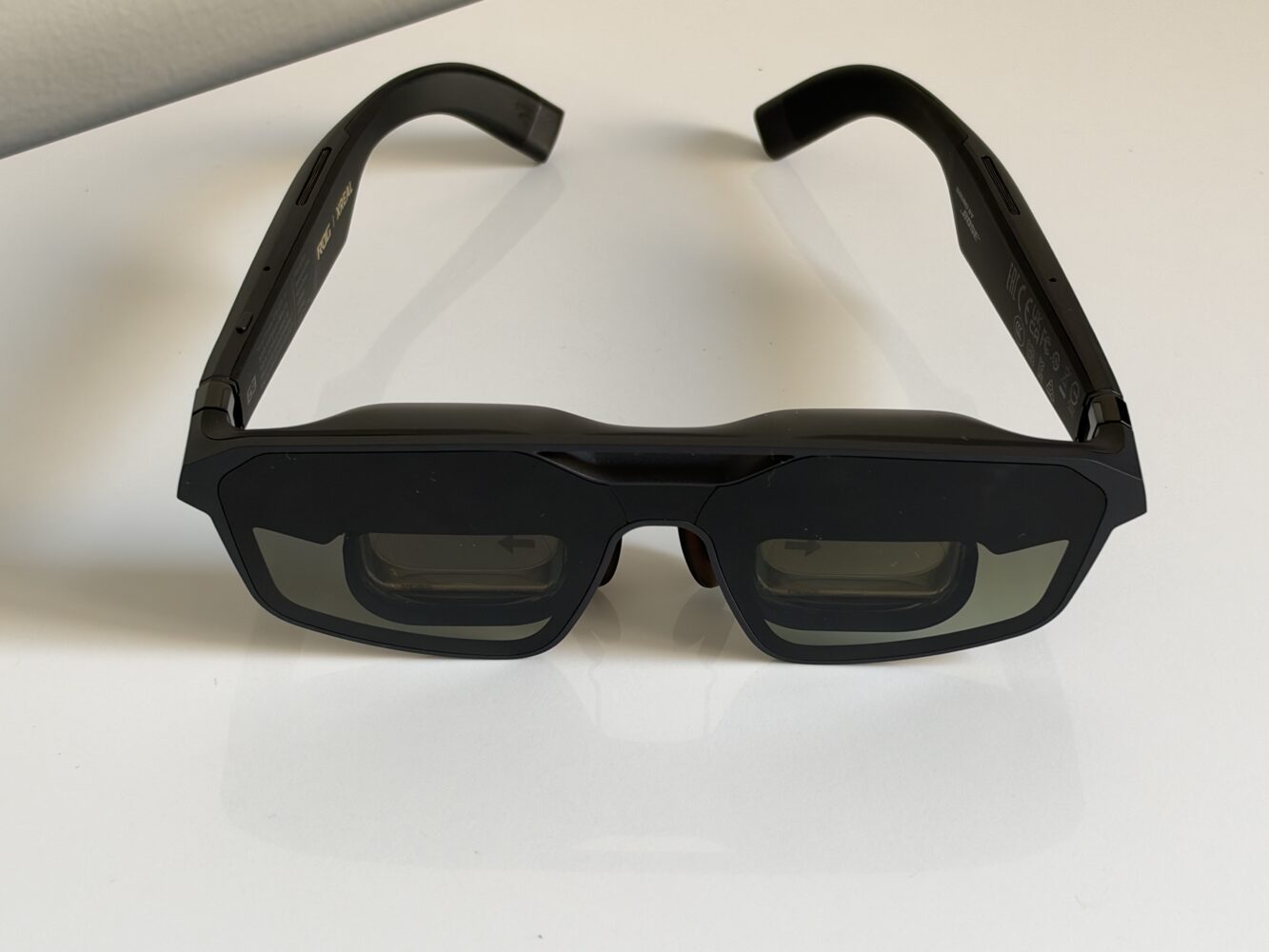
They also look the part, matching the X20’s black-and-gold styling so the whole kit feels cohesive rather than thrown together. Setup is simple, you plug in and go, and the integration with ROG’s Command Center makes adjusting things quick without digging through menus. Pairing the glasses with a controller-style grip and the Ally’s audio gives you a surprisingly complete, cocooned gaming experience that I kept reaching for even when the OLED screen was right there.
Living with the glasses changes how you play
The glasses shine most during longer sessions where you’d otherwise hunch over the handheld. With the screen floating at eye level, my posture was better, and story-driven games, racers and anything cinematic felt far more engaging on that huge virtual display. The high refresh support keeps motion feeling smooth, even if the Ally itself rarely pushes modern games anywhere close to 240fps. It’s the kind of experience that makes you want to keep playing just because it feels like an event.
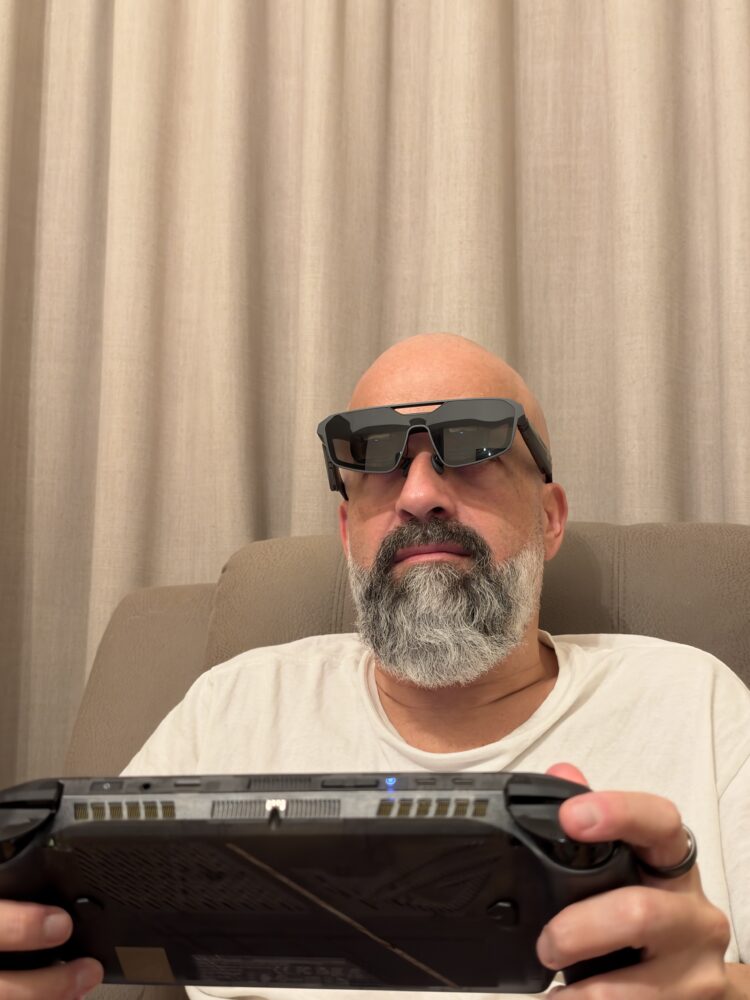
They aren’t for everyone, though. Fit, eyesight and personal comfort play a big role with any display glasses, and some people simply won’t enjoy wearing them for long. They also need to be tethered to the Ally to work, so they aren’t a standalone device. If you already like the idea of AR glasses, this bundle is an easy sell; if you’ve never tried a pair, it’s worth trying them before committing this much money.
The Pelican case and dbrand skin round out a travel-ready package
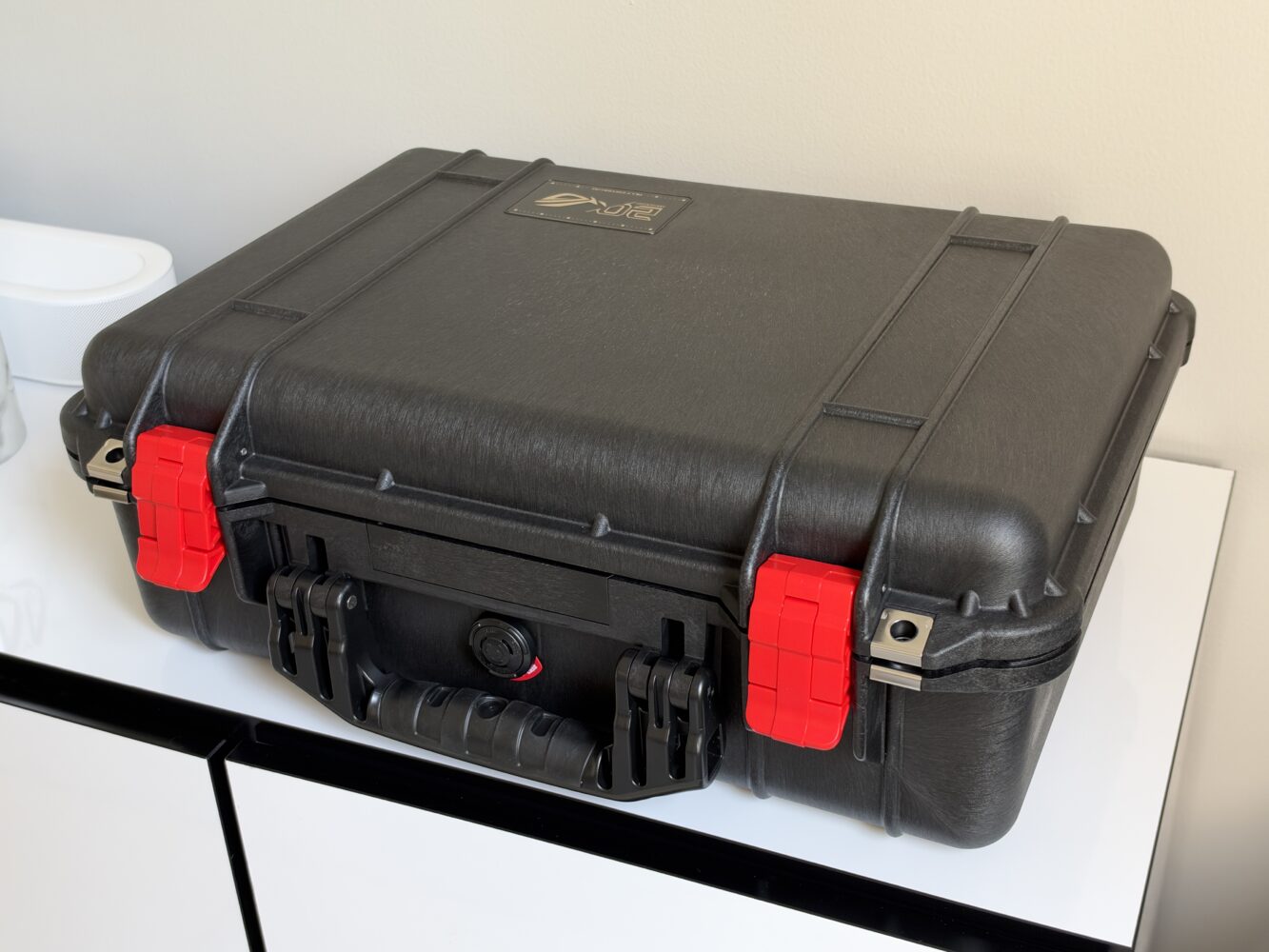
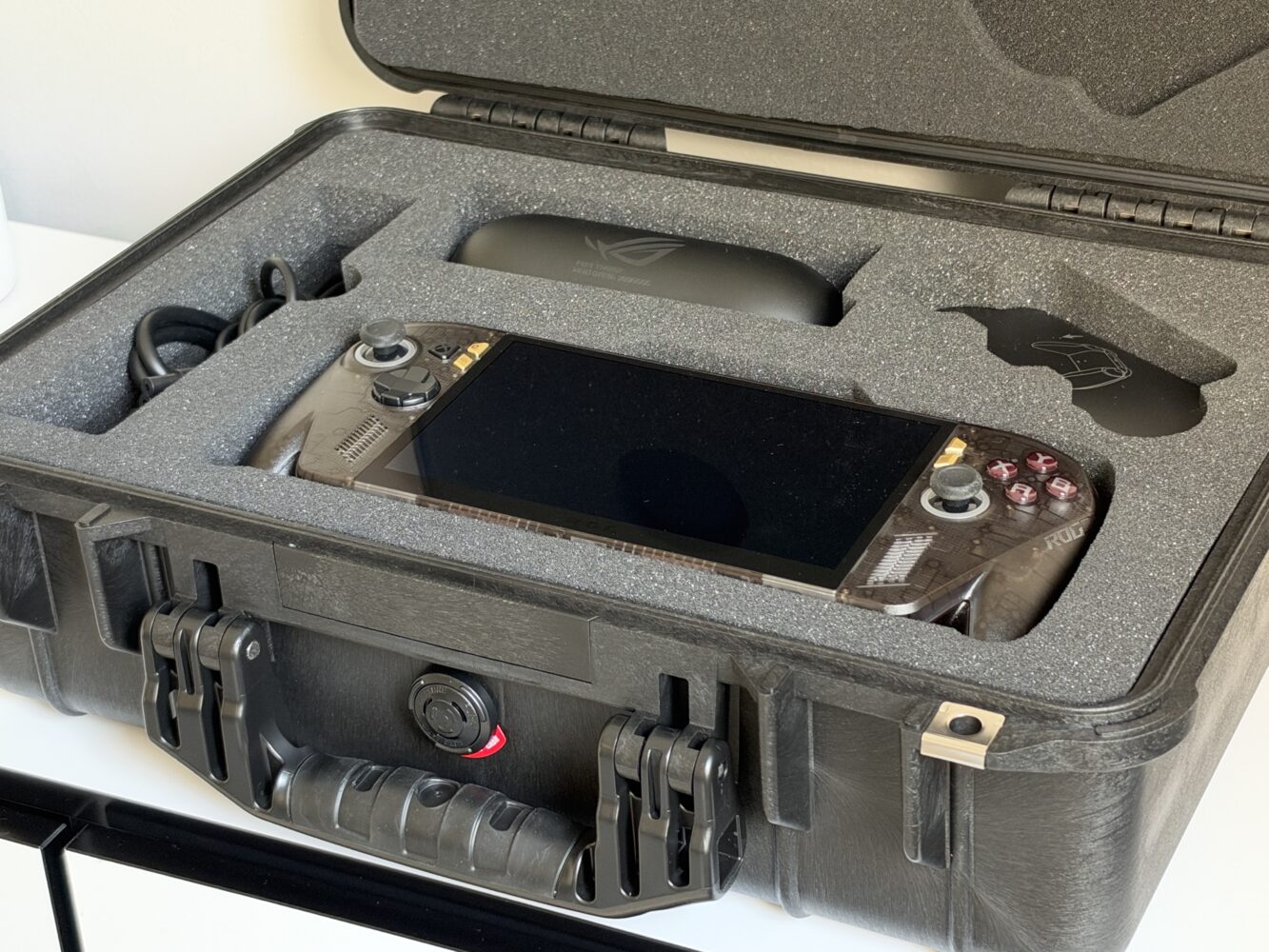
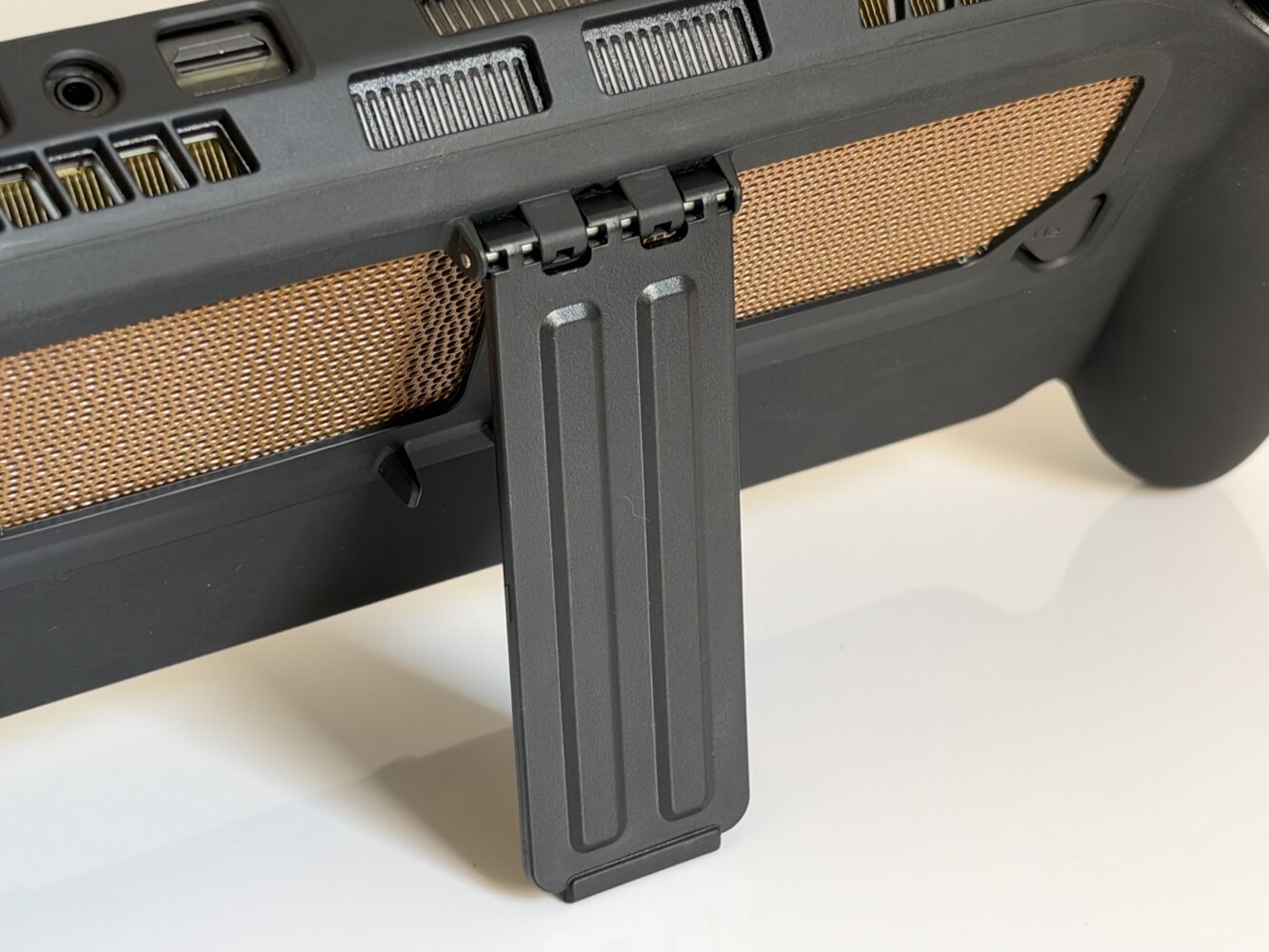
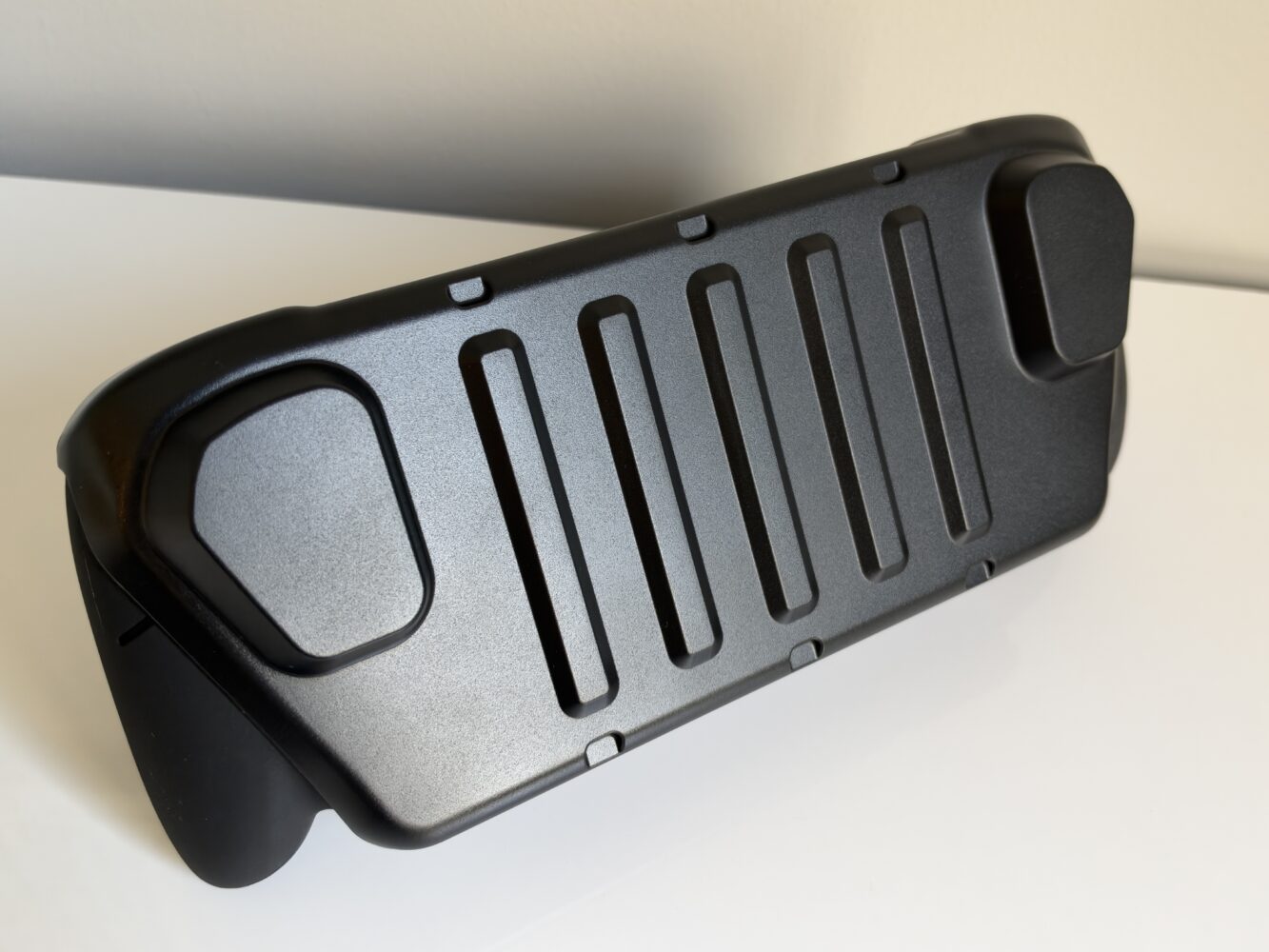
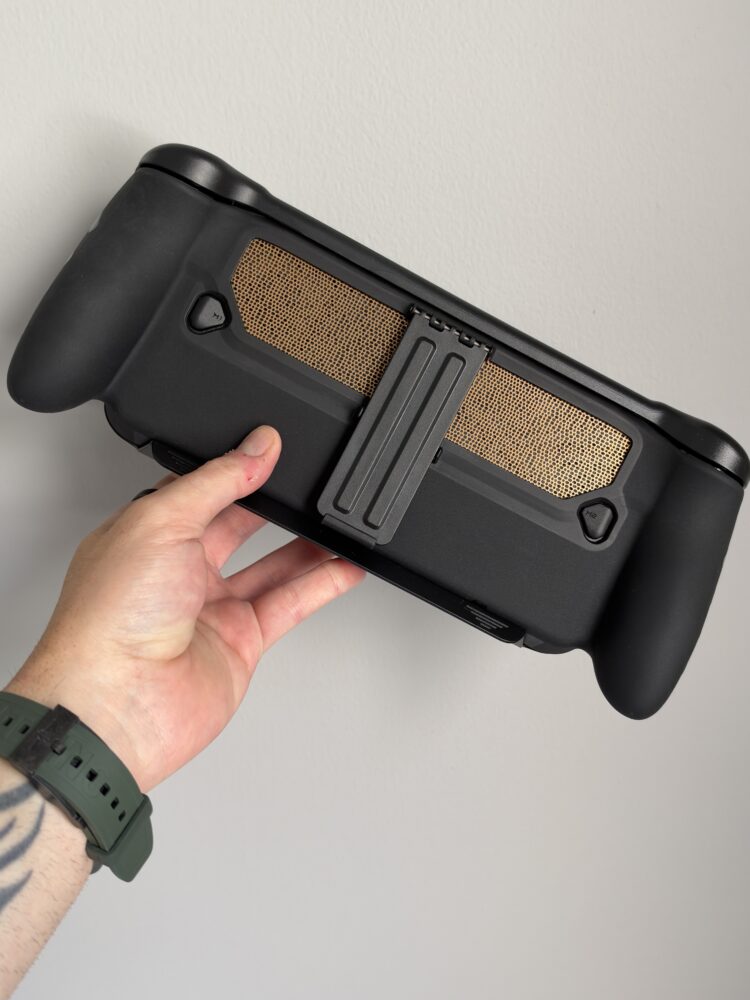
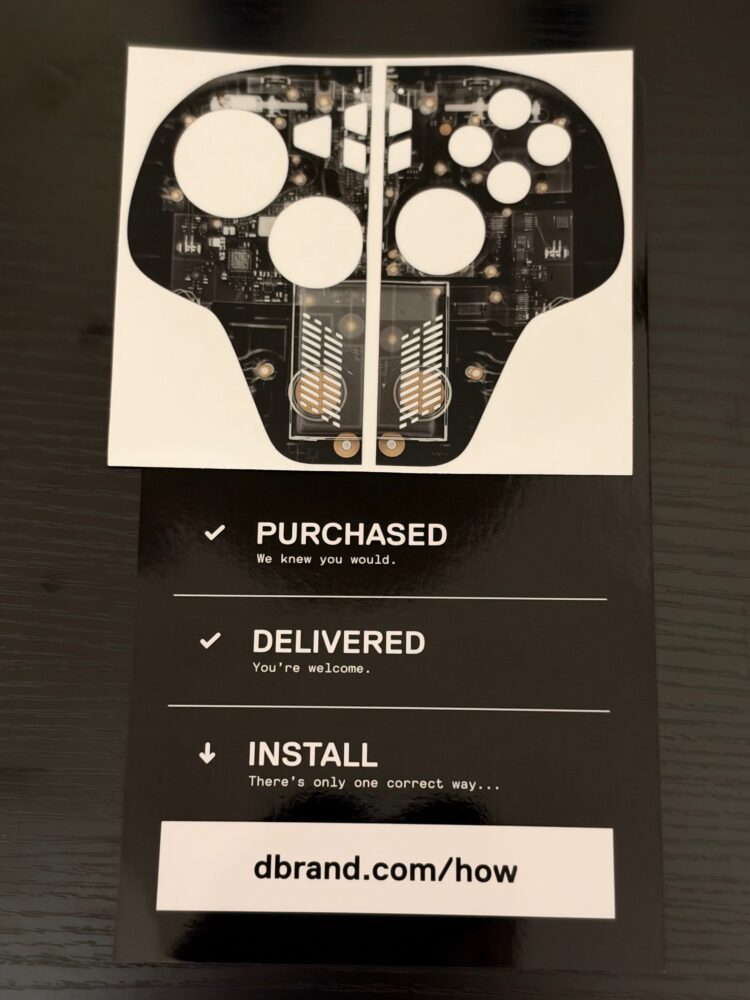
The Pelican Protector Case is a sensible addition for something this expensive, especially when you’re carrying both the handheld and the glasses. Pelican’s reputation for tough cases is well earned, and it gives real peace of mind when tossing the kit into a bag. The dbrand Killswitch adds grip and protection without hiding the translucent design entirely, and fits the travel-focused vibe of the whole bundle.
There’s also two months of Xbox Game Pass Premium included, which gives you an instant library to dive into. At this price it’s a nice bonus rather than a reason to buy, but it means you can start playing properly the moment you unbox it.
Verdict
The ROG Xbox Ally X20 Bundle takes one of the best Windows handhelds around and fixes its biggest weakness with a stunning 7.4-inch OLED display, then sharpens the controls with TMR sticks, flush face buttons and a clever transforming D-pad. Battery life is good, the connectivity is excellent, the design is a real head-turner, and the XREAL R1 glasses turn portable play into something genuinely immersive and fun. Performance stays at regular Xbox Ally X levels, which is strong but not new, and the hefty 756g weight is noticeable during long sessions.
The sticking point is value. At AED 10,999, you’re paying a big premium for anniversary styling, the glasses, the case and the skin, and that only makes sense if you’ll actually use them. For ROG collectors, frequent travellers and anyone who wants the most immersive portable gaming kit available, it’s an easy recommendation. If you just want a great handheld, the regular Xbox Ally X or the standalone X20 will get you most of the way for far less.