

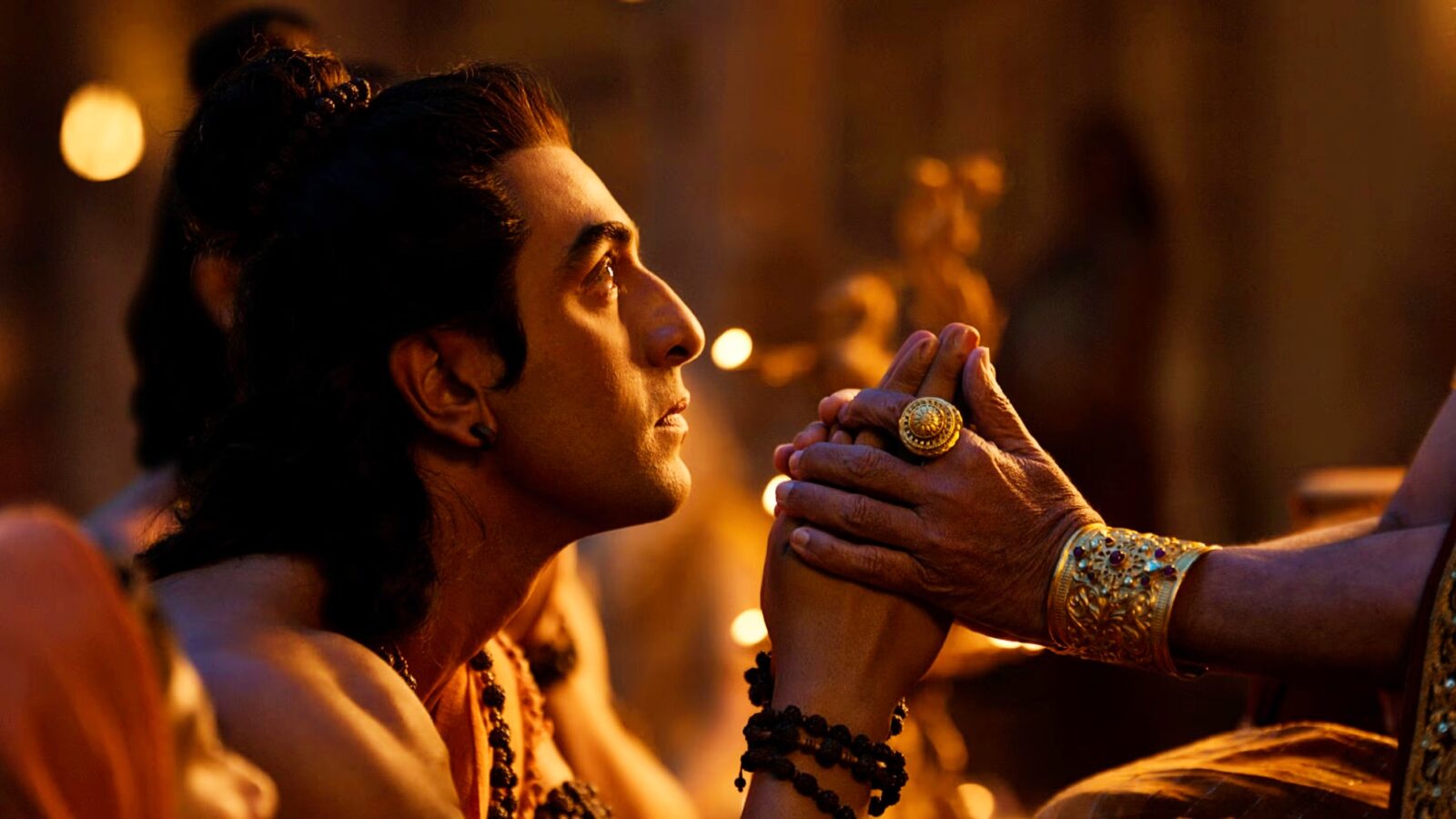
TL;DR: Yash’s fascinating Ravana deserves a better movie. Ramayana: Rise of a Legend is a handsome but hollow Part 1, undermined by a dull Rama, messy action and an off-putting AI-dubbed English version.
Few stories carry the cultural weight of the Ramayana, a tale so embedded in Hindu and Indian life that adapting it is closer to handling a sacred heirloom than optioning an IP. Nitesh Tiwari’s take, starring Ranbir Kapoor as Rama, Yash as Ravana and Sai Pallavi as Sita, is clearly designed as India’s answer to the franchise blockbuster, complete with a sequel already promised. The English-language version heading to Western cinemas from November 5 runs 162 minutes, which is 18 minutes shorter than the original Hindi cut. It has also traded its Indian “Part 1” subtitle for “Rise of a Legend,” a rebrand that hides the most important thing to know going in. This is only the first half of a story, and it stops right where the central conflict of the epic is about to begin.
The setup is a cosmic war between the god-like Devas and the demonic Asuras. Ravana, ruler of the island kingdom of Lanka, prays for the power to free his people from Deva domination, then curdles into a conqueror who swallows neighbouring cities alongside his siblings. In response, the protector god Vishnu is reborn as Rama, one of four princes of Ayodhya, destined to end the Asura threat. Most of the first hour is spent on origins, and by the time Rama accepts 14 years of exile so a brother can take the throne, the film still feels like it is clearing its throat. The hero and villain never actually meet, which makes this Ramayana movie review feel a bit like reviewing a season premiere that costs a cinema ticket.
Yash turns Ravana into the movie’s beating heart
The best decision this film makes is how it handles Ravana’s famous ten heads. Instead of stacking them on his shoulders, Tiwari treats them as ten warring personalities inside one mind: young and old, swaggering and fearful, all bickering for control. It is a genuinely clever reinterpretation, and Yash sells it with a performance that is both physical and sly. He throws enemies around with pro-wrestling ferocity, dances in fiery devotion to Shiva and lets you watch revenge slowly take shape behind his eyes. Lanka itself is vivid, sensual and alive, while Ayodhya feels stiff and austere by comparison.
That contrast creates a problem the film never solves. Much like Killmonger in Black Panther, this Ravana has a grievance that makes more emotional sense than anything driving the hero, and I found myself far more curious about him. Yet whenever the story flirts with that moral grey zone, it snaps back to a strict light-versus-darkness framework. The film wants the complexity of a modern anti-villain without committing to what that complexity means. The result is a fascinating character trapped in a story that refuses to let him be fully interesting.
Ranbir Kapoor’s Rama never becomes a person
Rama is presented as virtue made flesh, and that is exactly the problem. Characters constantly describe his kindness and talent, but the screenplay rarely lets him demonstrate either, so the devotion surrounding him feels assumed rather than earned. Kapoor plays him with a solemn stillness that suits this version of the character, which is not the compliment it sounds like. His powers arrive through gurus unlocking dormant abilities rather than through training or struggle, a little like Neo downloading kung fu in The Matrix without any of the thrill. Each chapter becomes a new forest, a new CGI monster and a new bow-shot victory.
Sai Pallavi’s Sita fares slightly better, with more agency and a few sword-wielding moments that hint at a bolder interpretation. Those flashes are brief, though, and she is quickly pushed back into a more passive role. Worse, there is very little chemistry between Rama and Sita, which is a serious issue when their bond is supposed to fuel the entire saga. Ravi Dubey’s Lakshmana is tasked with comic relief, but his one-liners land with an awkward thud. Without a compelling central couple, it is hard to care where Part 2 will take them.
The AI lip-sync dub is distracting
The English version uses an in-house generative AI system called Brahma A.I. to reshape the actors’ lip movements to match the English dialogue. On paper, it sounds like an ambitious alternative to traditional dubbing. In practice, mouths move with an elastic, overcooked quality that drags you out of the moment, especially in close-ups. The earliest example comes when the creator-god Brahma appears as a constellation-like figure with a digitally animated mouth, and it is more unsettling than divine. Some of the English vocal performances also sound oddly modern and casual for a mythic epic.
The shorter English cut also strips out most of the singing and dancing, which removes one of the most distinctive tools of Indian blockbuster filmmaking. Without those musical beats, the film loses some of its personality and much of its sense of rhythm. If you have access to the original Hindi version, I suspect it will offer a more coherent experience. This edition feels like an export product designed to be easy to sell rather than exciting to watch.
Lavish visuals, chaotic action and a score without a pulse
When the camera holds still, the craftsmanship is obvious, from the opulent costumes to the grand palace sets. The problem begins once the fighting starts. Individual shots can look striking, but strung together they become frantic, with the focus jumping around the frame and no clear sense of geography. The creature designs are often unattractive, and the fights lack the weight that makes fantasy combat feel consequential. Even with Hans Zimmer and A.R. Rahman delivering a thunderous score, the music struggles because the scenes underneath it have no internal momentum.
There are moments that work. A sharp cut from a nightmare to an empty throne powerfully captures the burden of kingship, and the climactic mid-air battle is the one action sequence that feels clear and genuinely imaginative. However, that sequence belongs to a supporting character who has barely registered before then, not to Rama. It is telling that the film’s best set piece happens without its hero. That leaves the protagonist’s real development, and arguably the movie’s real story, postponed for the sequel.
Verdict
Ramayana: Rise of a Legend has big ambitions, an impressive production and a terrific Yash performance as a Ravana whose ten inner voices are the smartest idea in the film. Unfortunately, it is weighed down by a lifeless Rama, a weak central romance, chaotic action, unattractive CGI and an AI lip-sync dub that constantly pulls attention away from the drama. Viewers already devoted to the epic, especially during Diwali, may find enough spectacle and familiarity to enjoy. Newcomers are likely to be left with half a story and little reason to come back for the rest.