
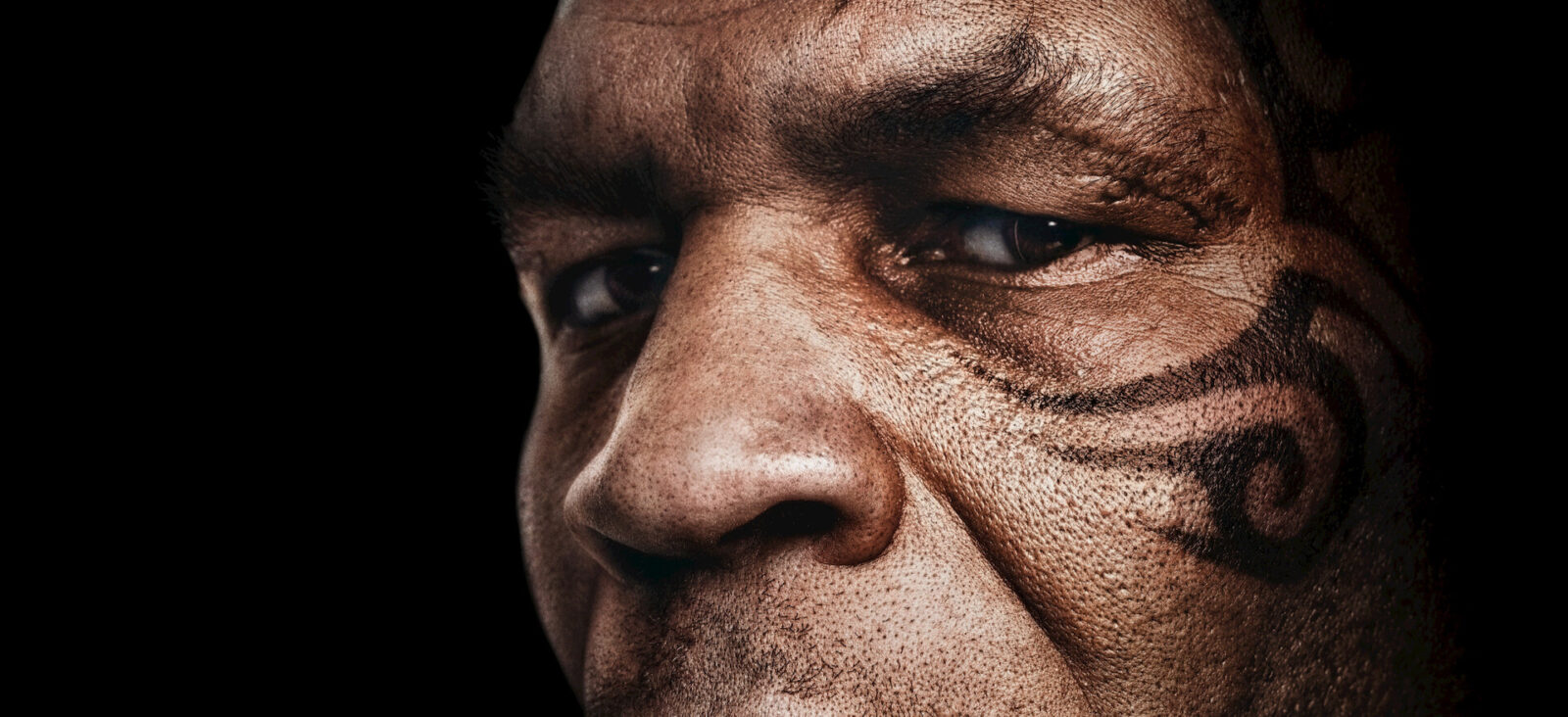
TL;DR: Netflix’s Tyson is gripping whenever Mike Tyson lets his guard down, but formulaic filmmaking, recycled material and too much deference on serious allegations keep it from landing a knockout.
Few celebrities have told their own life story as many times as Mike Tyson, and Netflix’s new four-part docuseries Tyson, directed by Floyd Russ and streaming from October 13, is the latest round in that marathon. We’ve had an Animal Planet series about his pigeons, an Adult Swim cartoon where he solves mysteries, a one-man stage show, and Hulu’s 2022 scripted series Mike, which Tyson loudly condemned despite it covering ground he’d already walked publicly. For an entire generation of gamers, he’s also the final boss of Mike Tyson’s Punch-Out!!, which means his legend arrived in some homes before his boxing record did. So the obvious question hanging over this Tyson review is whether there’s anything left to say. The honest answer is not much, though the man himself remains a magnetic, uncomfortable presence on screen.
Russ structures the series as a straight chronological journey, starting with Tyson’s turbulent Brooklyn childhood and early run-ins with the law. From there it follows him to the youth facility where boxing found him, his life-changing bond with trainer Cus D’Amato, and the brutal run that made him the youngest heavyweight champion in history. The later episodes cover his rape conviction and prison sentence, the infamous Evander Holyfield fights, the death of his daughter, and his long cycle of addiction, recovery and relapse. Tyson isn’t an executive producer, but he’s the gravitational centre of the whole project. Nothing is technically off the table, yet everything moves at whatever speed he allows.
Mike Tyson controls the narrative, and the series lets him
The defining tension of this Netflix docuseries is how often Tyson decides where the conversation goes. He can be startlingly raw one moment, visibly overwhelmed with grief, then shut down an entire line of questioning with a stare that would make any interviewer reconsider their career. Russ keeps several of those moments where Tyson tells him to move on, which at least makes the limits transparent rather than hiding them in the edit. Discussing his marriage to Robin Givens, he admits to some abuse while sidestepping other allegations. On the rape conviction, he offers only brief denials, and with neither Givens nor Desiree Washington taking part, his version goes largely unchallenged. That imbalance is the series’ biggest problem, because a documentary that defers to its subject on the most serious chapters of his life stops being an investigation and starts feeling like a sanctioned memoir.
Still, it’s hard to deny Tyson’s pull as a screen presence. He swings between funny, frightening, thoughtful, crude, eloquent and incoherent, sometimes within the same answer, and he laughs at things that absolutely shouldn’t be funny. It’s like watching a character from a prestige drama whose writers never settled on one personality, except this is a real person carrying real damage. Newcomers may find that open-wound energy revelatory, but anyone who’s caught his podcasts or past documentaries will recognise most of the beats. The rawness is genuine, but it’s also familiar territory.
The supporting interviews deliver the best moments
Where the series earns its keep is the wider cast of voices. Russ assembles childhood friends, gym partners, family members, fellow fighters and others from across Tyson’s life, and several of them provide the perspective he can’t. Lennox Lewis offers sharp insight, while James “Buster” Douglas reflecting on beating Tyson only weeks after his own mother died is the emotional high point of the whole series. Tyson’s children speak candidly about the good and difficult sides of growing up with him, and former manager Rory Holloway still sounds stung by Tyson firing his entire team years ago. Those interviews give the series a texture that the central sit-down often lacks.
There are also missed opportunities. Commentator Van Lathan occasionally points towards bigger questions about race in America and the cultural weight of the Black heavyweight champion, a topic that could have elevated the series into something genuinely essential. Russ never really follows those threads, which feels especially odd given how deeply Tyson himself knows boxing history. Donald Trump also appears as a talking head, offering predictable opinions on the sexual assault case, and how much value that adds will depend entirely on the viewer.
Formulaic filmmaking keeps Tyson on the ropes
Stylistically, Tyson sticks rigidly to the sports documentary formula popularised by ESPN and HBO, and it rarely throws a combination you won’t see coming. The structure is linear apart from occasional rewinds that jump back a few hours or days without adding much. The editing leans heavily on stock footage, predictable inserts and repeated shots of pigeons, which become a running visual motif long past the point of meaning anything. The fourth episode includes Tyson persuading Russ to smoke hallucinogenic toad venom with him, a moment practically begging for an experimental visual swing, yet the series films it as plainly as everything else. Compared to how Creed or even a well-produced Fight Night trailer captures the violence and poetry of boxing, this feels flat.
Verdict
Tyson is a competent but uninspired docuseries that survives mainly on the sheer force of its subject and a handful of excellent supporting interviews. Mike Tyson remains compelling, volatile and impossible to fully read, and the Buster Douglas and family segments add real emotional weight. However, the series offers little new information, lets Tyson steer around the most serious allegations unchallenged, and never rises above formulaic sports documentary filmmaking. Hardcore boxing fans and people who’ve never heard his story told in full will find enough to stay engaged. Anyone already tired of Tyson’s endless self-portraits, or uncomfortable with how much platform he receives, can safely skip it.