

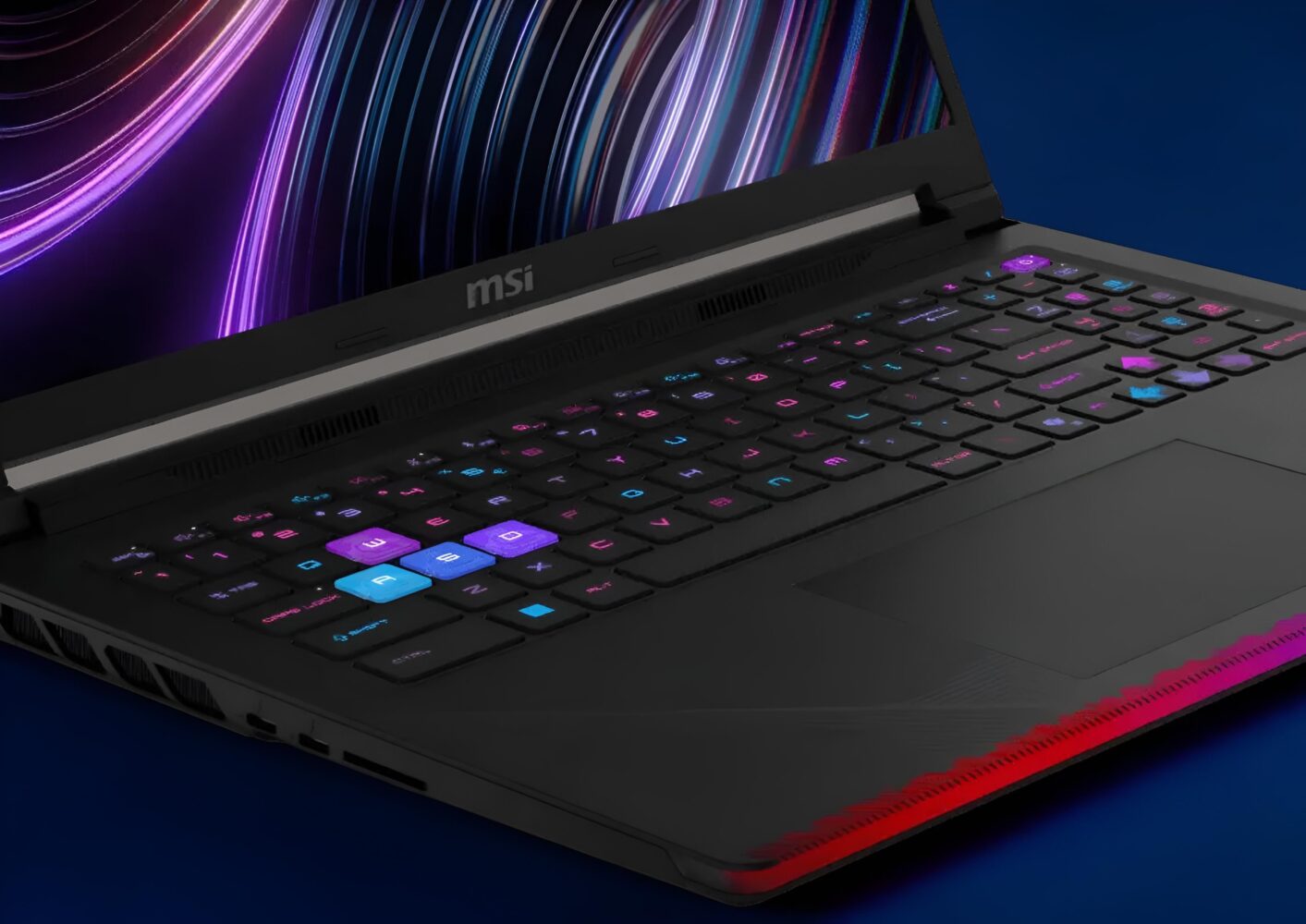
With desktop hardware prices climbing, RTX 5090 availability tightening and the cost of building a high-end PC becoming increasingly difficult to justify, MSI’s performance-focused Raider 16 Max HX makes a surprisingly compelling case for premium gaming laptops.
For years, the argument against buying a high-end gaming laptop was fairly straightforward. You could build a more powerful desktop for the same money, enjoy better cooling and upgrade individual components whenever necessary.
That argument still has merit, but in 2026, the economics are changing. Flagship graphics cards are becoming increasingly difficult to find at reasonable prices, memory costs have risen dramatically, and even assembling a high-end desktop requires a substantial investment before accounting for a monitor, keyboard and other peripherals. Against that backdrop, something like the MSI Raider 16 Max HX starts looking rather interesting.
We’re talking about a 16-inch gaming laptop with up to an Intel Core Ultra 9 290HX Plus processor, an NVIDIA GeForce RTX 5090 Laptop GPU with 24GB of GDDR7 memory and a combined CPU and GPU power budget of up to 300W. Add a 240Hz OLED display, an ambitious triple-fan cooling system and a genuinely useful approach to upgradeability, and MSI has assembled a machine designed to challenge what gamers expect from a portable computer.
It’s certainly not cheap. But given the current state of the PC hardware market, the gap between an expensive gaming laptop and an equally ambitious desktop setup is no longer as easy to dismiss.
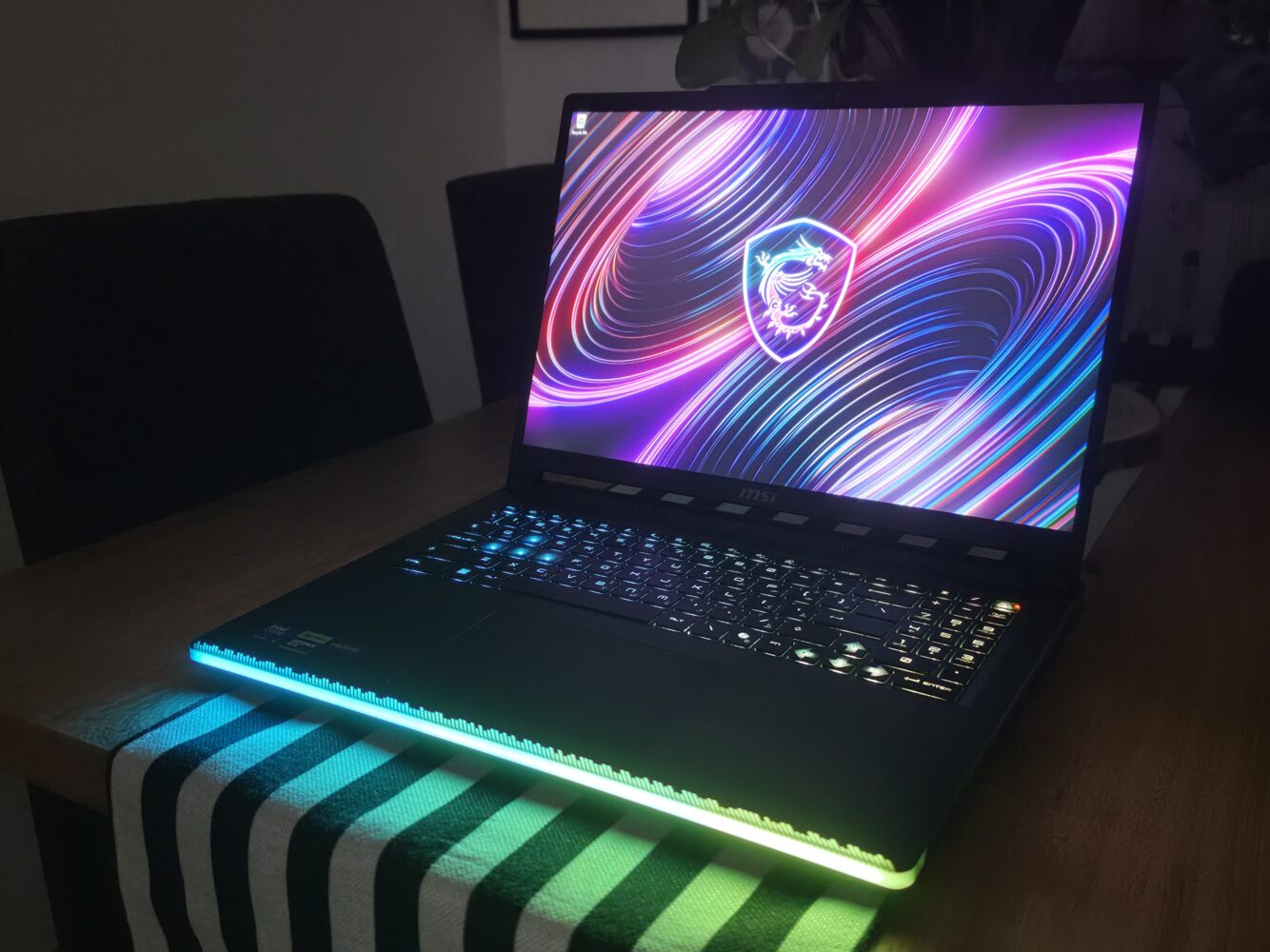
More importantly, the Raider delivers where it matters. Throughout my time gaming and editing on the machine, I was able to run most games at high or maximum graphics settings without meaningful performance issues. It was the sort of experience where I could simply launch a game, turn up the settings and enjoy it. And rendering 4K footage performed outstandingly.
Design: Gaming DNA, Without Any Attempt to Hide It
The Raider 16 Max HX is immediately recognisable as a gaming laptop.
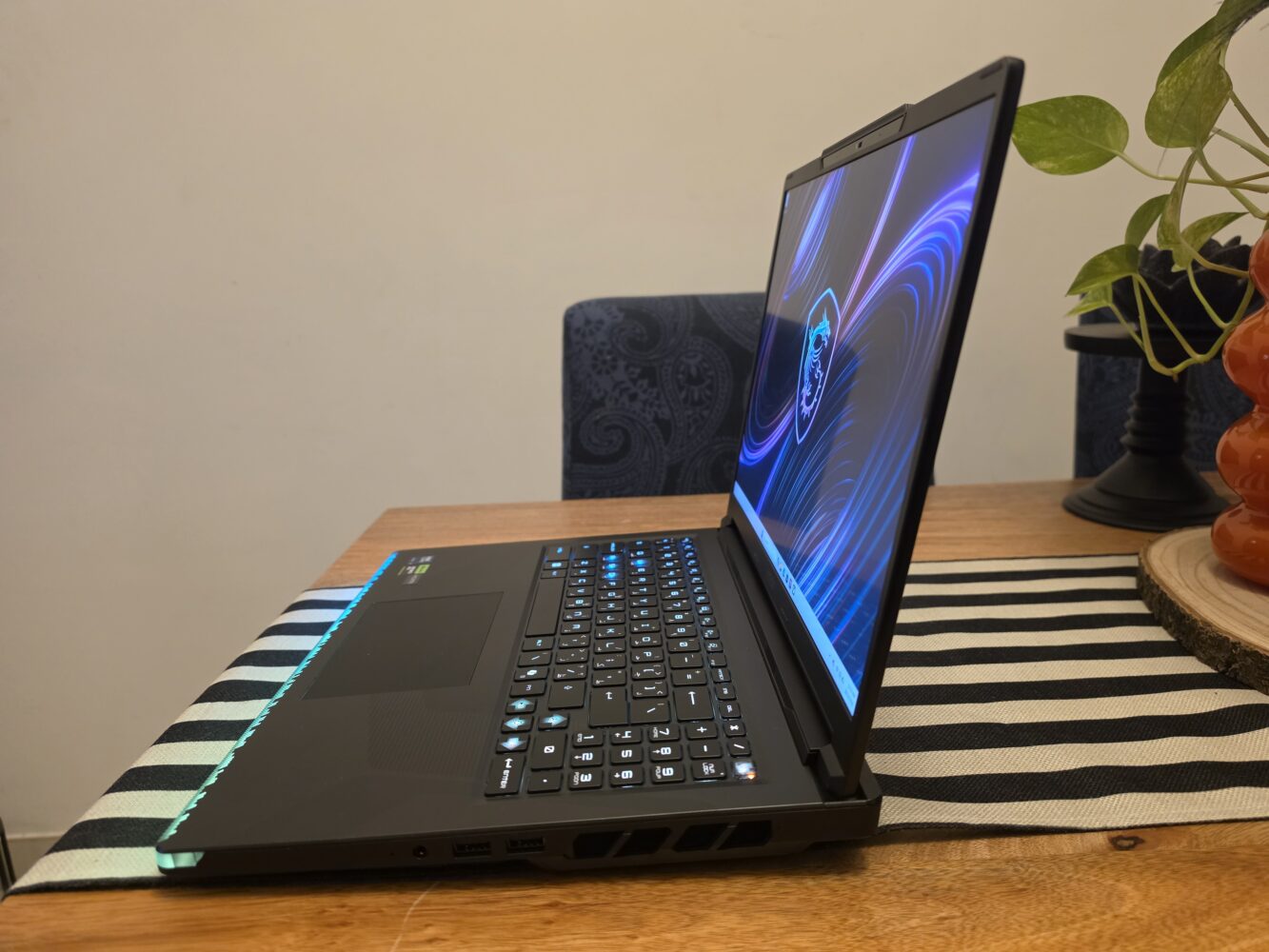
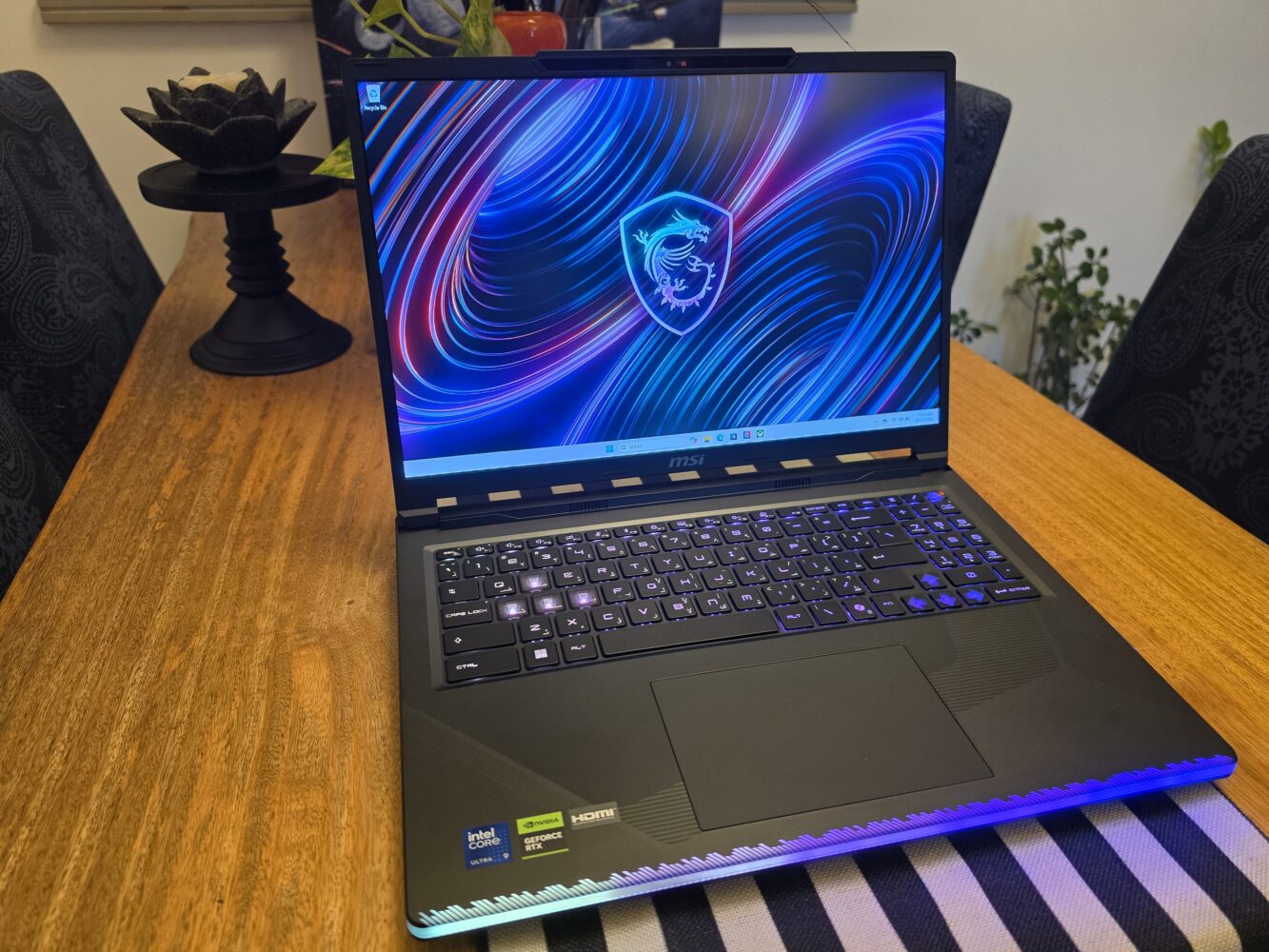
Between the illuminated MSI Dragon Shield on the lid, the geometric detailing, translucent keyboard accents and vibrant RGB light bar stretching across the front edge, subtlety clearly wasn’t at the top of MSI’s design priorities.
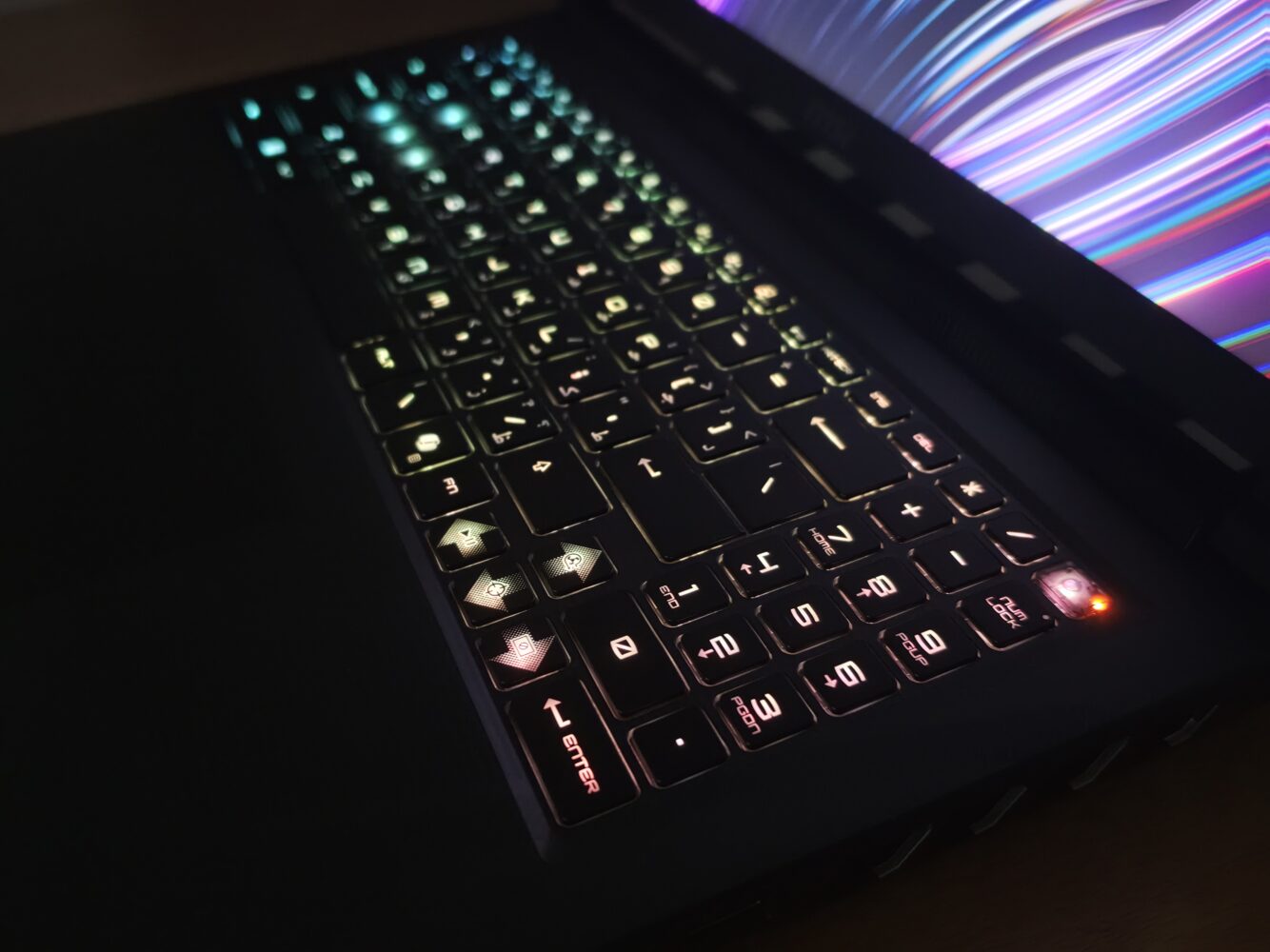
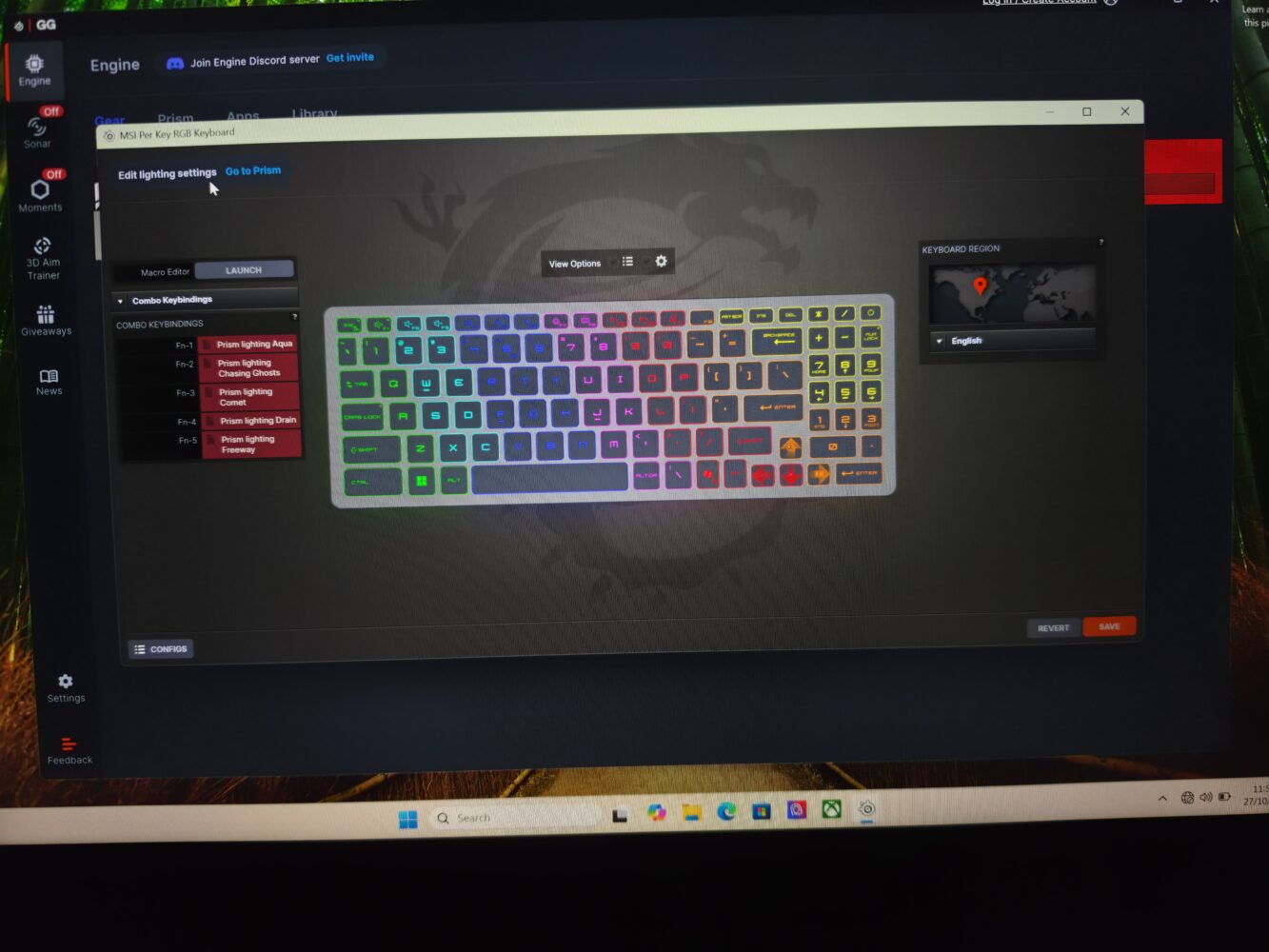
Gaming laptops have developed their own visual identity over the years, and MSI embraces that with the Raider. The front light bar is particularly distinctive, giving the laptop an almost futuristic appearance when paired with the per-key RGB lighting. The lighting can be customised through SteelSeries software, allowing users to dial it down or create more elaborate effects.
The bigger achievement, however, is fitting this much hardware into a 16-inch chassis. At approximately 2.6kg, the Raider is certainly not lightweight by conventional laptop standards. But its weight becomes considerably more impressive when you consider the hardware inside and the cooling capacity necessary to support it.
In terms of the performance available per kilogram, the Raider makes a strong case for itself against many considerably larger desktop-replacement machines. There are some compromises. Despite its premium pricing, the construction relies heavily on plastic, and that becomes noticeable when interacting with the keyboard deck and touchpad. It’s not necessarily an issue of durability, but rather one of perceived quality. At this price, an extensively metal chassis would have helped reinforce the premium experience.
The touchpad is another weak point. Although the surface offers smooth tracking, its physical click can feel somewhat loose or rattly, lacking the solid feedback expected at this level. The translucent keycaps and unusual number-pad arrangement are also design decisions that won’t appeal to everyone.
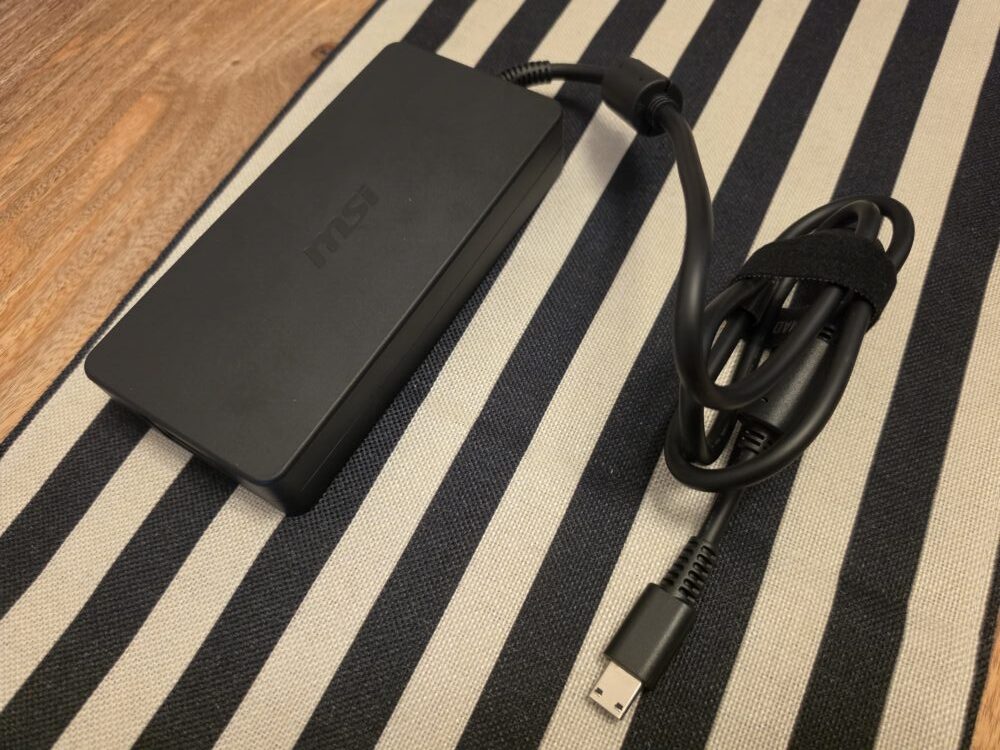
Still, the Raider’s overall form factor remains one of its biggest strengths. It’s a powerful gaming computer that can be packed into a bag and moved between setups without requiring a dedicated desktop tower. Just remember that the supplied 400W power adapter adds considerable bulk to the travel equation.
Display: A 240Hz OLED That Deserves the Hardware Behind It
A powerful graphics processor needs an equally capable display, and the Raider’s available 16-inch QHD+ OLED panel is one of its most appealing features.
With a resolution of 2560 × 1600, a 16:10 aspect ratio and a 240Hz refresh rate, it strikes an excellent balance between image sharpness and gaming performance. While a 4K panel would certainly sound impressive on the specification sheet, native 4K gaming places significantly greater demands on the graphics processor. QHD+ provides plenty of visual detail on a 16-inch screen while allowing the GPU to dedicate more resources to frame rates and advanced graphical effects.
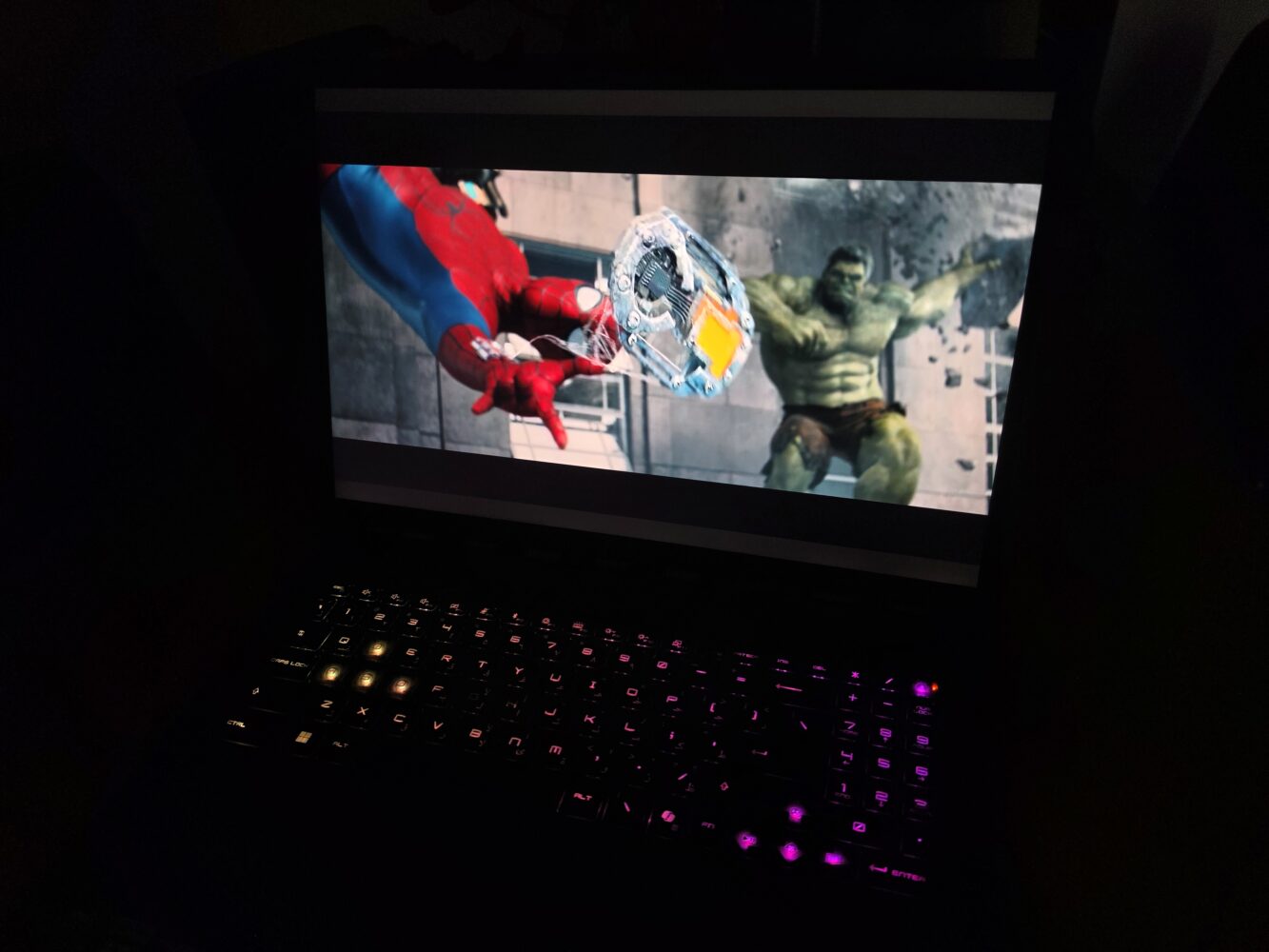
MSI specifies 100% DCI-P3 colour coverage and VESA DisplayHDR True Black 1000 certification for the OLED option, providing additional appeal for HDR gaming, video playback and creative work.
The 240Hz refresh rate also allows the display to take advantage of higher frame rates in less demanding or competitive titles but there are two notable compromises. First, the glossy OLED finish can make reflections more noticeable in bright environments.

Second, the Raider lacks NVIDIA G-Sync and Advanced Optimus support on the internal display. Intel-based variable refresh functionality has been reported in MSHybrid mode on some configurations, but it isn’t the same as having G-Sync consistently available when gaming directly through the dedicated GPU.
For a laptop with this much emphasis on high-end gaming, more comprehensive variable-refresh support would have been welcome. Nevertheless, the available OLED panel remains a compelling reason to consider the Raider. It’s a display capable of making the most of the hardware beneath it.
Performance: The RTX 5090 Finally Gets Room to Breathe
The central attraction of the Raider 16 Max HX is its performance capability.
MSI offers configurations reaching up to the Intel Core Ultra 9 290HX Plus, a 24-core processor comprising eight Performance cores and sixteen Efficient cores. With boost frequencies reaching up to 5.5GHz, the processor is designed to handle demanding gaming and multithreaded workloads.

The graphics options are equally ambitious, extending from the RTX 5070 Ti to the RTX 5080 and flagship RTX 5090 Laptop GPU. I got the RTX 5090 configuration on this review unit. It features 24GB of GDDR7 video memory and supports a maximum GPU power allocation of 175W with Dynamic Boost. This provides substantial graphics capability in a mobile form factor, particularly for games with demanding graphical effects and large texture assets.
Across most of the titles I spent time with, I was able to run high or maximum graphical settings without encountering problems that significantly affected gameplay.
A Productivity Powerhouse
That hardware performance isn’t limited to games. With up to 24GB of dedicated graphics memory and support for as much as 128GB of system RAM, the Raider also has considerable potential for content creation, rendering, 3D modelling and AI-assisted workflows.
For video editors and digital creators, the combination of a powerful GPU and a colour-rich high-resolution display makes the Raider attractive as a multipurpose workstation. The larger VRAM allocation on the RTX 5090 configuration is particularly relevant for workloads involving complex GPU-rendered scenes or local AI models.
It won’t replace every dedicated professional workstation, and the performance of AI applications depends heavily on their memory requirements and software optimisations. Nevertheless, the flexibility is valuable.
The Raider has enough processing and graphics capability to handle serious productivity workloads. Through MSI OverBoost technology, supported configurations can allocate up to 300W of combined power across the CPU and GPU under maximum-performance conditions.
Many gaming laptops use power limits to balance performance against cooling capability, acoustics and chassis dimensions. MSI has instead prioritised providing its flagship hardware with substantial available headroom. The system combines three cooling fans, six heat pipes and a five-exhaust heatsink arrangement, distributing airflow across the chassis to remove heat from the internal components.
There are compromises, of course. At maximum fan speed, the cooling system can become noticeably loud, especially in its most aggressive performance modes.
I experienced brief CPU temperature spikes approaching 102°C+ under particularly demanding conditions. Such peaks are different from sustained operating temperatures, but they reinforce just how hard the system can push its hardware. The upside of the new thermal design is that the wrist-rest area remains relatively comfortable during gaming, despite the considerable heat being generated internally.
Keyboard, Audio and Connectivity: Mostly the Right Decisions
The Raider features a SteelSeries keyboard with per-key RGB customisation.
The keyboard is suitable for both gaming and everyday typing, with the lighting customisation adding personality without compromising its basic functionality.
Not every part of the layout is equally successful, however. The number pad feels somewhat unconventional, with a compressed arrangement that requires adjustment, particularly for users accustomed to a full-size desktop keyboard. The translucent keycap styling is also likely to divide opinion.
The touchpad, meanwhile, is less impressive than the keyboard. Its smooth surface makes navigation easy enough, but the physical clicking mechanism doesn’t feel especially substantial for a premium machine. As with most gaming laptops, a dedicated mouse will provide the better experience for gaming.

Audio is handled by a four-speaker system designed with Dynaudio, consisting of two speakers and two woofers, supported by Nahimic processing. It’s a useful arrangement for casual gaming and media consumption, although a dedicated headset remains preferable for competitive multiplayer titles and more precise positional audio.
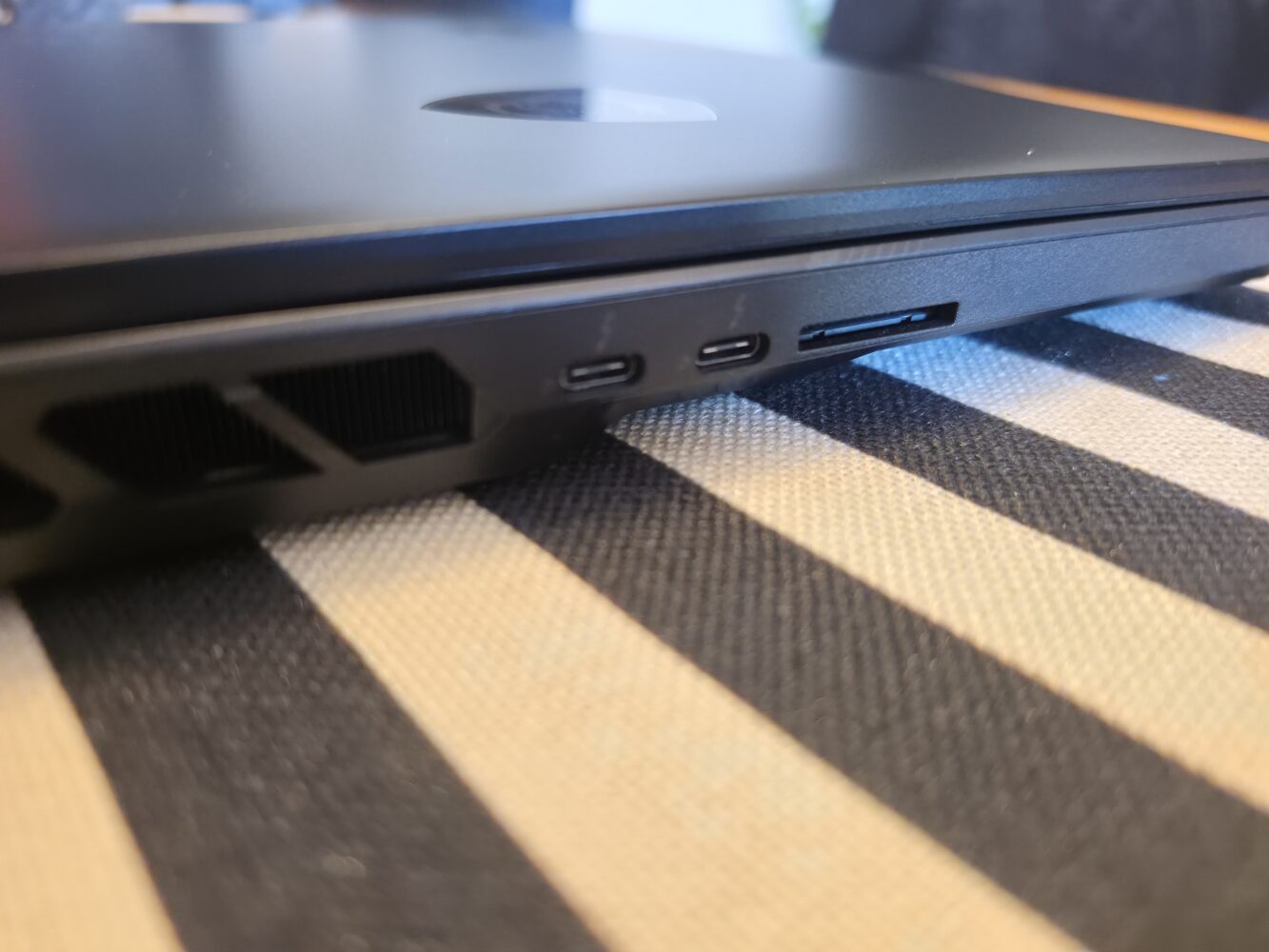
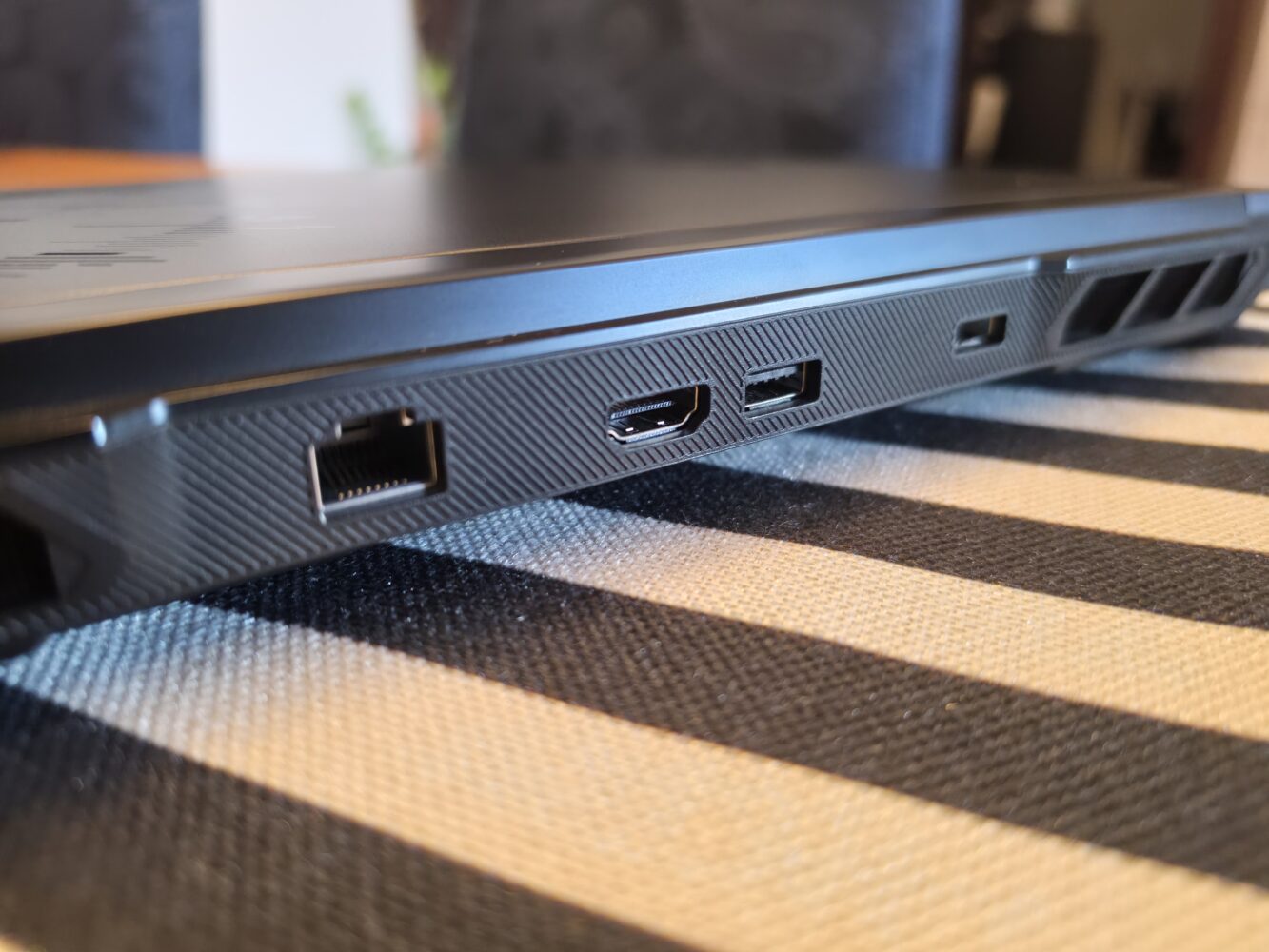
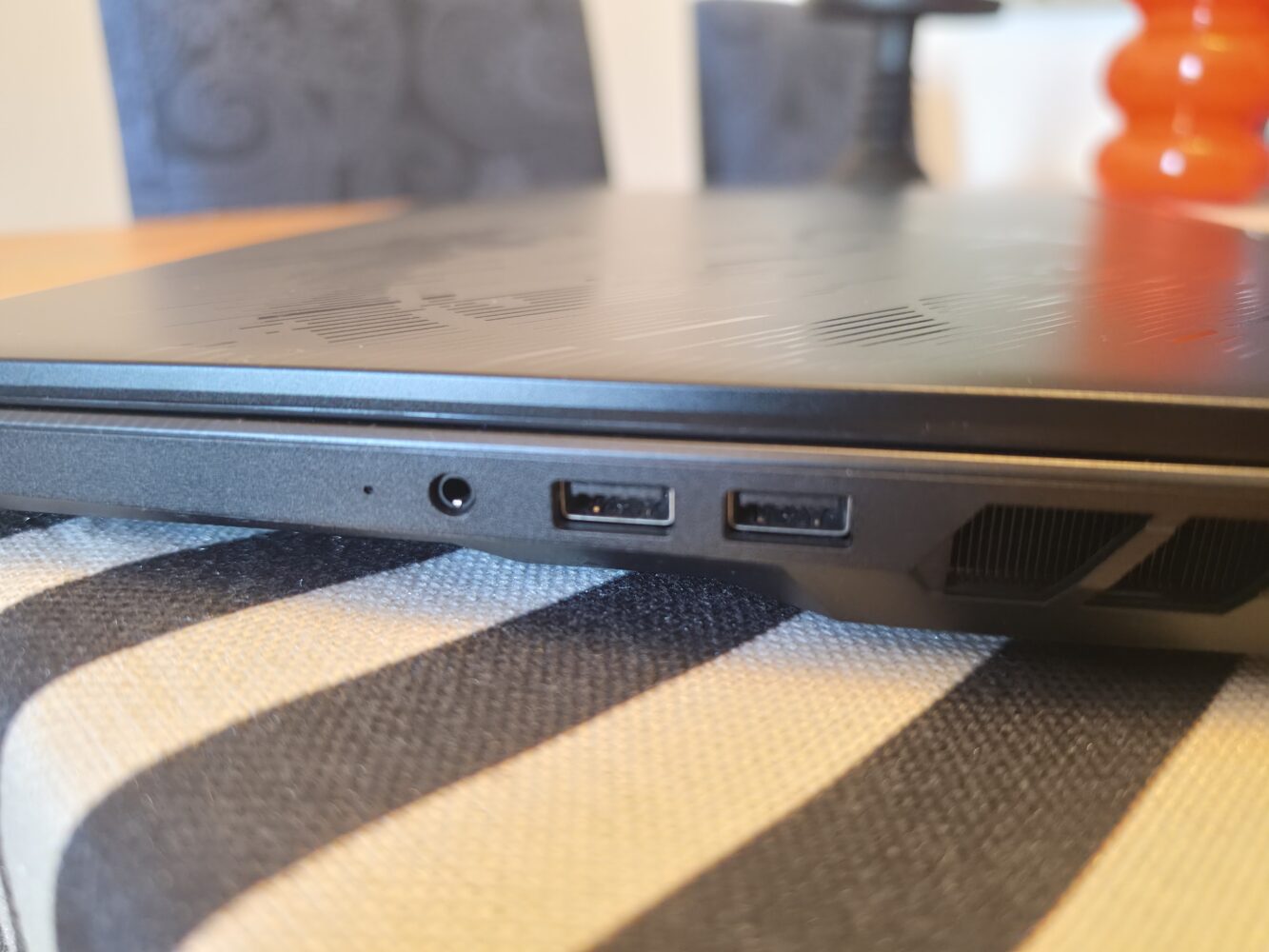
Connectivity, however, is an area where MSI deserves credit. The Raider provides two Thunderbolt 4 connections, three USB-A 3.2 Gen 2 ports, HDMI 2.1, an SD Express card reader, a 2.5Gb Ethernet connection and a 3.5mm audio jack. Wireless connectivity includes Wi-Fi 7 and Bluetooth 5.4.
An infrared Full HD webcam supports Windows Hello facial authentication, and MSI has included a physical privacy shutter. The webcam itself is fairly conventional rather than a standout feature, but it’s sufficient for general video calls and online meetings.
Upgradeability
One of the Raider’s most practical features is something that has nothing to do with frame rates. MSI’s Quick Access Panel provides easier access to the laptop’s memory and SSD slots without requiring removal of the entire bottom chassis.
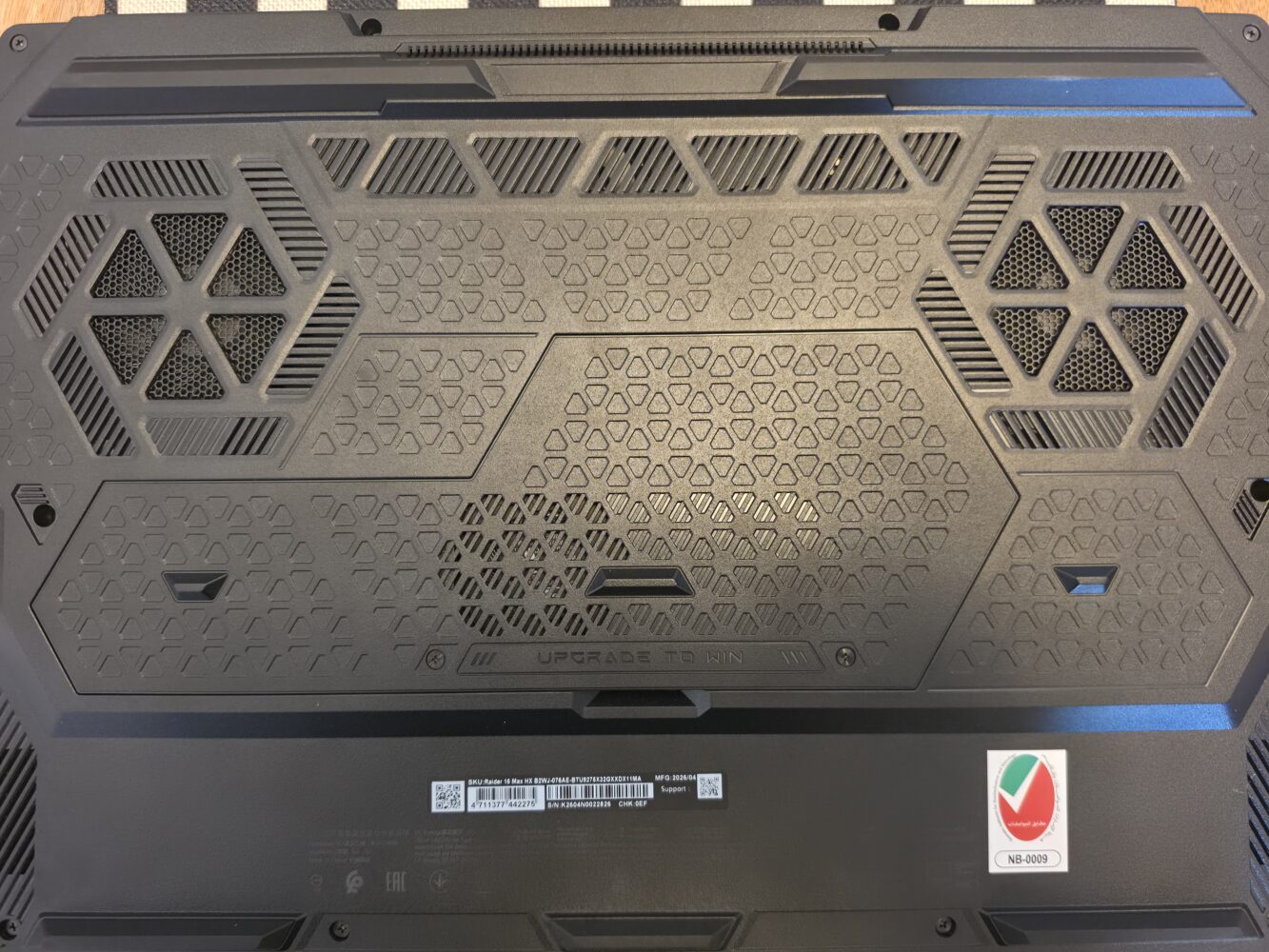
This is a particularly welcome decision in a market where many premium computers are becoming increasingly difficult to upgrade. The Raider supports two DDR5 memory slots, with maximum supported capacity reaching 128GB, and includes two M.2 SSD slots.
One SSD slot supports PCIe Gen5 x4, while the second supports PCIe Gen4 x4. That gives users considerable flexibility to expand storage and memory as their needs change. Modern AAA games can occupy enormous amounts of storage, so having the ability to add a second SSD is especially valuable. It’s also helpful for people using the Raider for creative applications, where project files, video assets and rendering caches can rapidly consume available space.
The Quick Access Panel doesn’t make every internal component replaceable, and GPU upgrades are obviously not an option. But it does address two of the most common upgrade requirements in a straightforward way. In a machine this expensive, the ability to extend its useful lifespan through storage and memory upgrades is a meaningful advantage.
Battery Life: Surprisingly Usable When You’re Not Gaming
Battery life is rarely the primary reason to purchase a laptop equipped with a high-end HX-series processor and RTX 5090 graphics.
Still, the Raider’s 91.8Wh battery provides a reasonable foundation for working away from the power outlet. The key is using the system’s less demanding operating modes.
With integrated graphics handling lighter workloads and the dedicated GPU inactive, battery performance reaches roughly six to eight hours in favourable usage scenarios, although actual endurance depends on brightness, applications, display configuration and power settings. That makes the Raider more practical for everyday productivity than its performance-focused design might suggest.
Browsing, writing, presentations and other lighter tasks don’t necessarily require the same power budget as gaming.
It’s a different story, as usual when playing demanding titles. The GPU and CPU operate under tighter battery-powered limits, and sustained gaming significantly reduces runtime. For the best gaming performance, the Raider really needs to remain connected to its supplied power adapter.
The RTX 5090 Situation
There’s another reason the Raider 16 Max HX feels especially relevant right now, and it has very little to do with MSI itself. The RTX 5090 is becoming an increasingly difficult product to obtain.
Throughout October 2026, reports have pointed to severe shortages of NVIDIA’s flagship desktop graphics card, with retail availability declining and speculation surrounding production cuts. NVIDIA has maintained that the RTX 5090 has not officially been discontinued and that shipments will continue.
But availability tells a more complicated story. The desktop RTX 5090 has disappeared from NVIDIA’s US marketplace, while some retailers have stopped actively carrying it.
More importantly for the Raider, supply pressure is extending to the RTX 5090 Laptop GPU. Laptop manufacturers have reported deteriorating procurement conditions, restricted shipments and increasing component costs. XMG has warned that RTX 5090 laptop configurations could become substantially more expensive as supply tightens.
This doesn’t mean the RTX 5090 has vanished permanently or that MSI’s Raider will be the last laptop ever to feature it. But it does mean that the opportunity to purchase this tier of mobile hardware at current prices may become increasingly limited.
When the latest flagship desktop GPU is difficult to find, and even laptop manufacturers are facing challenges obtaining their mobile counterparts, buying a complete system with an RTX 5090 already installed starts to carry a different kind of appeal.
A well-equipped RTX 5090 laptop purchased today offers access to a particularly high level of portable gaming performance. As supply constraints intensify, there’s no guarantee that equivalent new configurations will remain available at comparable prices.And while it isn’t a reason to panic-buy expensive hardware, but it’s certainly a factor worth considering.
Verdict: A Desktop Replacement That Arrives at the Right Time
The MSI Raider 16 Max HX isn’t perfect. Its plastic-heavy construction doesn’t always feel as premium as the price would suggest. The touchpad could be better, the keyboard layout takes some adjustment, and the absence of NVIDIA G-Sync and Advanced Optimus is disappointing on a gaming laptop of this calibre.
It’s also relatively heavy, especially once the substantial power adapter is added, and the cooling system can become loud when operating at maximum performance.
But those compromises need to be weighed against what the Raider actually delivers. Its RTX 5090 configuration combines a powerful Intel processor with one of the most capable mobile GPUs available, supported by an unusually generous power budget and a cooling system designed around sustained workloads. The 240Hz QHD+ OLED option is excellent, connectivity is comprehensive, and the Quick Access Panel makes future storage and memory upgrades significantly easier. Most importantly, the gaming experience delivers on the promise of the hardware.
Being able to launch demanding games and play at high graphics settings without constantly compromising on visual quality is exactly what a flagship gaming laptop should offer. What makes the Raider especially compelling, however, is the market surrounding it.
With the cost of high-end desktop components continuing to climb, the RTX 5090 facing mounting availability pressures and gaming laptop prices potentially increasing further, the idea of getting so much performance in one self-contained system feels more reasonable than it might have a few years ago.
The Raider doesn’t replace the performance ceiling or upgradeability of a true high-end desktop. And it certainly doesn’t make expensive gaming hardware affordable. What it does offer is a remarkably capable combination of performance, display quality, connectivity and portability in a single machine. The MSI Raider 16 Max HX is not a budget-friendly gaming laptop, but in today’s increasingly expensive PC market, it might be a smarter purchase than its price tag initially suggests.
For enthusiasts who want RTX 5090-class laptop performance without building an entire desktop setup, the Raider is an increasingly compelling proposition and one that may be harder to replicate at the same price as hardware availability continues to tighten.