
TL;DR: Heart Of The Beast is a tense, warm and emotionally dangerous survival movie powered by Brad Pitt and one unforgettable German Shepherd. Familiar genre beats don’t matter much when James and Odin’s bond hits this hard — dog lovers, consider this your tissue warning.
There are certain things cinema has trained me to handle. Cities can explode, spaceships can get sucked into black holes, superheroes can turn to dust and entire fictional universes can collapse before the popcorn runs out. Fine. But put a loyal German Shepherd in danger and suddenly all bets are off. Heart Of The Beast knows exactly where that emotional weak spot is, presses it repeatedly, and somehow still makes the experience surprisingly fun between bouts of canine-induced panic.
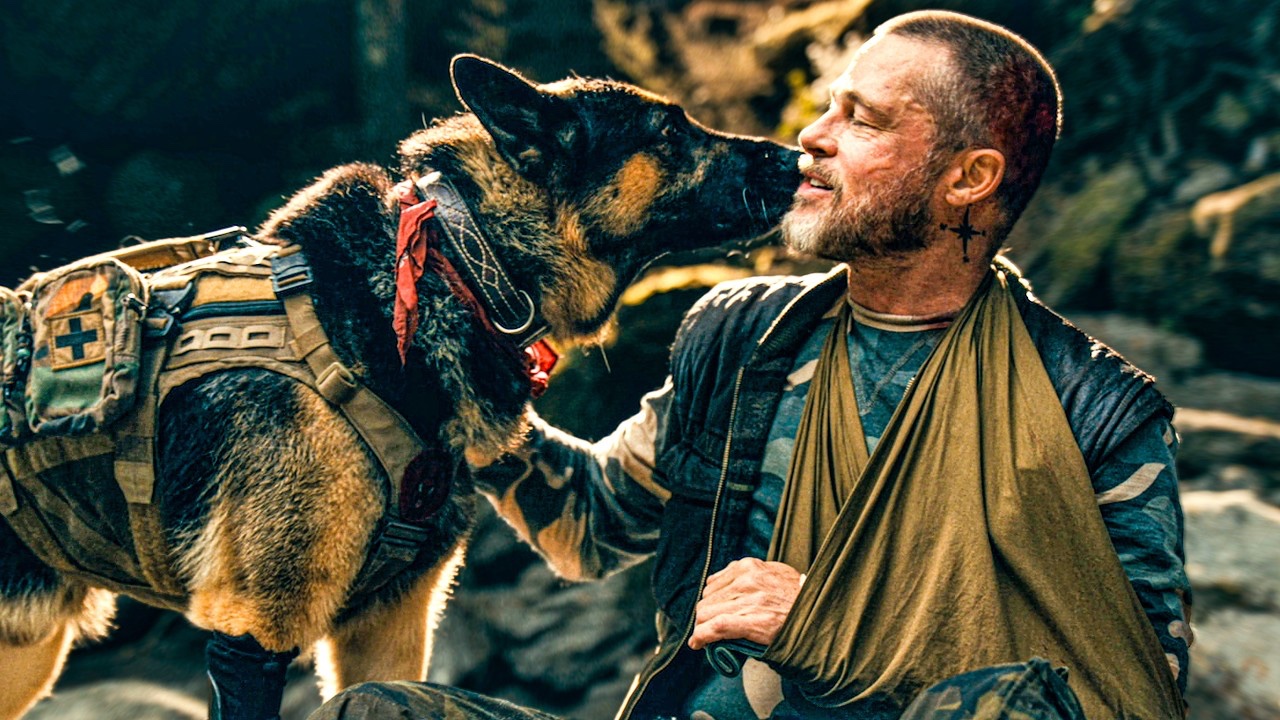
Directed by David Ayer, the film pairs Brad Pitt with Uber, playing Odin, for a wilderness survival adventure that is much sweeter than its bruising title suggests. Pitt plays James, a retired US Army Special Forces soldier carrying the scars of his service, while Odin is his equally battle-tested military working dog, complete with a prosthetic leg and lingering trauma of his own. A camping trip into the Alaskan mountains goes horribly wrong when James suffers a heart attack while flying them home, leaving both stranded after a crash. From there, Heart Of The Beast becomes less about one heroic man saving his dog and more about two broken veterans repeatedly refusing to leave each other behind. Yes, the emotional manipulation has begun. No, I am not strong enough to resist it.
Heart Of The Beast turns friendship into its greatest survival tool
On paper, this is familiar survival-movie territory. James and Odin face brutal terrain, dangerous wildlife, raging water, injuries and the general inconvenience of Mother Nature apparently deciding these two have had things far too easy. The film doesn’t reinvent the wilderness thriller, nor does it particularly try to. You can occasionally sense the next disaster waiting around the corner like you’ve wandered into a video game and the soundtrack has suddenly changed.
What makes those familiar obstacles work is the relationship underneath them. James isn’t simply dragging Odin towards safety, and Odin isn’t merely Lassie with military training waiting to activate Hero Dog Mode. They depend on each other. Odin tries to help James when his heart fails him, while James cares for Odin when the dog is injured. Their survival becomes an ongoing exchange of trust, and that mutual dependence gives even the most conventional danger considerably more emotional weight.
It also means the film can be unexpectedly charming. Between the physical punishment and anxiety, there is genuine warmth in watching these two communicate without needing anything complicated. James talks; Odin responds through movement, expression and behaviour. Somehow it works. Anyone who has ever held an entire conversation with a dog despite receiving precisely zero grammatically correct answers will understand immediately.
Brad Pitt makes James vulnerable without making him helpless
The cleverest decision Heart Of The Beast makes is refusing to turn James into another indestructible Special Forces action machine. His background means he knows how to survive, but his body has other plans. A heart attack immediately strips away the usual fantasy that enough military experience can solve every problem. You can’t tactical-roll your way out of cardiovascular trouble.
That vulnerability gives Brad Pitt something more interesting to play than rugged survivalist mode. With almost nobody else around, he has to carry enormous stretches of the movie opposite a dog, and their relationship needs to feel convincing or the entire thing collapses faster than a badly constructed shelter. Pitt sells it because he doesn’t play his interactions with Odin as cute intermissions between action sequences. James’ attachment to him feels fundamental.
There’s affection, frustration, dependence and fear packed into that relationship, and Pitt allows those emotions to emerge without turning James into a walking speech about how much he loves his dog. That restraint matters. The movie is already engineered to make dog people emotionally unstable; it doesn’t need Pitt staring into the middle distance every five minutes explaining friendship to us.
J.K. Simmons has a brief supporting presence as another adventurer, but this is effectively Pitt and Uber’s show. And yes, Uber is absurdly easy to root for. The editing helps communicate Odin’s perspective without constantly making him behave like a human trapped inside a German Shepherd’s body. A sequence involving Odin’s trauma pushes that idea a little too far, but thankfully the film usually remembers that the quickest route to loving this dog is simply allowing him to be a dog.
David Ayer discovers his softer side without losing the danger
David Ayer might not be the first filmmaker you’d associate with warm-and-fuzzy cinema. His work has frequently lived around violence, masculinity, soldiers, cops and men having extremely stressful days. Heart Of The Beast still fits comfortably within that world, especially through James’ military history and the physical danger surrounding him, but Ayer approaches those familiar ingredients from a more vulnerable direction.
The action works because it remains connected to the relationship. Rivers, animals and falls aren’t simply there to keep the trailer exciting; every threat tests how far James and Odin will go for each other. The pacing helps enormously. At around 100 minutes, the film keeps moving without transforming the wilderness into a ridiculous conveyor belt of increasingly elaborate death traps. There’s enough breathing room for affection between the scares, but not so much that the survival story loses momentum.
Most importantly, Ayer isn’t afraid to get sentimental. Sometimes he gets very sentimental. If your emotional kryptonite involves dogs, congratulations: this movie has found the cheat code. But there is a difference between sentiment that has been earned and a movie simply screaming, “LOOK AT THE SAD DOG!” while a violin threatens you from the soundtrack. Heart Of The Beast mostly stays on the right side of that line because James and Odin’s connection is established through what they do for each other.
Knowing Odin’s fate somehow doesn’t make this less stressful
One of the film’s strangest and smartest choices comes right at the beginning. We see Odin alive before jumping back to the events that stranded him and James in the wilderness. In theory, that’s madness. The sacred law of Dog Movies says the audience must spend approximately two hours whispering, “If anything happens to that dog, I swear…” at the screen.
Instead, Heart Of The Beast gives away a crucial piece of reassurance and then somehow spends the rest of the movie making you worry anyway. Knowing a destination doesn’t mean knowing the cost of reaching it, and the film exploits that distinction beautifully. Every injury still hurts. Every separation still causes anxiety. Every time Odin struggles, the rational part of your brain can remind you what the opening showed, while the emotional part has already packed its bags and left the building.
That structure also reveals what Heart Of The Beast is actually interested in. Survival is important, but survival isn’t the whole point. This is a movie about devotion: the kind that doesn’t require speeches, promises or even a shared language. James and Odin understand each other because they’ve apparently spent enough time together for loyalty to become instinct. The wilderness merely gives that connection the worst possible day to prove itself.
Verdict
Heart Of The Beast is not going to surprise anyone looking for a radical reinvention of the survival thriller. Its path through the Alaskan wilderness is familiar, several dangers arrive exactly when genre instincts tell you they will, and its occasional attempts to humanise Odin’s inner experience can become a little too much. But none of that stopped the central relationship from getting to me.
Brad Pitt gives the movie the vulnerable, understated performance it needs, while Uber provides its enormous furry heart. Together, James and Odin turn what could have been a straightforward wilderness adventure into something warmer, funnier and considerably more emotional. Their bond works because neither exists simply to rescue the other. They’re partners, both carrying scars, both occasionally vulnerable and both seemingly incapable of accepting a future in which the other gets left behind.
And that’s where Heart Of The Beast gets you. Not through enormous twists or revolutionary filmmaking, but through the painfully simple idea that sometimes love looks like refusing to stop walking when someone you care about still needs you. Dog owners are going to be absolute wrecks. Dog lovers aren’t escaping much better. Everyone else gets a tightly paced, beautifully straightforward survival adventure about loyalty, trauma and companionship.
Bring tissues. Bring more tissues than you think you need. Then go home and give your dog an embarrassingly long hug, because Odin has absolutely earned one on behalf of the entire species.