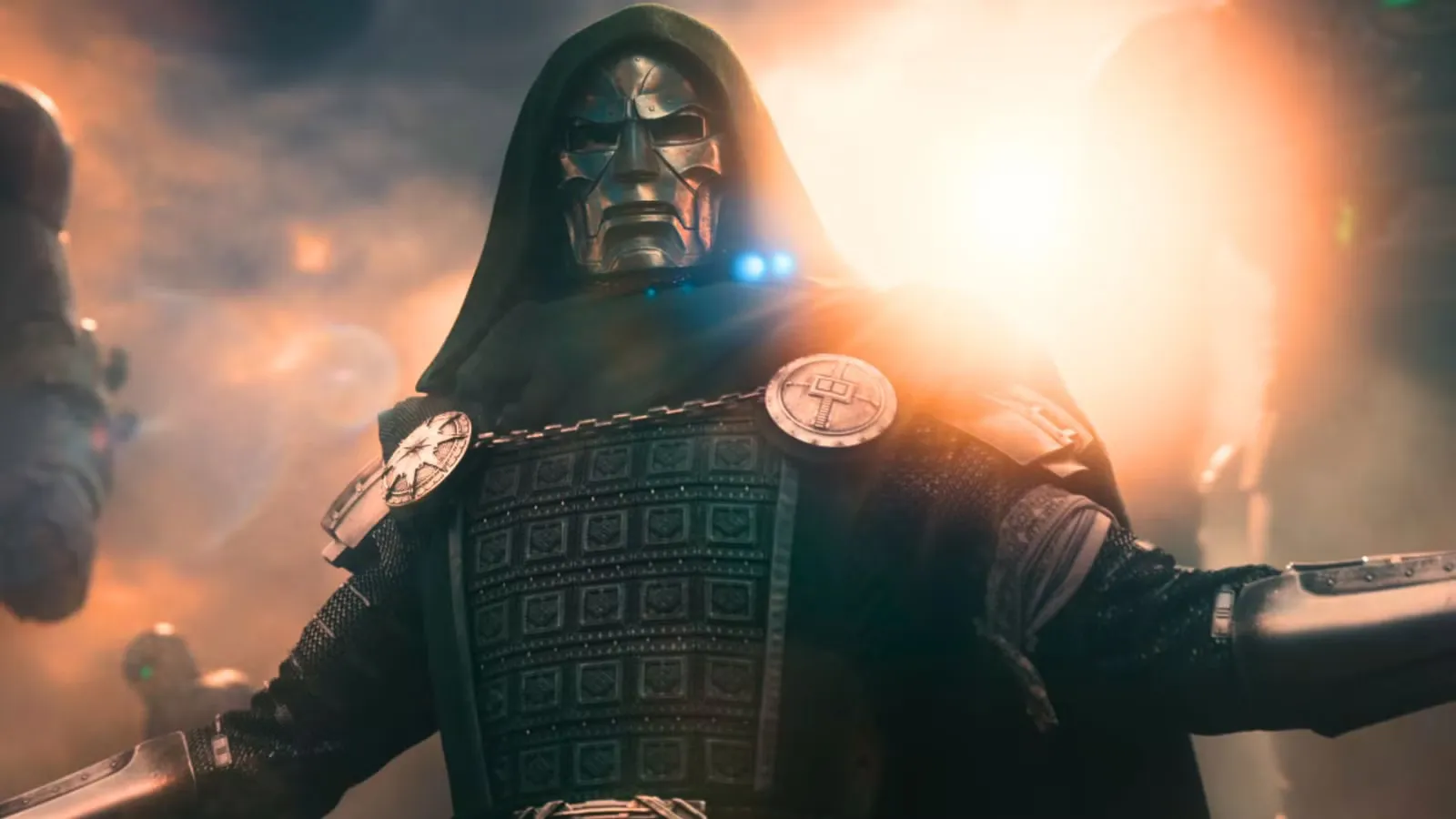

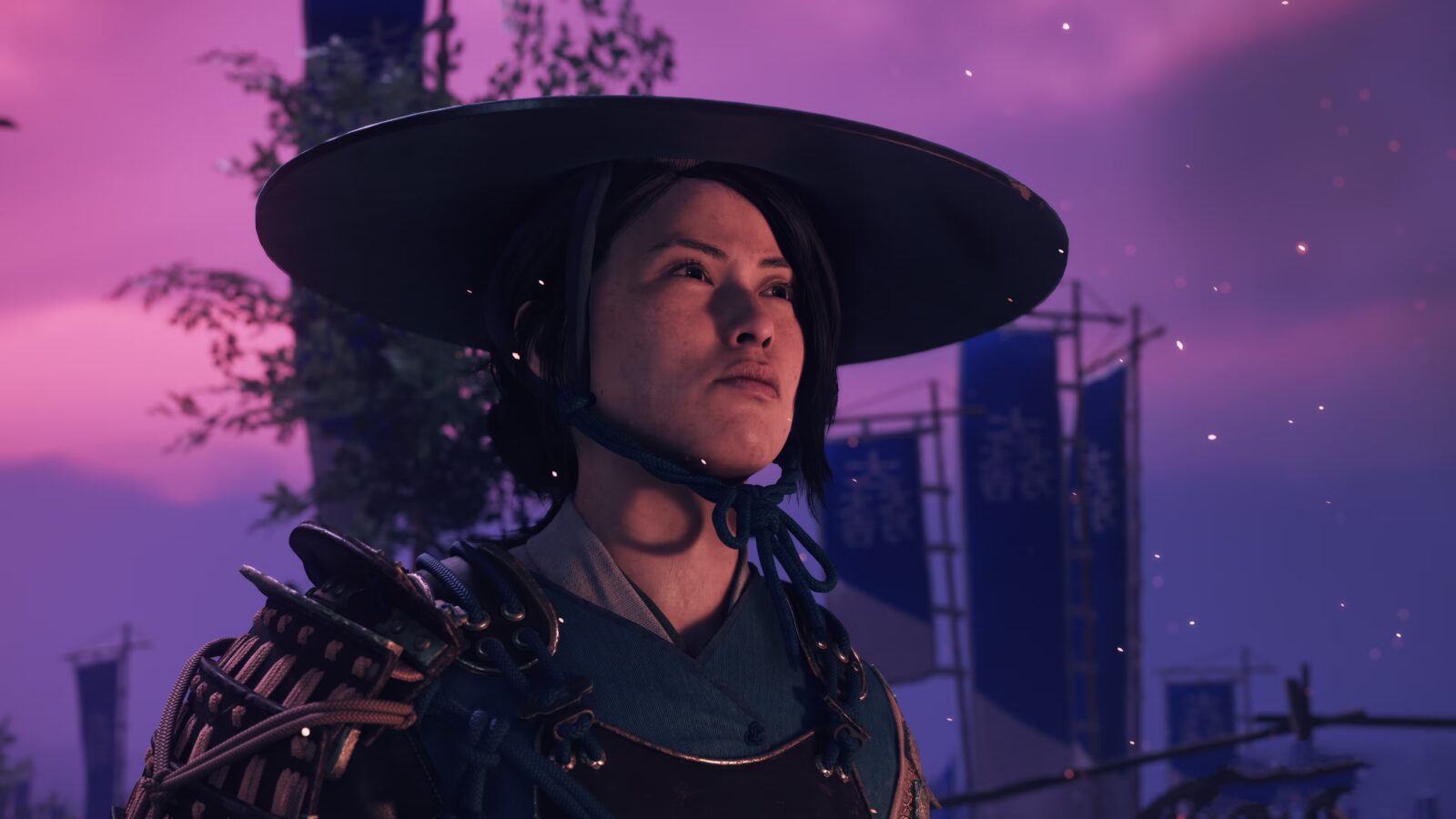
TL;DR: Echoes of Sekigahara adds a restrained, rewarding chapter to Atsu’s past, while Most Wanted turns Yotei’s combat into a deeply replayable roguelike starring a faithful Jin Sakai. Recycled content and some targeting hiccups aside, this is the definitive way to play.
A year after Ghost of Yotei arrived, Sucker Punch has given players two very different reasons to head back north. The Ghost of Yotei Complete Edition bundles the base game with Echoes of Sekigahara, a story expansion set in the middle of Atsu’s campaign, and Most Wanted, a single-player roguelike mode built entirely around combat. One is a character piece that fills in a chapter of Atsu’s life she never talked much about. The other is a pressure cooker designed to test how well you actually understand the game’s swordplay. They share almost nothing in structure, yet they pull in the same direction, sharpening what Ghost of Yotei already did best rather than bolting on something unrecognisable. The result is the most complete version of one of the PS5’s standout exclusives, and a strong reason for existing owners to return.
What the Complete Edition actually includes
Ghost of Yotei: Complete Edition launched on October 1, 2026, exclusively on PS5. Newcomers can buy it outright, while anyone who already owns the base game can upgrade for $15 through the PlayStation Store. Beyond the two headline additions, the package also folds in a selection of extras, including some that were previously exclusive to the Digital Deluxe Edition. It’s also worth noting that the base game itself has been steadily improved since launch, with several updates adding content, features and polish over the past year. So even before touching the new material, returning players are stepping into a more refined version of the game they remember. For $15, the upgrade is easy to justify, particularly given how much Most Wanted alone can extend the game’s lifespan.
A flashback expansion that lives inside the campaign
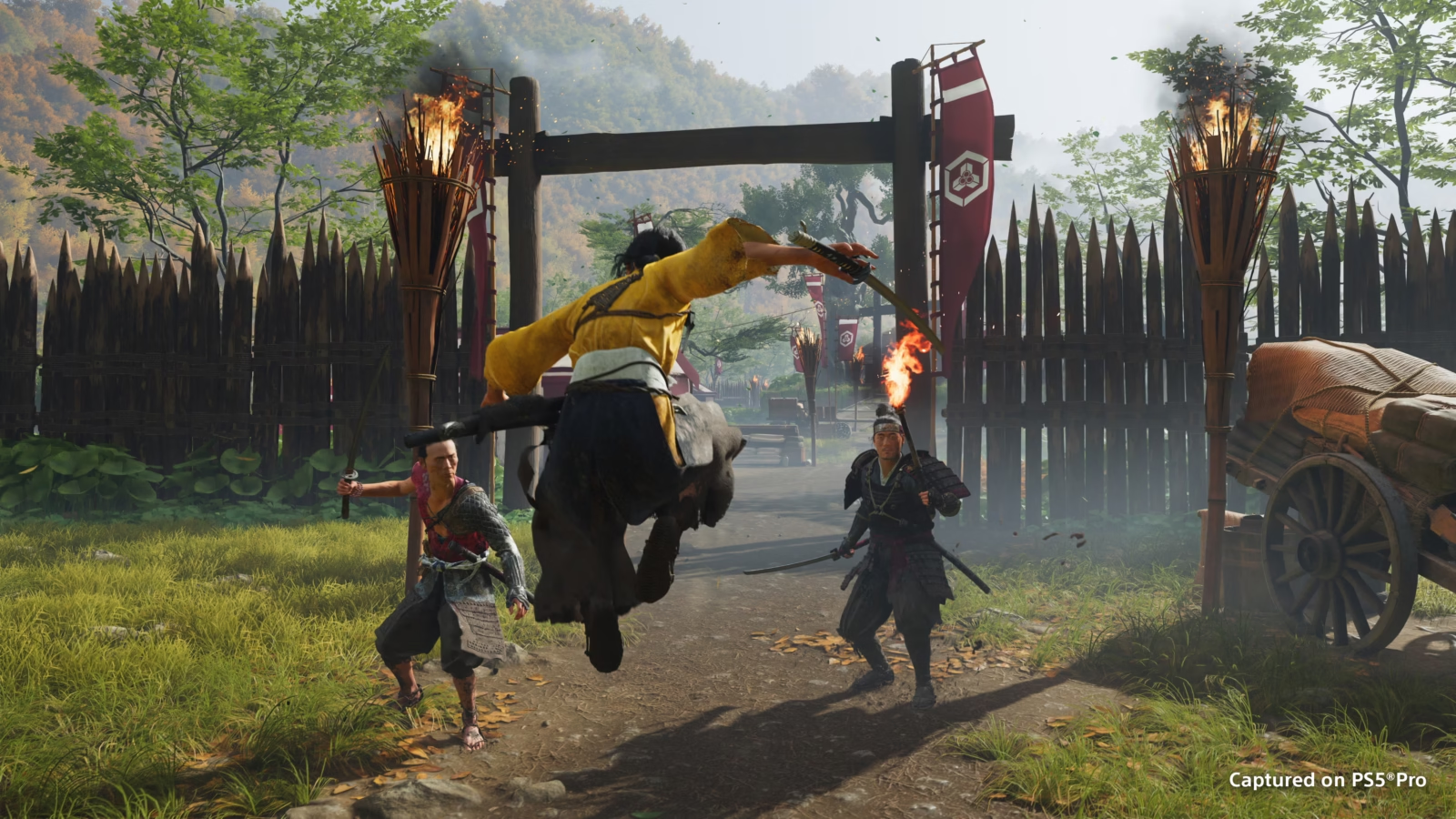
The first thing to understand about Echoes of Sekigahara is where it sits. Rather than continuing Atsu’s story after the credits, it slots into the middle of the campaign, unlocking after roughly 10 hours of progress once you’ve completed a number of key missions and taken down some of the Yotei Six. At that point, a bounty titled “Nagato, the Handsome” becomes available, and following it leads Atsu into the Ashoro Foothills, an all-new region. I like the logic of this placement, because the expansion is about who Atsu was before her quest for revenge began, and that context lands best while her story is still unfolding. The trade-off is that players who already finished the game and were hoping for a sequel-style continuation won’t get one. Revisiting it post-game can also feel a little awkward narratively, since the expansion assumes events are still in motion that you may have already resolved. It’s not a dealbreaker, but it’s worth knowing before you go in expecting an epilogue.
Atsu, Nagato and the ghosts of Sekigahara
Nagato is the heart of this expansion. He’s a former comrade of Atsu’s from the frontlines of the Battle of Sekigahara, where the two held high rank and drifted into a romance while preparing for the fighting ahead. Something went wrong between them three years before Yotei’s events, and Atsu’s decision to track him down is as much about settling that unfinished business as it is about any mission. In the present, Nagato has his own agenda: a large cache of Lord Saito’s gold is believed to be hidden somewhere in the region, and he intends to liberate it. That gives the pair a reason to cooperate while Atsu works out what he’s really after. Along the way, they also set about crippling Saito’s supply lines and dismantling The Vipers, a faction of The Snake’s followers who’ve been running wild since Atsu killed their master at the start of her story, with several would-be successors fighting to claim his place.
Predictable on paper, compelling in practice
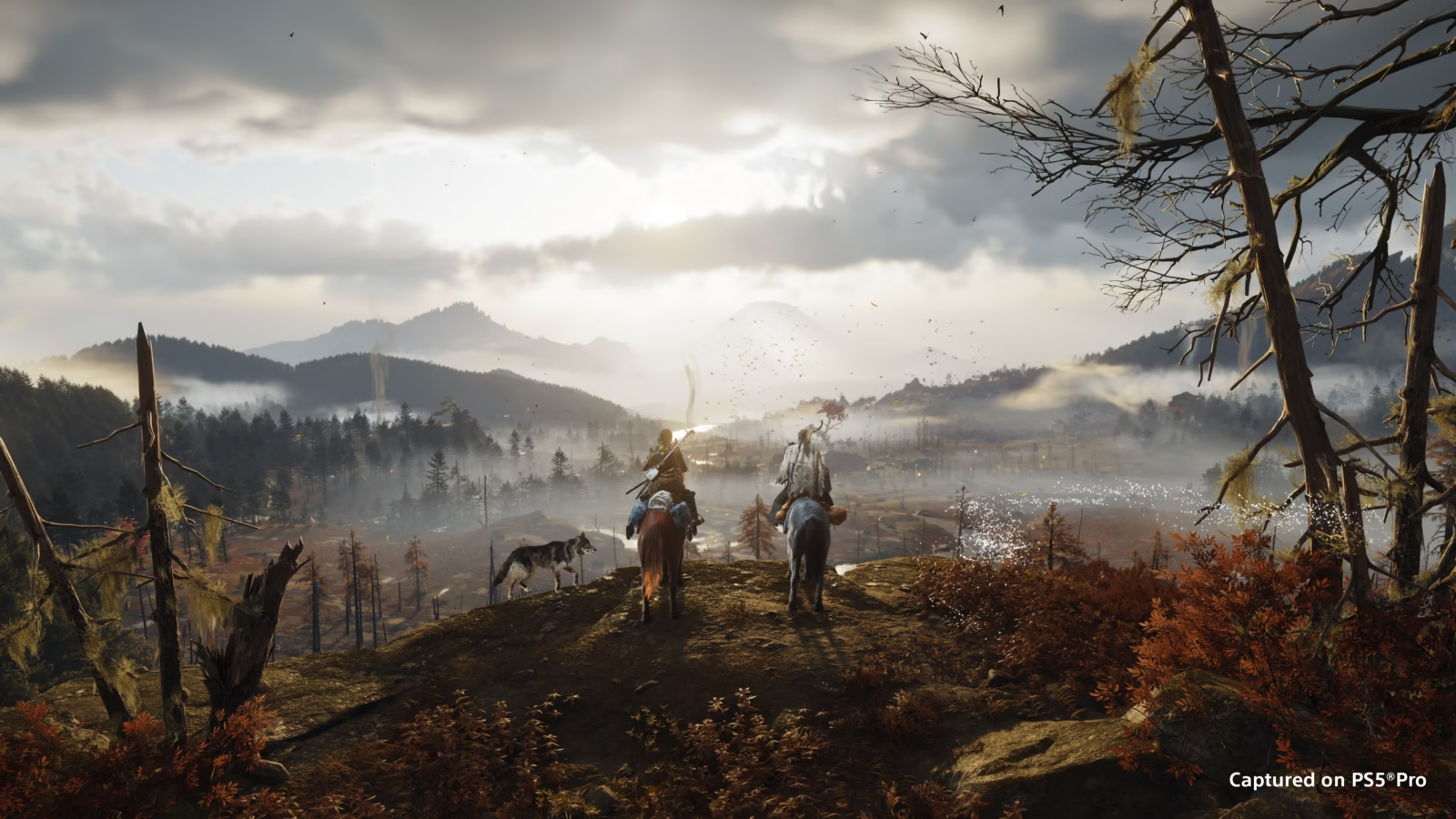
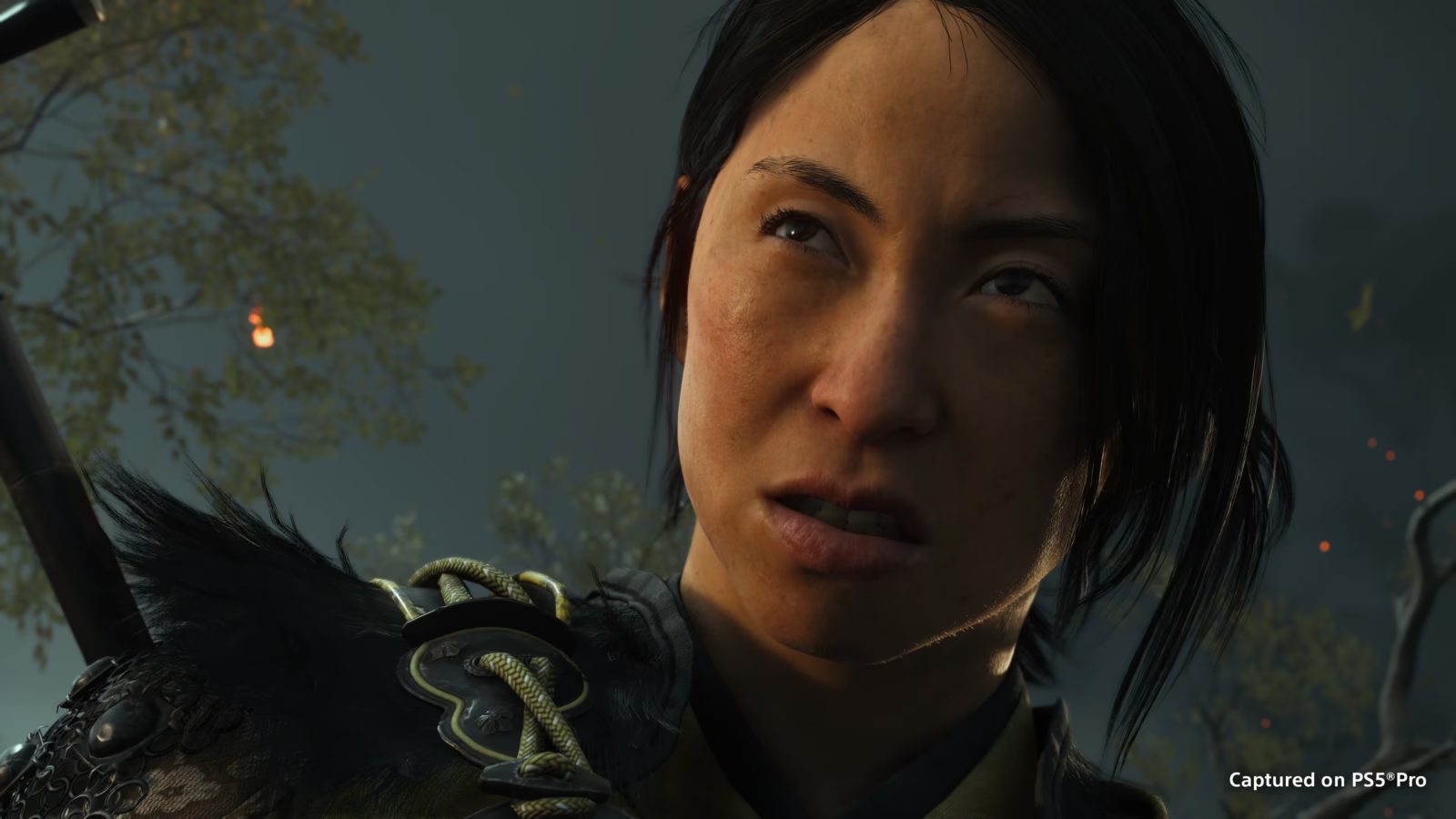
The narrative won’t shock anyone who has played through the main campaign, and its broad trajectory is fairly easy to read early on. What keeps it engaging is the dynamic between its two leads. Atsu has always been more volatile and personal than Jin Sakai, a vigilante with no patience for codes of honour, and Echoes of Sekigahara shows a softer, more guarded side of her that the base game only hinted at. Nagato, meanwhile, is a charming operator whose “The Handsome” moniker tells you plenty about how he carries himself. Their exchanges flicker between tension, wariness and old affection, and the way Atsu constantly weighs her feelings against cold practicality gives the story real emotional texture. The flashbacks to Sekigahara are short and playable, and they work well as a counterweight to the present-day plot, showing us the relationship at its warmest so its later fractures carry weight. It’s a romance told with restraint, which suits Atsu far better than melodrama would.
How long Echoes of Sekigahara lasts
Length is where your playstyle matters most. The main questline is relatively brisk, and you can see it through in around four to five hours if you stay focused on the story. The Ashoro Foothills, however, comes with its own bounties, tales and open-world activities in the same mould as the base game, and engaging with them stretches the expansion considerably, potentially to a dozen hours or more for completionists. That makes it a flexible package: a tight narrative detour if you just want Atsu’s backstory, or a substantial new region if you enjoy picking a map clean. Considering it’s bundled alongside an entire roguelike mode, the amount of content here is generous for the price.
A forgotten land worth defending
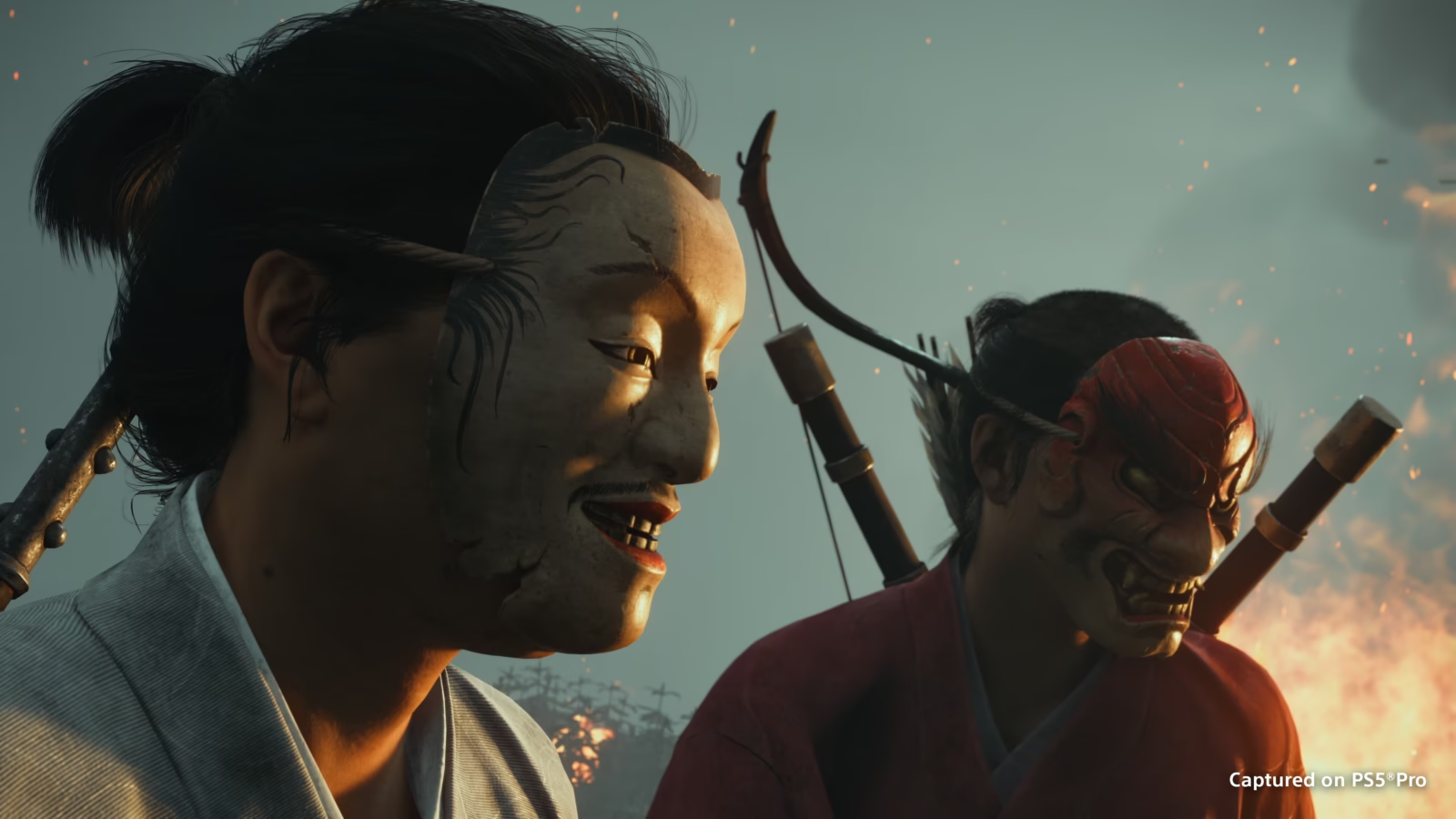
At first, the Ashoro Foothills look like a stretch of territory nobody wants, scarred by warlords and bandits and largely ignored by those in power. That bleakness is intentional, and it gives the region a melancholy that sets it apart from Yotei’s more idyllic corners. The side content plays into this theme well. On the surface, most activities are familiar: drive off bandits, confront opportunistic samurai, rescue villagers. What gives them weight is that they feed into a broader effort to rebuild and protect a forgotten community. One questline in particular, centred on The Snake’s family business, stands out for how it handles Atsu’s vengeance, giving her revenge moral boundaries rather than falling back on the tired idea that she’s become the very thing she hunts. It’s one of the more thoughtful character moments in the entire game.
Stealth partners, scenic climbs and oversized weapons
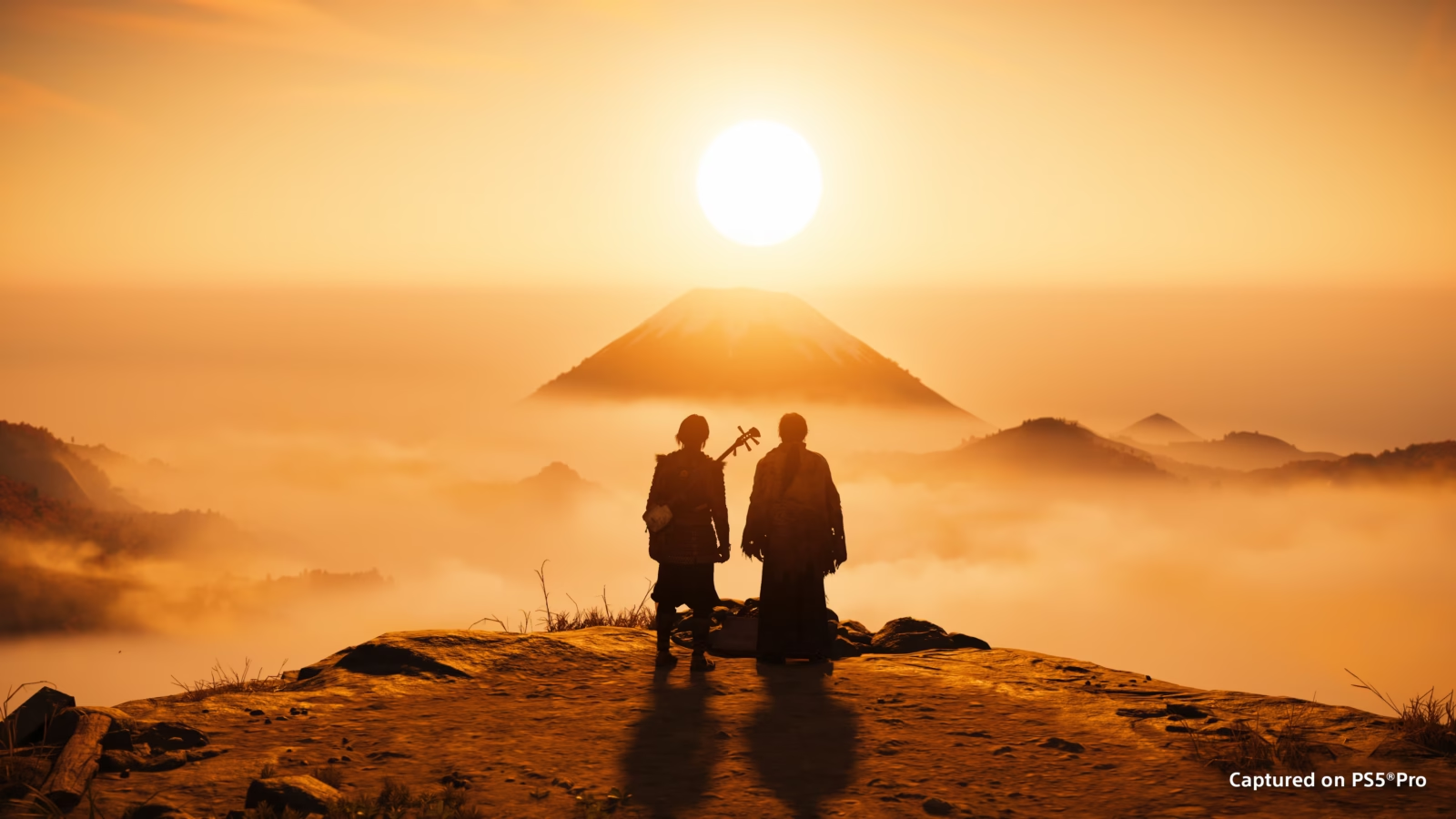
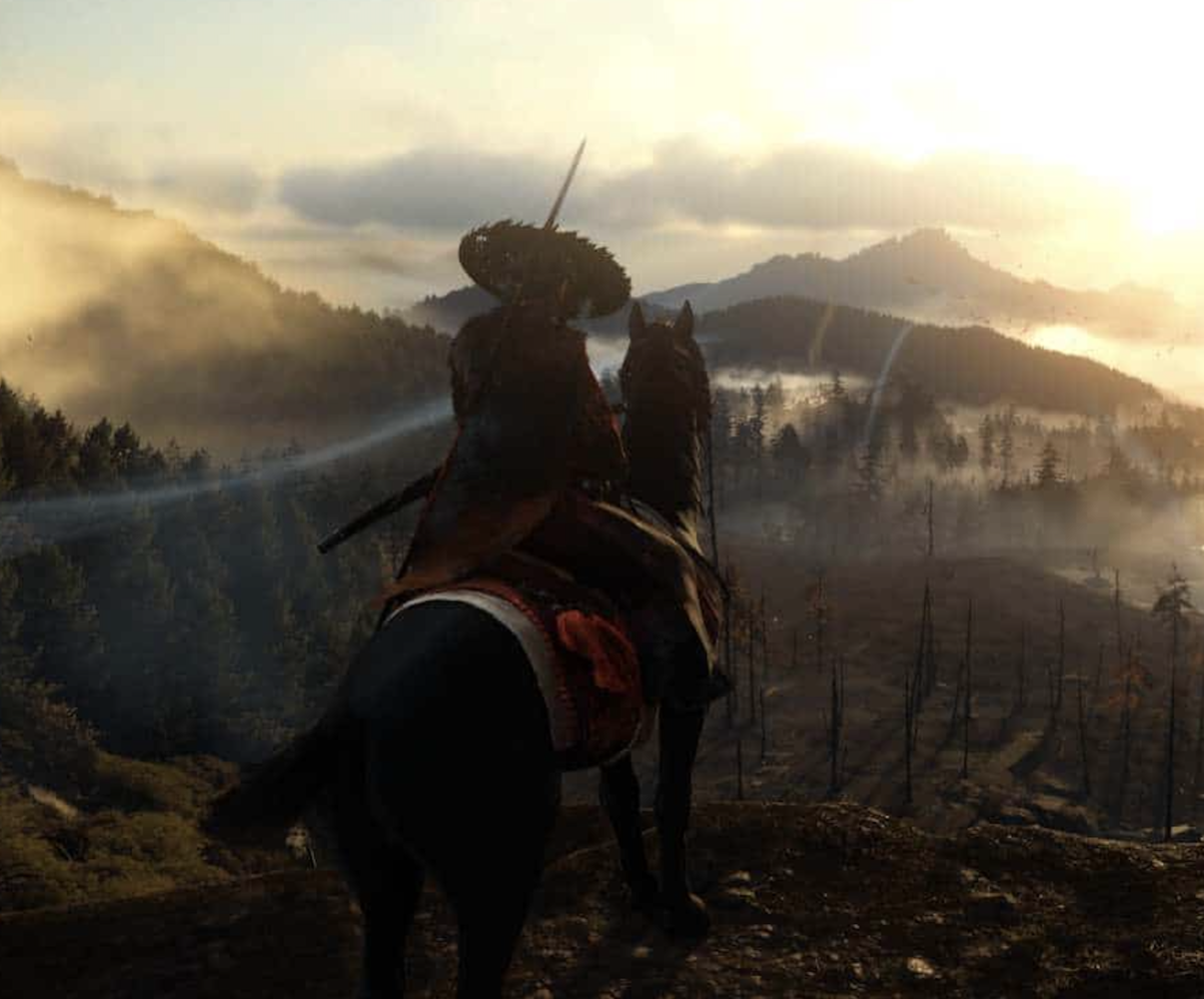
Nagato accompanies Atsu on most main missions, and his most valuable contribution comes during stealth. When you aim your bow, he’ll target a different enemy, allowing for synchronised ranged takedowns, a handy trick given how often the expansion leans into stealth scenarios. In open combat he’s less impactful, mostly drawing attention away from you rather than meaningfully turning fights. The other notable addition is Massive Weapons, disposable heavy arms such as huge clubs and axes, which drop from bulky enemies or can be found on racks in combat arenas. They don’t overhaul Yotei’s weapon-counter system, but cracking open the guard of a fully armoured samurai with a weapon he simply can’t block is deeply satisfying. Between fights, there are plenty of conversational climbing sequences where Atsu and Nagato scale cliffs while trading jabs. If their banter works for you, as it did for me, these moments are a welcome change of pace, and they usually reward you with the expansion’s most spectacular views. Sucker Punch’s eye for colour, scale and wind-blown detail remains one of the best in the business.
Most Wanted is Ghost of Yotei with the safety net removed
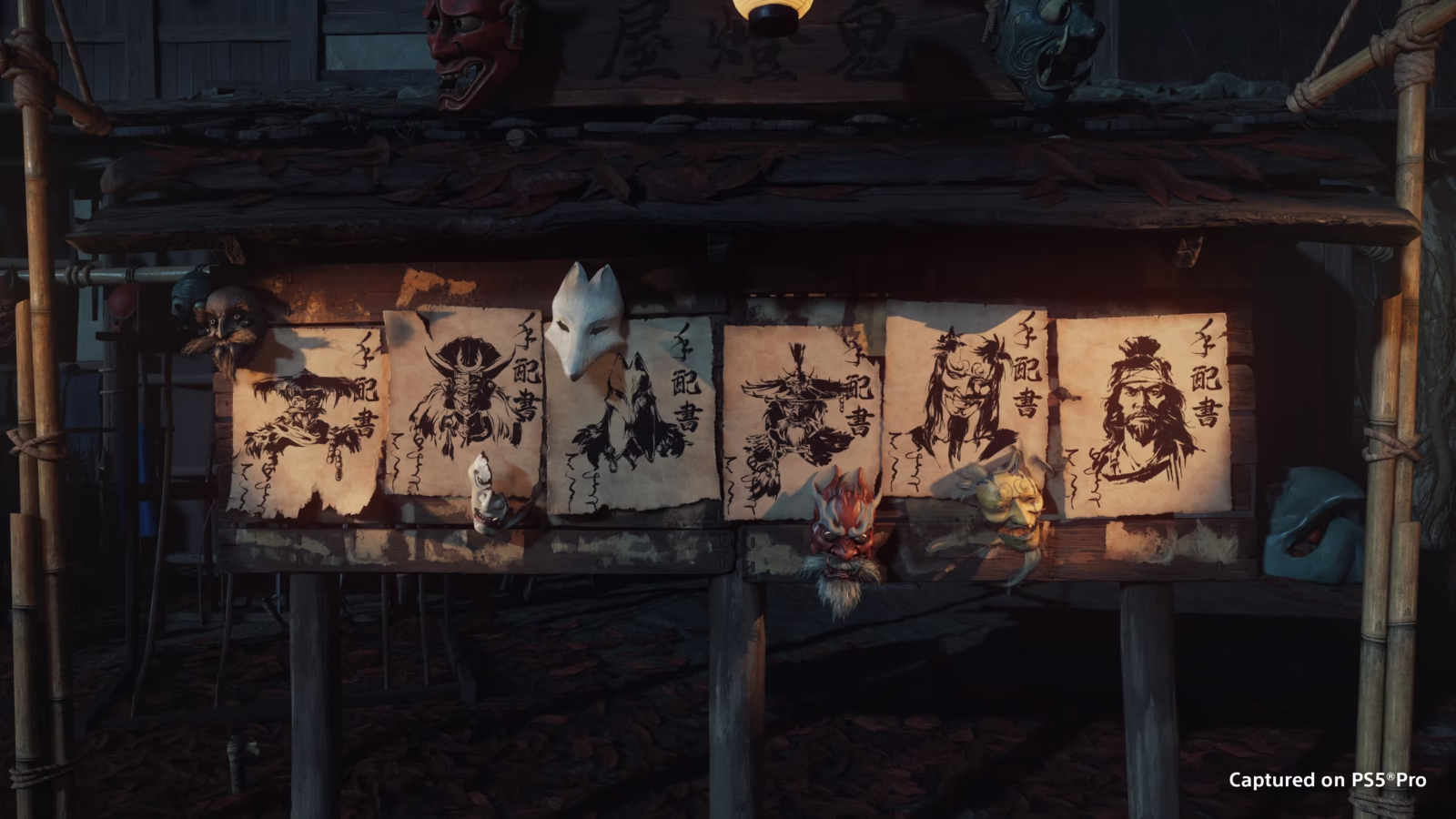
Most Wanted is where the Complete Edition gets genuinely exciting. It’s a single-player combat mode with no stealth, no exploration and no wandering off to chase foxes. You choose a bounty target, built around the six members of the Yotei Six, and are dropped into a random location from the base game’s open world, where you’ll need to survive waves of enemies before typically facing a tougher duel. That cycle repeats a number of times depending on how challenging your target is, until you finally reach the bounty itself. Each attempt is a single shot, and the targets escalate in difficulty as you work your way through the list. Multiple difficulty options are available, but the mode is clearly designed to push you hard. It’s a smart way to isolate Ghost of Yotei’s combat, which is easily strong enough to stand on its own.
Crowds change everything
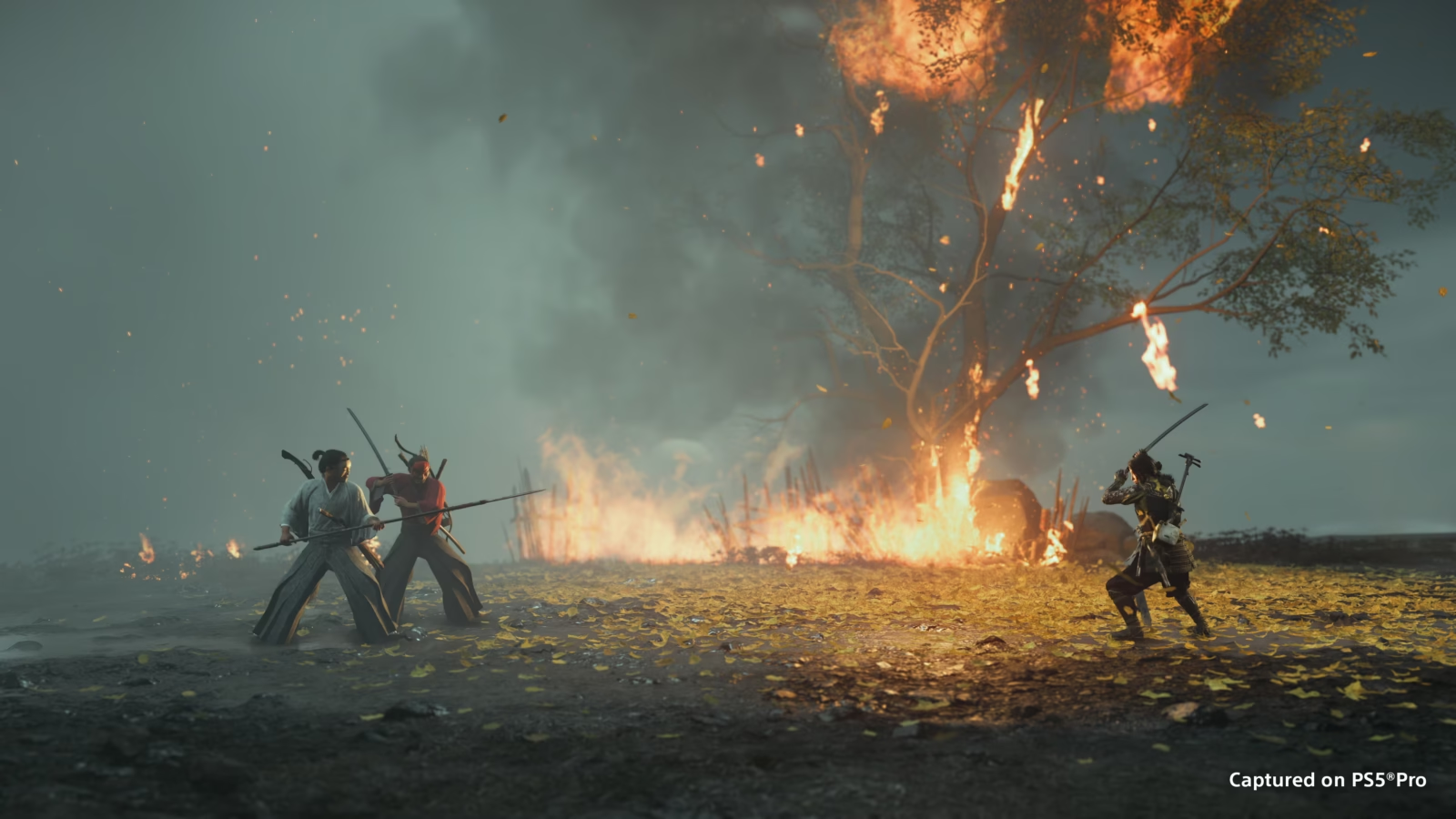
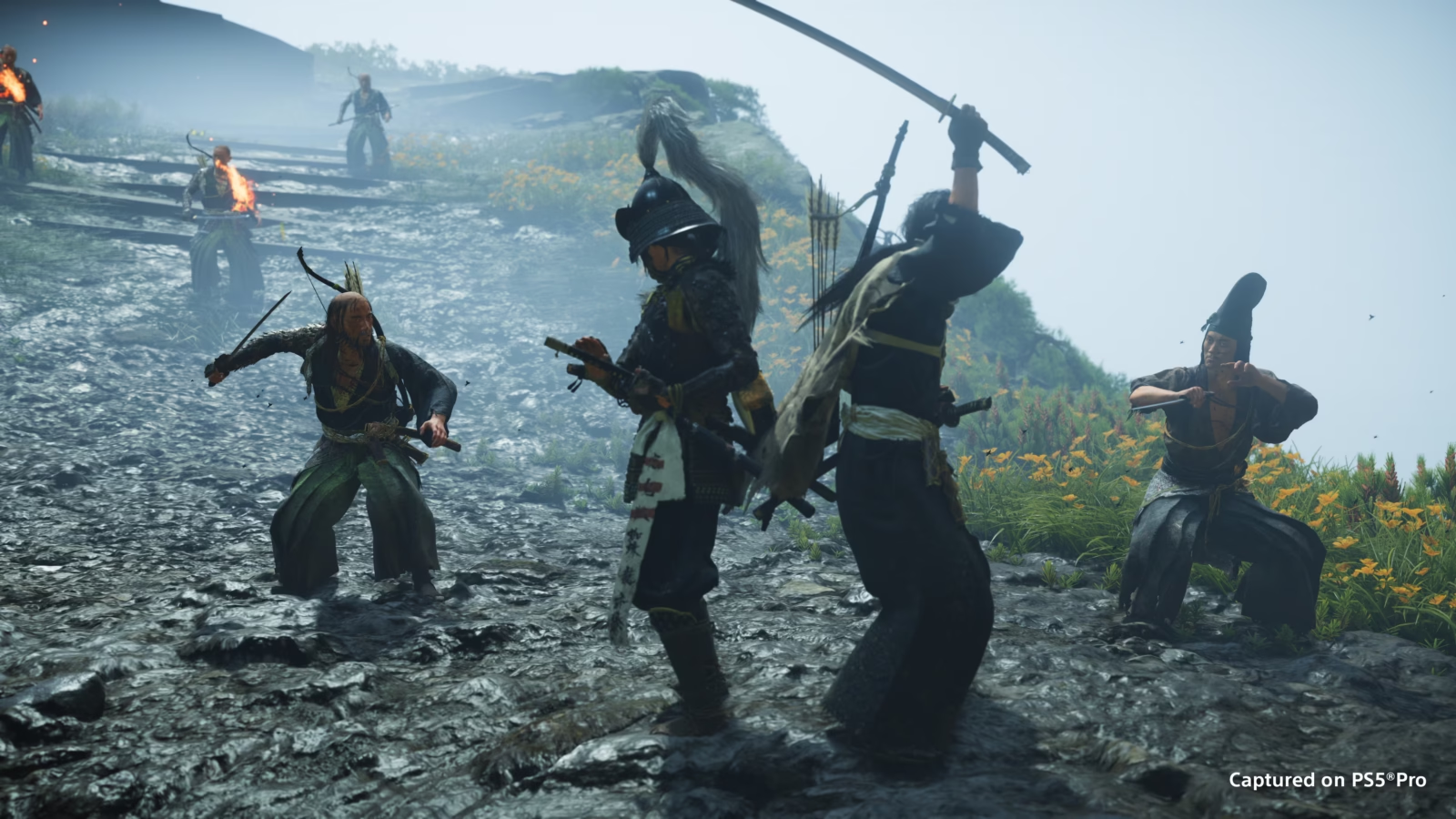
What makes Most Wanted feel distinct from the campaign is sheer enemy density. Encounters throw far more opponents at you at once than story missions ever do, and that forces a different mindset. Charging in and relying on reflexes alone won’t carry you very far. Instead, crowd control becomes crucial: smoke bombs and fire bombs can break up a mob, archers on the fringes need to be dealt with immediately, and weapons with wide reach, like the kusarigama, earn their place by keeping groups at arm’s length. Perfect parries and dodges still matter, but reading the battlefield and choosing the right tool at the right moment matters just as much. It brings out a tactical side of Yotei’s combat that the campaign rarely demands.
Perks, wolves and the roguelike hook
Between stages, you’re offered a choice of perks that last for the rest of the run. Some hand you weapons your character doesn’t normally carry, while others reward particular actions, such as inflicting poison, setting enemies ablaze after a number of hits from a specific weapon, triggering explosions when foes die, or summoning wolves to fight alongside you. Some of the most effective pair neatly with skilled play, like a perk that pops a free smoke bomb after a headshot on a marked target, or one that spreads fear among nearby enemies after a perfect parry. When the right perks line up with confident execution, a run can snowball in a way that feels earned. All of these temporary boons vanish when you die or finish a run, which keeps each attempt fresh and gives the mode its compulsive “one more go” rhythm.
Permanent progression and an unlockable roster
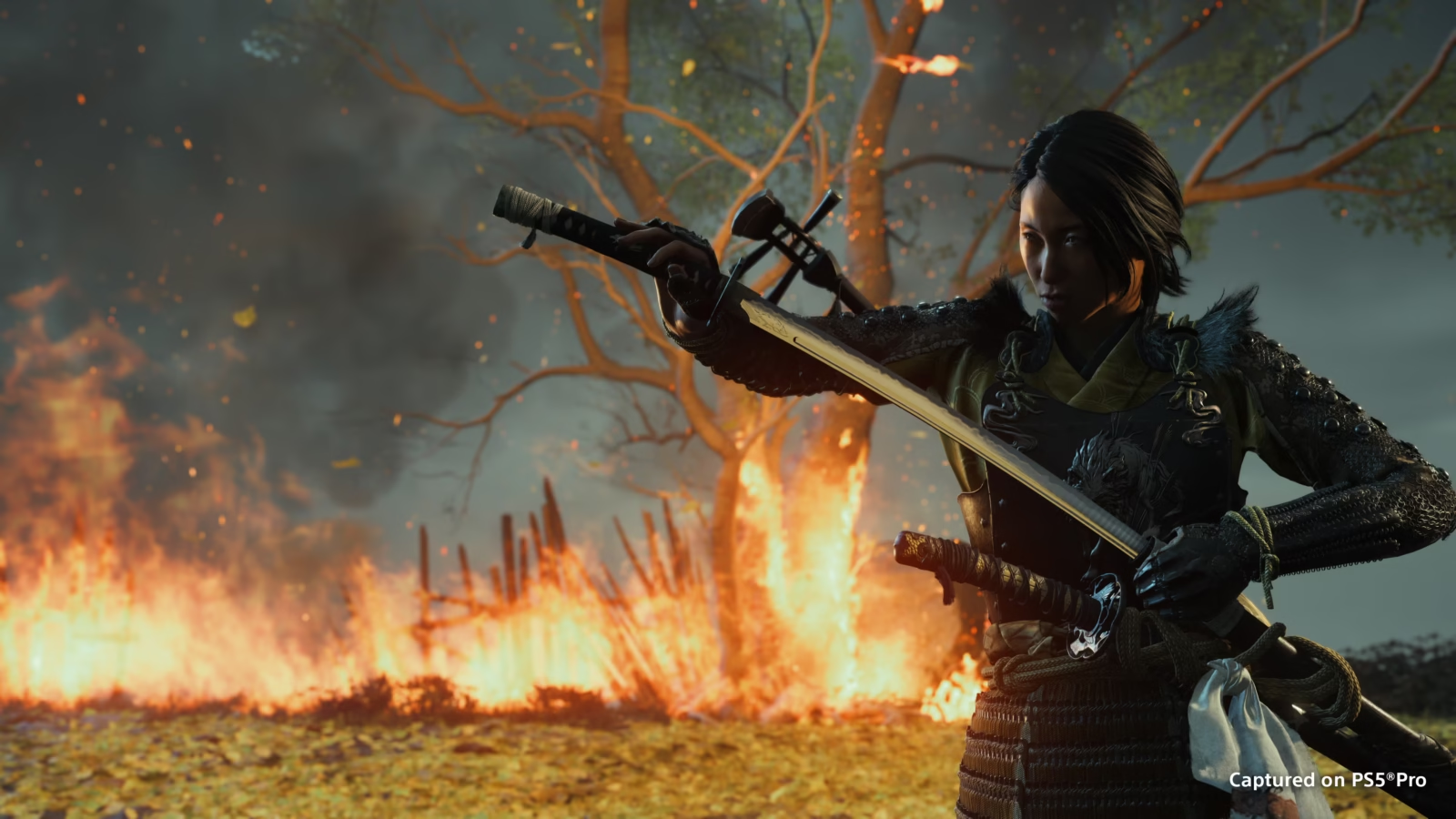
Most Wanted also includes a persistent progression layer that keeps failed runs from feeling wasted. Money earned during runs can be spent on a wide range of permanent upgrades and new skills, while boss tokens unlock cosmetics. Spending money also gradually opens up additional playable hunters. You start with Atsu alone, then expand the roster to include Oyuki, Nagato and, most excitingly, Jin Sakai from Ghost of Tsushima. Each hunter works like a combat class with a distinct loadout, all built around a katana but diverging sharply beyond it. Atsu carries dual katanas, a bow and a quickfire pistol, while Oyuki brings a kusarigama, a musket and kunai. Because Yotei’s weapon-counter system is still in effect, every character has gaps in their toolkit, which pushes you to improvise with projectiles, dropped weapons and throwables rather than relying on a single solution.
Jin Sakai returns, and he hasn’t changed a bit
Jin’s inclusion could easily have been a skin with a familiar face, but Sucker Punch went further. He plays exactly as he did in Ghost of Tsushima, with his stance system intact, each stance built to counter specific enemy weapon types. He fights with a single katana, flows between forms with real agility and has heavy attack combos no other hunter can access. His sticky bombs are also, to my mind, the best quickfire option in the mode. Having his original mechanics preserved within Yotei’s newer combat framework is a thoughtful touch for longtime fans, and it makes him a genuinely different way to play rather than a nostalgic novelty.
Recycled arenas and the targeting problem
Most Wanted isn’t without limitations. Its locations are drawn from existing villages and encampments in the base game’s world, and its bosses are recycled from the campaign, so there’s little here you haven’t technically seen before. The tension comes from the remix rather than new assets, and while that works well, players hoping for fresh enemies or environments may feel short-changed. More frustrating is targeting. Ghost of Yotei avoids a strict lock-on system, which generally keeps combat fluid, but in crowded encounters the game’s auto-targeting can drift toward the wrong opponent. Land a perfect parry and try to follow it up, and you may find yourself attacking a nearby enemy instead, squandering an opening and potentially exposing yourself. It doesn’t happen often, but in a mode where one mistake can end a long run, especially in final boss fights where reinforcements are summoned, those moments hurt.
Verdict
Ghost of Yotei Complete Edition is the best way to experience Sucker Punch’s samurai epic, and the upgrade path for existing owners is excellent value. Echoes of Sekigahara is a focused, emotionally grounded expansion that reveals a more vulnerable side of Atsu through her complicated history with Nagato, backed by a moody new region, flexible length and side content that ties into a meaningful theme of rebuilding. Its story is predictable, its placement mid-campaign can feel odd for post-game players, and Nagato is more useful in stealth than in open combat. Most Wanted is the bigger surprise, turning Yotei’s combat into a tactical, replayable roguelike with run-based perks, permanent progression, an unlockable roster and a faithfully recreated Jin Sakai. Recycled bosses and locations, along with occasional targeting mishaps in crowded fights, stop it short of perfection. If you loved Ghost of Yotei, particularly its combat, the $15 upgrade is an easy decision. If you never played it, this is the version to buy.