
TL;DR: Dark Matter Season 2 sacrifices some of Season 1’s narrative precision for bigger ideas, richer characters and a far more ambitious multiverse. The risky cliffhanger hurts, but this remains smart, emotional sci-fi that earns its continuation.
There was always one enormous problem with making Dark Matter Season 2: Season 1 had already done its job. It took Blake Crouch’s novel, turned its multiverse mechanics into compelling television, followed Jason Dessen through an increasingly nightmarish search for home, and arrived at the book’s conclusion with remarkable confidence. Continuing beyond that point could have felt like unlocking the secret ending of a game only to discover somebody had bolted on another campaign because the first one sold well. Instead, Season 2 embraces the danger and uses it as creative fuel.
Crouch remains firmly in control as creator and showrunner, co-writing the season with Jacquelyn Ben-Zekry, but the safety rails of the original novel are now gone. That freedom changes Dark Matter considerably. The new season is broader, stranger and less linear, shifting attention beyond Jason Prime and allowing characters who previously orbited his story to occupy more meaningful space. It isn’t quite as clean a narrative machine as Season 1, but it arguably becomes a more ambitious science-fiction series because of that messiness.
Dark Matter Season 2 finally lets the multiverse become the story
Season 1 had an elegantly simple emotional engine underneath all the quantum weirdness: Jason wanted his family back. No matter how complicated the Box became, that objective gave viewers a compass. Season 2 deliberately throws away that comfort. Jason, Daniela and Charlie remain essential, but the series expands its attention to Ryan Holder, Amanda Lucas, Leighton Vance and Blair Caplan, turning what was once primarily one man’s journey through infinite possibilities into something closer to an ensemble examination of their consequences.
That change is both Season 2’s greatest strength and the source of some of its friction. The first season could explain a mind-bending idea while maintaining the momentum of a thriller because Jason always had somewhere he desperately needed to go. Here, the multiverse itself becomes the playground. Different perspectives and branching character journeys make the season less immediately streamlined, but they also allow the series to explore possibilities its original storyline couldn’t accommodate.
Crucially, Dark Matter doesn’t become so fascinated with its science-fiction toy box that it forgets the people trapped inside it. Infinite realities are dramatically useless if every person starts feeling replaceable, and Season 2 understands that problem. Variants may exist, but individual lives still carry emotional weight. That’s an important distinction because without it the show’s entire concept could collapse into narrative save-scumming: bad outcome? Reload another universe.
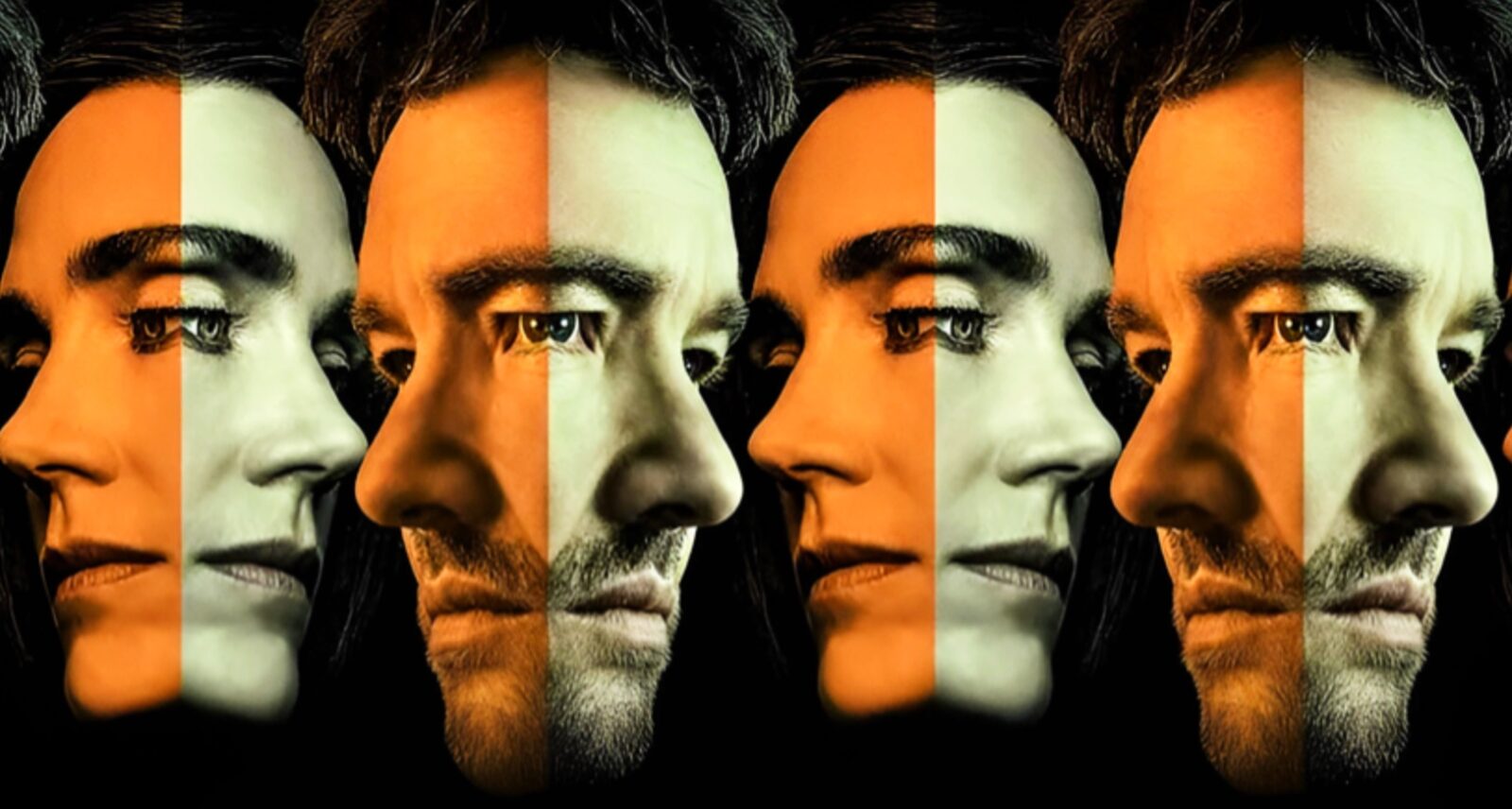
Joel Edgerton and Jennifer Connelly keep the impossible painfully human
The Dessen family remains the show’s emotional gravity even as everything around them becomes more complicated. Joel Edgerton’s Jason, Jennifer Connelly’s Daniela and Oakes Fegley’s Charlie aren’t simply allowed to reset after Season 1’s ordeal. Their experiences follow them, influencing decisions that can be uncomfortable, frustrating and occasionally difficult to agree with. That’s precisely why much of the character drama works.
Season 2 isn’t interested in making its protagonists behave like players who have already read the walkthrough. They make decisions based on fear, trauma, loyalty and incomplete information rather than whatever would most efficiently move the plot toward victory. Sometimes you’ll want to reach through the screen and confiscate everyone’s decision-making privileges, but the important thing is that those choices remain connected to who these people have become.
The expanded structure also gives previously antagonistic figures additional shading, including Jason 2 and the Leighton Vance from his reality. That’s a smart use of the show’s central concept. A multiverse shouldn’t merely provide increasingly exotic backdrops; it should destabilise easy assumptions about identity, morality and whether one version of somebody can ever define every version of them. Season 2 gets much more mileage from that idea than it would from simply finding bigger ways to deploy the Box.
Bigger sci-fi ideas don’t drown out the emotional stakes
Dark Matter remains cerebral science fiction rather than transforming into John Wick: Into the Quantum-Verse, but Season 2 does increase the physical danger. There are higher stakes, violent confrontations and genuine consequences as the characters navigate what Season 1 unleashed. Chris Diamantopoulos also joins the cast in an antagonistic role connected to that fallout, including the rather inconvenient problem of multiple dead men sharing Jason Dessen’s face. Multiverse travel: amazing for existential discovery, considerably worse for explaining things to authorities.
Yet spectacle isn’t what gives these developments their impact. The stronger material comes from examining what happens psychologically when people discover that reality isn’t singular and choices can literally produce different lives. The Box remains a fantastic science-fiction mechanism because it turns regret, desire and possibility into something tangible. Season 2 pushes harder on those implications instead of treating parallel worlds as a sightseeing tour.
That also makes the ten-episode season feel more emotionally adventurous than a straightforward continuation had any right to be. There are individual character stories capable of carrying substantial dramatic weight, while the wider mythology becomes richer without completely abandoning intimacy. The balance isn’t effortless, and viewers who preferred Season 1’s cleaner pursuit narrative may miss its relentless direction, but ambition suits Dark Matter.
The biggest gamble is saved for the ending
There is, however, one creative decision that is much harder to celebrate unconditionally. Season 1 ended with genuine closure because it reached the conclusion of Crouch’s novel. Season 2 doesn’t offer the same luxury. Its finale leaves significant uncertainty hanging over the series, making the prospect of a third season feel less like a bonus and more like an important part of the equation.
That’s particularly dangerous in modern streaming, where renewal announcements can feel governed by algorithms developed in one of Dark Matter‘s less merciful universes. A cliffhanger can generate excitement when another season is guaranteed; without that guarantee, it risks leaving an otherwise rewarding journey frustratingly incomplete. The irony is that the ending stings precisely because Season 2 proves there is far more story worth exploring.
Still, I’d rather see Dark Matter gamble on expanding its identity than spend ten episodes desperately recreating the first season. This is no longer merely Jason Dessen’s race home wrapped around a clever quantum premise. It has become a larger story about people confronting versions of themselves, consequences they cannot erase and possibilities that aren’t automatically gifts. That’s fertile territory for science fiction, and Season 2 demonstrates that the series doesn’t need its original novel to tell worthwhile stories.
Verdict
Dark Matter Season 2 takes the dangerous route and mostly gets rewarded for it. Losing Season 1’s beautifully focused central quest makes the storytelling more fragmented, and the unresolved finale is a genuine weakness if another season never arrives. But the trade-off is a more expansive, emotionally complicated series that finally explores the multiverse rather than merely travelling through it.
The returning cast anchors all that conceptual chaos, while the broader character focus gives the show’s ideas about identity and choice considerably more room to breathe. Fans who loved Dark Matter primarily as a tightly wound thriller may find this season less immediately satisfying; viewers who wanted the series to dig deeper into its science-fiction possibilities should have plenty to obsess over. Season 2 doesn’t simply justify continuing beyond the novel’s ending — it makes the possibility of stopping here feel like the bigger mistake.