
The first autistic Barbie doll has reached stores in the UAE, adding another layer to the long-running effort by toy makers to reflect a wider range of human experiences. Launched during World Autism Month, the doll arrives at a time when the country continues to push national policies supporting people of determination through education, employment, and community participation.
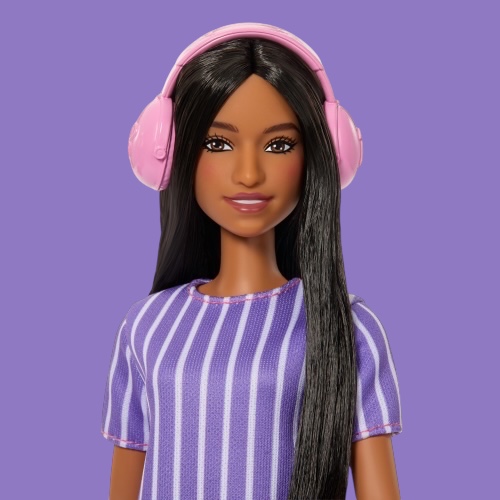
Developed with input from the Autistic Self Advocacy Network (ASAN), a US-based organisation led by autistic people, the doll attempts to depict some common autistic traits and coping strategies. Its design includes articulated elbows and wrists to allow for stimming motions such as hand flapping, an eye gaze directed slightly away to represent avoidance of direct eye contact, and a set of accessories: a spinning pink fidget toy, noise-cancelling headphones, and a tablet displaying symbol-based communication aids. The outfit features loose fabric and flat shoes chosen for comfort and reduced sensory input.
These choices draw from community guidance rather than clinical checklists, aiming to make the figure recognisable to some autistic children and informative to others. In that sense, it follows Barbie’s earlier Fashionistas releases that have included dolls with type 1 diabetes, Down syndrome, and blindness. The collection now exceeds 175 variations, part of a gradual shift from the doll’s original narrow beauty ideal toward broader physical and neurological representation.
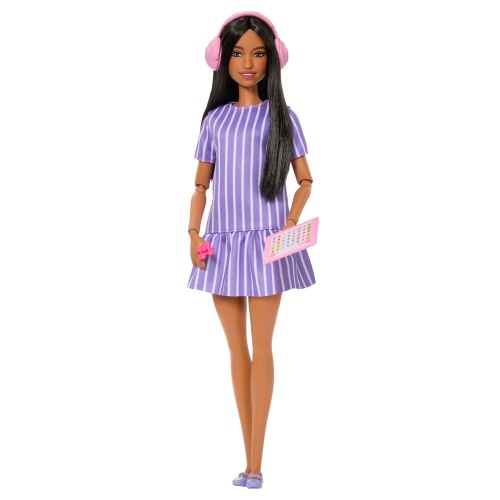
Whether this translates into meaningful inclusion remains open to debate. Critics have long pointed out that commercial toys often prioritise market expansion over deep social change, and a single doll cannot capture the vast spectrum of autism. Still, providing visible tools like headphones or fidget items in play can normalise everyday supports that many autistic people actually use. At a practical level, the doll offers parents and educators a tangible object to spark conversations about neurodiversity without requiring abstract explanations.
Globally, the World Health Organization estimates that roughly one in 100 children is autistic. In the UAE, where awareness campaigns and inclusive education policies have gained momentum, the timing of this release aligns with broader societal goals. Yet the real test lies in how children actually engage with it. Decades of research on doll play show it can help build empathy and perspective-taking, particularly when the toys depict differences rather than uniformity. At the same time, play alone cannot replace structured support, professional understanding, or policy implementation.
Priced at AED 69, the autistic Barbie is now available at major toy retailers across the country. Its introduction forms one small piece in a larger cultural conversation about representation in children’s products. For some families it may feel validating; for others it might register as another corporate step that still falls short of lived complexity. Either way, it underscores how toys have become quiet battlegrounds for ideas about identity, difference, and belonging.
The doll does not pretend to solve autism-related challenges, but it does invite children to explore them through imagination—an approach that has informed children’s play for generations, now updated for contemporary realities.