

TL;DR: Star Wars Zero Company combines aggressive turn-based tactics, excellent squad customisation and a strong Clone Wars story without leaning on Jedi spectacle. Limited enemy variety and some technical roughness hold it back, but this is far more than XCOM wearing a Star Wars costume.
Star Wars has spent decades telling us that the fate of the galaxy rests with Jedi, Sith, Skywalkers and whoever happens to possess the most dramatically illuminated sword. Star Wars Zero Company is far more interested in the people doing the dirty work while those legends dominate the holonet headlines. Its Clone Wars campaign follows mercenaries, clones, criminals, soldiers and other assorted troublemakers, and that smaller perspective gives its story an identity of its own.
The tactical foundation will immediately feel familiar to anyone who has sacrificed years of their life to XCOM, but calling Zero Company an XCOM clone wearing stormtrooper armour would seriously undersell it. Its smaller battlefields encourage aggression rather than defensive crawling, characters can be rebuilt with enormous flexibility, and systems such as Advantage and Backup reward coordinated attacks that can turn a seemingly ordinary turn into an elaborate chain of destruction.
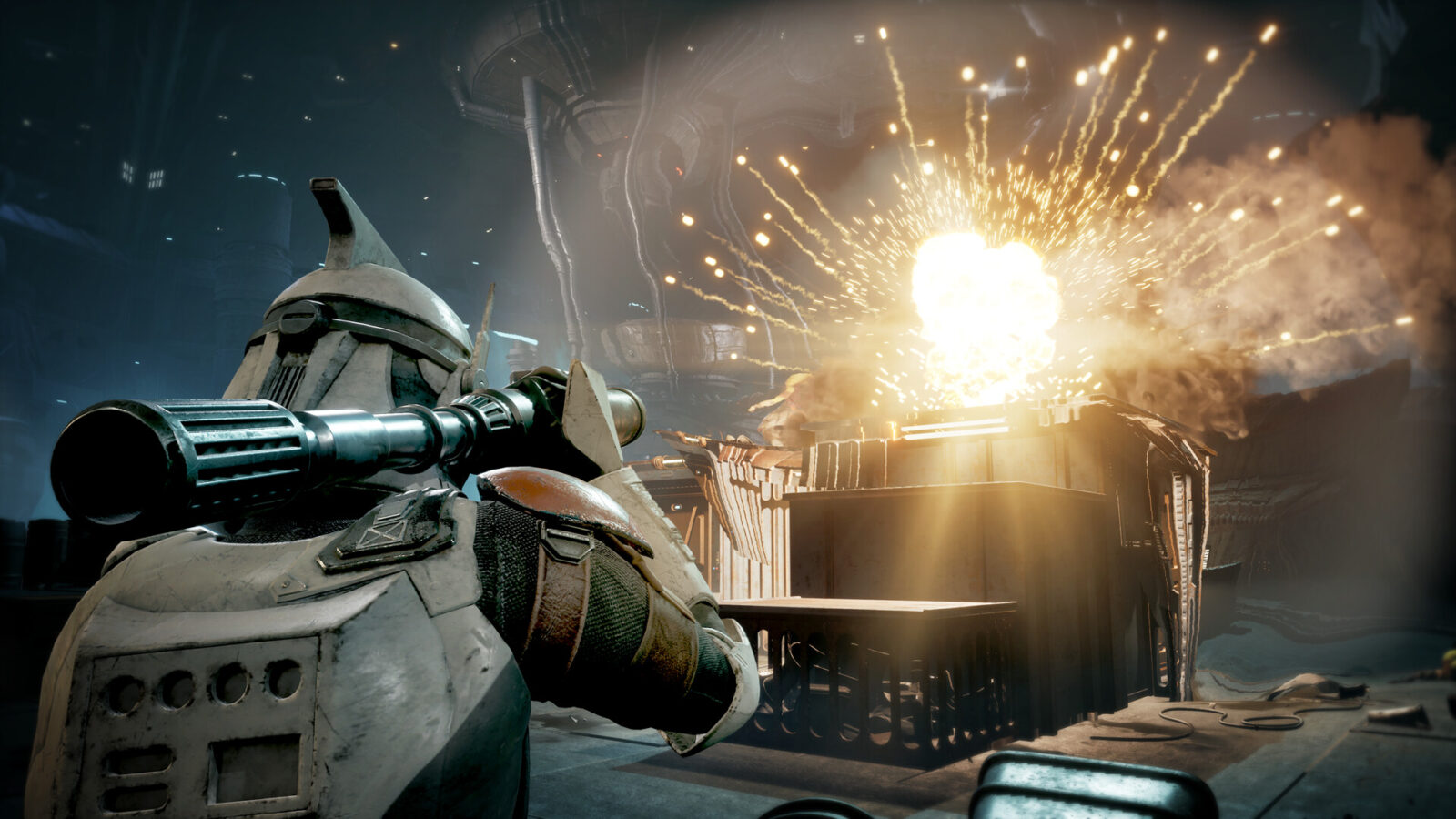
More importantly, the tactical systems and Star Wars presentation actually complement each other. Zero Company understands that a blaster fight should feel fast, messy and cinematic without abandoning the calculation that makes turn-based tactics satisfying. After around 35 hours on Normal difficulty, what surprised me most was how confidently it establishes its own rhythm instead of simply borrowing someone else’s.
The Clone Wars look different from the sidelines
Zero Company wastes little time establishing where it sits within Star Wars. Republic and Separatist forces may be fighting their enormous war, but the camera figuratively and literally shifts away from that main event to focus on something smaller. The customisable protagonist, Hawks, is a former military commander now running an independent crew after suffering a defeat.
That crew becomes entangled with the Infinite Coil, a Separatist-aligned cult led by the mysterious Fathom. Its plan involving a mind-altering plague and some deeply unpleasant bugs gives Zero Company a villainous threat that feels refreshingly disconnected from the usual Sith-shaped emergency. There are hints of something Force-related lurking around its edges, but the narrative wisely avoids turning everything into another excuse for lightsabers to start humming.
Fathom benefits enormously from being allowed to remain mysterious. Her relationship with her son and henchman adds another dimension without burying her beneath exposition, and the escalating conflict eventually leads to a major space battle that is not playable but delivers considerable cinematic spectacle.
The restraint surrounding the Force is particularly important. Zero Company is still unmistakably Star Wars, complete with familiar Clone Wars connections and cameos, but it understands that this universe is much larger than its mystical celebrities. Blasters, thermal detonators and ordinary people get to matter.
Zero Company has a crew worth fighting for
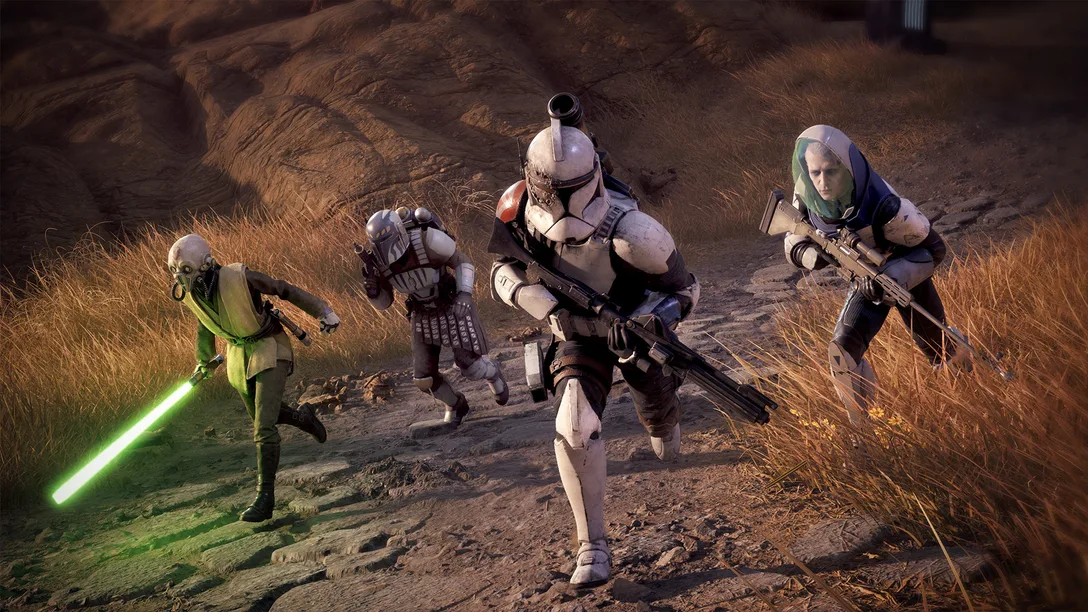
The main squad is built from recognisable Star Wars archetypes, but strong writing and performances give them enough personality to work. Kabb is the hulking alien bruiser, Jae comes from a displaced mining family, Trick is a medically discharged clone, Cly is a Mandalorian seeking revenge, Tel-Rea is an AWOL Padawan investigating the Infinite Coil, and Luco is a sharpshooter carrying considerable resentment toward the Republic.
Each gets their own chain of story missions, giving the campaign space to develop its ensemble beyond whatever tactical function somebody happens to serve on the battlefield. The result occasionally brushes against Knights of the Old Republic territory in spirit, even though Zero Company isn’t trying to be that kind of dialogue-heavy RPG. You’re running a crew with histories, grudges and personal stakes rather than moving interchangeable chess pieces around a grid.
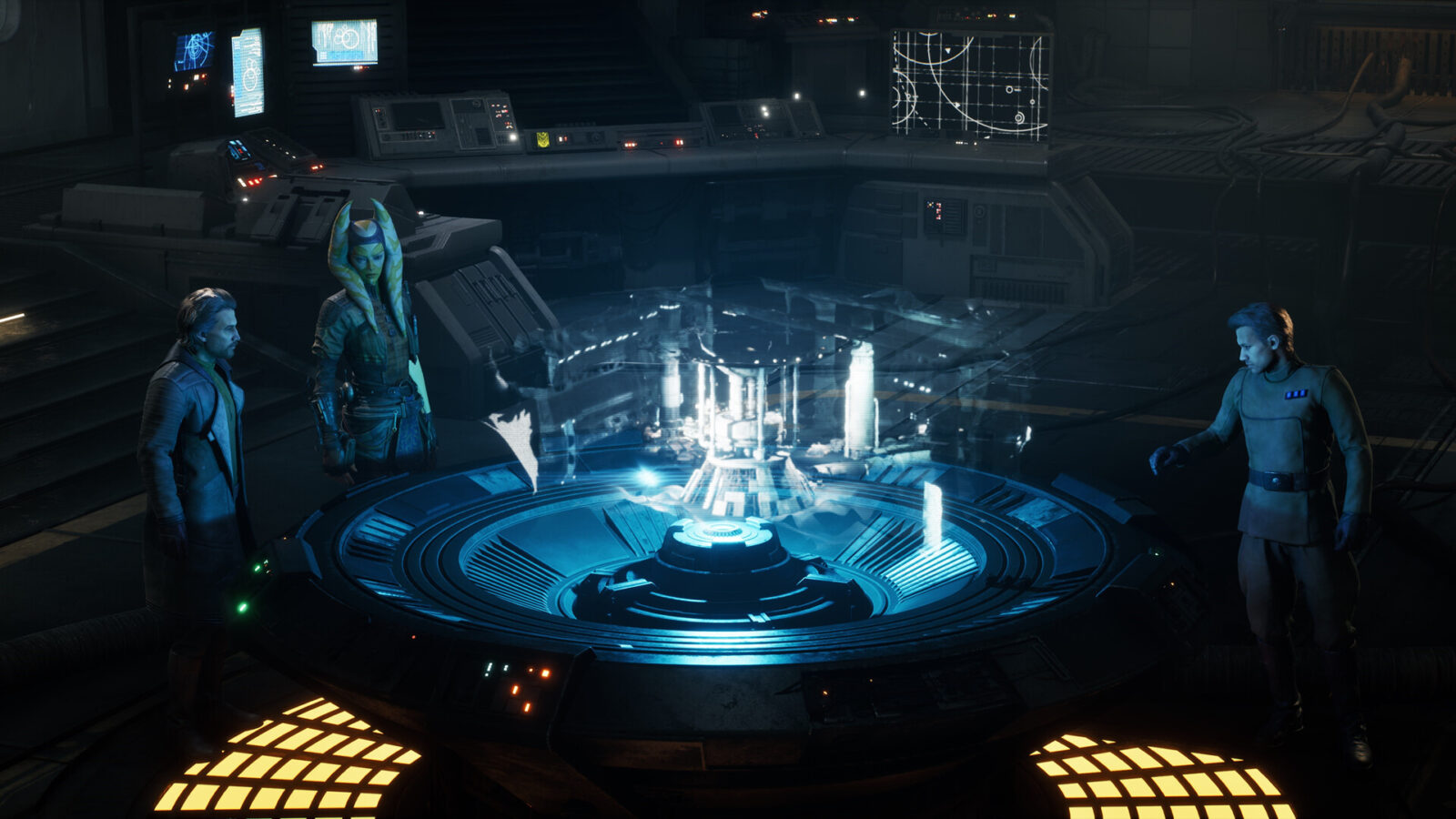
Some of my favourite personalities aren’t deployable at all. The Den, Zero Company’s docked freighter and home base, houses characters such as personnel manager Runa and Republic Intelligence officer Bennic. Runa’s Separatist background creates an interesting contrast with the more Republic-friendly members of the crew, while her personality and banter with Bennic inject humour into the downtime between missions. Medical droid M-3VO and Lasat arms dealer Neesh also contribute to making The Den feel more like a workplace full of personalities than a glorified menu screen.
That character work gives tactical decisions more weight. There is a difference between losing “Sniper Unit #4” and potentially losing someone whose personal story you’ve been following. Zero Company understands that attachment is one of the best weapons a tactics game can use against its player. Cruel? Certainly. Effective? Absolutely.
XCOM instincts help, but aggression wins battles
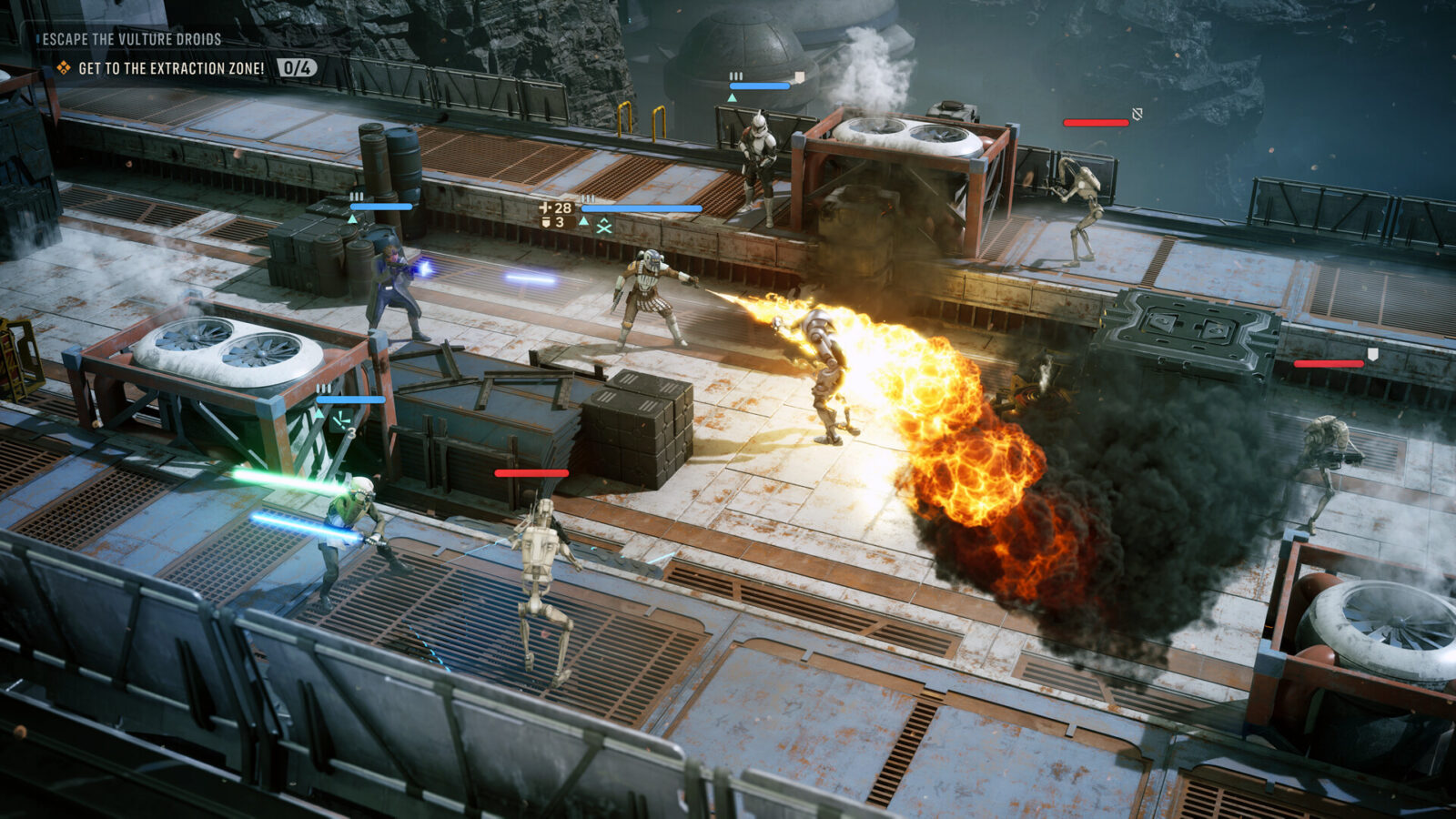
The basics of Star Wars Zero Company combat are easy to understand. Four-character squads move across relatively compact maps, use cover, line up percentage-based attacks and occasionally miss shots that looked practically guaranteed. Yes, the ancient tactical ritual of screaming at a 90% hit chance survives thousands of years into a galaxy far, far away.
Where Zero Company distinguishes itself is in what it wants you to do after taking cover. These battles encourage movement and disruption. Enemies can be knocked into one another, pushed from ledges, shoved into overwatch lanes or repositioned into situations where area attacks become considerably more attractive. Instead of spending every turn cautiously inching forward, I found the game rewarding plans that actively dismantled enemy formations.
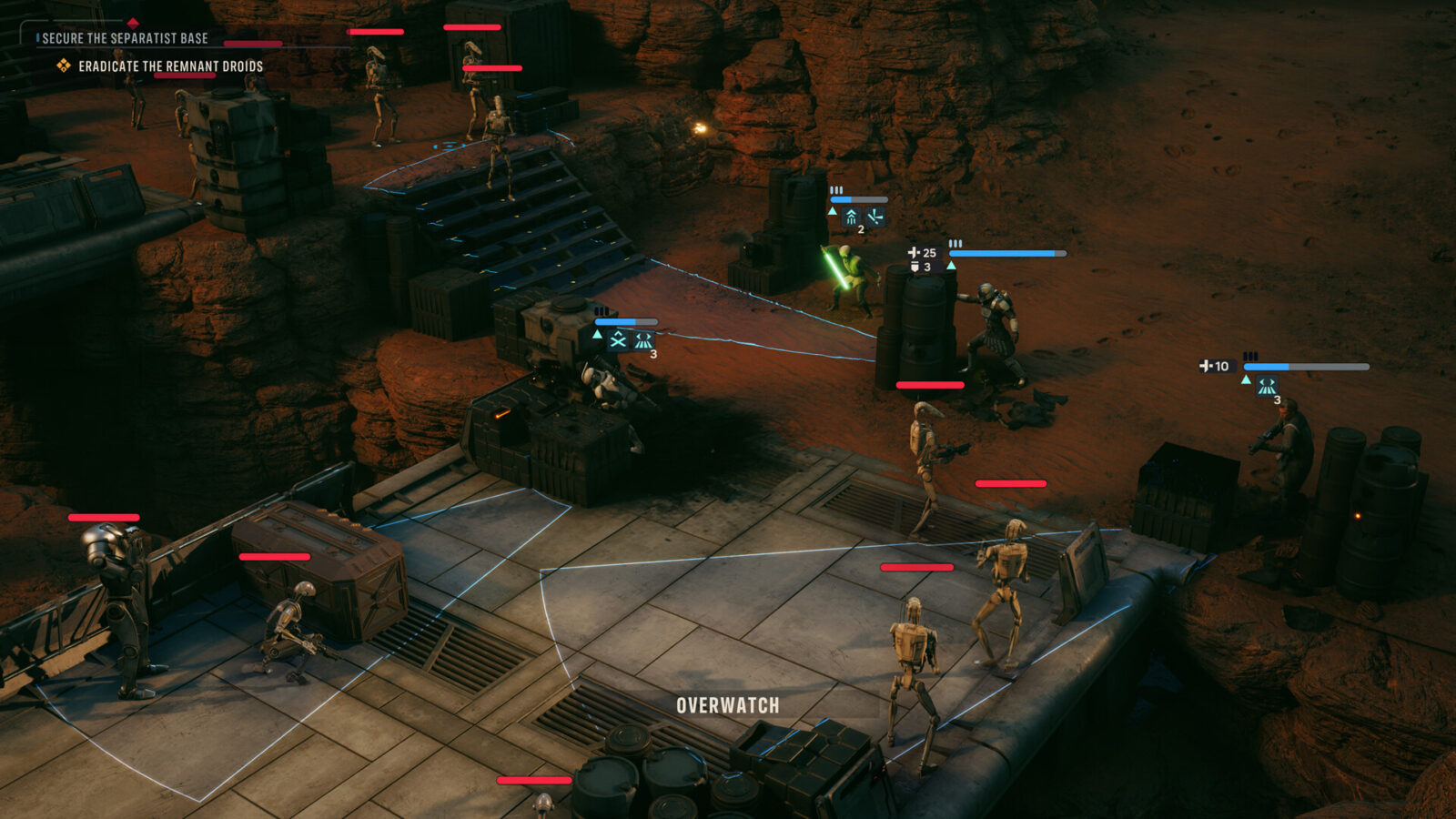
The relatively forgiving survivability rules support that aggression. Permadeath is enabled by default, but a character needs to be downed three times without being healed between missions before being permanently lost. Damage itself also carries no persistent consequence until a character is first downed and injured. Combined with smaller maps and the absence of fog of war, this creates room for calculated recklessness.
On Normal difficulty, that means Zero Company can sometimes feel generous to an experienced tactics player. Across the roughly 35-hour campaign represented in the supplied review material, no squad member came particularly close to permanent death. That does reduce some of the dread associated with XCOM-style casualty systems, but it also supports the more adventurous combat philosophy Zero Company is clearly pursuing.
Advantage turns good attacks into ridiculous turns
The Advantage system is where combat starts getting especially interesting. Damaging enemies and using certain abilities generates Advantage points, which become a shared resource for triggering additional abilities across the squad. The basic three-action-point economy is therefore only the beginning of what a well-planned turn can accomplish.
That immediately changes how weapons and abilities should be evaluated. Blaster pistols, for example, sacrifice some damage and range compared with heavier weapons but can fire multiple times, making them useful for rapidly generating Advantage. Those points can then fuel stronger actions elsewhere, including Trick’s rocket launcher or Hawks’ ability to provide another squad member with an extra action point.
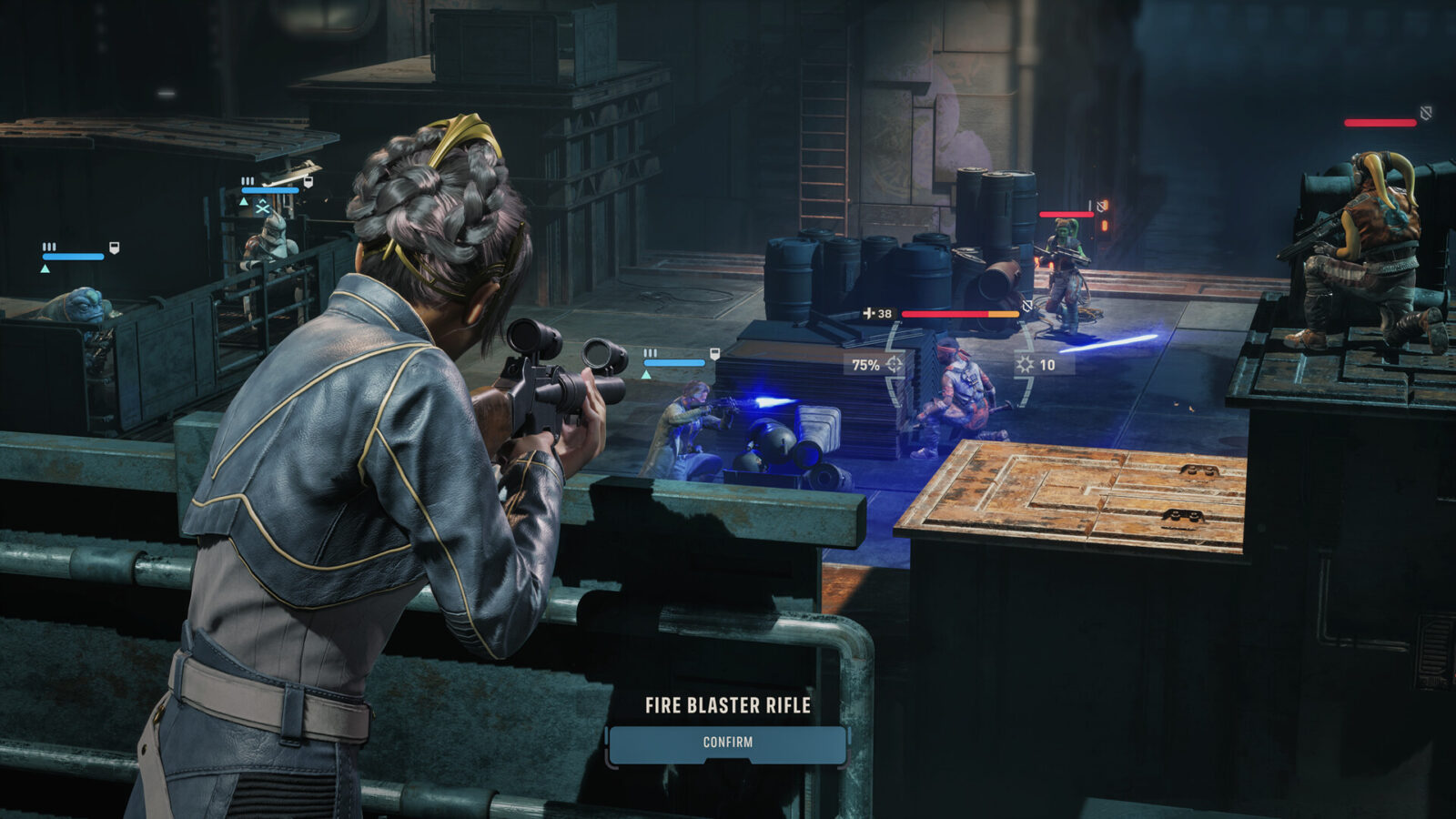
The result is a satisfying tactical feedback loop. One character creates resources, another exploits them, and suddenly the entire squad is doing considerably more than their standard action allowance suggested was possible. Rather than treating every operator as an isolated unit, Zero Company pushes you to think about the team as an interconnected machine.
That philosophy is reinforced by Backup. Each turn, the ability rotates randomly to a different squad member, who can nominate an eligible teammate to follow their next attack with a guaranteed hit. The catch is that positioning still matters: the supporting character needs line of sight, and an unexpectedly lethal first attack can waste the follow-up entirely.
Guaranteed damage is extraordinarily valuable in a percentage-driven tactics game, but Backup doesn’t simply hand it over. You need to build the situation that allows it to work. It’s another small system encouraging cooperation, positioning and sequencing, and together with Advantage it gives Zero Company’s combat a personality beyond its obvious inspirations.
Customisation encourages experimentation
Character development is remarkably permissive. Hawks can switch between specialities such as Medic and Sniper, skill points can be redistributed, and weapons can be swapped to accommodate dramatically different squad configurations. Even individual weapon categories offer multiple visual and audio variations, which is exactly the sort of unnecessary nerdy detail Star Wars fans deserve.
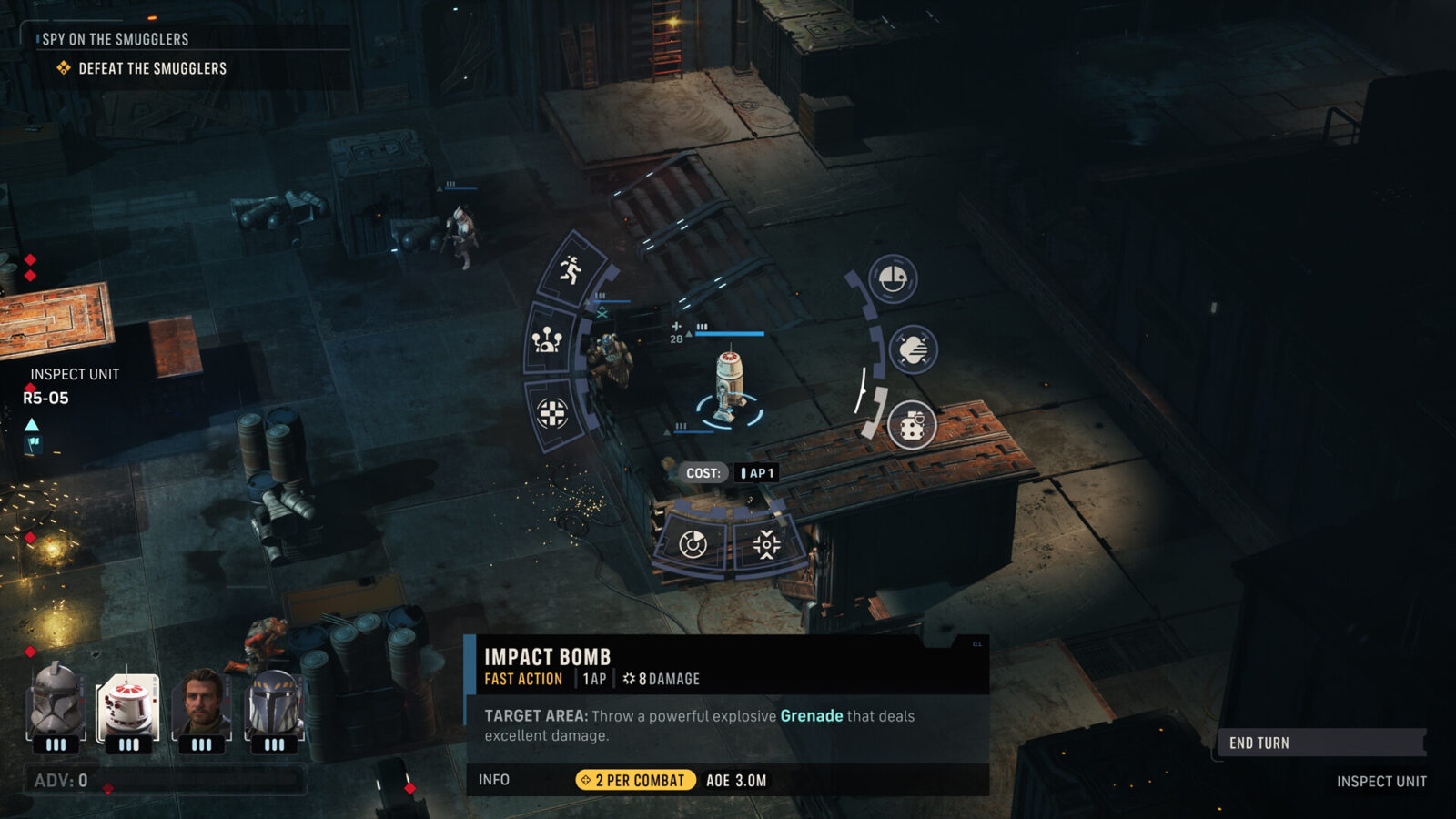
Many recruitable characters share that flexibility, although certain units have more specialised roles. Astromech droids, for example, are particularly useful for distributing action points and throwing grenades or healing items around the battlefield. The main story companions remain more distinct because each has a defining class and unique ability.
Those signature abilities can substantially affect how a character operates. Jae can execute sufficiently weakened enemies, Kabb can refund action points when his melee attack kills its target, Cly’s Mandalorian jetpack can ignite enemies when she lands, and Trick can resurrect himself once per mission. Tel-Rea, unsurprisingly, receives her own Jedi-focused skill system.
Eventually, secondary classes add another layer by allowing characters to divide skill points between two class trees. Combined with weapon modifications, utility equipment, unique abilities and team composition, there is substantial potential for build crafting.
The downside of such generous respeccing is that individual development choices can feel less consequential. A bad build is rarely a permanent mistake when you can simply dismantle it and construct something else. Zero Company prioritises experimentation over commitment, and whether that feels liberating or slightly too forgiving will depend on what you want from a tactics RPG.
Relationships aren’t just there for dialogue
Relationships between squad members also have mechanical consequences. As two characters strengthen their bond, you choose from randomly selected bonuses applying to both of them. Individual improvements can be modest, such as additional ranged damage or movement, but consistent choices can accumulate into meaningful statistical advantages.
It’s an elegant way of making squad chemistry tangible without turning Zero Company into a dating simulator with thermal detonators. Repeatedly deploying compatible characters isn’t merely about enjoying their personalities or finding complementary abilities; the relationship itself can gradually make them stronger.
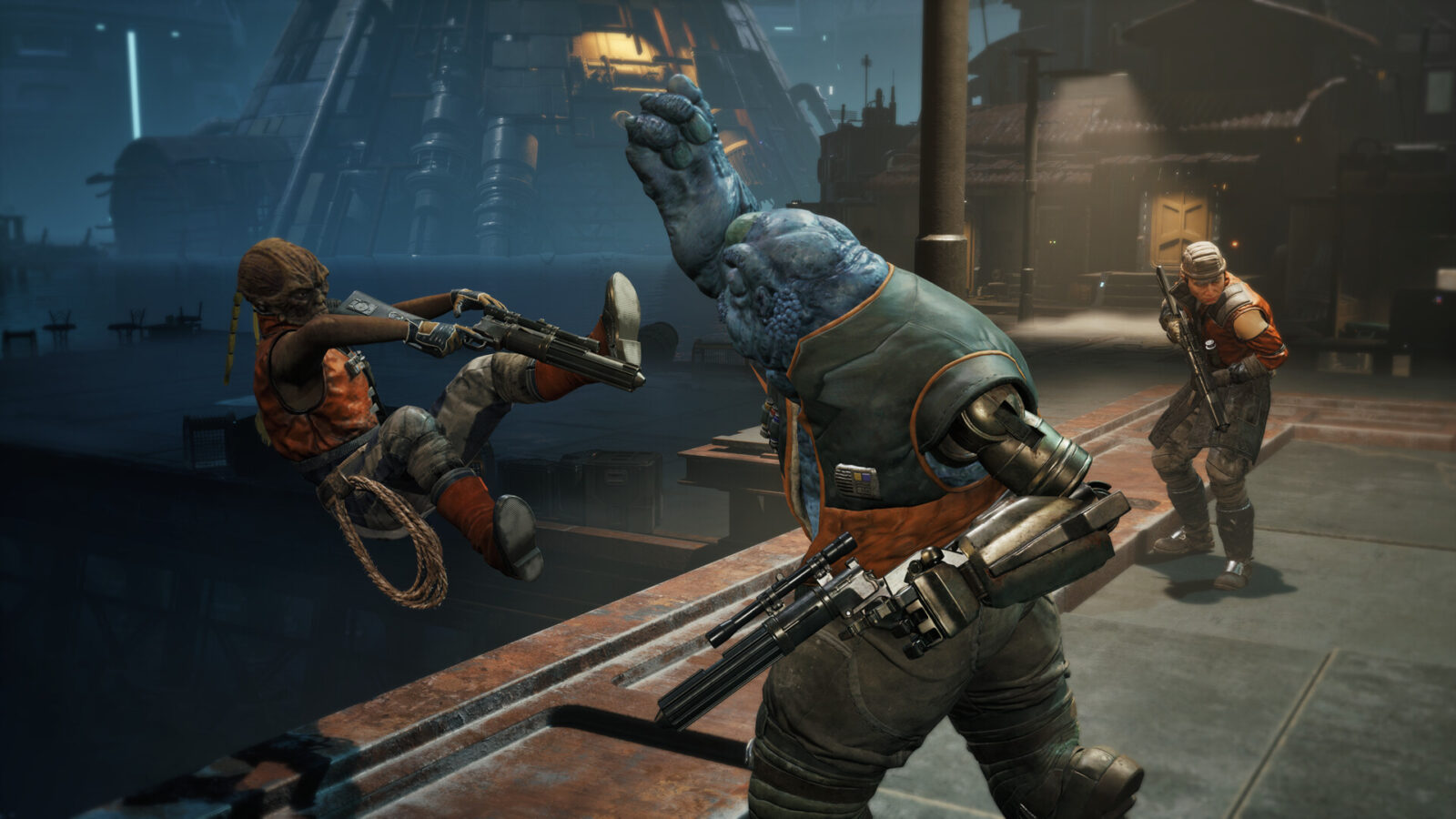
That feeds neatly into the wider emphasis on synergy. Classes, secondary specialisations, equipment, Advantage generation, Backup attacks, bonds and unique companion abilities all overlap. The interesting question isn’t simply whether you’ve brought your four individually strongest characters. It’s whether those four can make one another better.
Missions know when to break the tactical routine
Story missions provide some of the campaign’s strongest scenarios because they don’t always settle for eliminating everything with a health bar. Certain encounters force continuous movement by destroying areas behind the squad, while others require holding multiple positions before escaping against continually arriving enemies.
Some larger missions string multiple battles together within the same environment. Between encounters, the camera moves into third person and gives direct control of Hawks while travelling toward the next combat area. There isn’t much interaction beyond walking to objectives and triggering dialogue, but the change in perspective makes these missions feel like coherent locations rather than disconnected tactical boards.
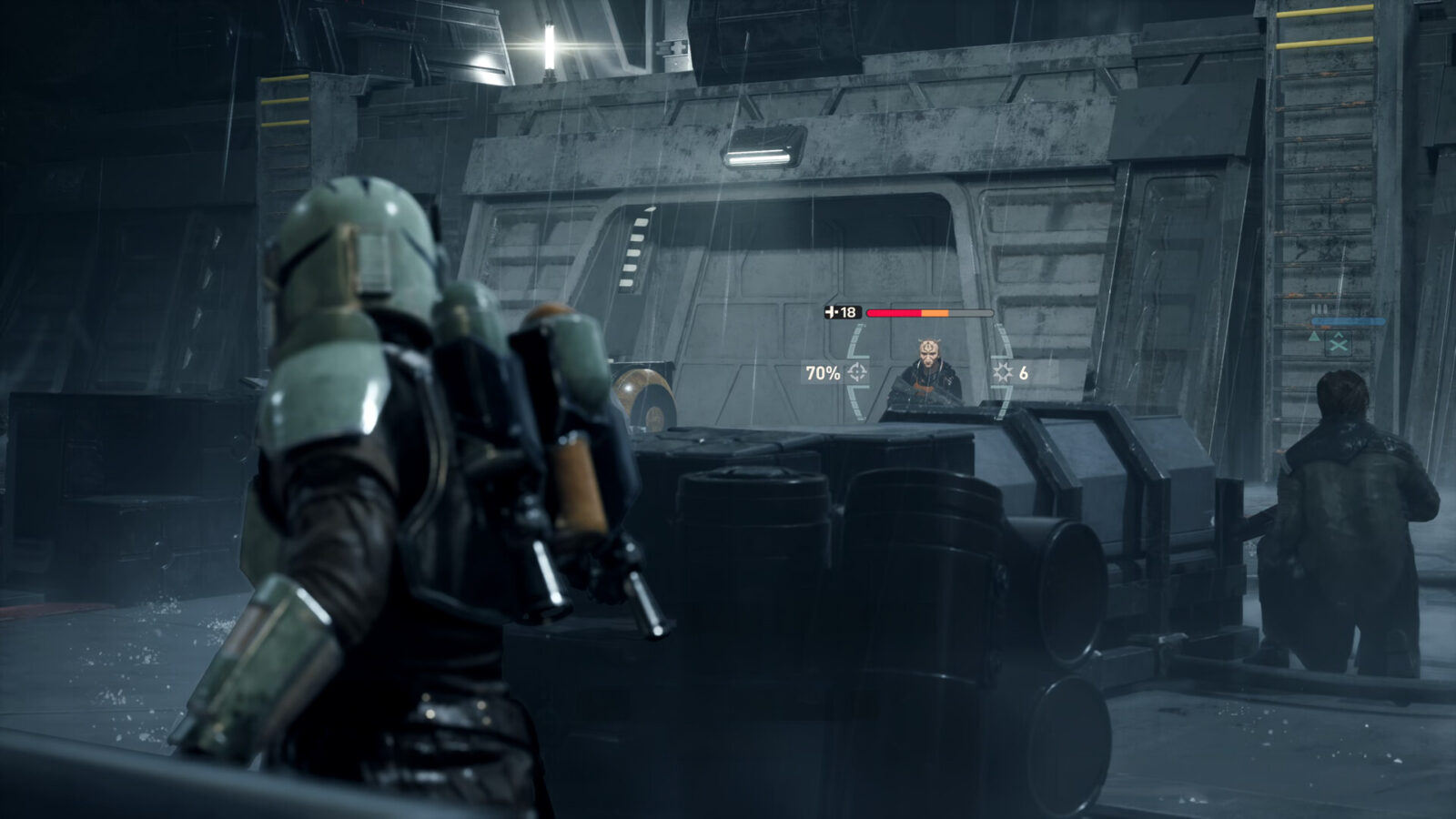
It’s a clever cinematic flourish, particularly because the environments themselves look good enough to benefit from the closer perspective. I only wish these sections offered more interaction. Once you’ve been handed direct control inside a detailed Star Wars environment, merely walking forward and pressing a button feels like being invited onto the Millennium Falcon and told not to touch anything.
Regular side missions can feel comparatively abrupt, dropping the squad directly into battle without that same geographical continuity. The tactical encounters remain enjoyable, but the story missions reveal how much stronger Zero Company becomes when presentation and mechanics are working together.
The enemy roster could use reinforcements
For all the possibilities within your squad, the opposition isn’t quite as diverse. There are different combat roles to consider, from melee units to snipers, alongside Infinite Coil soldiers whose mechanics can alter how you prioritise targets. Droidekas remain particularly memorable thanks to their shields and distinctive behaviour.
Eventually, though, too many opponents begin feeling visually and mechanically familiar. There are enough variations to require tactical adjustments, but not enough truly unusual enemy types to continually challenge the increasingly elaborate squad builds available to the player.
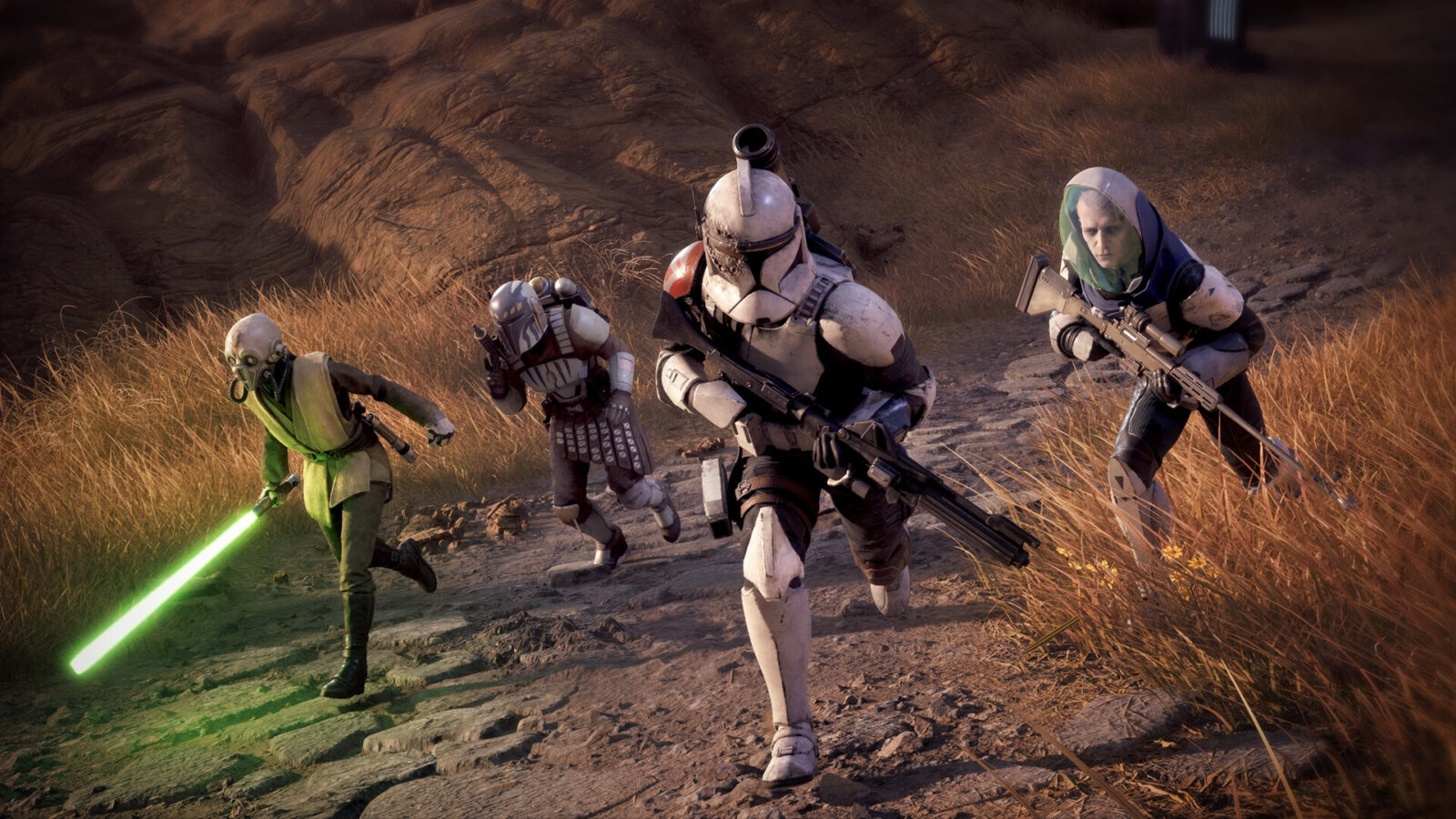
This becomes more noticeable because dismantling groups of battle droids is so satisfying. The combat systems are strong enough that I wanted a wider collection of enemies capable of forcing me to reconsider the tricks I’d grown comfortable using. When your toolbox keeps expanding, the targets need to evolve alongside it.
Zero Company’s challenge therefore comes more from combining familiar enemy roles and mission conditions than constantly unveiling radically different threats. It works, but the battlefield could have used a few more surprises.
Verdict
Star Wars Zero Company succeeds because it understands that putting Star Wars characters into an established tactical template isn’t enough. Its smaller maps, aggressive combat philosophy, Advantage economy, Backup system, flexible character building and relationship bonuses combine to create battles with their own distinct rhythm. There’s genuine satisfaction in constructing a sequence where one attack generates the resources needed for another ability, which enables another character, which ultimately turns a dangerous enemy formation into expensive scrap metal.
The campaign surrounding those battles is equally important. Hawks and Zero Company give the Clone Wars a welcome ground-level perspective, while the Infinite Coil and Fathom provide an antagonist that doesn’t require another Sith-shaped apocalypse. Strong companions and entertaining personalities aboard The Den make the crew worth investing in, and story missions use cinematic presentation effectively without overwhelming the tactical core.
There are weaknesses. Enemy variety could be broader, Operations sometimes ask players to make choices without enough useful information, technical glitches occasionally interrupt the spectacle, and its authored campaign inevitably limits long-term unpredictability. Experienced tactics players may also find Normal difficulty relatively forgiving.
None of those problems undermine what Zero Company gets right. This is a confident turn-based tactics game that uses Star Wars as more than decoration, giving blasters, teamwork and ordinary galactic misfits their chance to shine while the Jedi are busy elsewhere. Tactics fans should find plenty to dissect, Star Wars fans get a strong story outside the franchise’s usual centre of gravity, and anyone belonging to both camps may want to cancel a few plans. The Force can wait. I’ve got percentages to miss.