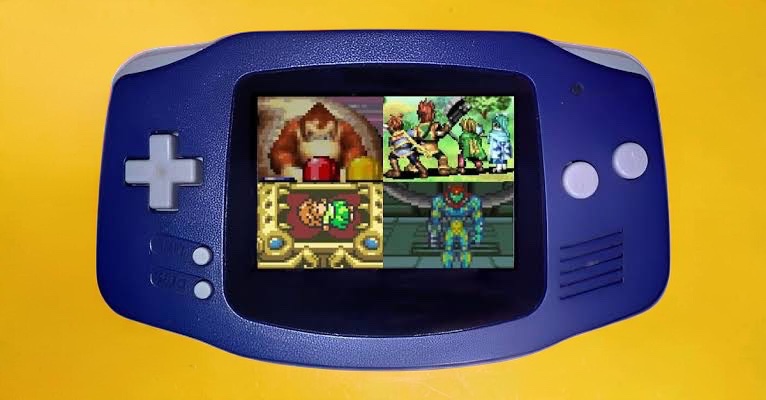
Nintendo has quietly expanded its Game Boy Advance library on Nintendo Switch Online, adding three games without a trailer, a social post or any notice in advance. Monster Rancher Advance, Metal Slug Advance and Kururin Paradise are now available through the Nintendo Classics app for subscribers on the Expansion Pack tier.
None of the three is a headline name like Zelda or Metroid. That is part of what makes the batch interesting. Each comes from a third-party developer, and each represents a corner of the GBA era that is hard to play legally today without the original cartridge.
Monster Rancher Advance, released by Tecmo in 2001, is a portable spin-off of the monster-raising series. Players create creatures, train them and send them into battle. It was a fairly unusual series to bring to a handheld at the time, and its mix of care simulation and combat holds up as a lower-pressure option for the library.
Metal Slug Advance arrived in 2004 and keeps the series’ run-and-gun approach while changing the setting. Playing as Walter Ryan or Tyra Elson, you are dropped into a survival training camp on an island with limited weapons and supplies, before an enemy force turns the exercise into a rescue mission. Compared with the arcade entries, it leans more on scarcity and exploration, which suits a handheld.
Kururin Paradise, developed by Eighting and released in 2002, is the stranger and arguably more charming pick. A sequel to Kuru Kuru Kururin, it has you guiding a constantly spinning helicopter through tight mazes to rescue the pilot’s family. It also includes 16 minigames for solo or multiplayer play, which makes it a good fit for passing a Switch around.
Shadow drops like this have become fairly routine for Nintendo’s retro service. Game Boy Advance titles joined the Expansion Pack in 2023, and the wider catalogue now exceeds 270 games across NES, SNES, Game Boy, GBA, Nintendo 64 and Virtual Boy, with GameCube titles limited to Switch 2. Volume has never really been the issue. Pacing and visibility have. Adding a handful of games unannounced keeps the subscription active, but it also means many subscribers may never notice the additions.
For a service whose main draw is preservation and convenience, the gradual arrival of third-party GBA titles is welcome. The bigger question is whether Nintendo can secure enough licensing deals to make the GBA collection feel like a real reflection of that era rather than just a selection of what was available.