

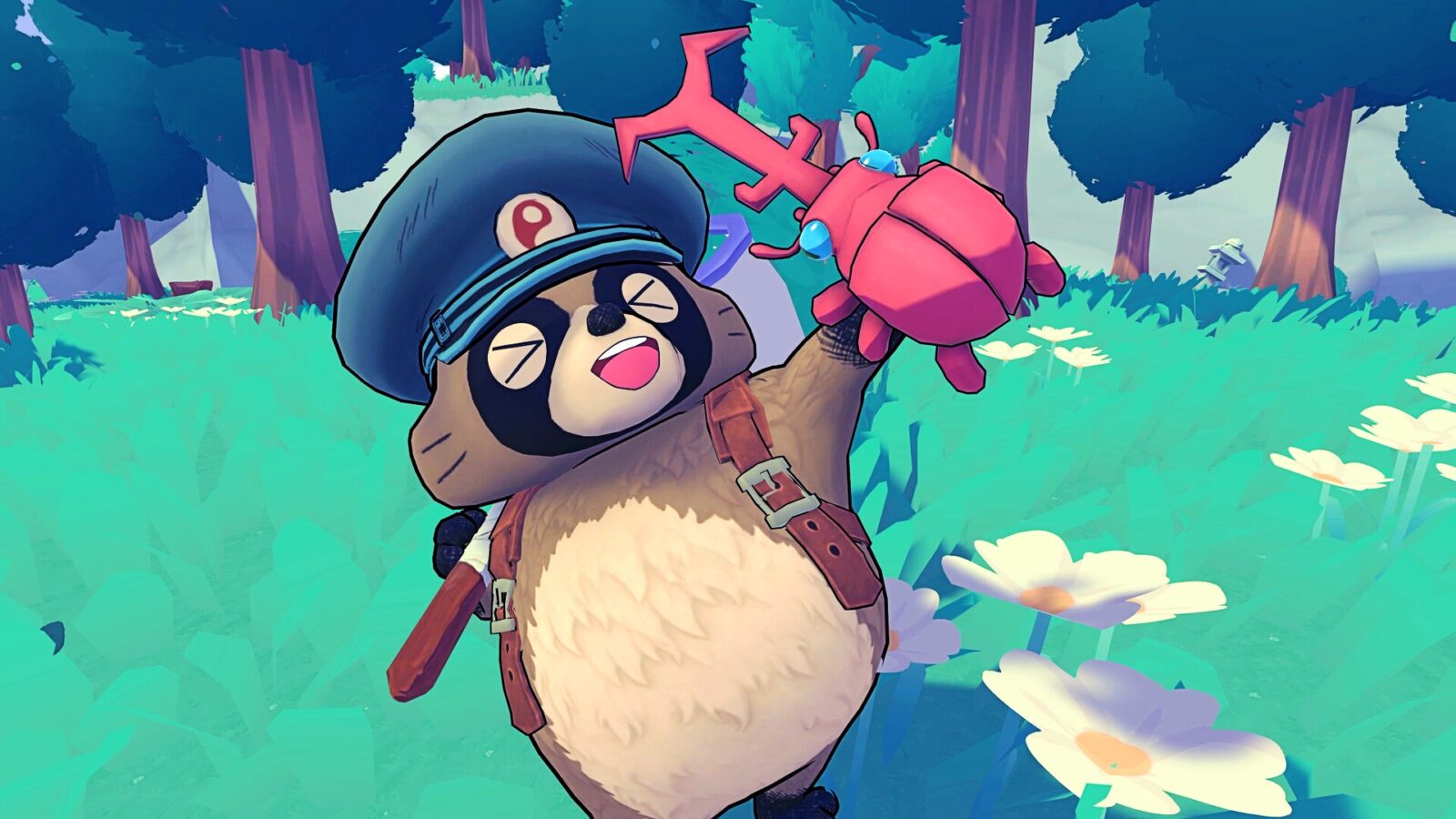
TL;DR: Tanuki: Pon’s Summer turns mail delivery into a sunny BMX playground with a charming island cast and plenty of warmth. A few slow minigames, optional decorating and pre-release save-wiping bugs take some of the shine off, but the riding and summer vibe make it well worth the trip.
Some games describe their whole pitch in one sentence, and Tanuki: Pon’s Summer manages it in about four words: tanuki, BMX, mail delivery. Kyoto-based studio Denkiworks has built a small, sun-drenched slice of rural Japan around Pon, a tanuki who was meant to look after a local shrine and instead let it fall apart while he snacked on chips and played video games. The tanuki gods are not impressed, and they lean on him hard to restore the place before a big festival arrives. Restoration costs money, money means a job, and Pon’s only real asset is his bike. So he signs up at the post office and spends a month of in-game summer pedalling parcels across the island. It’s a premise with the logic of a Saturday morning cartoon, and that’s a big part of why it works so well.
Why the commute is the best part of the job
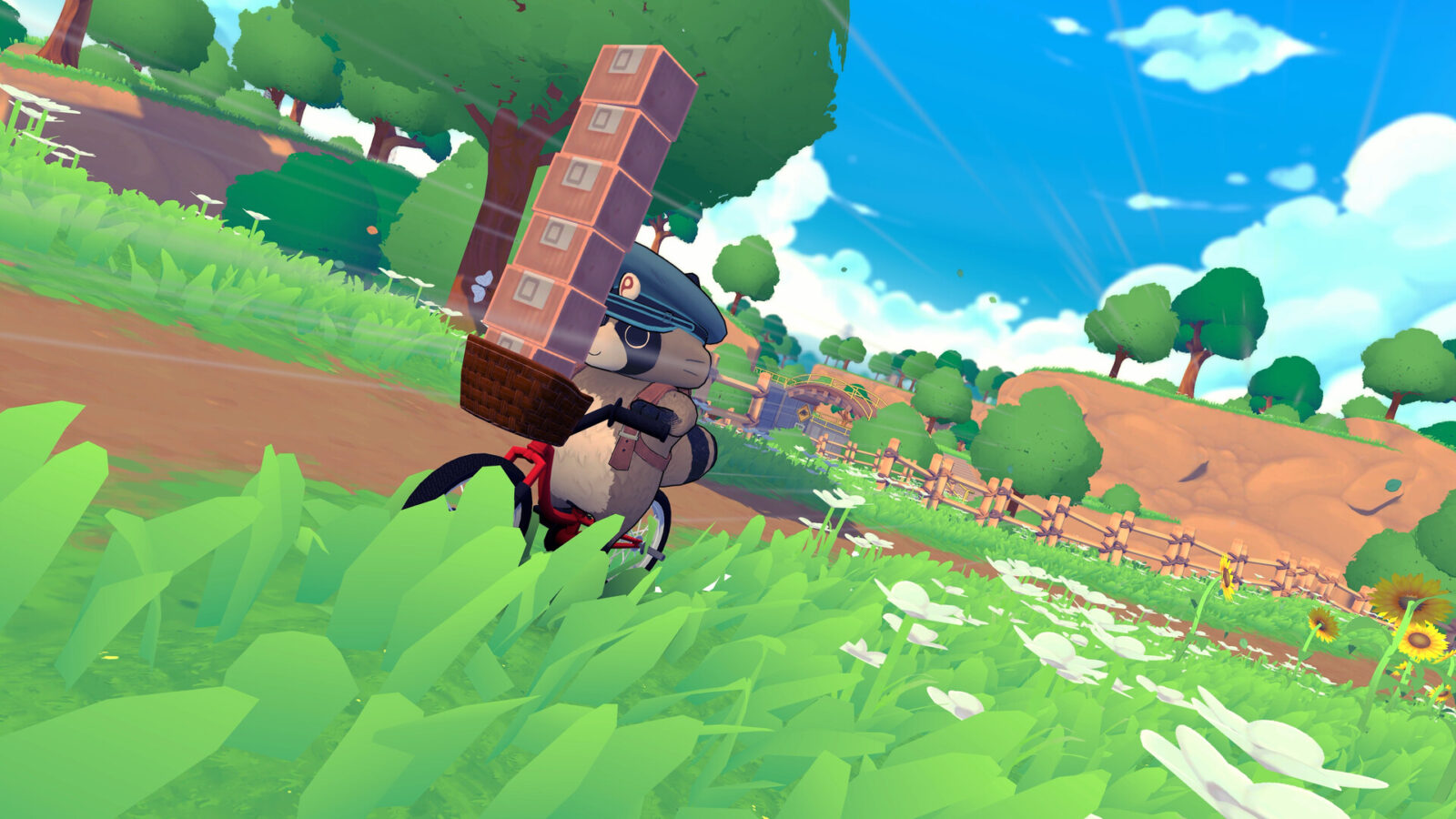
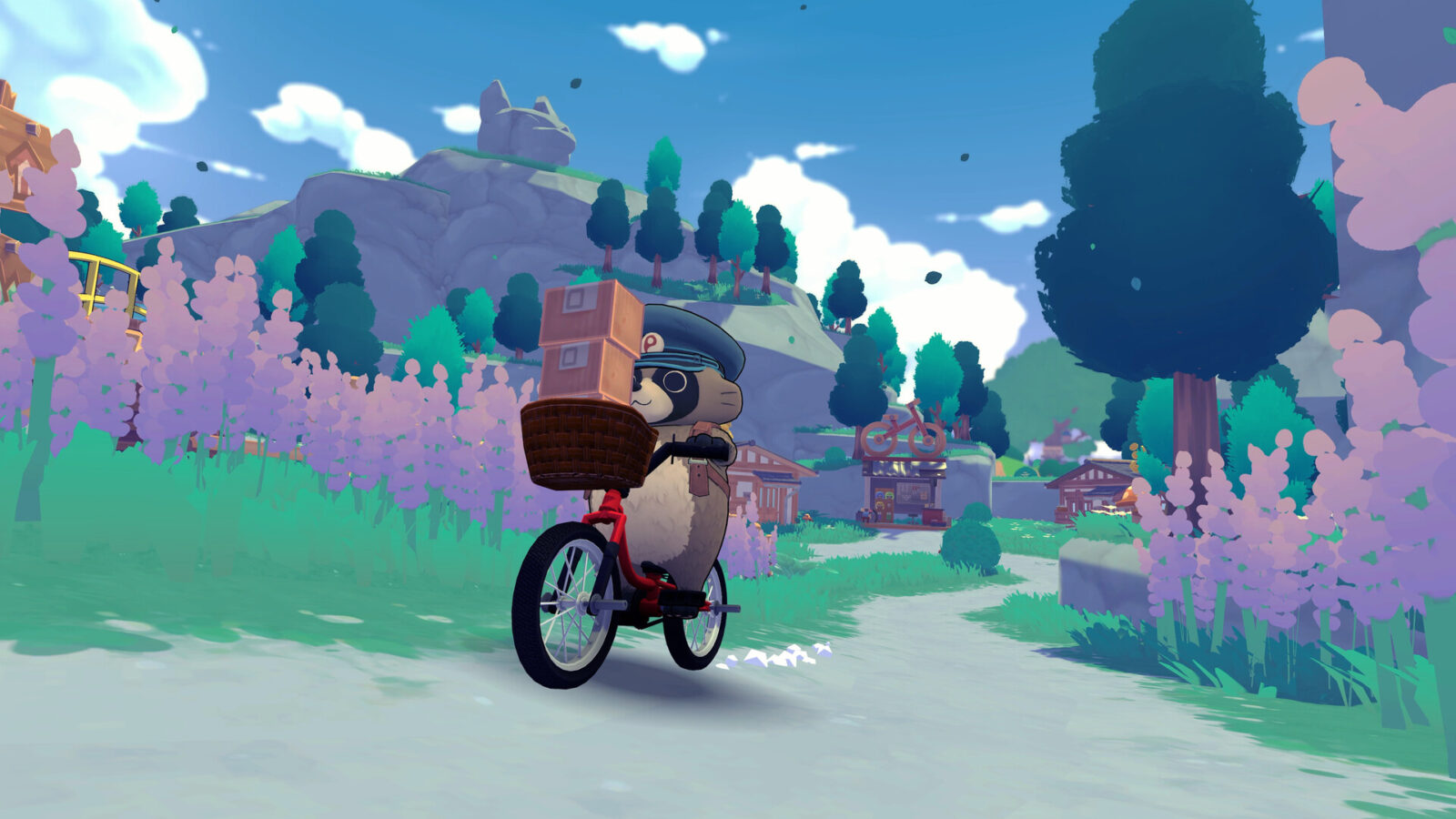
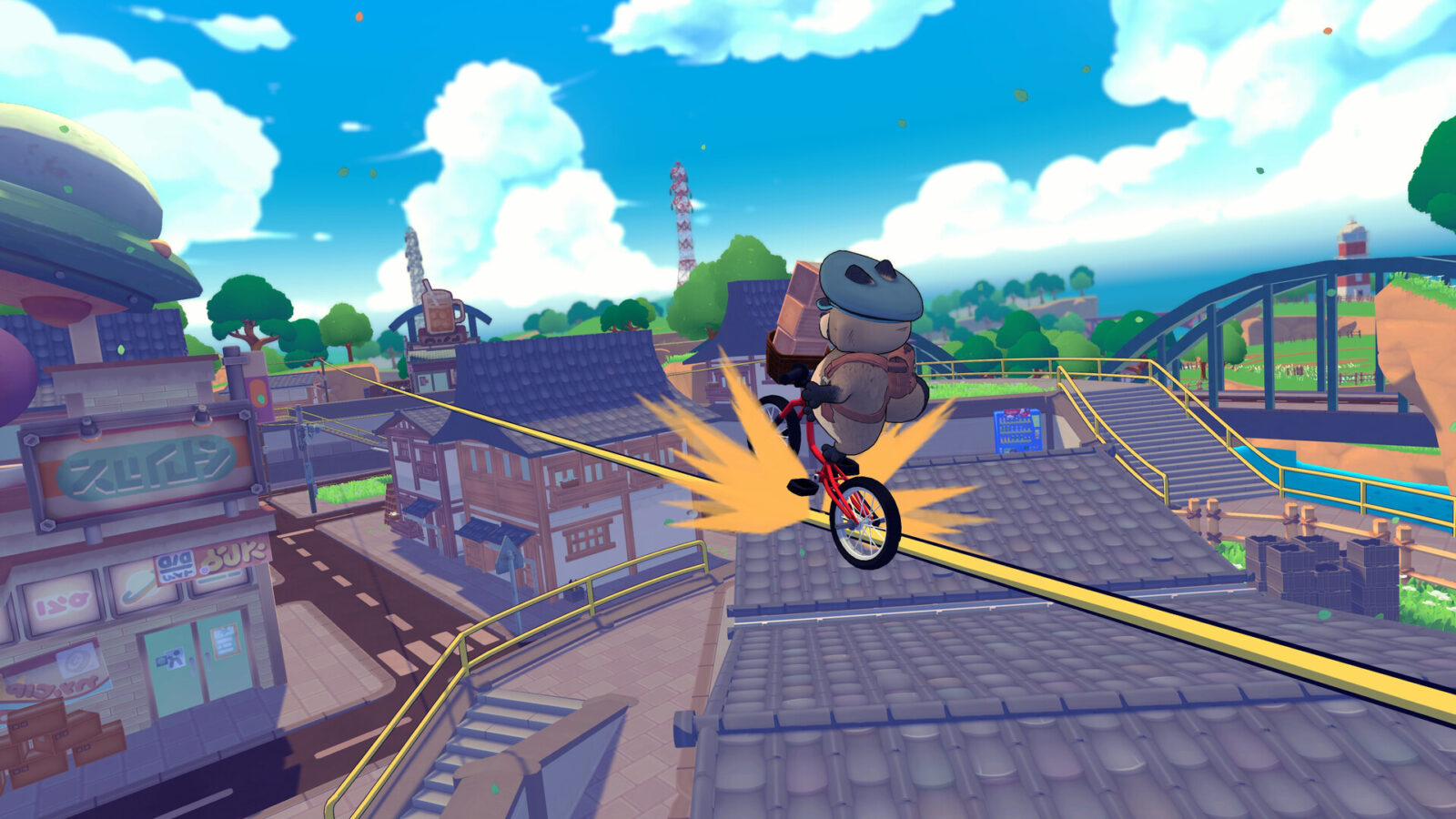
What sold me on Tanuki: Pon’s Summer is that getting from A to B isn’t busywork. It’s the game. Pon can walk, but he can’t jump on foot, so the bike quickly becomes the only sensible way to move around. The island leans into that completely, with ramps, rails, ledges and rooftops arranged like someone dropped a skatepark into a sleepy coastal town. Pon can bunny hop small drops, grind handrails, launch over gaps and hop between rooftops, all with simple stick-and-button trick inputs while airborne. Single tricks are easy to land, while linking them into proper combos takes more practice, which gives the system a skill ceiling without ever putting up a wall. The more I played, the more I caught myself choosing routes because they looked fun rather than because they were quick.
Tricks for the sake of tricks, and that’s fine
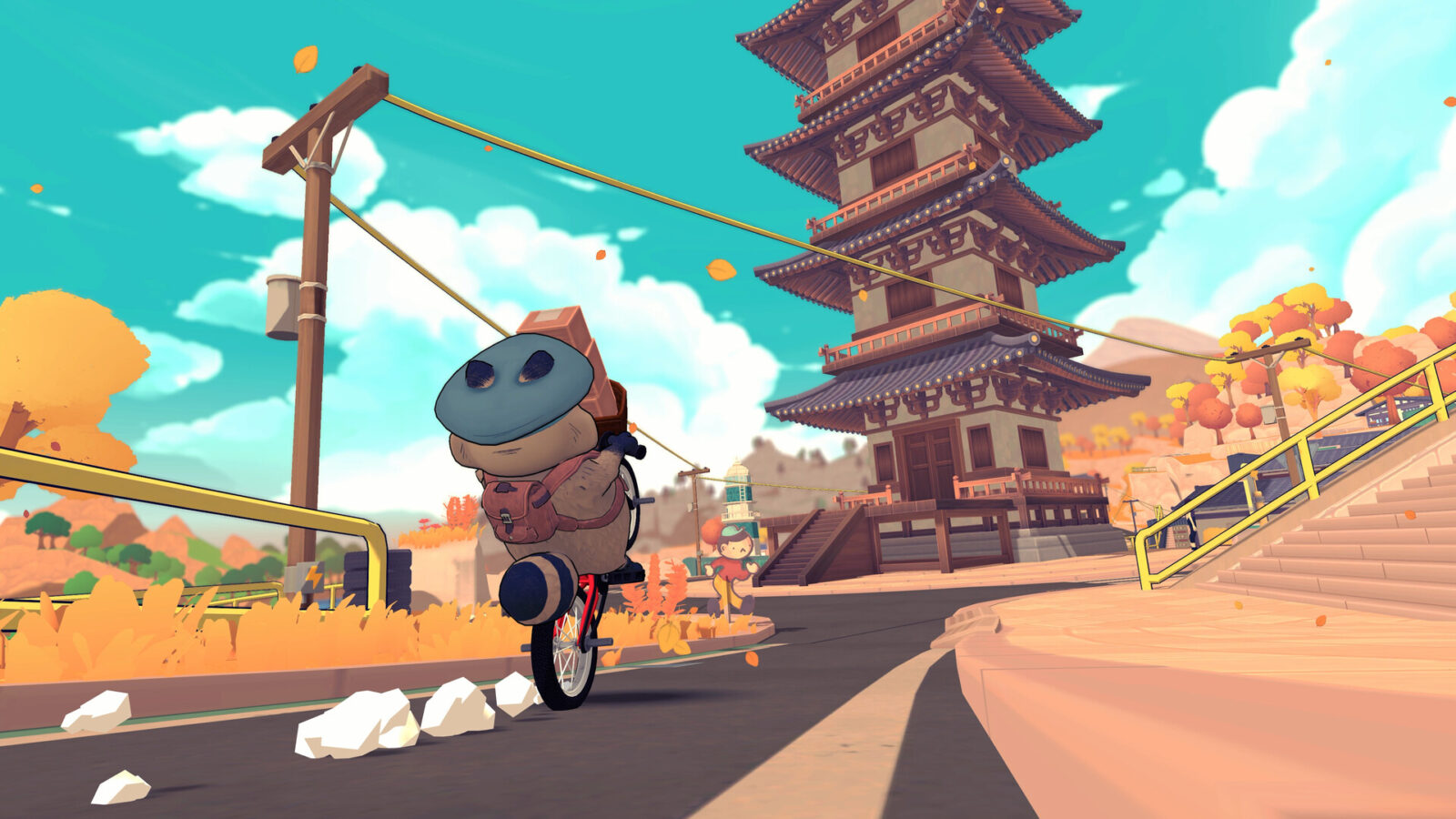
Trick points are tallied constantly, popping up on screen even when Pon is pulling a barspin into a wheelie on his way to drop off a model kit. For the most part, those numbers don’t lead anywhere. Optional challenges around the island test your skills, and some residents occasionally ask Pon to hit a points target within a time limit, but the game rarely forces you to show off. I found that restraint smart. The riding is good enough to sell itself, and the urge to find a long, empty road just to see how far a wheelie can stretch comes from the controls, not from a progress bar. Anyone who lost afternoons to the Tony Hawk games will recognise that itch, just in a much gentler, sunnier setting where nobody cares whether you landed the 900.
A daily routine with a Tetris twist
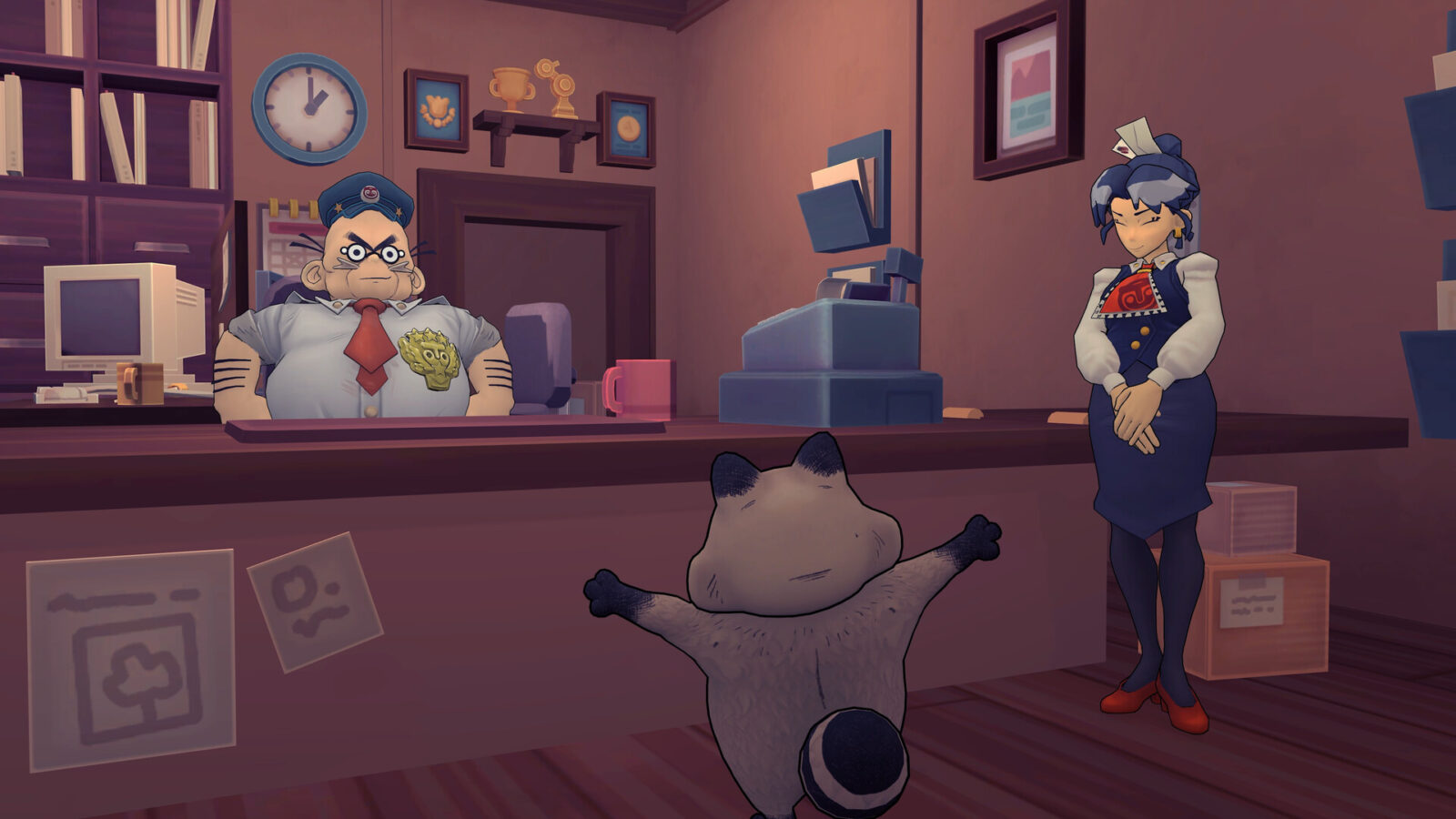
Each day begins at the post office, where Pon loads his basket through a small Tetris-style packing puzzle. It sounds like filler on paper, but it settles into a pleasant ritual, the kind of short morning task that frames the day before you head out. From there, the structure is open in the sense that you choose your delivery order, but the story itself moves along a fixed path. Days are tracked on a calendar across the month, which gives the whole thing a nice summer-holiday rhythm rather than the urgency of a ticking clock. Some deliveries are just quick drop-offs, while others unlock a scene or a task involving the island’s residents. That mix keeps the loop from feeling like a courier simulator with a nicer paint job.
The real story belongs to the neighbours
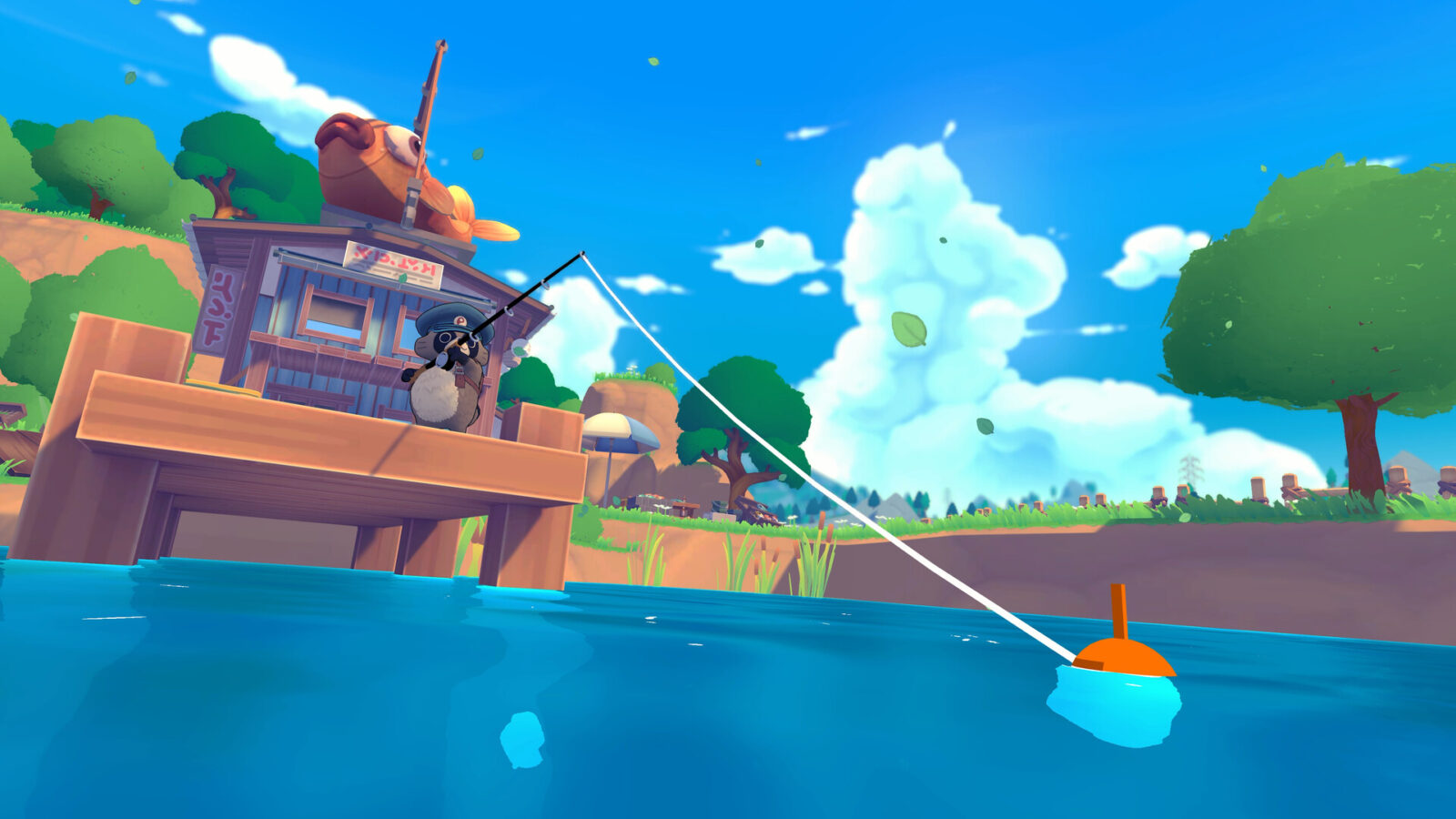
Pon’s name might be on the box, but Tanuki: Pon’s Summer is really a story about the community around him. The cast is wonderfully odd: rival sushi and yakitori chefs who’ve been feuding for years, a photographer stuck in a creative rut, a tough guy who turns out to be softer than he looks, and an estranged father and daughter who both work as artisans. Several of them start off treating Pon with open suspicion, since everyone knows he’s the lazy tanuki who let the shrine rot. What worked for me is how gradually those attitudes shift, both toward Pon and between the residents themselves. It’s not a dramatic narrative, and it doesn’t try to be. The emotional pay-off comes from watching small grudges thaw and relationships mend, with Pon acting more as a catalyst than a hero.
Minigames: summer fun versus summer chores
Almost every resident needs a hand with something, and that’s where the minigames come in, along with most of the game’s variety. Pon skewers meat and vegetables for yakitori, stacks sushi to order, serves shaved ice and pours foamy beers, rings up customers at the convenience store, drums for a local musician and swings for home runs at the baseball field. At its best, this spread captures the feeling of childhood summers when every day might throw up something new. Most of these tasks only appear once, so the game keeps moving forward rather than recycling the same activity. When they land, they’re charming little detours that add personality to the people asking for help.
The problem is that not all of them land. Sanding logs plods along at a painfully slow pace, and a bamboo-cutting task asks you to chop through far more stalks than it has any right to. A boulder-rolling maze and a few others feel more like obligations than playful detours. None of them are especially long, but they stand out because they pull you off the bike, which is where the game is at its strongest. Every dull minigame breaks the momentum built up from flowing through town, and that contrast makes the weaker ones feel worse than they would in a slower game. Yes, real summer holidays came with chores, but I didn’t need Denkiworks to be quite that authentic about it.
Shrine decorating for the Animal Crossing crowd
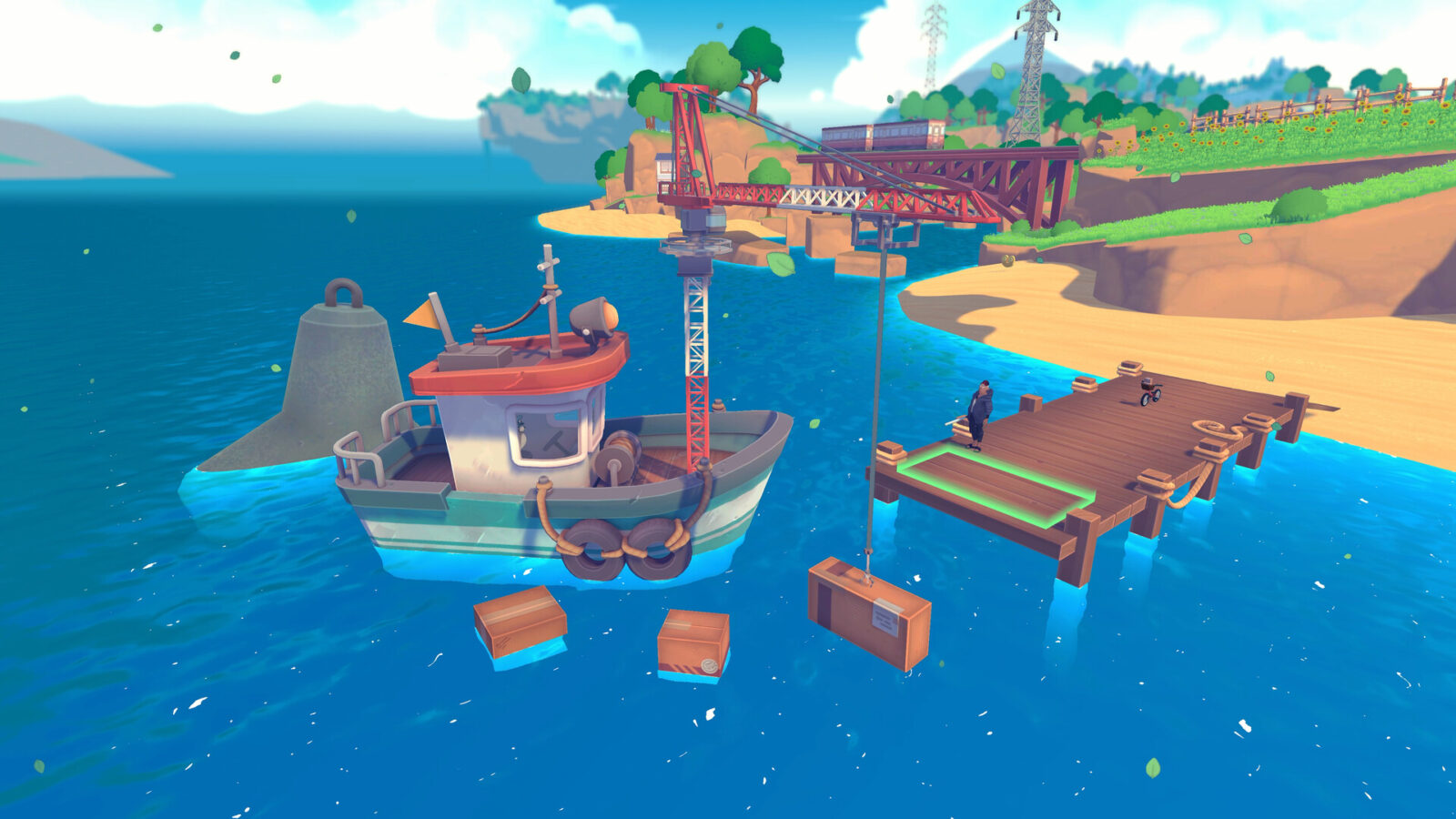
The shrine itself doubles as an optional decoration project. As the month progresses, larger empty spaces open up, and Pon fills them with furniture and decor earned from residents’ requests or bought from kitsune merchants wandering the area. Players who spent hours arranging their Animal Crossing: New Horizons islands will probably find something to enjoy here. For me, though, it felt disconnected from everything else. There are no goals, themes or real consequences tied to how you decorate, so it exists simply as something to do if you want to. It’s not a flaw so much as a missed opportunity, especially since restoring the shrine is the entire reason Pon is working in the first place.
Length, bugs and the case for manual saving
My run took roughly ten hours, covering the main story, a healthy chunk of challenges and plenty of aimless riding. That’s a comfortable length for a game like this, long enough to enjoy the full summer arc without wearing out its welcome. The review build, however, had some game-breaking bugs that forced me to replay lost days. Autosaves are fairly sparse, which made those crashes more painful than they needed to be. Until patches confirm these problems are gone, my advice is simple: use the manual save often. It’s a frustrating blemish on a game that’s otherwise so relaxing, and it’s worth knowing about before you start.
Verdict
Tanuki: Pon’s Summer captures the lazy, open-ended feeling of a perfect summer break better than almost anything I’ve played this year, and it does so mostly through the joy of riding a bike. The BMX traversal is the clear highlight, easy to pick up, fun to master and good enough that I chased wheelies and rooftop routes long after a delivery was done. Its cast of quirky island residents, with their feuds, insecurities and slow reconciliations, gives the game a warm heart that goes beyond its cute surface. On the other hand, a handful of tedious minigames drag the pace down, shrine decorating feels like an afterthought, and the pre-release bugs combined with stingy autosaves are a real annoyance. Still, the good far outweighs the bad here. If you enjoy cosy games with a bit of mechanical bite, or ever wished a skateboarding game had more charm and fewer high scores, this is easy to recommend. Just keep that manual save button close.