
TL;DR: Star Wars: Galactic Racer revives Star Wars racing with a tense no-restart roguelite campaign, gorgeous tracks and brutal takedowns. Repetitive planets, disposable speeders and no splitscreen hold it back, but it’s a thrilling, confident comeback.
Star Wars has more ways to go fast than almost any fictional universe ever built, which makes the long silence around its racing games strangely hard to explain. Podracing gave the prequel era its best set piece, and then the whole genre more or less parked itself in a Tatooine junkyard for over twenty years. Star Wars: Galactic Racer, developed by Fuse Games and launching October 6, 2026, is the first serious attempt to fire those engines up again. What I didn’t expect was a racer with a roguelite heart, a campaign that refuses to let you rewind your mistakes, and a hangar that reaches well beyond the podracer nostalgia most fans will arrive for. It’s fast, gorgeous and occasionally punishing, and while it leans too heavily on a small set of locations, it’s the most interesting thing to happen to Star Wars racing in a generation.
A post-Jedi racing league where podracing belongs to the history books
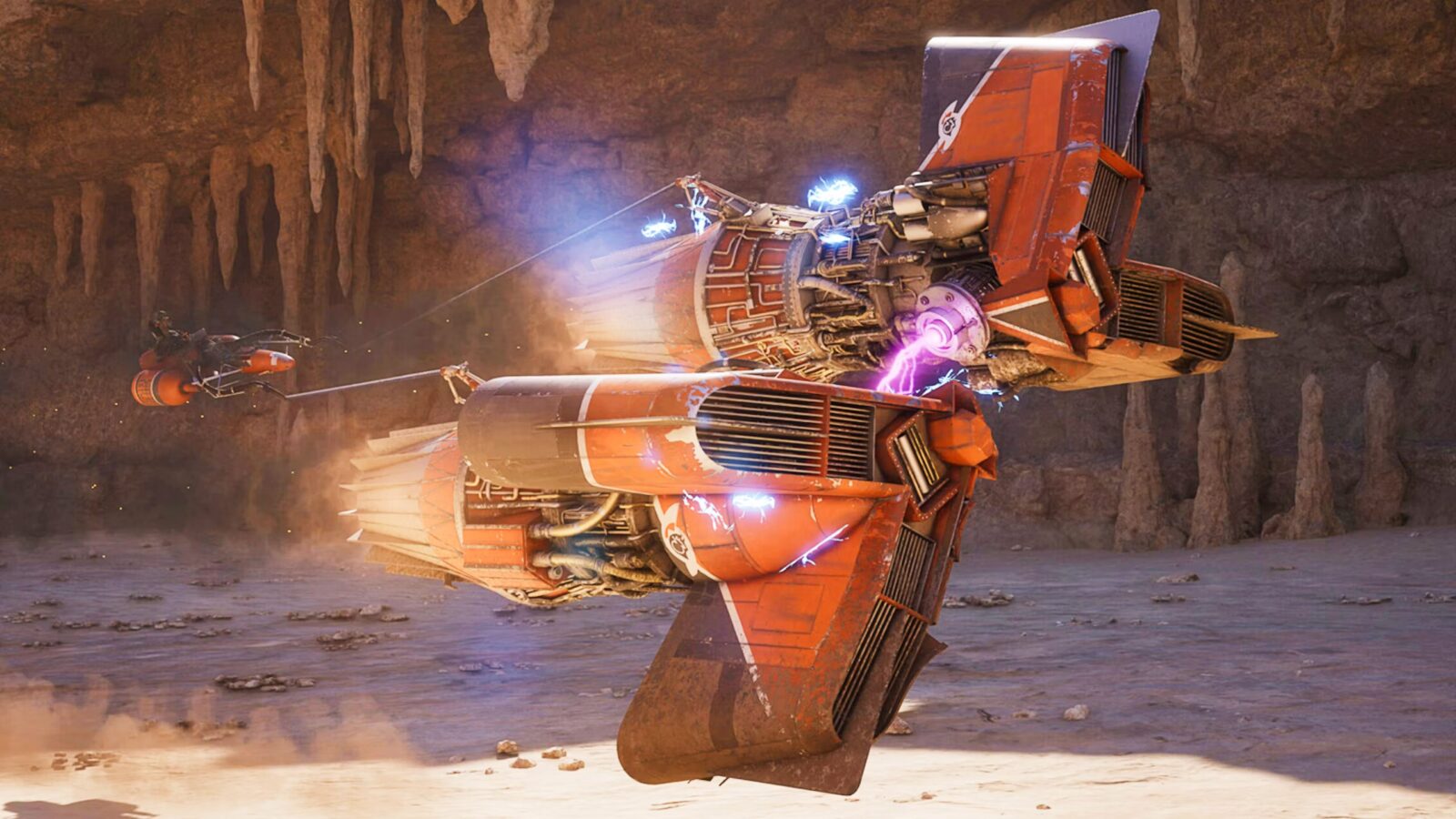
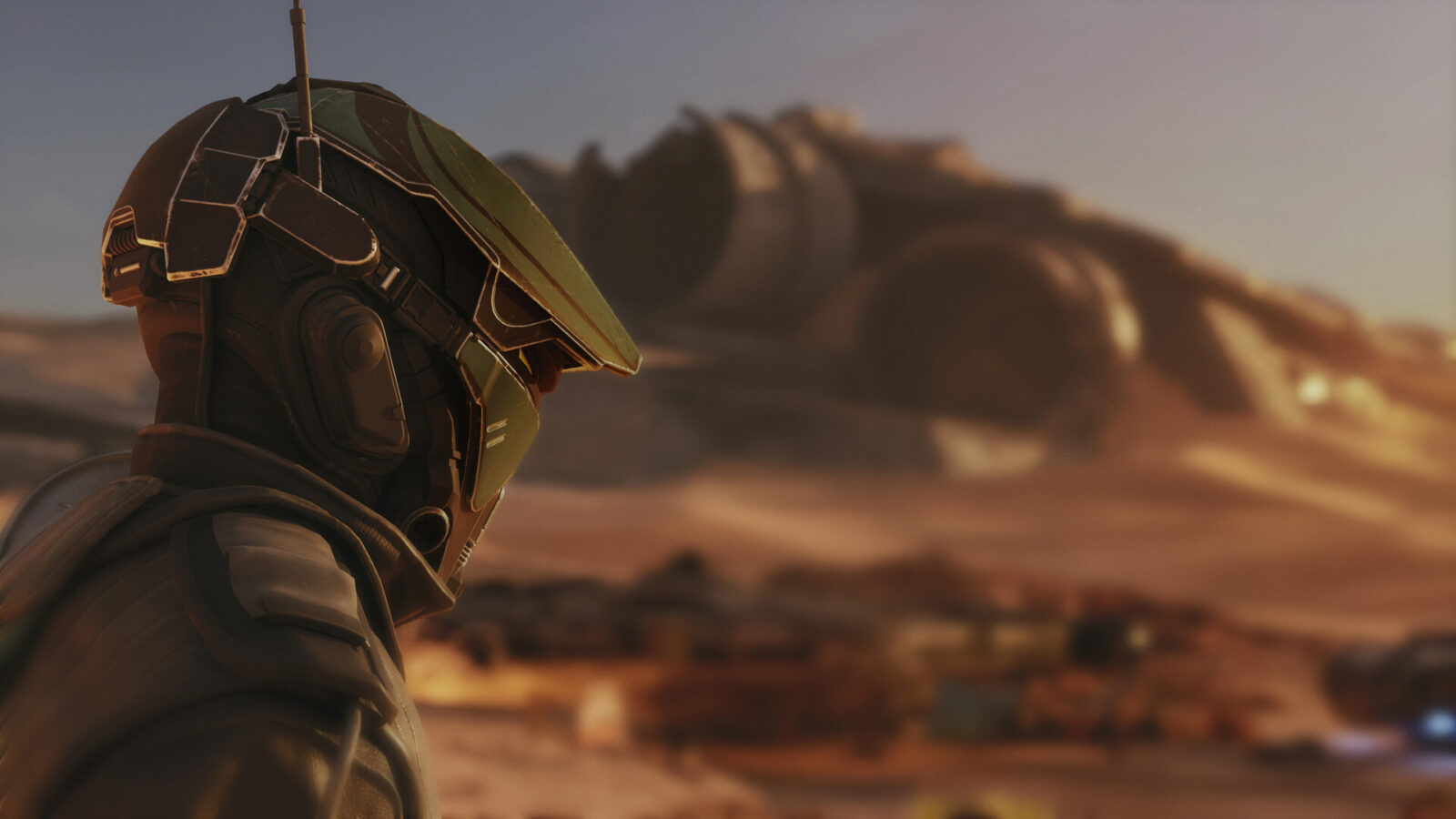
Rather than returning to the prequel era, Galactic Racer is set in the aftermath of Return of the Jedi, a period where podracing has become a faded relic rather than the sport of the moment. It’s a smart framing choice, because it gives the game room to build its own scene around the Galactic Racing League instead of leaning on Anakin-era cameos. You play as Shade, a faceless human racer with one clear goal: dethroning Kestar Bool, the league’s whiny, entitled champion, in a final head-to-head showdown. Bool is exactly the kind of rival you want in a racing campaign, the sort of character whose smugness gives every victory a little extra flavour. Podracers do still show up, both in quickplay and at a point in the story I’ll leave for you to discover, and when they do, they’re blisteringly quick and sound wonderfully authentic. Keeping them as a special guest rather than the main event is a confident move, and it makes their appearance feel earned rather than obligatory.
Landspeeders, bikes and skim speeders give every grid a different personality
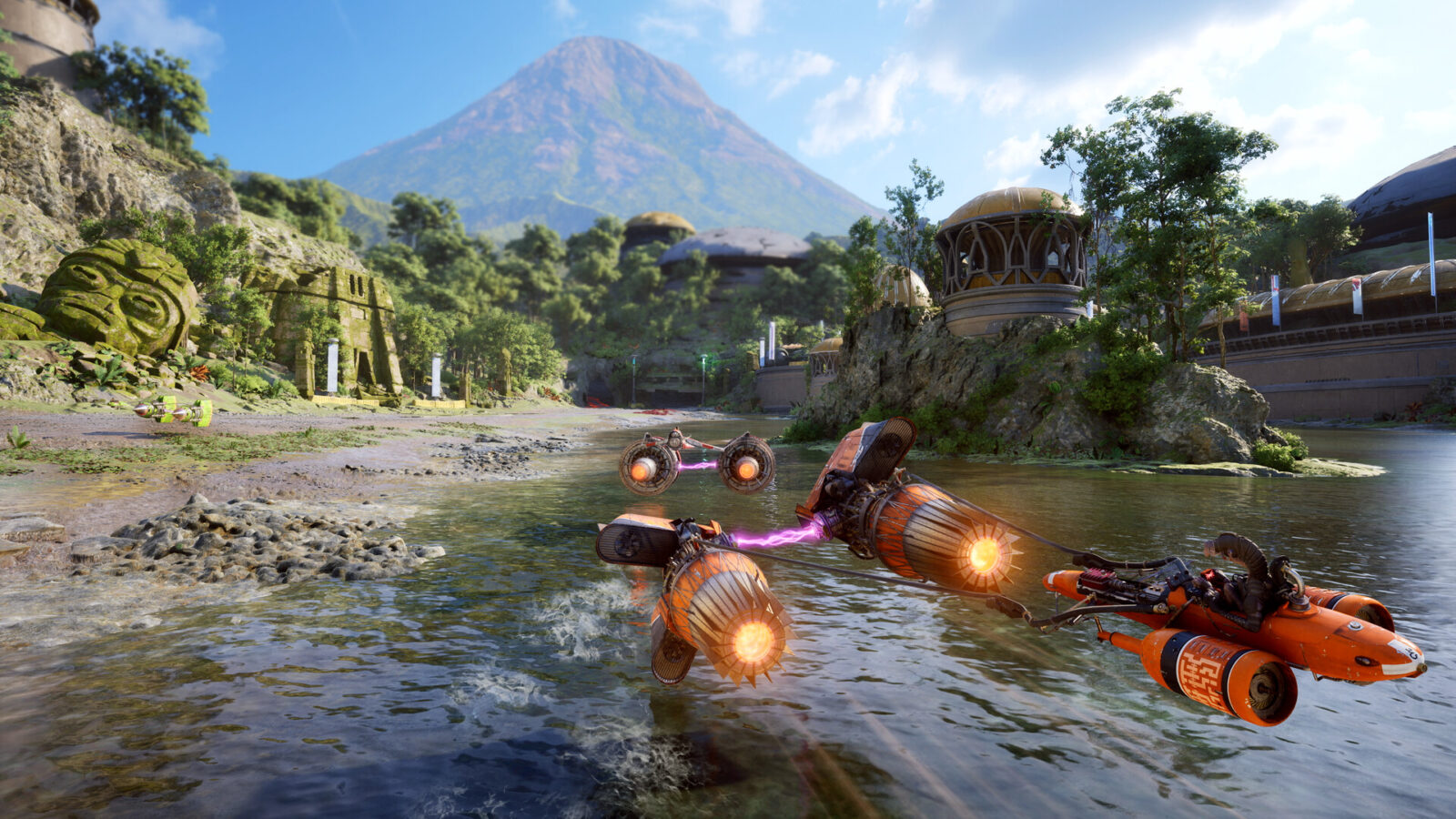
The bulk of the league’s garage is made up of three classes, and the differences between them matter more than the stat bars suggest. Speeder bikes are the glass cannons of the roster, rapid but fragile enough that a careless line can end your race. Skim speeders are the new addition, and their party trick is the ability to bank fully vertical, letting you knife through narrow gaps and carve tighter turns in a way that echoes classic podracer handling. Landspeeders are essentially hovering cars, and they’re where I found myself most at home thanks to their steadier handling and extra durability. What I appreciate is that none of these classes feels like a strict upgrade over another; each asks you to race differently and accept different risks. That variety becomes crucial given how often the campaign asks you to start fresh, because switching class is one of the best tools you have for keeping repeat runs feeling new.
Galactic Racer’s roguelite campaign makes every crash count
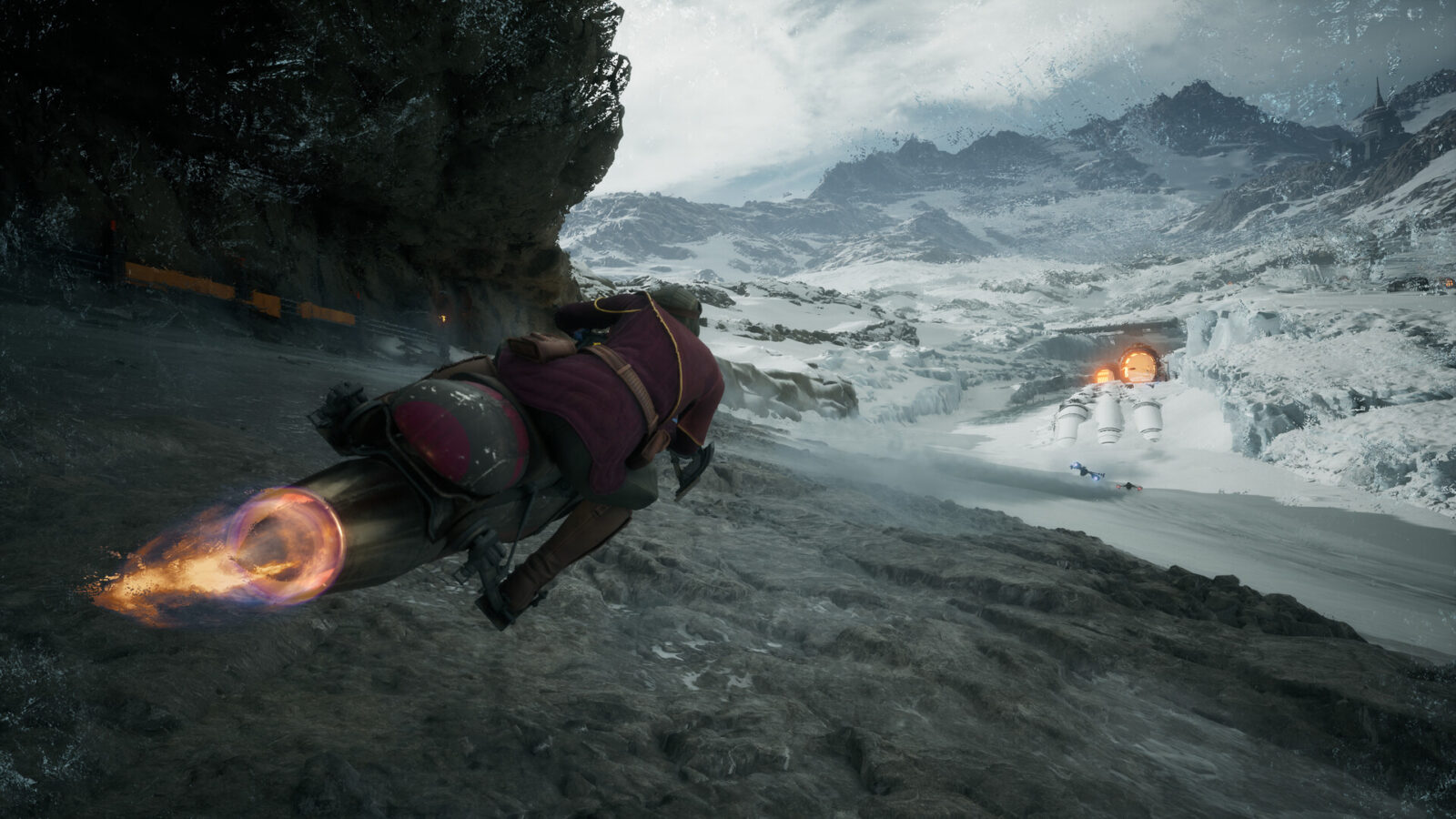
The defining idea here is a run-based campaign with no mid-race restarts. You can pause, and you can save and quit, but whatever happens on track stays happened. In an era where rewind buttons have made most racing mistakes disposable, this is a genuinely refreshing rule, and it transforms the mood of every event. A late collision isn’t an inconvenience you undo; it’s a consequence you carry into the standings. I found that this injects real tension into races that might otherwise blur together, because a single overconfident boost can unravel a promising tour. It won’t suit everyone, and players who treat racing games as a sandbox for chasing perfect laps may find it stressful, but it gives the campaign a backbone that most arcade racers lack.
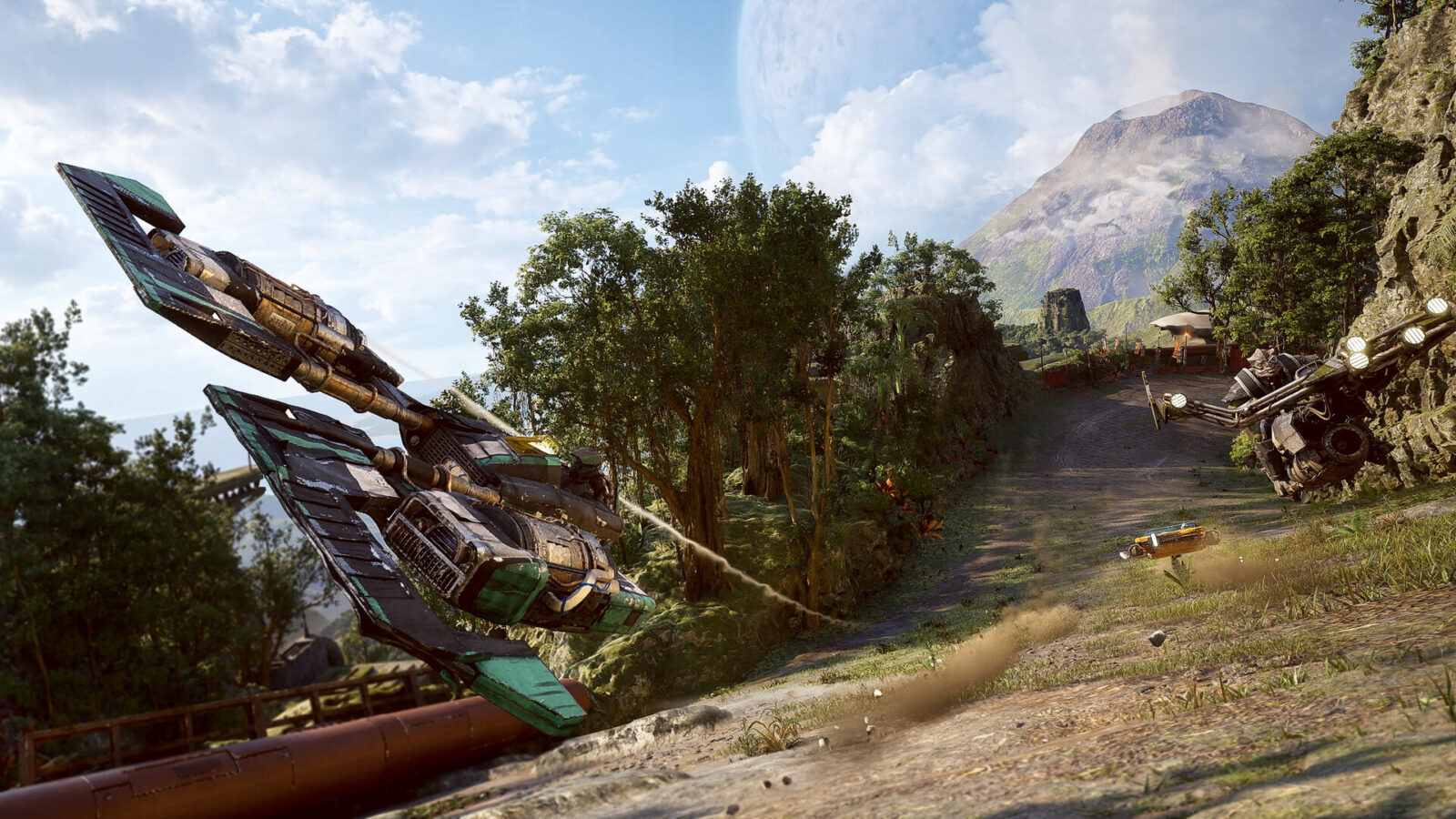
Tours span three planets at first, later expanding to five, before ending in a knockout finale, and failing at any point sends you back to start a fresh tour. Crucially, the story is split into three acts, and stumbling in the later stages only sends you back to the start of the current act rather than all the way to qualifying. That’s a sensible safety net that keeps the structure demanding without becoming cruel. Time also never resets in a narrative sense. Characters remember your failures and react when you come back for another attempt, so each loss reads as part of Shade’s story rather than a reload screen pretending nothing happened.
Upgrades, gadgets and the hardest goodbye in the hangar
Building a competitive speeder means juggling general stat upgrades, performance parts, perks, activatable gadgets and bonuses granted by allies you recruit over the story. Much of this is handed out randomly or earned as you work through each tour, which gives every run its own build-craft puzzle. The autopilot gadget quickly became my favourite, because it’s a genuine lifeline on the nastiest stretches of track where one wrong twitch means disaster. Gadgets are primed on the grid through a short sequence of button inputs that plays out like a pre-flight checklist, finishing with the command to light your engines and the chance to rev them while you wait. It’s a small ritual, but it gives every race start a sense of ceremony that I found surprisingly satisfying.
The catch is that speeders are scrapped between tours, and this is where the design started to rub me the wrong way. You can rebuild something that looks identical, with the same cosmetic parts and livery, but the specific upgrades that made your previous machine sing are gone. A heavily upgraded speeder does earn you more points to pump into the base stats of your next one, yet it won’t drive the same unless the dice favour you with the same perks or your mechanic Hibi happens to offer them in her randomised shop. For roguelite veterans, this is simply the genre doing its job. For players who come to racing games to bond with a car and tune it into perfection, it may feel like having your favourite ride towed away every few hours, and it makes long-term attachment to any single machine nearly impossible.
An explorable paddock that makes the league feel lived in
Between races, Galactic Racer lets you wander the paddock at each event in third-person, and this turns out to be one of its smartest ideas. Instead of bouncing between menus, you walk through a working racing community, chat with its characters and soak up the atmosphere of a sport that clearly has its own culture. It does a lot of quiet work in making the setting credible, which is exactly what a new corner of the Star Wars universe needs to feel worth caring about. It also ties neatly into the roguelite loop, because returning to the same paddock after a failed run carries meaning when the people there acknowledge your setbacks. I’d much rather lose a tour and stroll back into a world that noticed than stare at a “retry” prompt.
Jakku, Crait and Ando Prime are stunning, but there aren’t enough of them
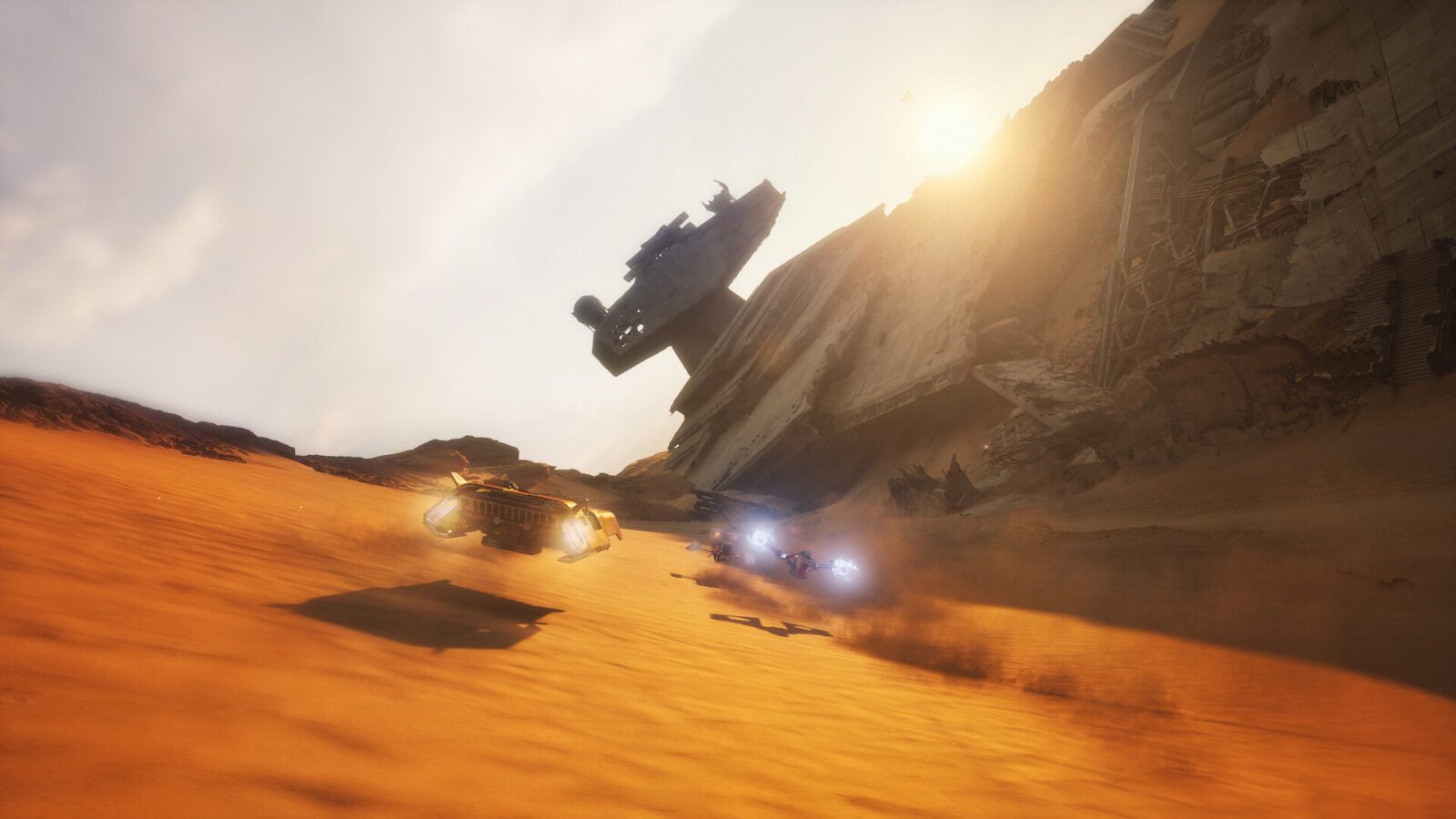
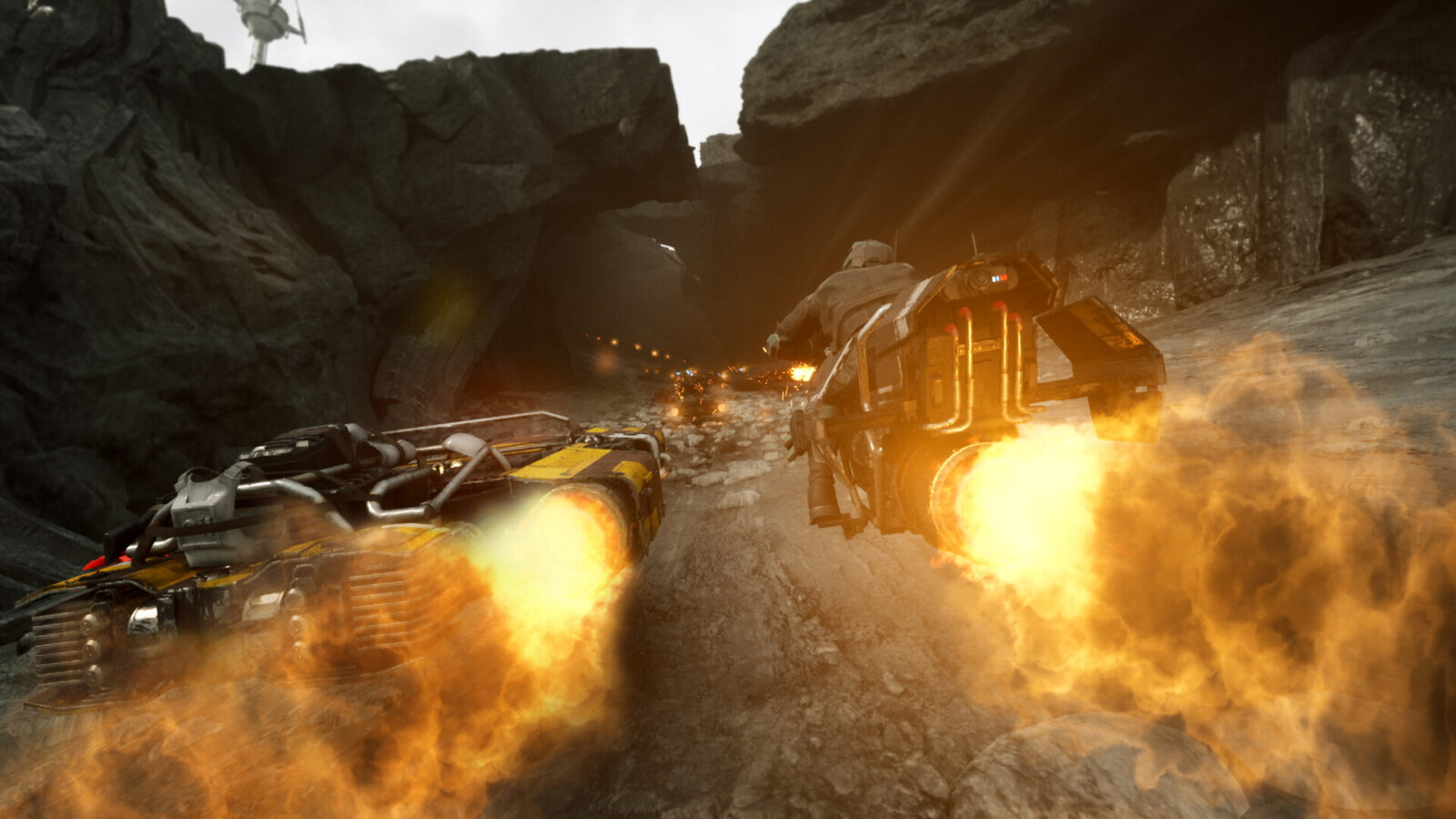
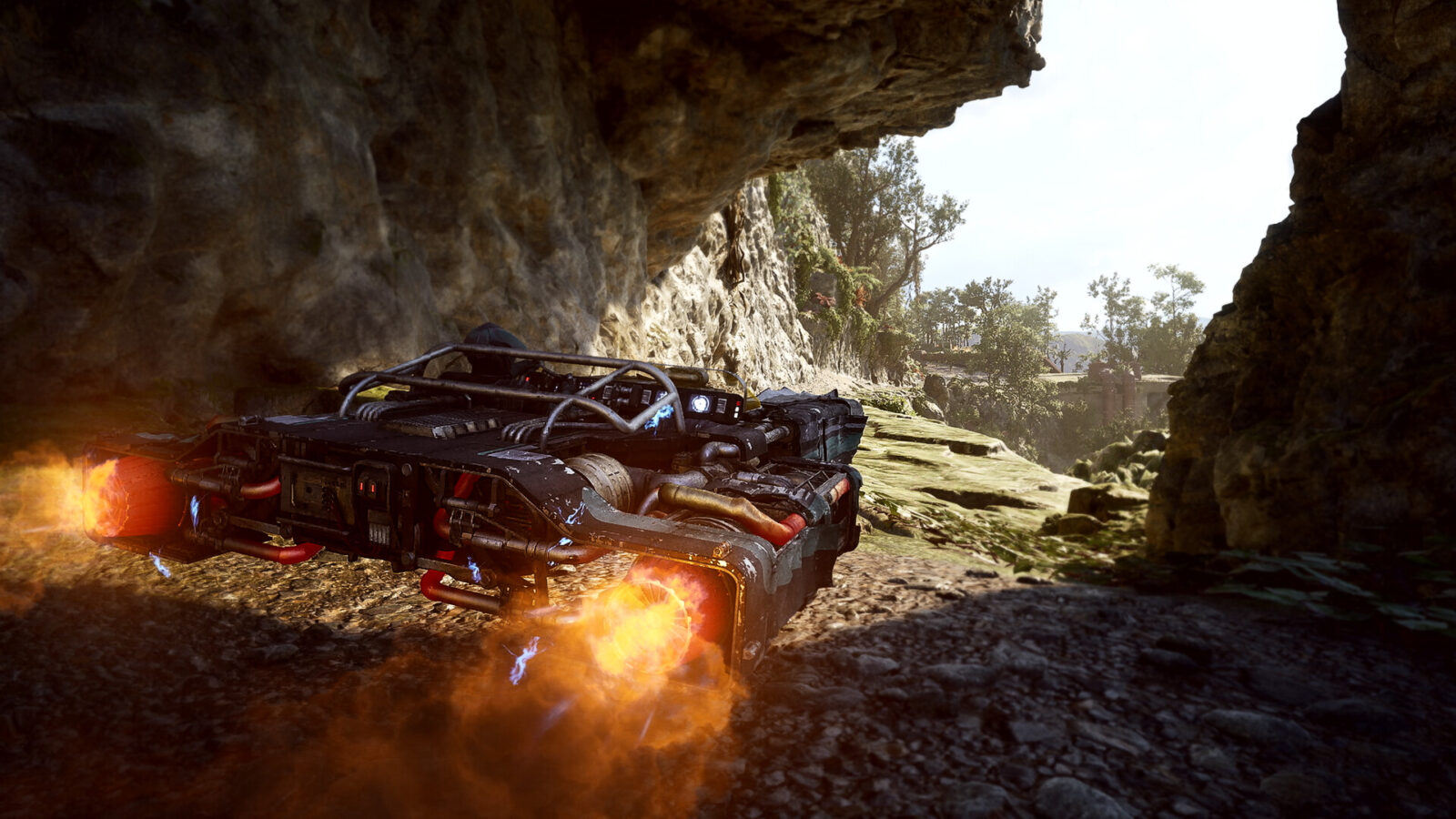
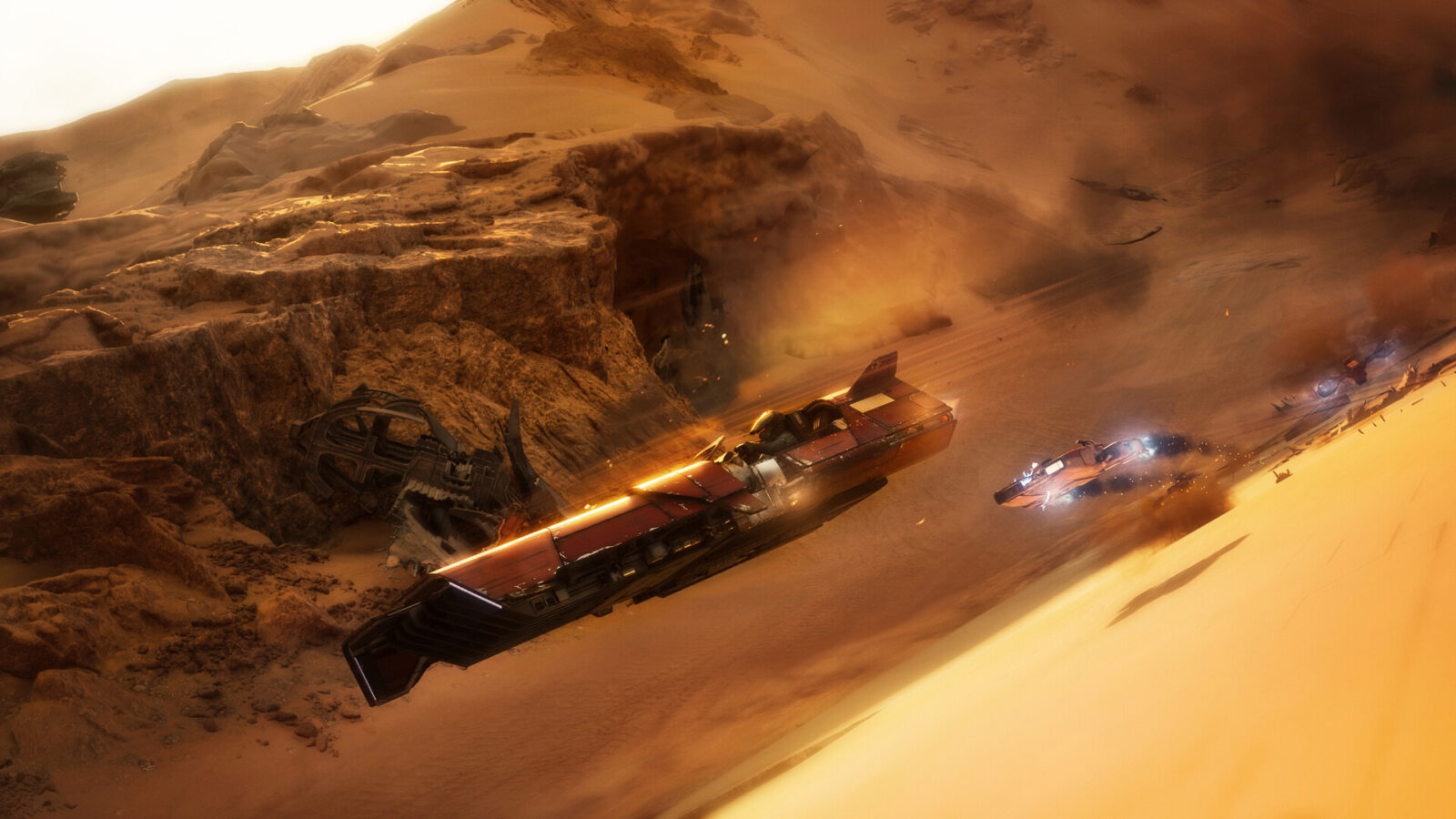
The track design is where Fuse Games really shows off. Jakku threads its routes through an enormous graveyard of starship wreckage, alternating between open desert sprints and claustrophobic tunnels carved through ruined hulls. Crait offers sprawling caves and that iconic salt crust, with speeders kicking up white to reveal red mineral underneath, a lovely visual nod for anyone who remembers The Last Jedi. Lantaana mixes thick forest with lava tubes, while Sentinel I is a poisonous wasteland of narrow causeways suspended over acid pools. Each location doesn’t just look different; it also has its own properties that can help or hinder you depending on your build.
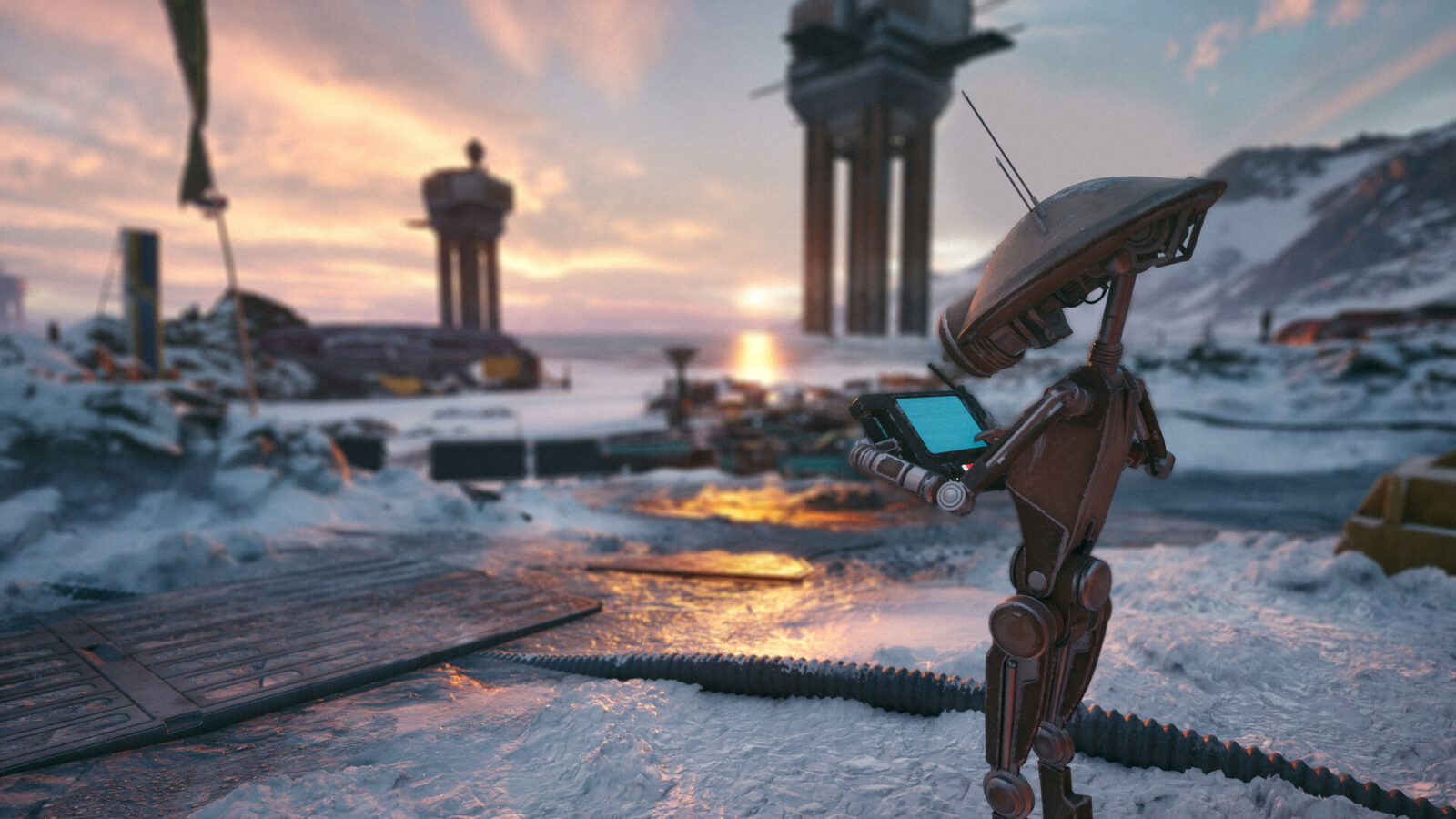
Ando Prime is the best example of that idea. The frozen planet numbs your steering as control surfaces ice over, and heating tubes scattered around the circuits can thaw you out. The trade-off is that staying away from those warm zones lets your volatile ramjet run longer before it overheats and explodes. That turns every lap into a small strategic negotiation between handling and speed, and it’s the kind of systemic design that makes Galactic Racer feel smarter than a typical arcade racer.
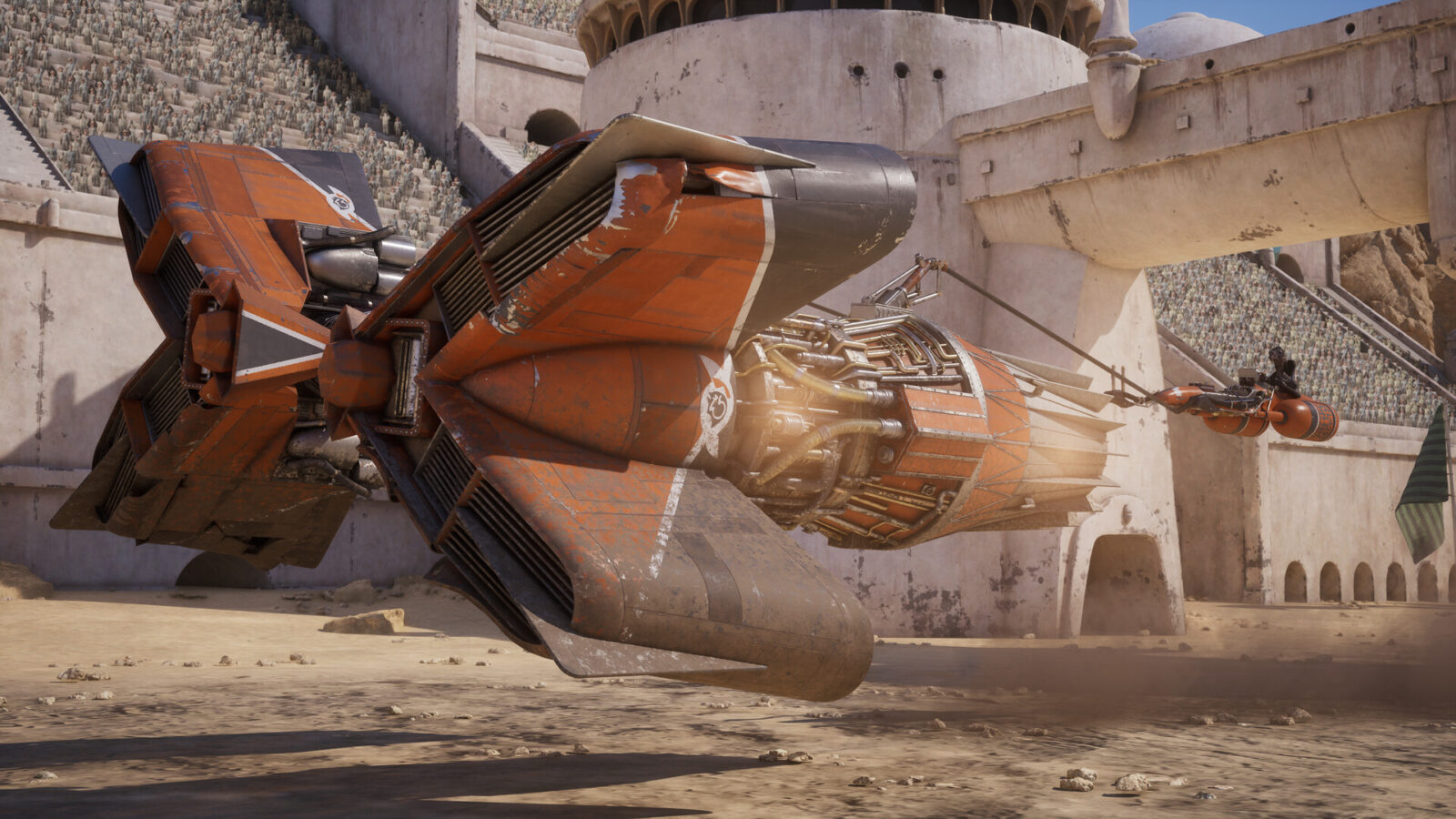
The problem is that the planet roster is simply too thin for a structure built on repetition. Circuits, event orders and branching paths are shuffled between tours, and reverse layouts add a little extra mileage, but the backdrops never change. After several runs, I found the scenery losing its sparkle, not because it’s poorly made, but because I’d seen every dune and causeway too many times. A couple of additional worlds rotating in and out would have gone a long way toward easing that fatigue, and it’s the single biggest thing holding the campaign back.
Burnout DNA and a ramjet that punishes greed
Fuse Games’ founders trace their roots back to Criterion, and it shows in the best possible way. Takedowns are not only allowed but encouraged, with rivals slammed into trackside obstacles and bursting into showers of debris while a slow-motion camera lingers on the carnage. Better still, aggression is woven into the upgrade system. One perk I always grab when it appears recharges your battery with every successful takedown, which in turn fuels more uses of gadgets like autopilot. That loop rewards confident, physical racing and gives combat a purpose beyond spectacle.
The ramjet boost adds another layer of risk. Hold it a fraction too long and your speeder doesn’t just slow down; it detonates in spectacular fashion. Combined with wide tracks littered with natural hazards and alternate routes, plus mixed vehicle classes sharing the grid, every race becomes a constant balancing act between ambition and survival. Galactic Racer is at its best when it puts you in that space, constantly asking whether the extra speed is worth the gamble.
Online racing is solid, but the lack of splitscreen stings
Multiplayer supports 12 players online, or eight in podracers, built around a six-event championship that plays like a compact version of the campaign tours, with your upgraded vehicle discarded once it’s over. It’s a sensible way of carrying the roguelite flavour into competitive play, and it should give dedicated racers plenty to chew on. What’s missing is splitscreen, and that’s a genuine disappointment. Star Wars racing has always been a natural fit for same-couch rivalries, and a game built with this much Criterion heritage feels like it should be wired for that kind of chaos. Solo players and online regulars are well catered for, but anyone hoping to settle grudges on the sofa will be left out.
Visuals, sound and PC tech
Galactic Racer is a seriously handsome game. The planets are rich in detail, the speed is exhilarating, and the destruction from takedowns is impressively messy. Engines cough to life and glow brighter as you throttle up, and the podracers in particular sound wonderfully authentic, capturing the snarl that made the original Episode I Racer so memorable. On PC, the game supports NVIDIA DLSS 4.5, which should please anyone chasing higher frame rates on compatible hardware. I can’t speak to specific performance figures, but the overall presentation is consistently confident and polished.
Verdict
Star Wars: Galactic Racer is a bold and largely successful revival of a genre the franchise left behind for far too long. Its no-restart roguelite campaign gives every race weight, its three main vehicle classes offer meaningfully different ways to play, and its explorable paddock turns a racing league into a believable corner of the galaxy. The planets are beautifully designed and packed with mechanical twists, while the Burnout-style takedowns and volatile ramjet make each race as thrilling as it is risky. The cracks show over longer sessions, when the small planet list starts to feel worn and the loss of carefully built speeders between tours undermines any sense of ownership. The absence of splitscreen is also a frustrating omission for a game so clearly built for rivalry. If you enjoy arcade racing with real stakes, roguelite structure or simply want an excuse to tear through Jakku at absurd speed, this is an easy recommendation. Purists looking for traditional car-tuning attachment or couch multiplayer should temper expectations, but for most Star Wars fans and racing enthusiasts, Galactic Racer is a hugely welcome return to the track.