

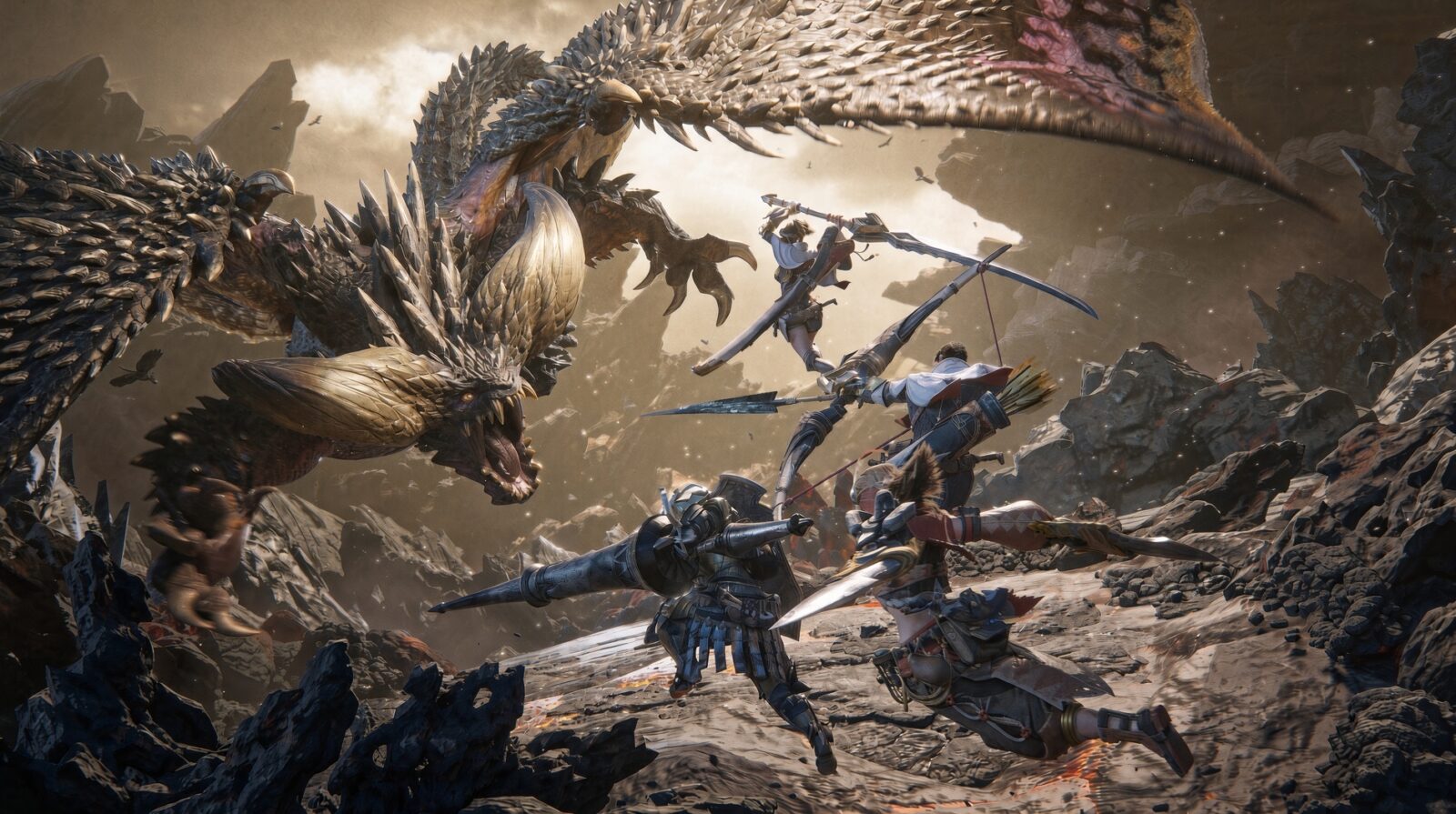
TL;DR: Monster Hunter Outlanders delivers surprisingly authentic, great-looking hunts on mobile with smart controls and a fun character roster, but endless progression systems, menus, and gacha-driven roadblocks slowly weigh down an otherwise excellent core.
Capcom has flirted with handheld Monster Hunter for as long as the series has existed, but Monster Hunter Outlanders is a different kind of experiment. This is a free-to-play mobile game built around gacha pulls, timers, and a currency for practically everything. The part I didn’t expect is that it plays like a real Monster Hunter rather than a tie-in. Underneath the event banners and reward pop-ups is a hunting game with big explorable zones, monsters that fight back with real intent, and the attack-and-retreat rhythm that has hooked players since the PSP days. Its problem is everything stacked on top of that foundation, and how much of the clutter eventually gets between you and the next hunt.
Monster Hunter World’s DNA, rebuilt for touchscreens
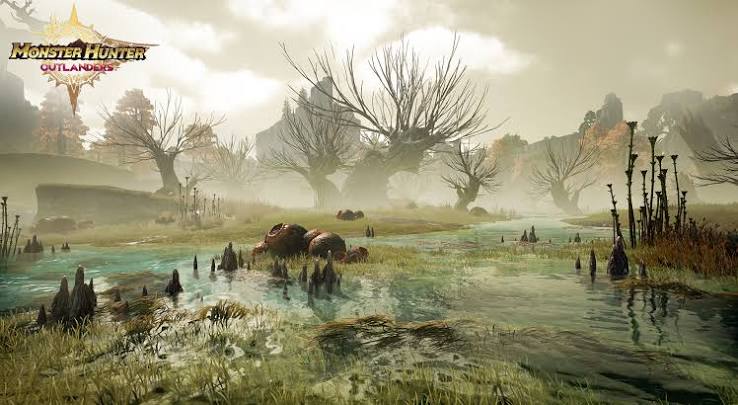
The quickest way to describe Outlanders is Monster Hunter World with the combat trimmed and the whole package moved onto a phone. The resemblance runs deep, from the zone-based structure to the overall shape of the story. You’re part of an Adventurer’s Guild expedition sent to the uncharted island of Aesolan to investigate Radiantate, a mineral that is changing the behaviour of the local monsters. It’s a functional setup and it does its job, but the plot is fairly forgettable and rarely gives you a reason to care beyond the next big target. The more interesting choice is that the supporting cast doubles as the gacha roster, so the characters you meet in cutscenes are the same ones you’re encouraged to pull for and level up. That blurs the line between narrative and storefront in a way that feels very mobile, although your own custom hunter stays at the centre of it all.
Two control schemes, and the one I’d actually pick
Getting Monster Hunter’s notoriously busy controls onto glass is the biggest design challenge here, and Capcom’s answer is two separate schemes. Adventure mode reduces everything to three context-sensitive buttons, Attack, React, and Burst, that change based on what’s happening. The Bowgun will switch to the most effective ammo on its own, and React might become a guard rather than a dodge depending on the moment. It sounds like it should strip out all the decision-making, but in practice it keeps fights readable on a small screen without flattening the timing that makes a good hit land. Classic mode offers the more traditional layout with dedicated inputs, and it works on touch better than I’d expected, though there’s a lot to manage with just your thumbs. What worked for me was simple: Adventure for touch play, Classic when a controller is connected, which is clearly the best way to play if you have one handy.
Hunts that still respect the series’ sense of weight
Despite the simplification, the core of combat is intact. Fights still depend on reading a monster’s tells, committing to attacks at the right time, and knowing when to back off and heal. That deliberate weight is what has always set Monster Hunter apart from faster action games, and Outlanders keeps it. The cuts show up in other places. There’s no dedicated jump, so although you can still run up walls, fights largely stay on the ground, and the thrill of vaulting onto a Rathalos and riding it out is gone. Environmental tools such as a Flashfly to stun a target now appear as simple on-screen prompts when you’re nearby, which is convenient but takes away some of the improvisation that made World’s ecosystems so memorable.
A tokusatsu-flavoured roster that earns its place
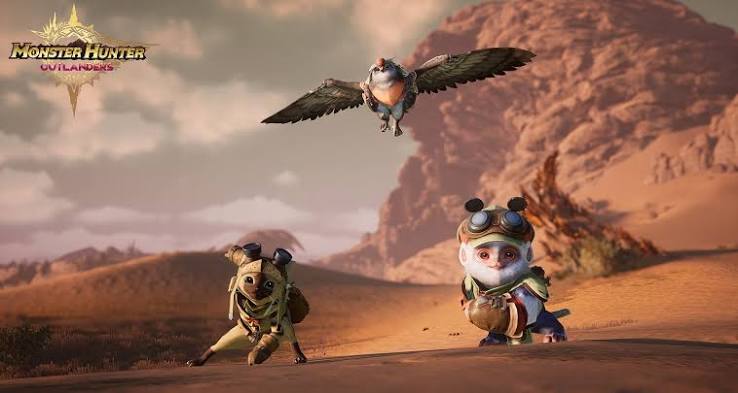
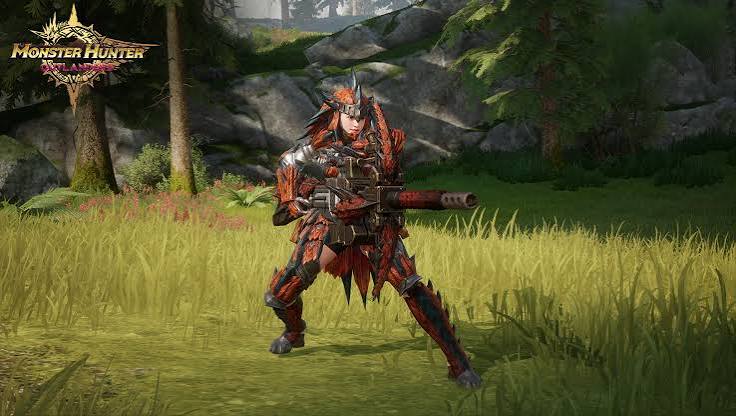
The gacha characters are where Outlanders shows the most personality, and they turned out to be one of my favourite parts. You build a squad around your main hunter and the characters you’ve pulled, and you can switch to control any of them directly, each with their own moveset, abilities, and Ultimate. Keres wields claw-style dual blades with a drilling attack that’s as ridiculous as it is satisfying. Luxheart revs his two-handed sword to fire off fireworks, turning every combo into a small stage show. The designs have a toy-commercial, transforming-hero energy that fits Monster Hunter’s long-standing streak of silliness. These distinct kits also do practical work, because switching characters is one of the best ways to break up the repetition of farming the same monster over and over.
The trade-off is weapon variety. Outlanders has eight weapon types, fewer than recent mainline games, and series favourites like the Hunting Horn and Insect Glaive are missing. If your identity as a hunter is tied to one of those, that absence will sting more than any change to the controls. Partner skills help make up for the loss of vertical play, with tools like net-firing cannons that give ground fights more texture, but they can’t fully replace the feeling of mastering a weapon you’ve used for years.
The monster lineup is where Capcom didn’t cut corners
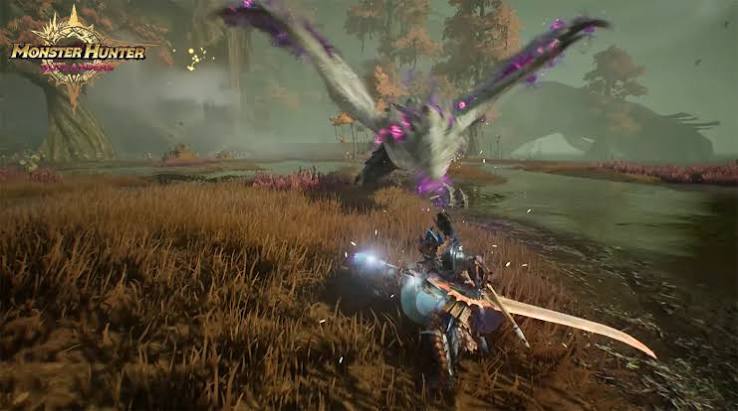
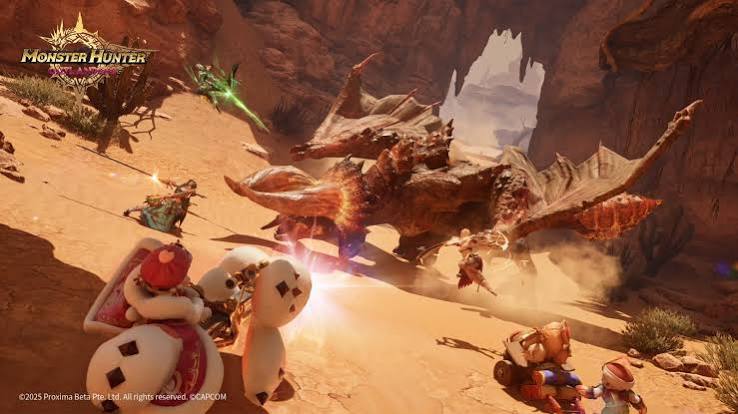
A Monster Hunter game lives or dies on its monsters, and this is where Outlanders feels most confident. The roster draws from across the series, and each creature gets a powered-up Radiant variant with new attacks and behaviours instead of just inflated health bars. That gives familiar fights a second act and makes repeat hunts less predictable. Outlanders also keeps the World and Wilds-style moment where a larger predator crashes into your fight and turns a controlled duel into chaos. It’s still one of the series’ best tricks, and it’s impressive to see it pulled off on mobile.
Monster Hunter Outlanders performance and exploration on iPhone
The game’s scale is the other surprise. Outlanders isn’t strictly open world, but it uses the same large-zone structure as World and Wilds, and those areas are packed with things to do. You can hunt monsters freely without starting a formal quest, gather materials, take on side quests, and play little diversions such as a rhythm minigame where you steal treasure from a flying monster. Building camps unlocks fast travel and rest points, catapults launch your hunter into a high-speed glide, and resource collectors gather materials in the background. Together those tools make getting around feel purposeful instead of tedious.
It also looks fantastic. On an iPhone 14 Plus, the game ran on High settings at a stable 45fps with almost no slowdown, even when fights got hectic. For a game with environments this large and monsters this detailed, that’s a serious technical achievement and a big reason the experience feels premium despite the free-to-play model.
The currency maze nobody asked for
Things start to go wrong once the menus take over. Outlanders has so many overlapping progression systems that even someone used to gacha games will struggle to keep track. Every hunter has equipment, partners such as Palicos with their own levelling, and charms that must be upgraded and then ascended. Raising level caps depends on Ecological Rank, which has its own requirements. The Insight system adds skills based on weapon skill points, while the Visage system has you collect monster cards as you defeat them, equip several per character, and rank each one individually. On top of that are Adventurer Rank, Proof of Mastery, and Investigation Notes, plus seasonal rewards and launch events with their own currencies and optional paid passes.
The mode list is just as busy. Beyond the story and free exploration, there are Free Hunts, stamina-limited Hunt Requests for levelling materials, a Trial Expedition with 150 escalating battles, and guild-based modes called Guild Clash and Guild Carnival. There’s no shortage of content, and new modes and tutorials keep unlocking well past the 30-hour mark. The issue isn’t quantity. It’s that these systems often interrupt the hunting instead of supporting it. I spent close to a fifth of my time in menus and tapping through reward screens, and Monster Hunter already has plenty of menu work by default. Combine that with gacha-style management and the game slows down far more often than it should.
How generous is the gacha, really?
To its credit, Outlanders never pushed me to spend money during those first 30 hours, and I had more materials than I needed. By gacha standards, it’s one of the more generous examples I’ve come across. The trouble begins as your roster grows and every new character needs investment. Main story quests become gated behind Adventurer Rank, Ecological Rank, and other requirements, which means grinding side activities or waiting for daily rewards to reset before you can continue. You can keep playing without paying, but it’s obvious that real money is the intended shortcut, especially for event costumes and limited characters. Mainline Monster Hunter games usually open up after the first few dozen hours. Outlanders does the opposite, starting strong and then gradually tightening its grip.
Verdict
Monster Hunter Outlanders is ambitious, and in many ways it succeeds. Capcom has captured the essence of Monster Hunter World in a form that fits short mobile sessions: the deliberate combat, the hunting loop, the scale of the zones, and the drama of monster turf wars. The Adventure controls are smart, the gacha characters are fun to play, the Radiant variants add longevity, and the performance is excellent for a game this large. The problem is excess. Layer upon layer of upgrade systems, currencies, timers, and story gates gradually bury the strongest parts of the experience, and the losses of jumping and two well-loved weapon types are noticeable for series veterans.
This is best for Monster Hunter fans who want a credible way to hunt on the go, and for mobile players looking for a substantial action RPG who are comfortable with gacha mechanics. If you have little patience for menus or anything that feels like pay-to-progress, the second half is going to test you. Go in with reasonable expectations and you’ll find a genuinely good Monster Hunter game underneath the mobile clutter. It just takes more digging than it should.