
TL;DR: Dog in the Machine is a gleefully chaotic tactics roguelite where you weaponise enemies, traps and combo-stacking Tricks against a robot city. Busy boss fights and overly generous rewind hold it back, but it’s clever, replayable and great value.
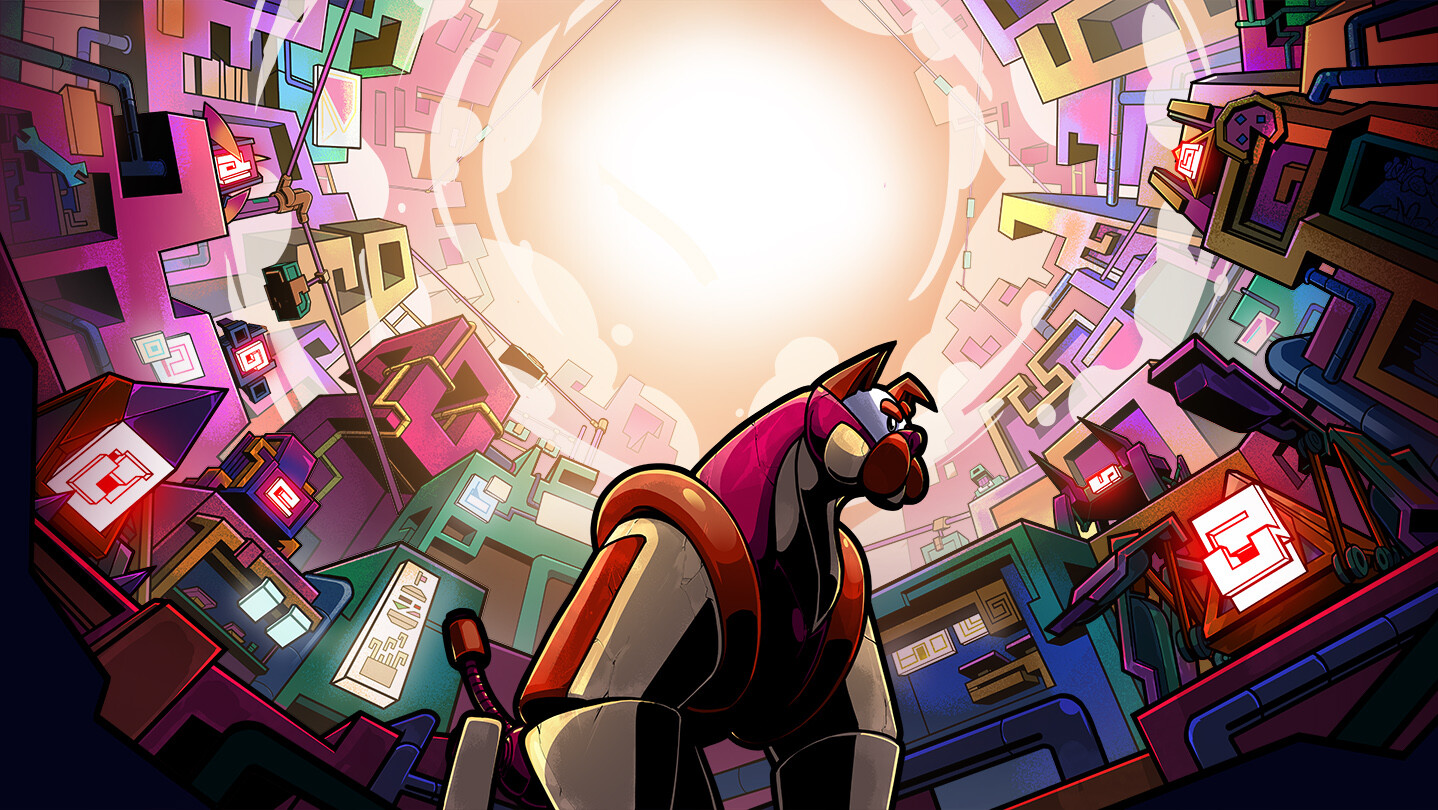
Somewhere between Wile E. Coyote’s catalogue of Acme disasters and the booby-trapped house in Home Alone lives Dog in the Machine, a turn-based tactical roguelite about a robot pup who refuses to accept his redundancy notice. Developed by Studio Chahut and published by Goblinz Publishing, it arrived on Steam for Windows and macOS on September 29, 2026, priced at US$17.99, with 20% off until October 13. On paper, it’s a grid tactics game with roguelite progression. In practice, it’s a Rube Goldberg machine simulator where the ball at the end of the contraption is usually a robot’s face.
The pitch is delightfully simple: you are small, everything else is metal and angry, and your best weapon is the battlefield itself. I’ve played plenty of tactics games where the winning move is “shoot the biggest threat first.” This one keeps whispering a far more mischievous question in your ear: “What if you made them do it to each other?” The longer I spent with it, the more I appreciated how thoroughly the whole design commits to that idea.
Pick your pup, pick your personality
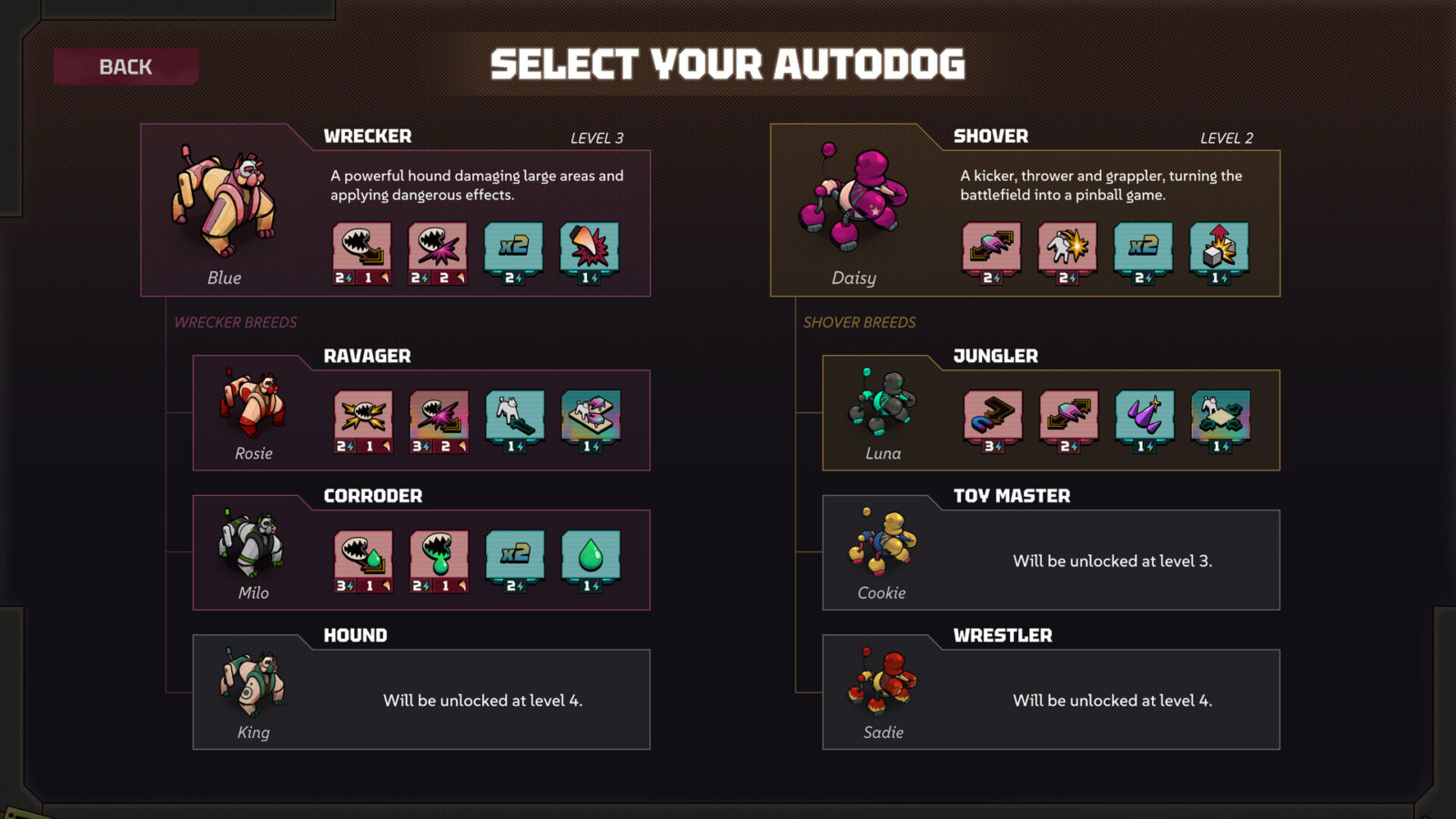
Every run begins with a decision that matters more than it first appears: which dog are you bringing to the robot apocalypse? Wrecker is the demolition enthusiast, built for hitting wide areas and leaving nasty status effects behind like an angry Roomba with a grudge. Shover is the opposite philosophy, a kicking, throwing, grappling bruiser who wins by putting things exactly where they don’t want to be. Neither feels like the “correct” choice, because they approach the same grid with completely different instincts.
Those two are just the starter kennel. Level them up and each unlocks three more breeds, eventually giving you eight in total. Wrecker’s family tree grows into Ravager, Corroder and Hound, while Shover’s line branches into Jungler, Toy Master and Wrestler. Yes, there is a robot dog called Toy Master, and yes, I respect that enormously. Each breed comes with its own attacks and traits, which means swapping dogs genuinely changes how you think about a run rather than just tweaking a few numbers.
That’s the quiet genius of the setup. Your dog choice decides which upgrades will sing and which will sit uselessly in your loadout. A Shover-line run nudges you toward positioning tricks, while a Wrecker-line run makes area damage feel like the obvious answer to everything. It’s the roguelite equivalent of picking a class in Slay the Spire, and it gives the game a strong “one more run, but with the other dog” pull.
The arena is your accomplice
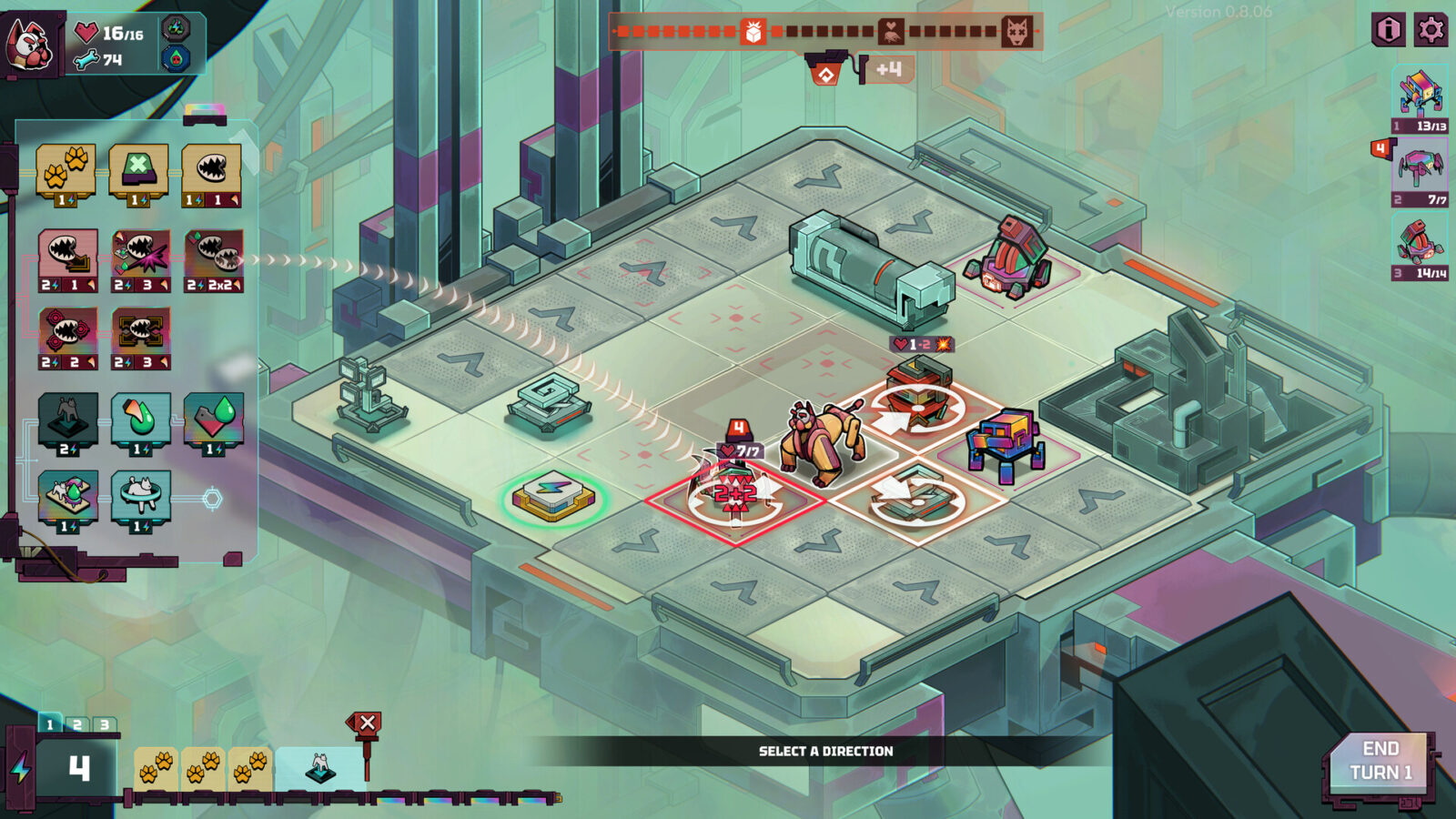
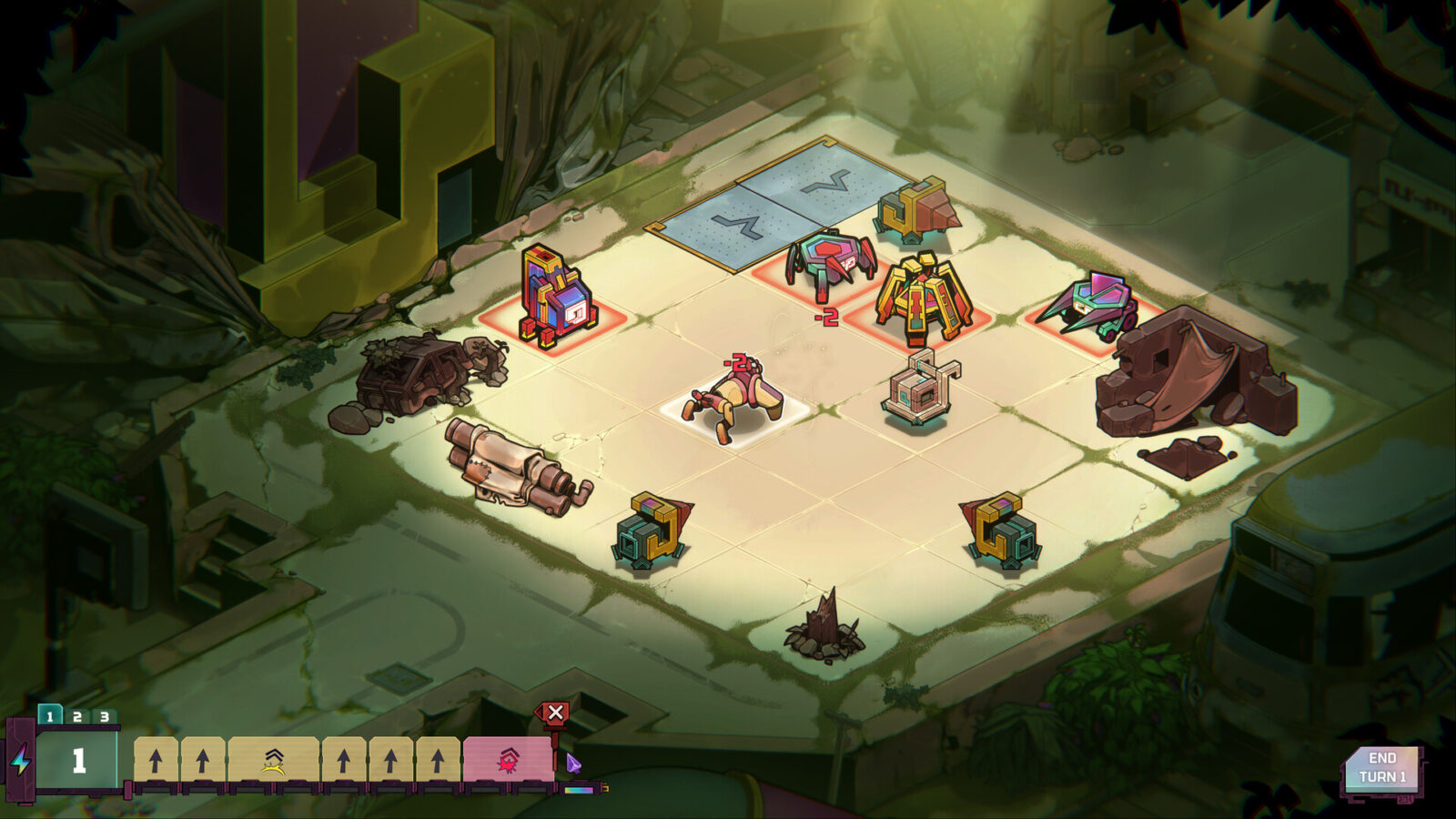
Combat takes place on compact isometric grids, and “compact” is doing important work there. With so little space, every tile is a potential weapon, hazard or escape hatch. Arrow tiles shove whatever stands on them in a fixed direction, which can be a free repositioning tool for you or a conveyor belt of doom for an enemy. Lasers sit quietly until something hits them, then fire along a visible line. Spiked traps and pushable boxes join the party too, and the deeper you go, the more creative the stage design gets.
The enemies are just as eager to complicate your plans. Some retaliate when struck, which is irritating right up until you realise their retaliation doesn’t check who’s standing next to them. Others threaten several tiles at once, shove objects around the board, or spawn fresh units and obstacles mid-fight. Early robots mostly bully whatever is adjacent, but later ones start striking from range and across wide areas. That escalation keeps you from settling into comfortable habits.
Crucially, every enemy shows its intentions before acting. If you’ve played Into the Breach, you’ll know how this changes the mood: battles stop feeling like gambling and start feeling like chess problems with explosions. You’re not guessing what a robot might do, you’re figuring out how to make what it’s about to do backfire spectacularly. Few things in gaming are as satisfying as watching an enemy’s own attack clean up its friends because you nudged everyone into the right spot.
Tricks are where the mad science happens
If the arena is the toolbox, Tricks are the instruction manual written by a gremlin. The AutoDog picks up new Tricks after battles, and most don’t act on their own. Instead, they piggyback on your next attack, layering extra effects onto it. That makes every reward screen a little thought experiment: not “is this good?” but “what does this do when it’s glued to everything else I’ve got?”
Boom Boom is the poster child for this approach. It turns everything your next attack hits into an explosive, and when one of those targets is destroyed, it deals damage to every adjacent entity, including diagonals. Combine that with a tightly packed group of robots, and one attack can become a fireworks display. Other Tricks reward kills with Energy, letting a strong opener refuel itself and roll into an even bigger follow-up. When a turn snowballs like that, the game feels less like tactics and more like setting off a domino chain you spent five minutes building.
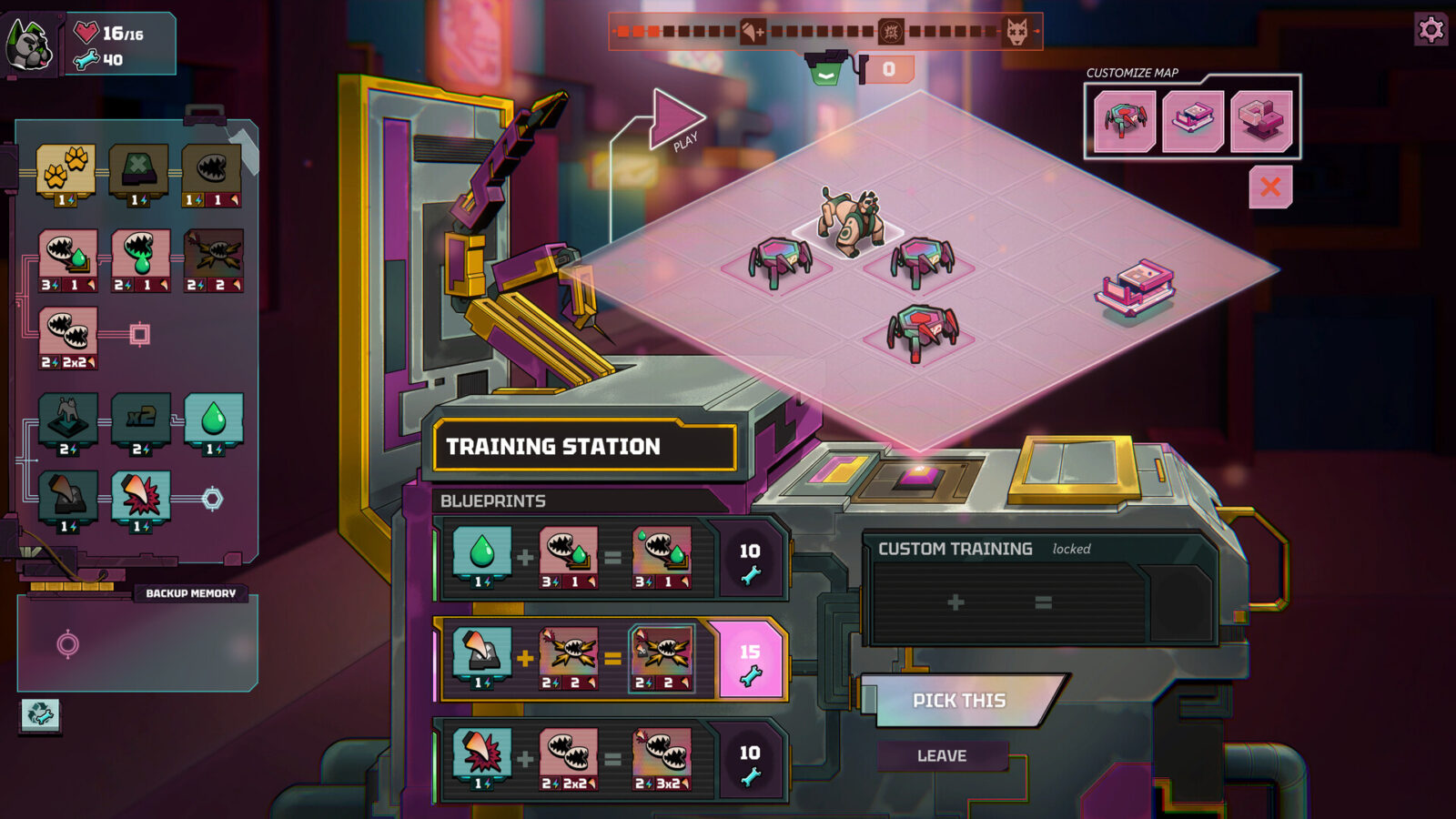
The Training Station takes the experimentation further. Spend bones on Blueprints and you can permanently fuse a Trick into one of your attacks, transforming something like Wide Bite into Wide Bite+ with Boom Boom welded on. I loved this because it rewards commitment. Instead of reassembling the same combo every turn, you can bake your favourite synergy into your kit and start building around it. It gives each run a distinct identity as it develops.
The alarm is always ringing
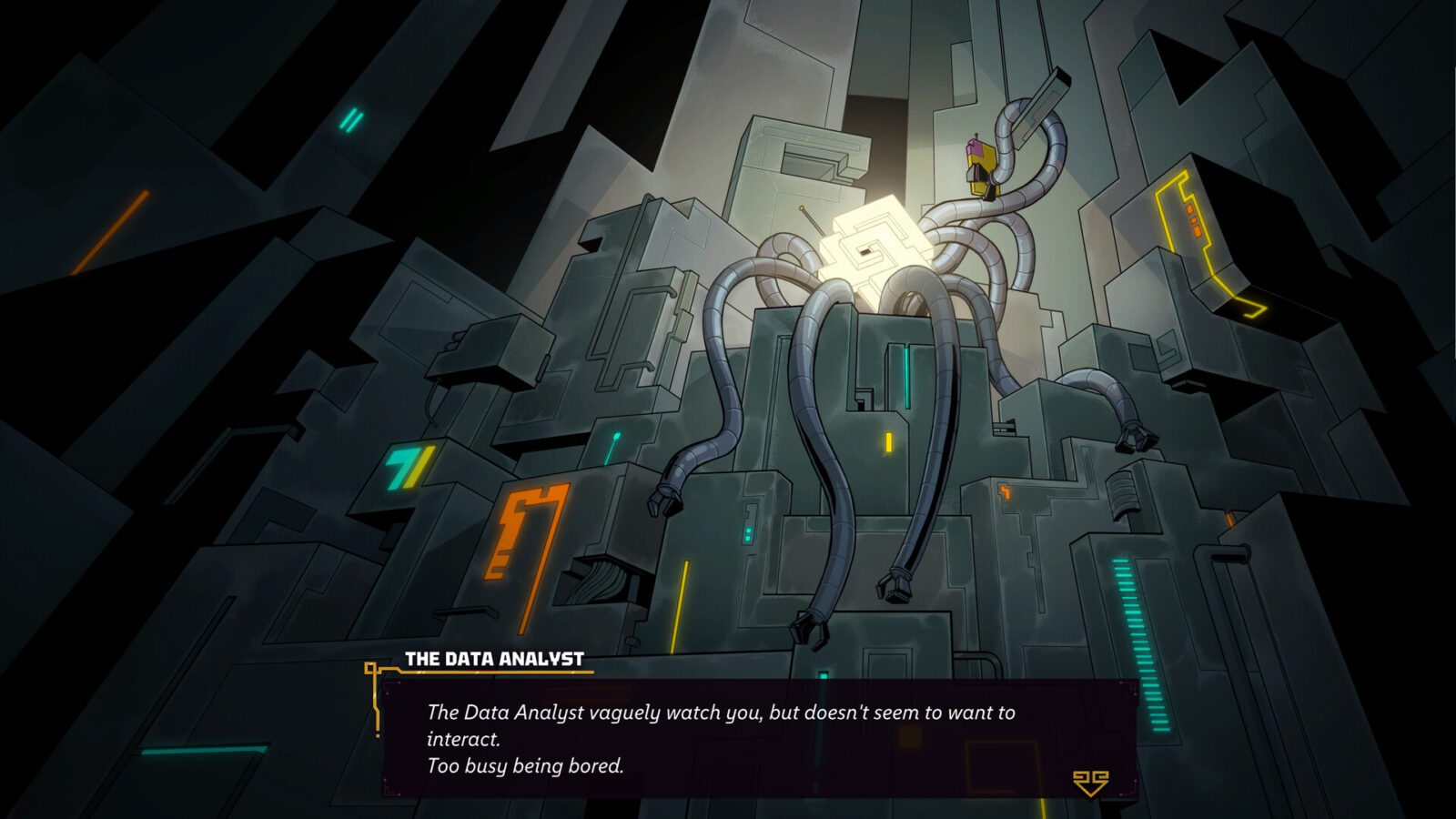
Where Tricks give you the toys, the Alarm Level gives you the deadline. Every time enemies land attacks, the alarm creeps upward, and if it fills completely, your run is over. Health matters, but this bar is the real ticking clock, and it has a nasty rule: once alarm has built up, nothing brings it back down. It’s like a credit card bill you can only slow, never pay off.
The twist is that dealing damage offsets how much the alarm rises, and the action preview shows exactly how much the bar will jump before you commit. That flips traditional defensive instincts on their head. Hiding in a corner and waiting doesn’t help much here, because aggression is part of your defence. Every turn becomes a balancing act between spending Energy on movement, spending it on damage, and making sure the robots don’t get too many free swings.
Your other resource, Energy, pays for both moving and attacking, so there’s constant tension between getting into position and actually doing something once you’re there. On higher difficulties, alarm thresholds also trigger extra effects, which means the bar stops being merely a fail state and becomes an escalating threat. It’s an elegant system that keeps fights tense without simply inflating enemy health pools.
Time travel for good boys (and why I’d ration it)
Dog in the Machine hands you a rewind feature that would make Doctor Who jealous. Every single action can be undone individually, down to each tile you walk, and undoing refunds the Energy it cost. The only boundary is the end of your turn, at which point reality is locked in. Want to see whether that laser bounce actually reaches the robot two tiles over? Try it, scrub it back, try something else.
This is wonderful for experimentation, and it does a lot to tame an opening hour that throws plenty of mechanics at you in quick succession. New Tricks and systems get explained as they arrive, but there’s still a lot to juggle, and being able to undo mistakes takes the sting out of learning. After a few runs, the patterns start sticking, and the game shifts from homework to instinct.
The catch is that rewind has no limit at all, and that makes the default mode far too gentle. When every bad idea can be quietly erased, the knife-edge tension that makes tactics games thrilling starts to dull. Thankfully, Irondog mode in the run settings removes free canceling, and that’s where I think the game truly shows its teeth. If you’ve got genre experience, flip it on as soon as you’re comfortable and watch your decisions suddenly start to matter.
The run settings also handle difficulty. The entry tier, Puppy (adorable), strips out district modifiers, disables alarm-linked effects and grants extra max HP. Doggo and Elite Dog 1 unlock as you clear each previous tier and offer better rewards for the extra pain. There’s also a seeded run option, which is a lovely addition for anyone who enjoys comparing strategies with friends or retrying a specific setup.
Why you’ll keep coming back to the kennel
Each run pays out three kinds of loot, and they feed separate progression tracks. TechShards go into permanent upgrades on the AutoDog Upgrades screen, with prices ranging from a modest 100 to a hefty 1,000. Dog XP levels up whichever breed you played, unlocking new Tricks, Chipsets and breeds. Nexus Intel pushes the story forward, which I’ll get to in a moment.
The pacing here is well judged. Cheaper upgrades show up quickly enough to make early runs feel rewarding, while the pricier ones dangle just out of reach and give you a reason to keep grinding. Because new breeds and Tricks keep unlocking alongside those upgrades, progress doesn’t just make you stronger, it hands you fresh ideas to play with. That’s the difference between a roguelite that feels like a treadmill and one that feels like an expanding toybox.
Automatown has a sad dog problem
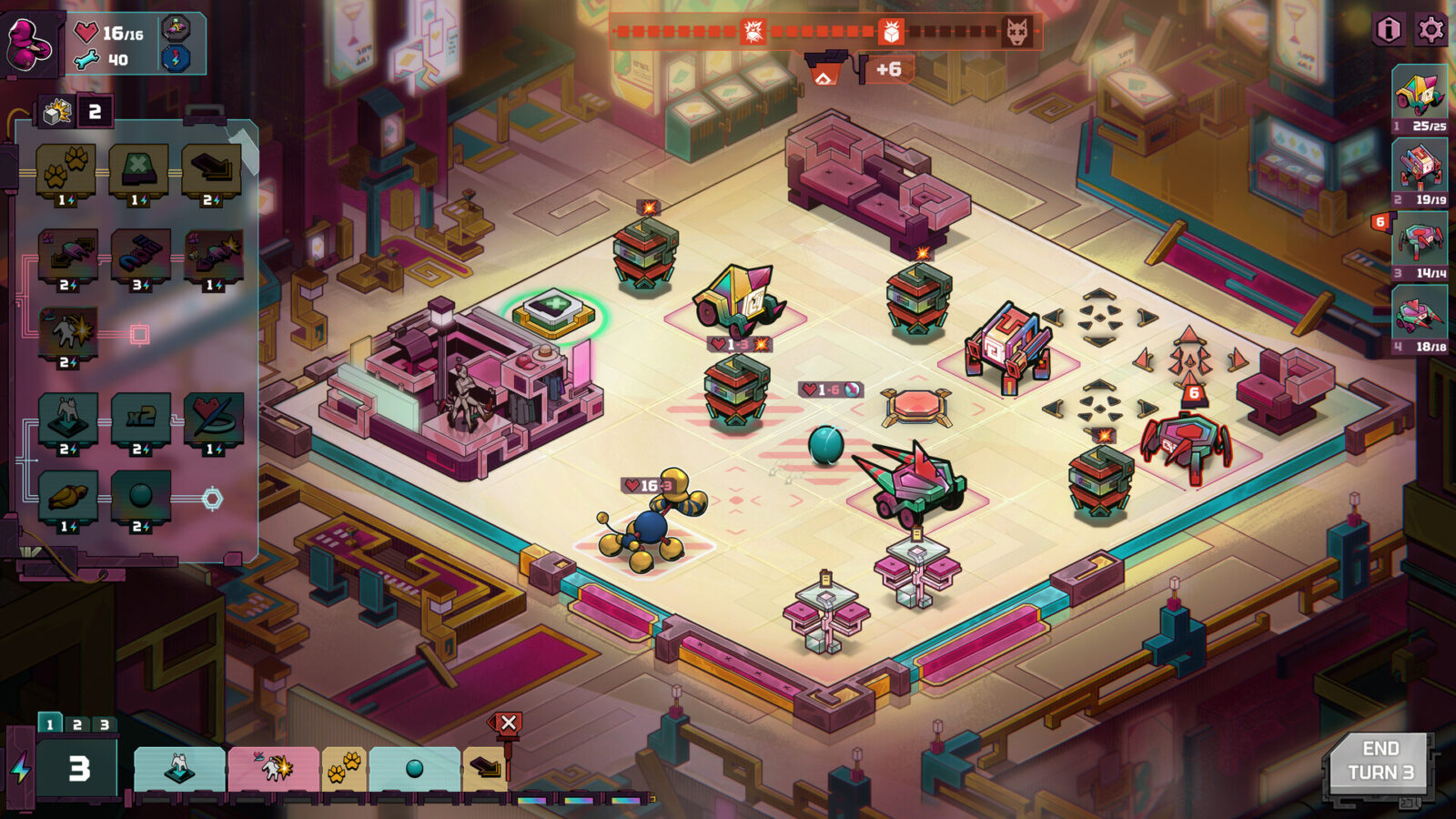
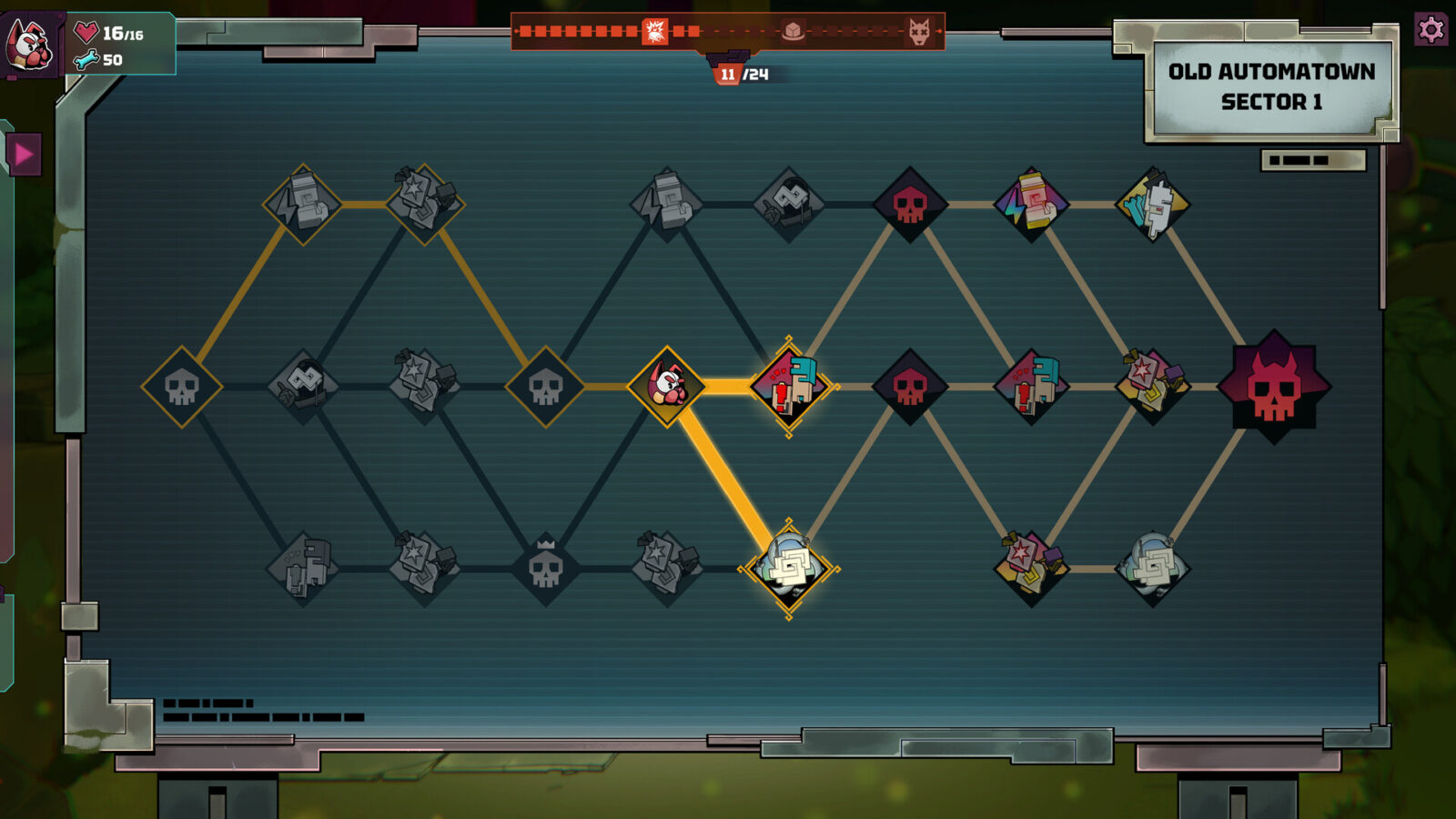
The story is lightweight, but it’s charming in exactly the way it needs to be. Humans have been banished from Automatown, robot pets have been declared useless, and our AutoDog wants to escape and find his people again. It’s basically K-9 crossed with Homeward Bound, set in a metallic dystopia that treats a lonely pet as a security threat. It’s hard not to root for the little guy.
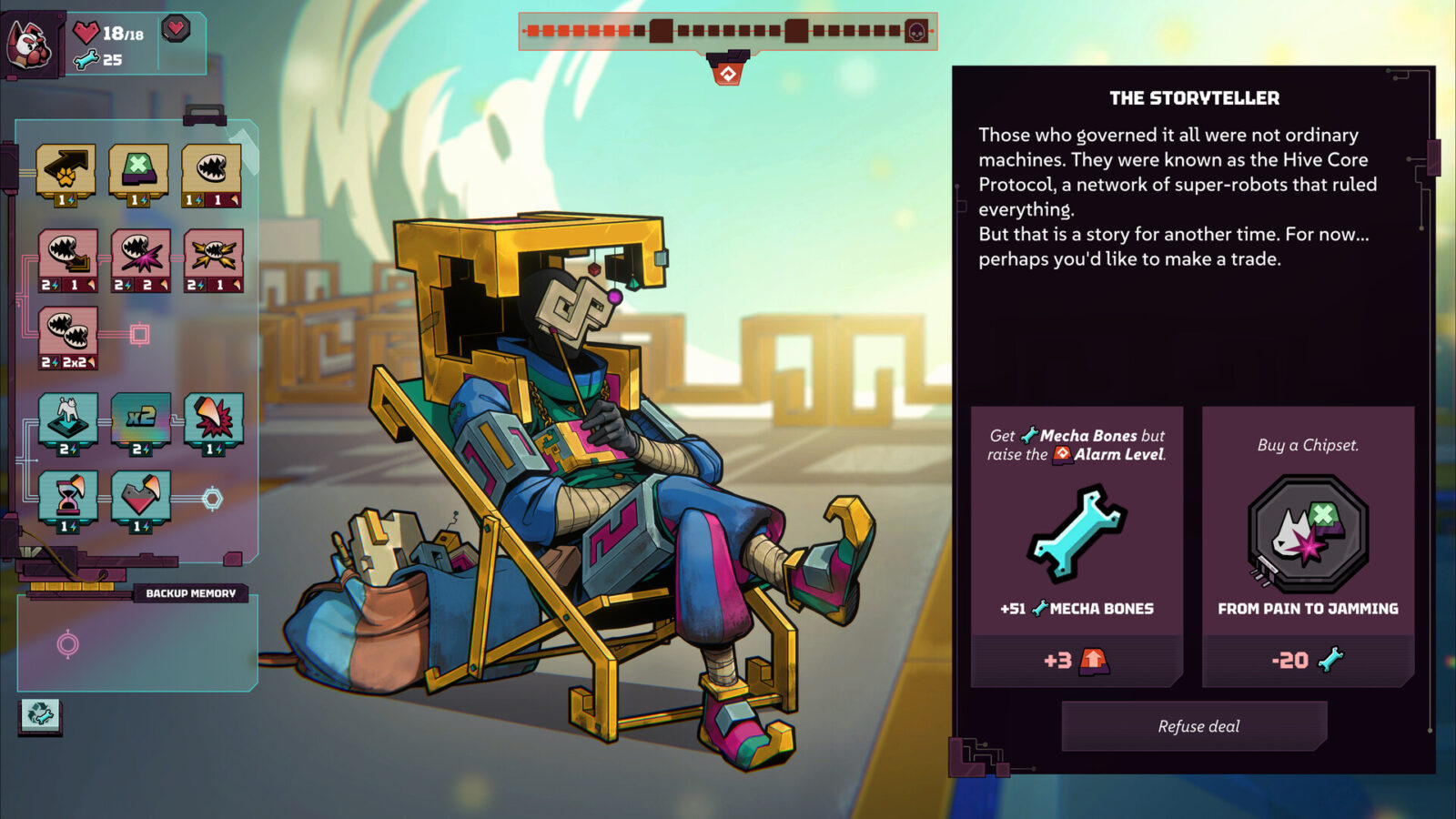
There’s a slightly bigger thread running underneath. Nexus Intel collected during runs unlocks the Nexus node, and sabotaging it advances a wider rebellion against the machine-run city. It’s not the reason to play, and the game clearly prioritises tactics over storytelling, but it adds a welcome sense of purpose to the endless loop of escape attempts.
Pretty robots, busy bosses and a PC-friendly footprint
Visually, the game keeps things readable and themed. The mechanical setting means every crate, laser and conveyor looks like it belongs in a fight, and stages travel from teal industrial platforms to sunny canals and overgrown ruins. That variety helps runs feel like a journey through a living city rather than a loop of identical arenas. And yes, you can pet the AutoDog, which should be a mandatory feature in every game featuring a dog, robotic or otherwise.
The weak spot is clarity when things get busy. Standard encounters are easy to read, but crowded boss fights can turn into a jumble of overlapping enemy previews. The preview also shows what enemies plan to do without fully mapping the cascade your own move might trigger. In a game built around chain reactions, losing track of them during the biggest fights is a real frustration.
Music and sound effects suit the clanking, whirring setting nicely and stay out of the way of your planning. On PC, there are no graphics presets, but the basics are present: resolution, display mode, V-sync, an FPS limit and a camera shake toggle. Mouse and keyboard controls are fully rebindable. It’s a lightweight game that sits comfortably on modest hardware, making it a solid choice for laptops and older rigs.
Verdict
Dog in the Machine is a gleefully mischievous tactics roguelite that turns every battlefield into a contraption waiting to go off. Telegraphed enemies, weaponisable hazards and combo-stacking Tricks make outsmarting robots far more satisfying than simply outgunning them, while eight distinct breeds keep runs feeling fresh. Busy boss fights can get visually messy, and unlimited rewind makes the default mode too forgiving, though Irondog mode fixes that nicely. If you love Into the Breach-style puzzles or synergy-hunting roguelites, this is one good boy well worth adopting.