


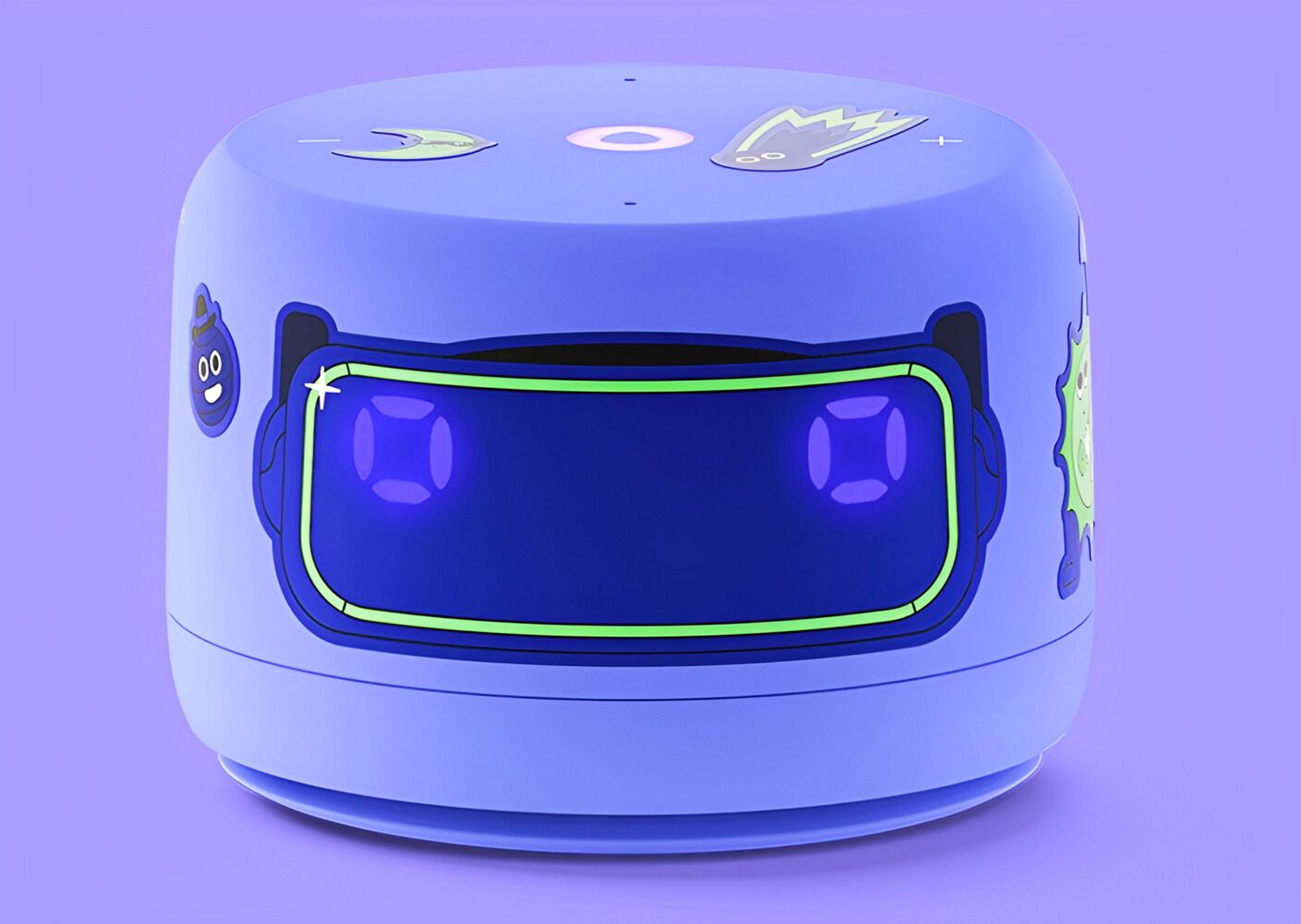

Every smart speaker on the market can say marhaba by now. Actually getting the Arab world is a different job entirely. The dialect shifts from Dubai to Cairo to Beirut, a joke that’s affectionate in one country lands as an insult in the next, and the way you talk to your teta is definitely not the way you talk to your little brother. That’s the gap Yango is going after with Yasmina, the bilingual voice assistant built for the region, speaking Khaleeji Arabic and English in the UAE and, according to Yango, already in 150,000 homes across the country.
The pitch sounds simple and is anything but: an assistant built here, not adapted for here. One that can handle the very real chaos of a typical UAE household, where mum speaks Levantine, dad speaks Egyptian, the kids flip to English mid-sentence, and nobody should have to repeat themselves for a machine. Throw in a Kids Mode that switches on by itself, and Yango’s bet is clear: cultural fluency, not just language, is what earns a spot in the living room.
We sat down with Maysam Azzam, who leads communications for both Yasmina and Yango Play and is a founding member of the Arabic Language Youth Council, to talk dialects, jokes that don’t travel well, taking on Alexa and Google, paywalls, privacy, and why Arabic grammar homework might be Yasmina’s next big job.
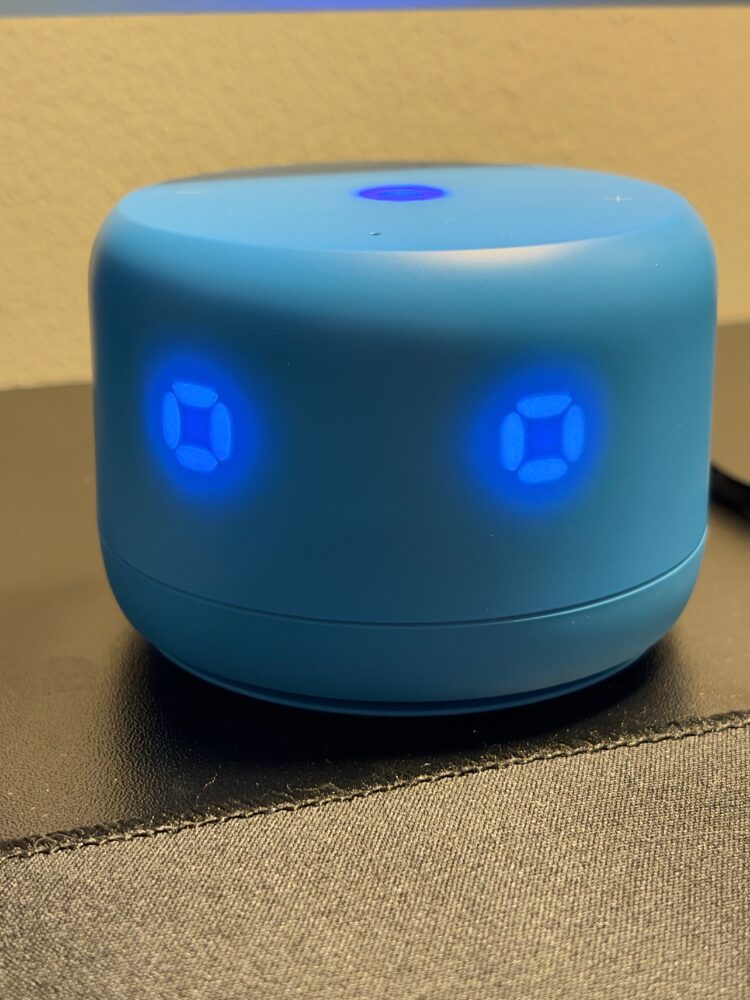
1. The “understands, not just speaks” promise. You’ve said Yasmina should do more than speak Arabic and actually understand the cultures behind it. What does that difference look like in practice? Can you share an example where an assistant that only translates would get it wrong and Yasmina gets it right?
Speaking Arabic is the easy part now. Every assistant can do that. Understanding is a different thing. Most assistants in our region speak Arabic the way a tourist does. The grammar is correct, but they’re on the outside looking in. They explain our culture to us as if we were foreigners.
Here’s a simple example. A mum says, “Remind me to call my mother after Maghrib.” An assistant that only translates hears “after sunset” and asks you for a time, or sets one fixed alarm. But Maghrib isn’t a time on the clock. It’s a moment in your day, it moves every single day, and it depends on which city you’re in. For us it’s normal to plan the day around prayers, not around the clock. Yasmina gets that, because that’s how she was built to think.
Or take “inshAllah.” Translated word for word, it means “God willing.” Any Arab mum knows it can mean yes, maybe, or “please stop asking me.” The words are the same, but the meaning depends on who’s saying it and why.
That’s the difference. Translation gives you the words, and understanding tells you what to say, to whom, and when. Global assistants were adapted to our region. Yasmina started here.
2. Training cultural intelligence. What does your day-to-day work on Yasmina’s training involve? How do you teach an AI about dialects, humour, politeness norms and traditions that change from one Arab country to the next?
I should be honest: I’m not the one writing the code. Behind Yasmina there’s a big team: AI engineers, but also language experts and cultural experts who know how people actually talk at home in the Gulf, in Egypt, across the region. Not textbook Arabic. My job is to decide who Yasmina is, and then I spend a lot of my time testing her and keeping an eye on how she responds, together with them.
Every time, I ask myself one question: would I trust her as a member of my own family, in my own house?
Here’s an example. In testing, a child asked her what happens when someone dies. Her answer was medically accurate. The heart stops, the brain stops. It was correct, and I would never want a child in my family to hear it like that. In our homes, a question like that gets a gentle answer, a bit of faith, and a “go ask Mama and Baba too.” So that’s how she answers now.
Correct isn’t enough. She has to answer the way the family would.
Humour works the same way. One version of her would tease a kid who got a homework answer wrong, a sarcastic “ya fale7,” very Egyptian. In Cairo, that’s affection. In an Emirati home, a kid can hear it as an insult. Same joke, opposite effect.
Politeness changes too. Early on, she spoke to a grandmother as casually as she would to a teenager. In an Arab home that’s not a small mistake, it’s disrespect. Now she knows that elders get a different Yasmina.
That’s why we don’t build one Yasmina and translate her. For Egypt, she speaks Egyptian. She isn’t a Gulf assistant putting on an accent.
3. Dialects at home. The speakers feature a bilingual assistant built for the Middle East that converses in both Khaleeji Arabic and English. How does Yasmina handle a household where the parents speak Levantine or Egyptian Arabic, the kids switch to English mid-sentence, and a nanny speaks neither?
Honestly, that’s not an edge case. That’s the typical UAE home. You have a Lebanese mum, an Egyptian dad, kids who say “Mama, can I have the iPad, ya3ni just for five minutes,” and a nanny from an entirely different country. Global assistants struggle with this because they expect you to pick one language and stick to it. Nobody here talks like that.
Yasmina was built for exactly this kind of mess. In the UAE she speaks Khaleeji and English, and she understands Levantine and Egyptian, because any Arab understands other Arabs. My Egyptian friends don’t switch dialects to talk to me, and Yasmina doesn’t need you to either.
When a kid says “Yasmina, شو الـ weather today?”, she just answers. She doesn’t ask them to repeat it in one language. That mix isn’t a mistake, it’s how this generation speaks, and she was built to speak it with them.
That’s the whole point. A family shouldn’t have to change how it talks for a device. Yasmina adapts to the family, not the other way around.
4. Faith and family features. Yango has built faith-related routines into the device to reflect the UAE’s cultural context. How did you decide which routines to include, and how do you keep them respectful and accurate across different communities?
We didn’t start with a feature list. We started with the day. In an Arab home, the day has a rhythm: Fajr, the kids going to school, Maghrib, the family coming together in the evening. In Ramadan, the whole house moves to a different clock. So the question was never “what religious features should a speaker have?” It was “where does faith already sit in a family’s day, and how can Yasmina be part of that without getting in the way?”
That’s how we ended up with things like the adhan at the right time for where you live, Quran recitation, daily duas, and Ramadan routines like suhoor and iftar reminders. Simple things, but things people use every day.
Respect comes down to one rule: Yasmina is not a sheikh. She doesn’t give fatwas and she doesn’t take sides. If a child asks a religious question, she gives a simple, gentle answer and encourages them to ask their parents.
For adults, her faith-related answers are guided by trusted religious sources and scholars. We take this very seriously. It’s the one area where we don’t improvise. Prayer times follow the official local authorities, and the religious content is reviewed by people who know it deeply. If it’s something people within the faith disagree on, she doesn’t pretend there’s only one answer.
And faith is personal. Not every home practises the same way, and Yasmina never assumes. She’s there when you ask, and quiet when you don’t.
5. Competing with the global giants. Reviewers argue that Yasmina’s case rests on how Gulf families actually speak and use a voice assistant, something the biggest global platforms don’t always prioritise. Is cultural fluency a moat that lasts, or will Alexa and Google eventually catch up?
They’ll catch up on the language. I’m sure of it. These are some of the best-resourced companies in the world, and their Arabic will keep getting better. If our only advantage were speaking Arabic well, I’d be worried.
But language was never the advantage. Focus is.
For a global platform, the Arab world is one market out of a hundred. It sits on a roadmap somewhere between Brazil and Indonesia. For us, it’s the only market. Every decision about Yasmina, from how she answers a child to what she does in Ramadan to how she jokes, is made for this home and no other. You can’t do that as a side project.
And the competition isn’t just Alexa and Google anymore. It’s every AI assistant on every phone. Fine. Most of them are built to answer questions. Yasmina is built to belong in a family. She’s the one the kids talk to after school, and she knows when Maghrib is. That’s not a feature someone can ship in an update.
You can teach an AI a language. Belonging takes much longer, and you have to care about it from day one. We’ve been doing that from day one, and 150,000 homes in the UAE have already let her in.
6. Kids and privacy. The assistant can recognise up to four family members by voice and personalise recommendations for each one. Families with young children are a core audience. How do you balance personalisation with privacy and with filtering content for kids?
For me, this goes back to my test: would I trust her with my own family? With kids, the bar goes up. Parents don’t need another screen they have to watch over. The whole promise of Yasmina is that a mum can let her child talk to her without standing over them. If parents can’t trust her, nothing else matters.
That’s why in the GCC we have Kids Mode. When Yasmina detects that a child is speaking to her, she switches to Kids Mode on her own: the content, the answers and the tone all change. The child doesn’t press anything, and there’s no setting they can switch off. She just knows who she’s talking to.
Parents stay in control, not the algorithm. They decide what the kids can access, and they can change it anytime.
On privacy, we’re simple about it: Yasmina is in people’s homes, so we treat their data the way you’d want a guest to treat what they see in your home. Data collection follows local laws and regulations in every market we operate in. We collect what she needs to work, and we don’t do anything that would surprise a parent if they found out.
Personalisation should feel like being known, not watched. That’s the line we hold.
7. The Yango Play connection. To get the full feature set, including music streaming and recommendations, users need a Yango Play subscription. You lead communications for both brands. How do you present the speaker and the subscription together without customers feeling locked into a paywall?
Honestly, I don’t like paywalls either. Nobody does. So the rule we follow is simple: you never pay to meet Yasmina.
Out of the box, she’s fully herself. She talks to the family, answers the kids’ questions, switches to Kids Mode, reminds you, helps around the house. Quran recitation is always there for every family, with no subscription needed. Her personality, her Arabic, her understanding of the home: none of that costs extra. You don’t buy a speaker and then pay again to get a family member.
The subscription is the upgrade. It’s like going pro on any app you already love. She gets smarter, she gets the full library of music and listening content, and she gets to know each person in the house well enough to recommend what they’d actually like. It also opens up more than 35 reciters to choose from, so the grandfather can listen to the sheikh he grew up with, and the kids can have the voice they learn with at school.
And we start people with it included, so they live with it first and decide later. If a family finds that the kids ask for their nasheeds every night, or that Yasmina just feels sharper with it, they’ll keep it. If not, Yasmina is still Yasmina.
Running comms for both brands helps here. I don’t have to sell the subscription as an add-on. I can show it the way families actually use it, as part of daily life at home.
8. Representation and what’s next. As a founding member of the Arabic Language Youth Council, what role do you think AI assistants like Yasmina will play in preserving Arabic for the next generation? And what is the one capability you most want Yasmina to have next?
Being part of the Arabic Language Youth Council, I spend a lot of time with young people who love Arabic but don’t feel at home in it. And honestly, I’m not a fan of the word “preserve.” It makes Arabic sound like something in a museum, behind glass. Arabic doesn’t need protection. It needs to be used.
The real issue isn’t Arabic disappearing from books or schools. It’s disappearing from everyday life. We work in English, we text in English, our phones and laptops speak English. Arabic becomes something for family gatherings, for formal occasions, for prayer. That’s not a language dying. It’s a language getting pushed into the corner.
That’s why it genuinely makes me happy to be doing this work in the UAE. The country has taken Arabic seriously for years, from the Arabic Language Charter and the Arab Reading Challenge, to the Arabic Language Law coming by 2027. And now there’s real investment in Arabic for the digital age: digitising Arabic books, building Arabic AI tools. It means we’re not swimming against the current. When a country decides its language belongs in the future, not just the past, it opens the door for companies like ours to build for it.
We actually saw this in how people buy Yasmina. Many expat families raising kids in the UAE, one of the biggest melting pots of cultures in the world, told us they got Yasmina so that Arabic is spoken at home. School, friends, screens, everything around them is in English. Parents wanted one voice in the house that keeps Arabic alive, naturally, without it feeling like a lesson.
That’s the role I see for AI assistants. Not teaching Arabic, but making it normal again. When you ask about the weather, play music, set a reminder or settle a family argument about a football score, and it all happens in Arabic, the language stops being an effort and becomes everyday life again. It’s the same reason Yasmina has a big library of Arabic bedtime stories, and why we keep growing it. The last voice a child hears before sleep should be able to speak their language.
As for what’s next, the one thing I’d personally love her to have soon is help with i’rab, the Arabic grammar homework we all had as kids.
People think of i’rab as the boring part of Arabic. It’s actually the heart of it. There’s an old story that Arabic grammar began because of one small mistake. Abu al-Aswad al-Du’ali’s daughter looked up at the night sky and said “ما أحسنُ السماءِ”, which means “what is the most beautiful thing in the sky?” He answered, “its stars.” She said no, she meant “ما أحسنَ السماءَ”, “how beautiful the sky is!” One vowel turned admiration into a question. That’s i’rab. It’s how Arabic knows who did what, to whom, and what you actually meant. Lose it, and you don’t just lose grammar, you lose meaning.
Every Arab remembers sitting at the kitchen table, stuck on whether a word is marfoo’ or mansoob. And let’s be honest, most parents can’t help anymore either. We all forgot it the day we finished school. If Yasmina can make i’rab less scary, that’s a whole generation, and their parents, who stop seeing Arabic grammar as the enemy and start seeing it for what it is: the logic that holds our language together.