
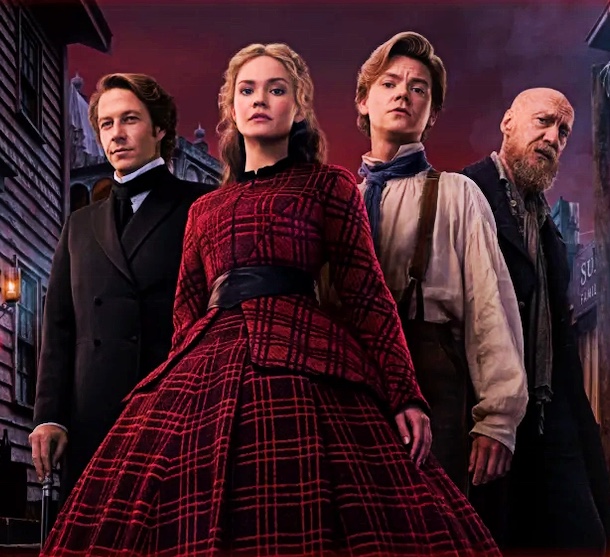
TL;DR: Season 2 of The Artful Dodger reinvents the series with richer visuals, deeper character arcs, and a more emotionally punishing romance. Thomas Brodie-Sangster and Maia Mitchell evolve beautifully, Lucy-Rose Leonard steals the spotlight, and David Thewlis delivers a career-best performance as Fagin. It’s darker, smarter, and more confident, proving this Dickens remix is no longer a novelty but a standout historical drama that deserves your full attention.
The Artful Dodger season 2
I’ll be honest right up front: I did not expect to be this emotionally compromised by Season 2 of The Artful Dodger. When Hulu first dropped the series back in 2023, it felt like one of those quiet holiday releases that you stumble into accidentally and then aggressively recommend to everyone like you’ve uncovered a lost Dickensian relic. It was clever, messy, romantic, and weird in that very specific “historical fanfic with a budget” way. Two years later, Season 2 doesn’t just return. It reinvents itself so thoroughly that I had to recalibrate my expectations somewhere around the opening minutes, when the show stares death square in the face and dares me not to blink.
This is not the same Artful Dodger. And that’s exactly why it works.
Season 1 was a genre smoothie: Victorian crime caper, medical procedural, colonial drama, and slow-burn romance all tossed into a blender and somehow poured into a coherent glass. Season 2 feels like the show finally figured out which flavors matter most, then doubled down with the confidence of a series that knows its audience stuck around for the long haul. What we get is richer, darker, hornier, sadder, and far more assured in its identity. It’s less “what if Dickens but spicy” and more “what if Dickens grew up, moved to Australia, and decided to emotionally ruin us on purpose.”
The season opens six months after that brutal Season 1 cliffhanger, with Jack Dawkins still breathing but only just. Watching Thomas Brodie-Sangster play Jack on the morning of his scheduled execution is one of those moments where the genre mask slips. This isn’t a cheeky rogue winking at the gallows. This is a man reckoning with every bad decision he’s ever made, every hand he’s ever picked a pocket with, every life he’s tried to outrun. The show milks the tension mercilessly, and even though you know Jack isn’t going to die in the first episode, the emotional math still lands. Especially for Belle.
Maia Mitchell’s Lady Belle Fox has always been the spine of this series, but Season 2 lets her evolve in ways I genuinely didn’t see coming. Belle has spent so much of her life fighting for agency that it’s jarring, in the best way, to watch her start questioning what she actually wants when the fight seems unwinnable. Her romance with Jack, frozen by circumstance and cruelty, becomes less about longing glances and more about absence. The show understands that love stories don’t just survive on proximity. Sometimes they rot in the quiet, and Season 2 is brave enough to sit in that discomfort.
Visually, this season feels like a glow-up forged in fire. With new creative blood behind the camera and in the design departments, Port Victory finally feels like a living, breathing colonial city rather than a stage dressed for plot convenience. The costumes are richer, the sets deeper, the lighting moodier. There’s a tactile quality to everything now. Mud looks like it stains. Blood looks like it costs something. Silk dresses feel like armor. It’s the kind of production design shift that signals confidence. Hulu clearly realized they had something special here and stopped treating it like an experiment.
That confidence extends to the storytelling, especially in how the show handles its supporting cast. Season 1 flirted with Dickensian expansion. Season 2 commits to it. The introduction of Inspector Henry Boxer, played with tragic sincerity by Luke Bracey, is one of the smartest moves the show makes. This is the kind of character who, in a lesser series, would exist solely to be hated. Instead, he’s thoughtful, wounded, and genuinely decent. Of course he falls for Belle. Of course he wants to protect the city. Of course he suspects Jack. The brilliance is that he’s right to feel all of those things.
Watching the show refuse to villainize Henry is excruciating in the best romance-novel way. I found myself rooting for him in moments, then immediately feeling guilty about it, like I’d just dog-eared the wrong page in a Brontë novel. The love triangle isn’t about competition. It’s about timing, class, trauma, and the brutal reality that sometimes the safer choice is also the lonelier one.
And then there’s Fanny Fox, who quietly steals the entire season.
Lucy-Rose Leonard takes what was arguably the weakest arc of Season 1 and flips it on its head. Fanny’s descent, or rather lateral slide, into criminal life feels oddly liberating. She doesn’t become darker so much as clearer. Crime, for Fanny, isn’t rebellion. It’s purpose. Watching her find joy, confidence, and identity among thieves is one of the season’s most subversive pleasures. It also allows the show to interrogate the idea of respectability in a way Dickens rarely afforded his female characters.
Which brings me to the beating heart of this series: David Thewlis as Fagin. I’ve watched Thewlis chew scenery, haunt frames, and weaponize awkwardness for decades. This is, without exaggeration, the best work of his career. His Fagin is funny, vile, tender, manipulative, and endlessly fascinating. He’s the devil you know, the father figure you shouldn’t trust, and the narrative anchor that keeps the show from drifting into melodrama.
What Season 2 does so well is refuse to redeem Fagin while still allowing him depth. His relationship with Jack fractures in ways that feel inevitable and devastating. His mentorship of Fanny is twisted but sincere. His schemes escalate not because the plot demands it, but because this is who he is. A shark stops swimming, it dies. Fagin stops conning, he disappears.
The season’s expanded scope also pays off through its villains. Pulling Uriah Heep from David Copperfield is exactly the kind of nerdy flex this show thrives on. Benedict Hardie plays him with a slimy restraint that makes every scene feel contaminated. He’s not just a bad guy. He’s a thematic mirror, exposing the rot beneath polite society and reminding us that monsters don’t always announce themselves with knives.
By the time Season 2 barrels toward its finale, I realized something unsettling. I don’t just want a Season 3. I need it. The show has outgrown its premise and earned its place among the best modern historical dramas by embracing mess, consequence, and emotional honesty. This isn’t comfort viewing anymore. It’s commitment viewing.
The Artful Dodger Season 2 feels like the moment a cult favorite realizes it can be great and chooses to be. It trusts its audience, challenges its characters, and refuses to settle for nostalgia. Over two years later, it doesn’t just come back sharper. It comes back transformed.