

Marvel and DC are heading into 2026 with something close to a credibility problem. The last few years have produced plenty of competent work, but also enough overextended slates, uneven scripts, and noisy franchise math to make “superhero fatigue” feel less like a meme and more like a market signal. Studios, streamers, and theaters all want the same thing: proof that the genre can still create events rather than obligations. In that sense, 2026 isn’t a single do-or-die moment, but it is a clear pivot year. Both companies are placing big bets, just in very different ways, and audiences are likely to be less forgiving than they were during the peak MCU era.
On the Marvel side, the Marvel Cinematic Universe in 2026 is built around a familiar strategy: anchor the year with the most reliable box office brand in the stable, then roll out an Avengers-scale crossover that’s meant to reassert the franchise’s cultural relevance. That plan assumes the audience still sees MCU chapters as essential, not optional. It also assumes that nostalgia and legacy casting can buy enough goodwill to carry the newer roster of heroes across the finish line. If those assumptions don’t hold, even strong opening weekends won’t solve the longer-term problem: Marvel’s recent projects have struggled to feel like shared experiences outside the core fan base.
Spider-Man: Brand New Day, dated for July 31, 2026, is the obvious pressure-release valve. Tom Holland returning for a fourth live-action MCU Spider-Man film is the kind of announcement that cuts through the noise because Spider-Man still functions as a franchise within a franchise. Even when broader MCU storylines wobble, Spider-Man tends to remain approachable: a recognizable hero, a clear identity, and a tone that can shift between street-level problems and larger spectacle without needing a flowchart. The choice of Destin Daniel Cretton as director suggests Marvel wants steady craft rather than maximal chaos, and the reported inclusion of Jon Bernthal’s Punisher points to a more grounded supporting dynamic than the multiverse-heavy detours that have dominated recent conversation. Casting Sadie Sink in an undisclosed role adds intrigue, but the smarter move may be keeping the film’s biggest ideas under wraps until marketing can sell something more substantial than “the next chapter.”
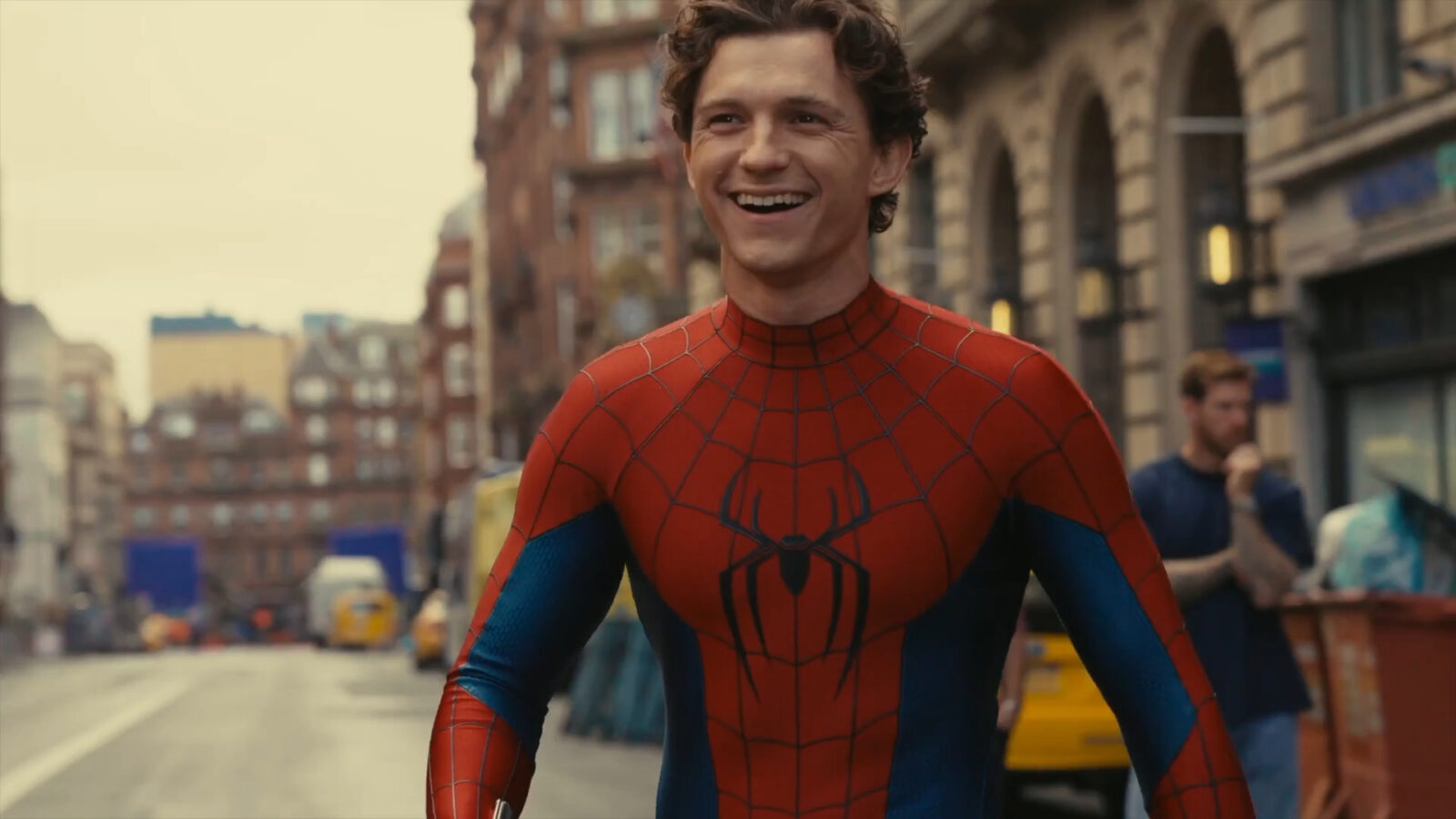
Still, the larger point is that Spider-Man: Brand New Day probably won’t serve as a clean referendum on MCU health. Spider-Man’s popularity is unusually durable, and audiences often show up for him even when they’re lukewarm on the larger universe. If the movie lands, Marvel will celebrate it as a franchise win, but the more telling test comes later.
That test is Avengers: Doomsday, slated for December 18, 2026. This is positioned as a reset button without officially calling itself one. The return of the Russo brothers and Robert Downey Jr. signals a deliberate attempt to bring back the “it felt like an era” texture that the MCU has struggled to recreate since Avengers: Endgame. Marvel’s decision to cast Downey Jr. as Doom is, at minimum, a high-stakes creative gamble: it could read as inspired misdirection and thematic mirroring, or it could read as a studio looking backward because it isn’t fully confident in what comes next. Either interpretation will shape how the audience approaches the film before they even see a trailer.
The behind-the-scenes context described here also matters. A huge crossover film with a tight runway, extensive visual effects demands, and a production cycle that invites reshoots is not unusual for Marvel, but it becomes riskier when the brand no longer has automatic benefit of the doubt. The MCU used to coast on trust: viewers assumed the landing would be worth the setup. More recently, the conversation has shifted to whether the setup is even coherent. If Avengers: Doomsday is meant to reestablish Marvel’s authority, it has to do more than stack cameos. It needs to feel like a story with stakes and shape, not a correction spree.
There’s also a quieter issue hiding behind the event-movie framing: Marvel’s “new era” characters haven’t consistently become household names. That doesn’t mean they’re bad, but it does mean the MCU can’t rely on the same cultural gravity it had when Iron Man, Captain America, and Thor were at the center of everything. In practical terms, that makes Doomsday’s job harder. It has to be satisfying as a film while also persuading a broader audience that Marvel’s current lineup still matters beyond brand familiarity.
Marvel’s 2026 television and streaming slate looks like the other side of the same problem. The Disney+ era expanded the MCU’s footprint, but it also trained viewers to expect quantity, not urgency. When multiple series feel like homework for the films, even engaged fans start triaging. Marvel’s stated “quality over quantity” pivot may be real, but the lineup described for 2026 still reads like a backlog clearing its throat.
Wonder Man (January 27, 2026) is one of the more interesting ideas because it’s set up as a meta story about Hollywood and superhero production culture, starring Yahya Abdul-Mateen II as Simon Williams, with Ben Kingsley returning as Trevor Slattery. On paper, a Marvel series that can satirize the entertainment machine could be sharp, but the risk is that corporate self-parody tends to stop short of anything uncomfortable. If Wonder Man is willing to examine the ways franchise logic flattens creativity, it could stand out. If it plays as light industry in-jokes without much bite, it may disappear into the scroll.
VisionQuest (Fall 2026) is positioned as a follow-up to WandaVision, with Paul Bettany returning as White Vision and a premise centered on identity and memory. That’s fertile territory, and the mention of James Spader returning as Ultron suggests Marvel is leaning into legacy villains and familiar threads. The creative shift behind the scenes—Terry Matalas stepping in after Jac Schaeffer’s departure—could also shape the tone. The question is whether VisionQuest can recapture the sense of formal experimentation that made WandaVision feel like an actual television event rather than another IP extension. If it becomes primarily a continuity project, it may satisfy dedicated viewers but struggle to reach beyond them.
Daredevil: Born Again Season 2 (March 4, 2026) appears designed to consolidate goodwill by leaning closer to what people liked about the earlier Netflix era, with Charlie Cox and Vincent D’Onofrio continuing as Matt Murdock and Wilson Fisk and a reported return of Krysten Ritter as Jessica Jones. The Mayor Fisk angle is a smart premise because it grounds the conflict in recognizable civic power rather than cosmic stakes, and street-level Marvel tends to feel less bloated when the writing is strong. The practical challenge is consistency: if the show can deliver character-driven tension without slipping into tonal whiplash, it could be one of Marvel’s best arguments that streaming can still work for the MCU.
Outside the “main” MCU lane, Marvel’s wider ecosystem keeps expanding through Sony’s separate efforts. Spider-Noir, a live-action series for MGM+ set in a Depression-era universe with Nicolas Cage reprising his Spider-Verse role, is the kind of left-field experiment that could either become a niche hit or a curiosity. The advantage here is that it doesn’t need to carry Marvel’s entire continuity on its back. If it commits to a distinct aesthetic and self-contained storytelling, it could benefit from the current appetite for shows that look and feel different rather than interchangeable.
X-Men ’97 Season 2 (Summer 2026) is also worth highlighting because it demonstrates a path forward that doesn’t require billion-dollar spectacle. The first season’s appeal came from taking its audience seriously and treating animated superhero storytelling as emotionally grounded rather than disposable. If Season 2 maintains that focus, it could remain a rare bright spot for Marvel on TV—especially at a time when animation is increasingly where superhero storytelling can take risks without needing to justify every creative decision with opening-weekend math.
If Marvel’s 2026 strategy is “go big and remind people why they cared,” DC’s approach is closer to “go selective and make people trust us again.” Under James Gunn and Peter Safran, DC Studios has promised a more coherent, connected DC Universe, but the key difference in the 2026 lineup is volume. DC is not flooding the market. It’s building around a smaller set of swings, hoping each one has enough identity to stand on its own.
Supergirl (June 26, 2026), based on Tom King and Bilquis Evely’s Woman of Tomorrow, is a notable choice for an early DCU chapter because it’s not the safest genre play. The story framework leans toward a space-western tone, with a harder edge shaped by Kara Zor-El’s traumatic history. Casting Milly Alcock suggests DC is willing to foreground a new face and let the character define the next phase, rather than relying solely on legacy icons. The opportunity here is differentiation: if Supergirl feels like a distinct movie with its own tone and stakes—rather than “the next IP installment”—it could broaden the DCU’s appeal. The risk is accessibility: a more unusual structure or tone might not translate to general audiences unless the marketing and the emotional throughline are clear.
Clayface (September 11, 2026) is even more clearly a differentiation play. A body-horror-leaning film with a relatively modest budget is a practical bet in the current box office climate, where mid-budget horror has repeatedly outperformed expectations. The involvement of Mike Flanagan as screenwriter, and James Watkins as director, suggests DC wants the film to function as horror first, comic book adaptation second. That’s a sensible way to avoid the usual “it’s a superhero movie but also…” marketing routine. If Clayface is genuinely allowed to be tragic and unsettling—rather than pulled back into franchise safety—it could become the kind of hit that helps DC build momentum without trying to out-muscle Marvel at spectacle.
DC’s single major 2026 series, Lanterns for HBO, looks like the company’s attempt to plant a prestige flag in a space Marvel has struggled to dominate lately: adult-oriented, weekly-discussion television that doesn’t feel like a stretched-out movie. The setup—a murder investigation in the American heartland involving Hal Jordan (Kyle Chandler) and John Stewart (Aaron Pierre)—is grounded enough to attract viewers who aren’t automatically interested in cosmic mythology. The creative names attached, including Damon Lindelof, Tom King, and Chris Mundy, indicate a deliberate attempt to make the show function as television rather than franchise content. If Lanterns delivers on tone and character, it could help define what DCU storytelling looks like on the small screen.
Beyond Marvel and DC, 2026 also looks like a year when “superhero media” will be judged by what isn’t traditional superhero media. The Boys is expected to wrap with its final season in 2026, closing a series that built its identity on anger at corporate hero mythology while still benefiting from the spectacle it critiques. Invincible is expected to continue with Season 4 in 2026, and it has steadily positioned itself as a model for how to adapt long-form comic storytelling with real consequences. These shows matter in the wider conversation because they’ve trained audiences to expect sharper writing, more emotional honesty, and more willingness to change characters in ways that actually stick. When viewers have that as a baseline, “fine” is no longer enough for Marvel and DC.
So what should you expect from Marvel and DC in 2026? Expect a visible split in strategy. Marvel will try to re-create event gravity with Spider-Man: Brand New Day and Avengers: Doomsday while managing a crowded streaming lineup that still reflects the consequences of the Disney+ expansion. DC will try to build a steadier foundation with fewer releases, leaning into tonal variety through Supergirl, Clayface, and the prestige framing of Lanterns. The genre’s future likely won’t be decided by one opening weekend, but 2026 will give a clear answer to a simpler question: do audiences still want superhero stories that feel like the center of pop culture, or only the occasional exception that earns attention on its own terms?