
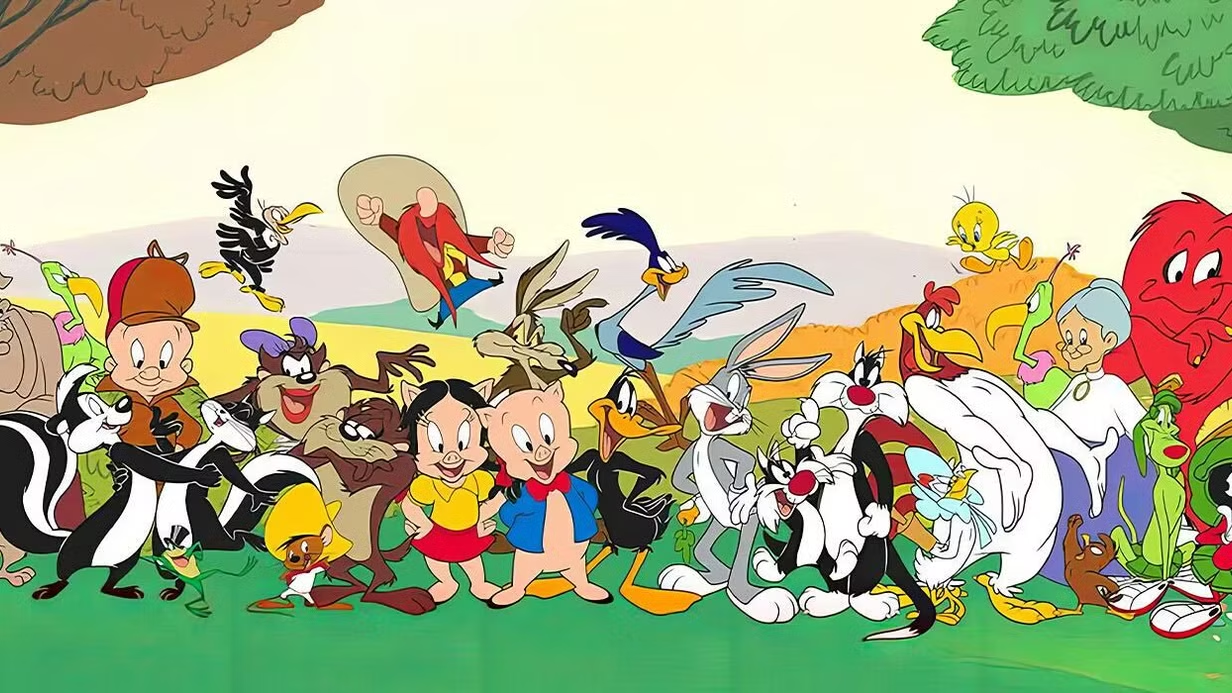
Looney Tunes is returning to more consistent visibility across both television and streaming, following a period where access to the franchise had become less predictable for audiences. The long-running animated series, originally launched in the 1930s and still closely associated with Warner Bros., is set to reappear through a mix of scheduled programming and expanded digital availability.
One of the more immediate returns comes through Cartoon Network’s annual “ACME Fools” programming block, which is scheduled to air on April 1. Running from 6 a.m. to 3 p.m., the event functions as a themed marathon featuring a selection of Looney Tunes-related series. This year’s lineup includes The Looney Tunes Show, Duck Dodgers, Tiny Toons Looniversity, and Bugs Bunny Builders, offering a mix of legacy content and more recent adaptations. The ACME Fools event, first introduced in 2022, has gradually become a recurring slot for revisiting the franchise in a concentrated format.
Alongside its television presence, Looney Tunes content has also expanded onto streaming platforms. Tubi has added a range of titles tied to the franchise as part of a broader catalog push focused on classic animation. The rollout includes not only Looney Tunes programming but also a wider selection of Cartoon Network-era shows such as Ben 10, Dexter’s Laboratory, Codename: Kids Next Door, and The Powerpuff Girls, along with animated DC series like Justice League and Batman: The Brave and the Bold. This collection is available to stream for free, supported by ads, which may make it more accessible to viewers who no longer subscribe to premium platforms.
The renewed availability follows a period where several Warner Bros.-owned animated titles were removed from HBO Max, limiting access to parts of the company’s back catalog. The shift toward distributing content عبر alternative platforms suggests a broader strategy to extend reach and maintain engagement with established franchises outside a single streaming ecosystem.
At the same time, Warner Bros. continues to develop new content tied to its existing properties. Announced revivals and reboots, including Adventure Time, The Amazing World of Gumball, and Regular Show, indicate ongoing investment in familiar intellectual property. Within that context, Looney Tunes remains one of the company’s most recognizable and adaptable brands, capable of moving between formats, audiences, and distribution channels.
Taken together, the return of Looney Tunes across both broadcast and streaming reflects a more distributed approach to classic animation. Rather than relying on a single platform, the franchise is now appearing across multiple outlets, making it easier for different audiences to access its content in various formats.