
TL;DR: A visually stunning, emotionally heavy episode that turns a “victory” into something hollow. The Culling Game isn’t about strength—it’s about exposing how little strength actually matters.
Jujutsu Kaisen season 3
I didn’t expect a single episode of Jujutsu Kaisen season 3 to leave me sitting in silence after the credits rolled, but here we are. Episode 11 isn’t just another flex of cursed techniques and high-budget animation wizardry—it’s the moment the Culling Game stops feeling like a brutal tournament arc and starts feeling like something far more cynical. Something rotten. Something designed to make strength look impressive while quietly proving it means absolutely nothing.
And yeah, that realization hits hard.
The fight that looks like a win (but really isn’t)
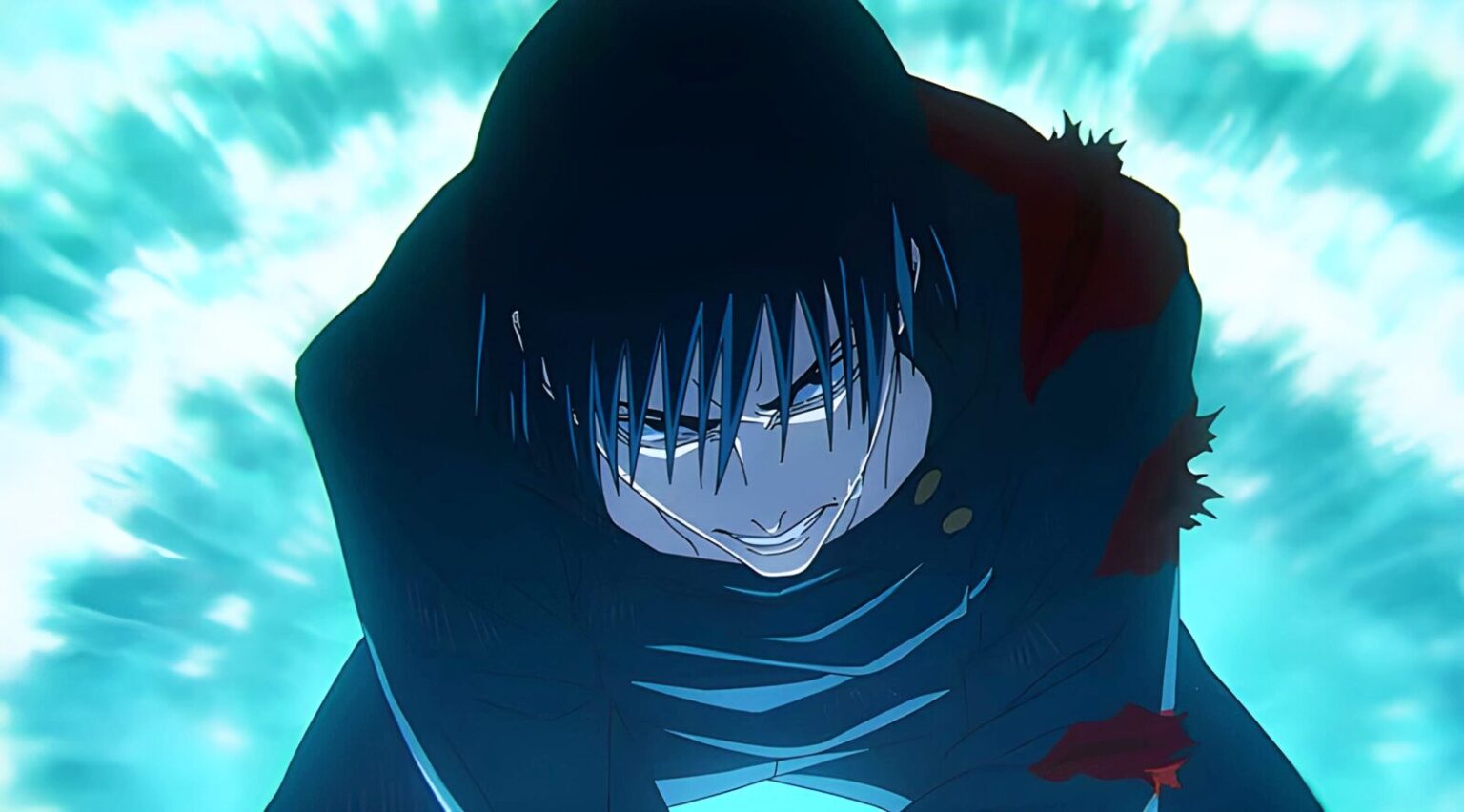
Going into the Megumi vs. Reggie fight, I was ready for the usual dopamine hit. You know the drill. Big brain tactics, flashy powers, maybe a clever twist or two. Jujutsu Kaisen has trained me to expect that rhythm. But what I got instead felt like watching a chess match where one player realizes halfway through that the board itself is rigged.
Megumi’s Chimera Shadow Garden continues to be one of the most fascinating half-finished powers in anime right now. It’s messy, unstable, and honestly kind of terrifying—not because it’s polished, but because it isn’t. There’s something deeply unsettling about a domain expansion that feels like it could collapse at any second, like a glitch in reality that Megumi is desperately holding together with sheer willpower.
The way he weaponizes that imperfection against Reggie is the kind of galaxy-brain move that reminds me why Megumi is low-key one of the smartest fighters in the series. The gymnasium setup, the lack of a barrier, the environmental manipulation—it all feels less like brute strength and more like someone hacking the rules of the game mid-match.
And yet, even as I watched him outmaneuver Reggie step by step, I couldn’t shake this creeping feeling that none of it really mattered.
Because the system they’re trapped in doesn’t reward intelligence. It doesn’t reward strength. It doesn’t even reward survival in any meaningful way. It just… consumes.
MAPPA flexes, but the story cuts deeper
I have to give it to MAPPA here. This season has been visually unhinged in the best way. The fight choreography leans into chaos with shaky camera work and warped perspectives that make everything feel just slightly off-balance, like the world itself is unstable.
There’s a moment where Megumi is literally buckling under the weight of Reggie’s summoned objects, barely holding his domain together, and it’s weirdly beautiful. Not in a clean, cinematic way—but in that gritty, “this could fall apart any second” kind of beauty.
It reminded me of those late-night gaming sessions where your character is one hit away from death, your resources are depleted, and you somehow clutch the win anyway. Except here, instead of relief, the victory feels hollow.
Because Megumi wins. Technically.
But the show makes sure you don’t feel good about it.
Reggie’s final words hit harder than any attack
Reggie isn’t the kind of villain you expect to linger in your mind. He’s not Sukuna-level iconic or Gojo-level magnetic. But his last moments? They land like a gut punch.
Calling sorcerers “liars” (or “con artists,” depending on how you interpret it) feels less like an insult and more like a thesis statement for the entire Culling Game. Everyone is pretending there’s a goal. A structure. A way to “win.”
But there isn’t.
And the worst part is, the players are smart enough to suspect that—but desperate enough to keep playing anyway.
Megumi’s reaction says everything. He doesn’t celebrate. He doesn’t even look relieved. There’s just this quiet realization settling in that maybe—just maybe—everything he’s been told about the game isn’t true.
That maybe there was never a fair version of this to begin with.
The illusion of strength in the Culling Game
This is where Jujutsu Kaisen season 3 really starts to separate itself from typical battle shonen. The Culling Game isn’t about crowning the strongest. It’s about exposing how meaningless that title becomes when the rules are written by someone like Kenjaku.
Strength, in this world, is contextual. It’s fragile. It’s manipulable.
You can be a tactical genius like Megumi, a powerhouse like Yuta, or a walking anomaly like Takaba—and it still might not matter. Because the game isn’t testing who’s strongest. It’s testing who can survive long enough to serve a purpose they don’t even understand.
And that’s where the story gets genuinely unsettling.
Takaba’s ability potentially rivaling Gojo’s is a perfect example of this warped logic. Here’s someone who might be one of the most powerful characters in the series—and he doesn’t even realize it. Power exists, but awareness of it doesn’t. Control over it doesn’t. Meaning behind it definitely doesn’t.
It’s like the entire system is designed to disconnect power from purpose.
Kenjaku’s endgame feels terrifyingly empty
The more I think about Kenjaku’s plan, the less it feels like a traditional villain scheme and the more it feels like an existential crisis wrapped in a battle royale.
Merging humanity with Tengen. Using Sukuna as a catalyst. Orchestrating mass death under the guise of evolution. None of it feels driven by passion or ideology in the way Geto’s descent once was. It feels… indifferent.
And that’s what makes it scary.
If Geto represented a twisted belief system and Gojo represents a flawed but hopeful one, then Kenjaku represents something else entirely. A kind of detached curiosity. Like he’s running an experiment and humanity just happens to be the test subject.
The Culling Game, in that sense, isn’t just a massacre. It’s a filter. A process of elimination disguised as opportunity.
And once you see it that way, every fight starts to feel less like a step toward victory and more like another cog turning in a machine that no one can stop.
Yuta’s quiet entrance, loud implications
Then there’s Yuta, who shows up at the end of the episode and casually shifts the entire balance of power in Sendai Colony.
His fight with Dhruv Lakdawalla is brief, almost understated—but that’s what makes it so effective. There’s no drawn-out spectacle, no dramatic buildup. Just a clean, decisive kill that instantly changes the stakes.
It’s the kind of moment that reminds you Yuta operates on a completely different level. And yet, even with all that power, you can’t help but wonder if he’s just another piece on Kenjaku’s board.
Because if Megumi’s hard-fought victory feels meaningless, what does overwhelming strength even buy you here?
Final thoughts: a game no one can win
By the time the episode ended, I realized something uncomfortable. I’m no longer watching the Culling Game to see who wins.
I’m watching to see how it breaks people.
Jujutsu Kaisen season 3, episode 11 takes everything we love about shonen battles—strategy, power, growth—and flips it into something bleak and introspective. It asks a question most series avoid: what if strength isn’t enough? What if it never was?
And worse—what if the system was designed that way from the start?
Verdict
This episode is a masterclass in subverting expectations without sacrificing spectacle. The Megumi vs. Reggie fight delivers on action and strategy, but it’s the emotional aftermath and thematic weight that elevate it into something far more memorable. Jujutsu Kaisen continues to evolve beyond a traditional battle anime, turning its own power system into a critique of itself—and that’s where it becomes truly compelling.