


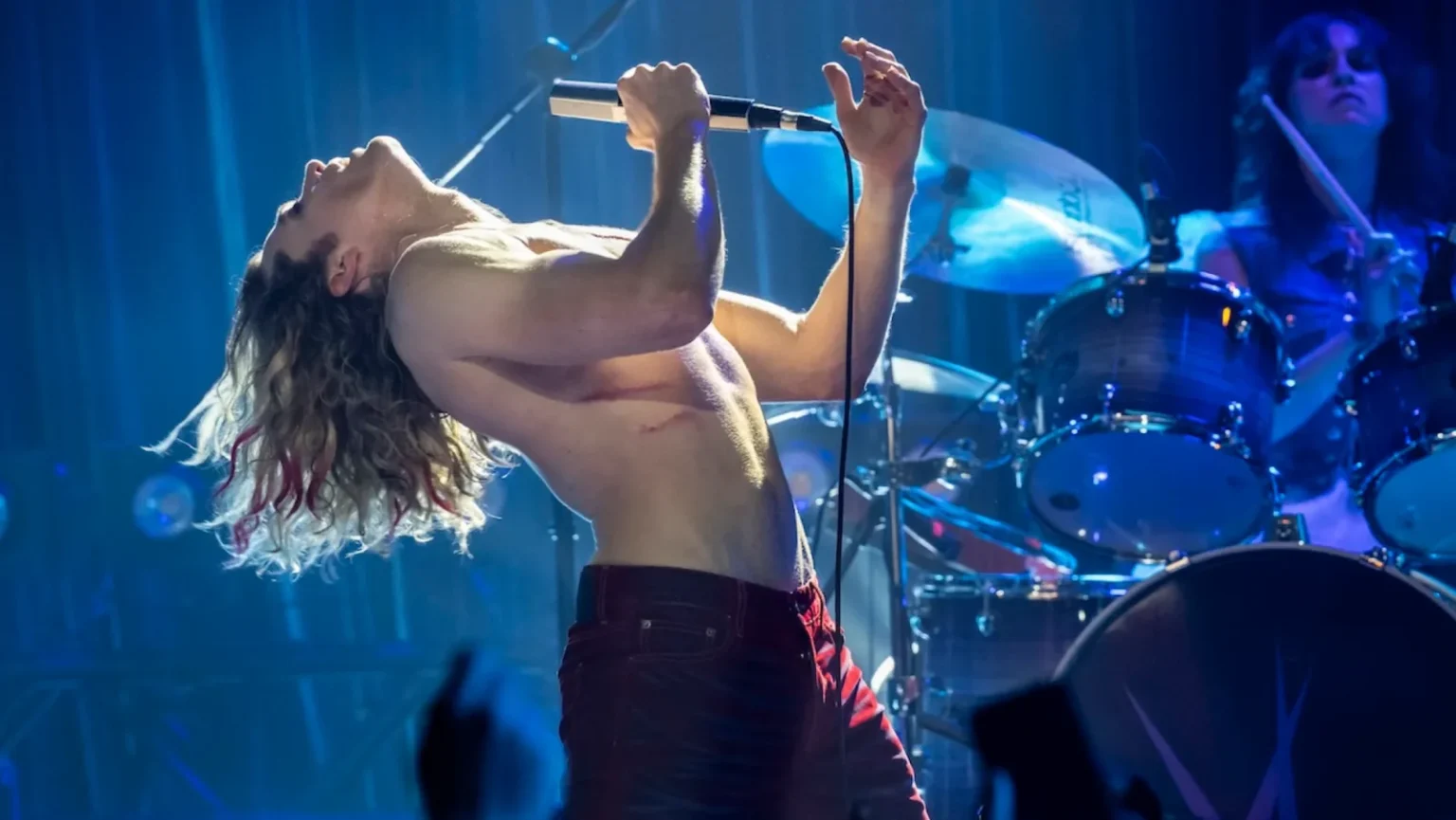
AMC’s Interview with the Vampire is shifting gears for season three, and the change is substantial enough that the series is being rebranded as The Vampire Lestat. After two seasons told largely through Louis de Pointe du Lac’s recollections, the upcoming chapter pivots to Lestat de Lioncourt’s account, drawing heavily from Anne Rice’s 1985 novel of the same name. Instead of continuing the intimate, confessional tone that defined the earlier seasons, this new arc frames Lestat’s story through the lens of his rock-music persona—an approach that signals a tonal departure rather than a simple continuation.
The season begins in the aftermath of journalist Daniel Molloy releasing his book Interview with the Vampire. Lestat, frustrated by the narrow portrayal of his character in Louis’ narrative, decides to reclaim his own story on his own terms. His method is intentionally theatrical: forming a rock band, touring, and using performance as a vehicle to rewrite the narrative that has defined him for decades. It marks the first time viewers see events unfold primarily through his perspective rather than filtered through the memories and biases of other characters. Season two’s finale briefly offered a glimpse of a more unguarded Lestat, but season three positions that emotional register as central rather than exceptional.
The creative team appears prepared to lean into the tension between spectacle and introspection. Lestat’s version of events is expected to expose rather than dissect, contrasting Louis’ more reflective storytelling with something louder and deliberately unvarnished. That allows the series to push into the extremes of his personality—hedonistic impulses, ego battles, and volatile relationships—without presenting them as glamorized or cautionary. It also reframes Louis, whose portrayal will now be filtered through Lestat’s subjectivity, adding a new layer to their longstanding dynamic. Whether the rock-opera framing heightens the show’s Gothic sensibilities or shifts it into new genre territory remains to be seen, but the premise suggests AMC is open to experimenting within Rice’s universe instead of relying solely on established tone.
Much of the core cast returns. Sam Reid reprises his role as Lestat, with Jacob Anderson back as Louis and Assad Zaman as Armand, whose behind-the-scenes manipulation drove much of season two’s conflict. Eric Bogosian returns as Daniel Molloy, now navigating his early vampiric state, and Delainey Hayles reprises Claudia despite the character’s death—an indication the season may integrate flashbacks or non-linear storytelling. New additions broaden the mythology considerably: Sheila Atim joins as Akasha, the Queen of the Damned; Christopher Heyerdahl plays the ancient vampire Marius; Jennifer Ehle appears as Gabriella, Lestat’s mother; and Damien Atkins portrays Magnus, a formative figure in Lestat’s origins. Further cast members include Jeanine Serralles as Christine Claire, Ella Ballentine as Baby Jenks, and a later wave of additions—Noah Reid, Sarah Swire, Seamus Patterson, and Ryan Kattner—as supporting characters within Lestat’s expanding world.
As production builds toward release, The Vampire Lestat signals a more ambitious structural approach for the series. By shifting away from a single narrator and grounding the story in performance culture, AMC is banking on a reinterpretation that might challenge expectations rather than simply retread earlier stylistic choices. If successful, season three could become a defining entry in the broader adaptation of Rice’s work, marking a moment when the series asserts its own creative identity instead of merely following its source material.