

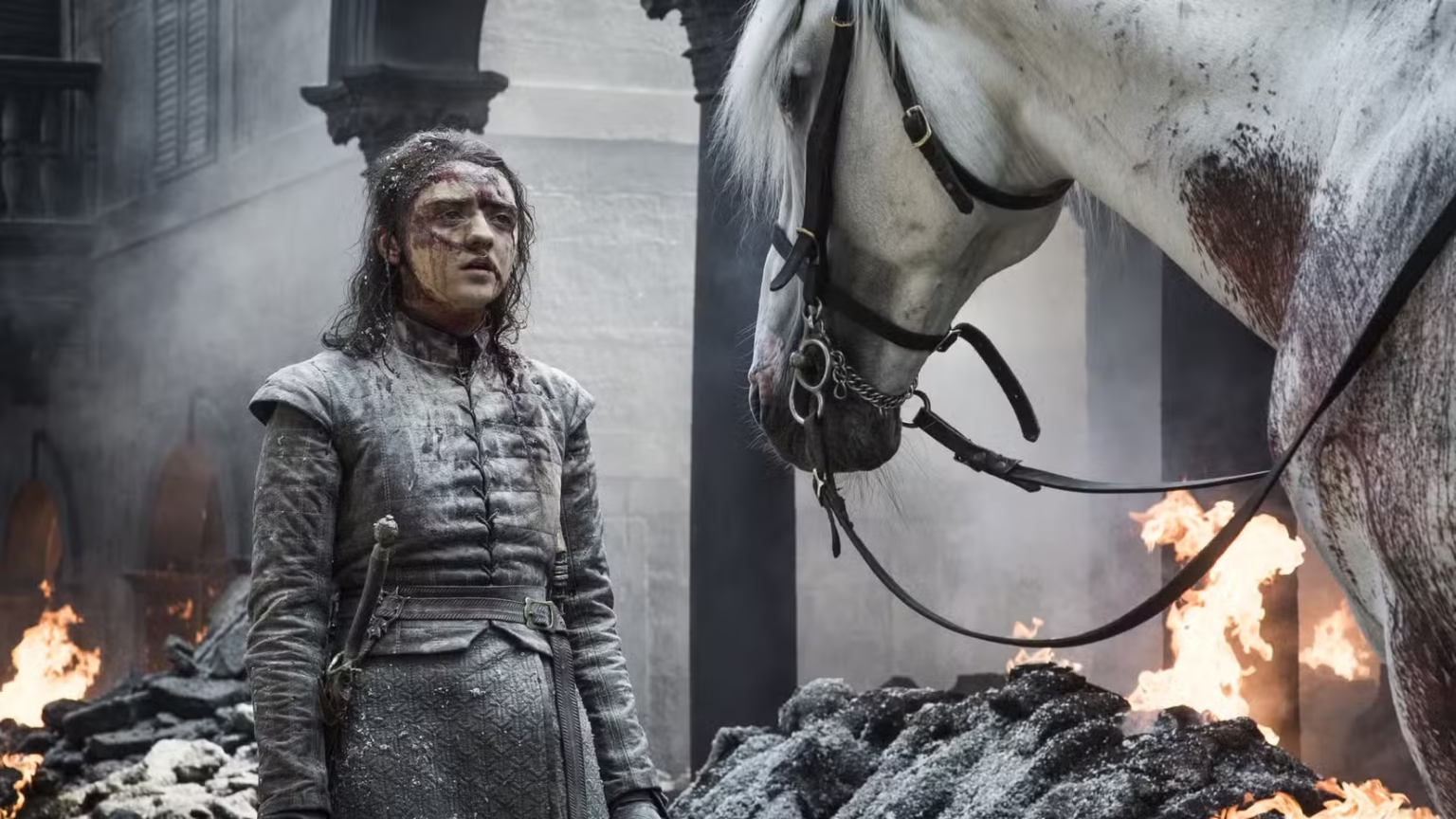
HBO is once again exploring how to move the world of Game of Thrones forward, this time with a sequel concept centered on Arya Stark. The project is reportedly in very early development and arrives after the network quietly stepped away from a previously discussed Jon Snow-focused continuation. While no formal announcement has been made, the shift in direction signals a more cautious and deliberate approach to revisiting the original series’ unresolved aftermath.
According to reporting tied to a recent profile of George R. R. Martin, HBO has enlisted writer Quoc Dang Tran, known for his work on Drops of God, to develop the Arya-led sequel idea. No casting decisions have been finalized, and that includes Maisie Williams, whose return is not yet confirmed. At this stage, the project appears to be more about establishing a creative foundation than fast-tracking production.
The Arya concept effectively replaces an earlier sequel effort centered on Jon Snow, played by Kit Harington. New details surrounding that abandoned project shed light on why it failed to progress. Harington reportedly advocated for a bleak story that followed Jon in isolation beyond the Wall, grappling with trauma and intentionally avoiding any traditional heroic arc. The character would have lived alone, discarded his sword, severed ties to his past, and ultimately died. HBO ultimately declined to move forward, viewing the premise as too relentlessly grim and difficult to sustain.
In contrast, Arya Stark offers a more flexible narrative path. Her final scene in season 8 showed her sailing west of Westeros, deliberately stepping outside the known map. A sequel built around that choice allows the story to explore unfamiliar territory without immediately entangling itself in the political consequences of Bran’s rule or the fallout in King’s Landing. Reports suggest the new series would likely be set in Essos, using Arya’s distance from Westeros as a way to re-enter the world without reopening old power struggles.
This approach aligns with HBO’s broader strategy for the franchise. Prequels like House of the Dragon and the upcoming A Knight of the Seven Kingdoms have allowed the network to maintain interest while avoiding direct confrontation with the divisive ending of the original show. An Arya sequel could serve a similar purpose, advancing the timeline while remaining largely separate from unresolved fan debates.
Whether the project moves beyond development remains uncertain. Still, HBO’s continued investment suggests the network views Game of Thrones less as a concluded series and more as a long-term narrative universe. If an Arya-led sequel proceeds, its success will likely depend on restraint, world-building, and a willingness to let the story stand on its own rather than attempting to retroactively correct the past.