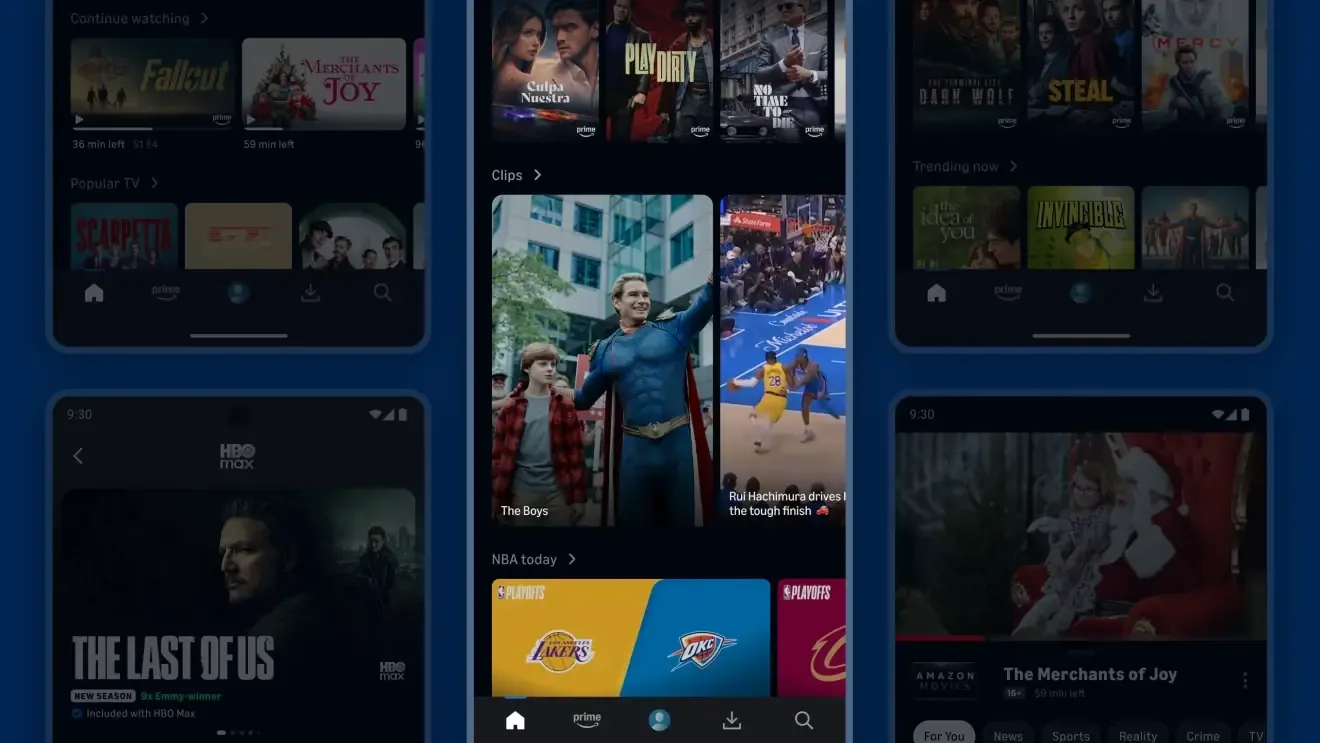

Prime Video has introduced a new scrollable vertical video feed called Clips to help users discover movies and series more quickly. The feature follows similar experiments by Netflix and Disney+, reflecting the industry’s growing reliance on short-form, mobile-first browsing tools inspired by platforms like TikTok.
The Clips carousel appears when users scroll down the Prime Video homepage rather than sitting in a dedicated navigation tab. Tapping a clip expands into a full-screen vertical feed that continues playing short snippets from the service’s catalog. These personalized previews draw from a user’s viewing history and stated interests, refreshing with each visit. Amazon describes the system as a way to surface content whether someone has just a few minutes or is actively looking for their next watch.
Each clip includes direct options to start the full title, rent or buy it, add it to a watchlist, or share the short video with others—though recipients must have the Prime Video app installed to access the link. Users can also like individual clips to help refine future recommendations. The rollout began with a limited group of U.S. users on Fire tablets, Android, and iOS devices, with a wider release planned for later this summer.
Prime Video already offered a vertical feed for NBA highlights, so the expansion to general entertainment fits an established pattern. Yet it arrives at a time when many subscribers report feeling overwhelmed by the sheer volume of content across services. Discovery remains a persistent problem for streamers, and vertical formats aim to solve it by mimicking the addictive swipe mechanics that dominate social media. Whether these short previews genuinely help users find worthwhile longer-form programming—or simply increase time spent in the app—remains an open question.
Access to Clips, like the rest of the catalog, requires an active Prime membership, currently priced at $14.99 per month or $139 per year in the United States. Those wanting to remove ads can pay an extra $4.99 monthly for the ad-free Ultra plan. This layered pricing continues the broader trend of streaming services introducing multiple tiers and add-ons, which can make the total cost of staying current with entertainment noticeably higher over time.
The move is hardly revolutionary in 2026. Netflix has tested its own Clips feature, while Disney+ offers something called Verts. Each service is essentially competing for the same finite pool of subscriber attention using comparable tools. For Prime Video, the addition may boost engagement metrics, particularly among mobile users, but it also underscores a familiar challenge: the more streamers copy social media’s playbook, the harder it becomes to differentiate themselves on actual content quality and curation.
In the end, Clips represents another incremental attempt to keep users scrolling longer within the app. For some it may simplify discovery; for others it will simply add one more feed to an already crowded home screen of options. The real test will be whether it meaningfully improves the viewing experience or just contributes to the growing sense of subscription fatigue many households now feel.
beIN MEDIA GROUP has rebranded its streaming platform from TOD to TOD by beIN, a change timed to coincide with its role as the official streaming service for the FIFA World Cup 2026 across the Middle East and North Africa. The update brings the platform more closely under the established beIN name, aiming to create a unified digital presence in a crowded regional market.
The service originally launched around the 2022 World Cup in Qatar and has since expanded to 24 countries with support from over 50 distribution partners. It is available on major smart TV platforms and focuses on both live sports and on-demand entertainment. Under the new branding, users will see a gradual rollout of updated interfaces across devices in the coming days.
The platform promises 4K and HDR streaming for live events, along with features such as interactive timelines, automatic highlights, MultiView, and real-time fan engagement areas. These tools are now standard across many sports streaming services, though their practical value often depends on connection quality and device compatibility. On the entertainment side, TOD by beIN continues to invest in original productions through TOD Studios and carries a mix of Arabic, Turkish, international, and children’s content, including titles from global studios.
The timing is strategic. With the 2026 World Cup approaching, beIN is positioning TOD by beIN as a central destination for premium sports rights that include the UEFA Champions League, Premier League, LaLiga, and other major competitions. Yet the broader streaming landscape in MENA remains competitive, with players like Shahid, OSN, and international services all vying for the same subscribers. Many households already juggle multiple subscriptions, raising questions about long-term retention once the tournament spotlight fades.
Access requires a subscription, with pricing and tiers varying by market. The rebrand itself does not introduce major new technical breakthroughs but rather consolidates existing offerings under a more recognizable label. For fans in the region, it may simplify discovery of beIN’s sports and entertainment library. For others, it represents another example of how media groups are tightening control over digital distribution to protect revenue streams amid rising content costs and audience fragmentation.
The shift highlights the maturing of streaming in the Middle East, where sports rights remain a powerful driver but must be balanced with broader entertainment ambitions to sustain growth beyond major events.