
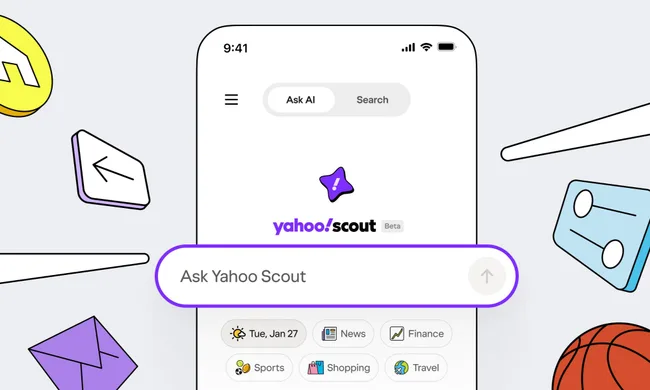
Yahoo has introduced Yahoo Scout, a new AI-powered search product that enters an increasingly crowded field dominated by Google’s AI-driven search features and independent tools like Perplexity. Rather than positioning Scout as a conversational chatbot, Yahoo frames it as an “answer engine,” a distinction that reflects both how the product works and what it prioritizes.
At its core, Yahoo Scout delivers concise, conversational responses to user queries, but unlike many AI search tools, those answers are built around prominently displayed links. Each response can surface up to nine visible sources, along with a clear breakdown of where information originates. Clicking through to external sites is not treated as an optional extra; it is central to the experience.
This design choice places Scout at odds with approaches taken by Google’s AI mode and tools like Perplexity, which often emphasize summaries while relegating sources to secondary positions. Yahoo’s message is straightforward: AI search does not have to obscure the open web to be useful. For publishers concerned about declining referral traffic from AI-generated answers, Scout’s structure is a direct response to those anxieties.
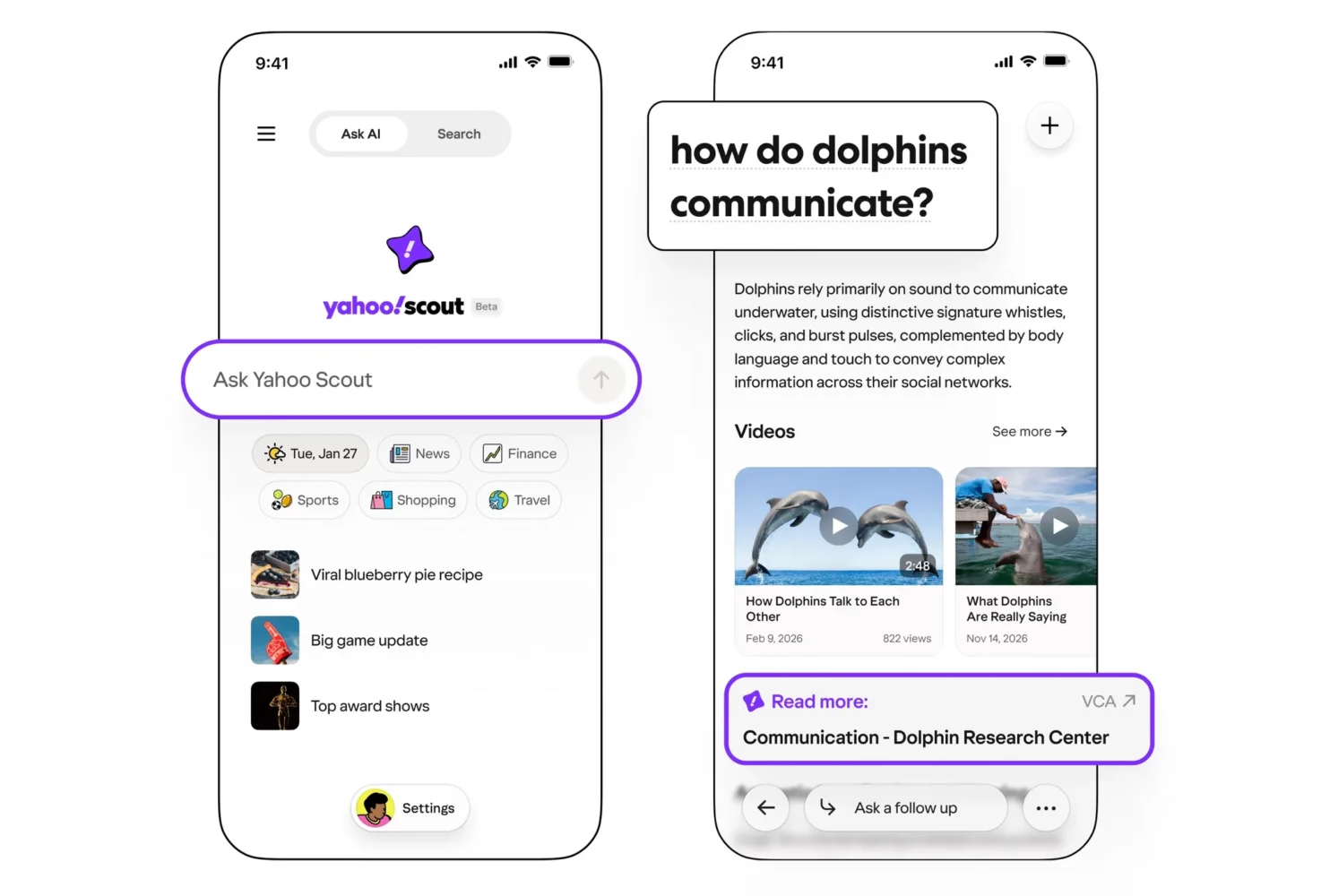
Yahoo Scout is launching in beta for U.S. users and is accessible via scout.yahoo.com, as well as within the Yahoo Search app on iOS and Android. Under the hood, the system is powered by Anthropic’s Claude model, layered with Yahoo’s own editorial tone, proprietary data, and long-established content verticals such as Yahoo News, Finance, and Sports. Broader web results are supported through Microsoft Bing, continuing Yahoo’s existing partnership with Microsoft.
In practice, Scout may feel familiar to anyone who has used AI-enhanced search products before, but its presentation shifts the emphasis. The interface resembles a curated research guide more than a personal assistant, with links treated as primary objects rather than supporting evidence. Yahoo appears less interested in making Scout personable or adaptive and more focused on speed, clarity, and traceability.
There are also strategic considerations behind this positioning. Yahoo does not operate a search advertising business on the scale of Google’s, which gives it more flexibility to experiment with AI-driven results without threatening a core revenue engine. According to CEO Jim Lanzone, Scout is expected to eventually replace traditional Yahoo Search. Monetization is already in place through affiliate links and ads displayed at the bottom of results, rather than embedded directly into answers.
In a market increasingly defined by opaque AI summaries, Yahoo Scout’s bet is that transparency still has value. By making sources visible and clicks intentional, Yahoo is wagering that directing users clearly back to the web may be a sustainable alternative to fully synthetic search experiences.