
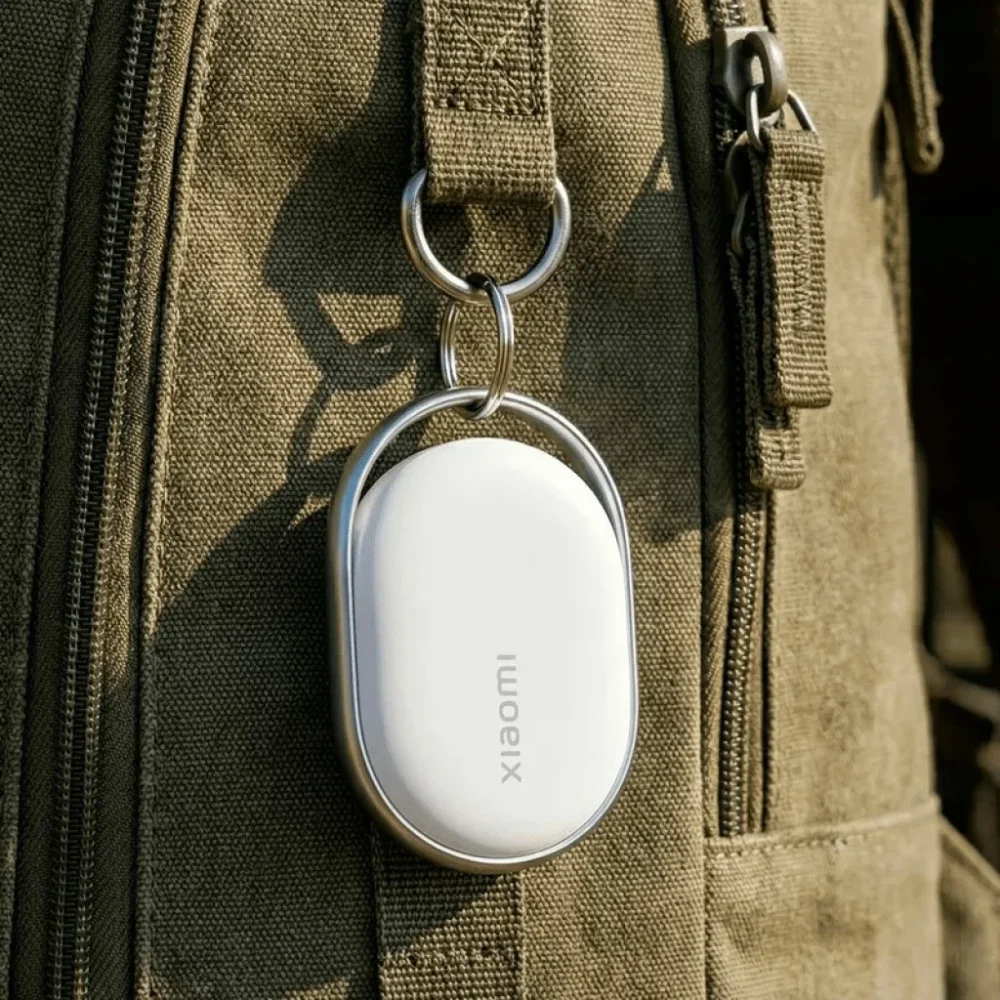
The Xiaomi Tag tracker is set for a global debut on February 28 at MWC 2026 in Barcelona, marking the company’s entry into the increasingly competitive Bluetooth tracking market outside China. The launch will take place during Xiaomi’s event at Mobile World Congress, where several additional products are also scheduled to be announced.
Weighing 10 grams and measuring 7.2mm thick, the Xiaomi Tag is designed as a compact accessory for locating everyday items such as keys, wallets, and bags. It runs on a CR2032 coin cell battery, with Xiaomi estimating up to one year of battery life under typical usage. Like most trackers in this category, the device relies on Bluetooth connectivity rather than built-in GPS, instead leveraging broader device networks for crowd-sourced location updates.
Notably, the Xiaomi Tag supports both Apple’s Find My network and Google’s Find Hub ecosystem. That dual compatibility positions it as a cross-platform alternative in a segment that has often been fragmented by operating system. The tracker uses Bluetooth 5.4 and NFC to assist with pairing and location sharing. However, it does not include ultra-wideband (UWB) technology, which limits its ability to offer the more precise directional tracking found in higher-end devices. Reports suggest a UWB-equipped version could follow in the future.
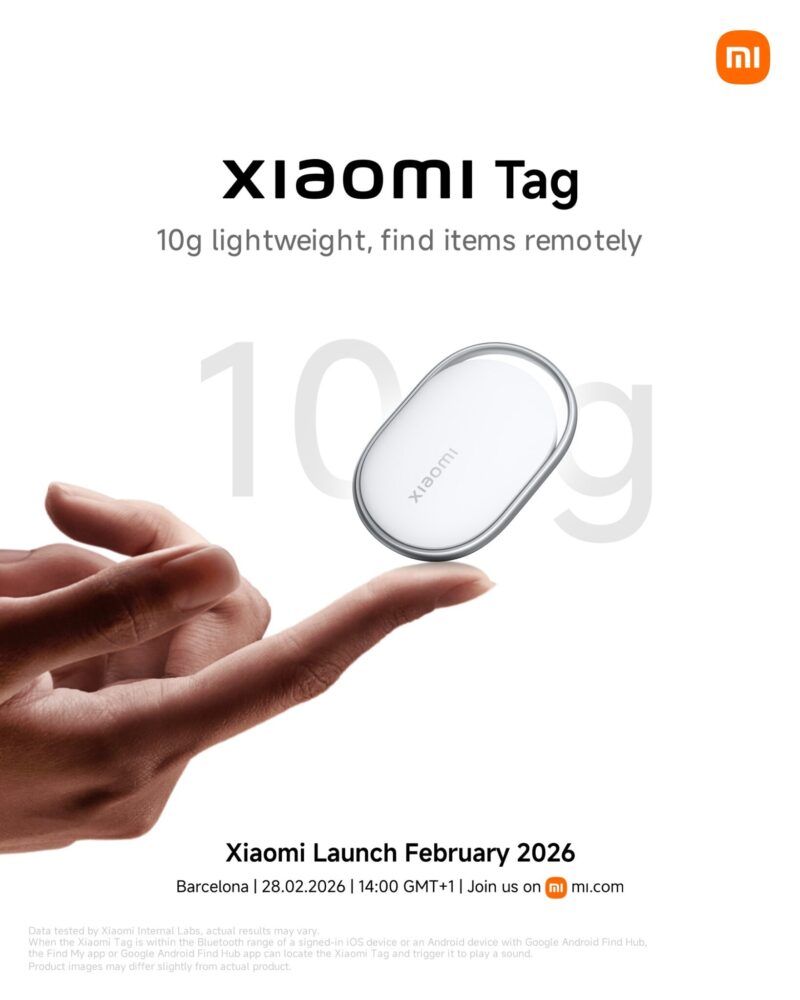
Early European retail listings indicate a price of €17.99 for a single unit, with a four-pack priced at €59.99. At that level, the Xiaomi Tag enters the market below many established competitors, including the Apple AirTag, Moto Tag, and Samsung Galaxy SmartTag. Pricing may prove to be Xiaomi’s main differentiator, particularly among budget-conscious consumers who want basic tracking features without paying a premium for UWB support.
The Xiaomi Tag launch at Mobile World Congress 2026 will be part of a broader product showcase. Xiaomi is also expected to unveil the Xiaomi 17 Ultra smartphone, Redmi Buds 8 Pro earbuds, and a new Ultra Slim Magnetic Power Bank, alongside additional AIoT devices. The event begins at 2 PM CET in Barcelona.
As Bluetooth trackers become more common, privacy safeguards and ecosystem integration will likely shape long-term adoption. By aligning the Xiaomi Tag with both major mobile platforms while keeping costs low, Xiaomi appears focused on accessibility rather than feature leadership. How well that strategy resonates will depend on real-world reliability and the strength of the Find My and Find Hub networks in key markets.