

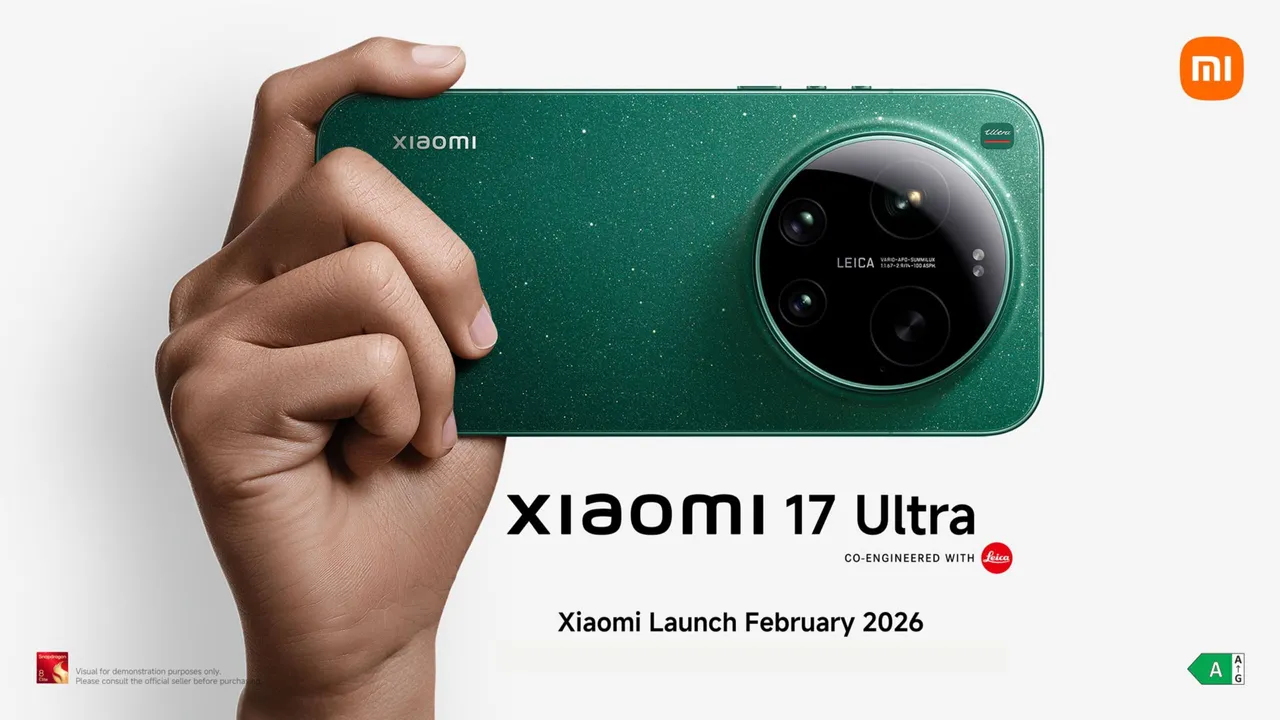
Xiaomi has introduced its 17 series to global markets just ahead of Mobile World Congress in Barcelona, positioning the lineup squarely within the premium Android segment for 2026. The release includes two models — the Xiaomi 17 and the Xiaomi 17 Ultra — both built around Qualcomm’s latest flagship mobile platform from Qualcomm.
At the core of both devices is the Snapdragon 8 Elite Gen 5 chipset, manufactured on a 3nm process. As expected at this tier, the focus is on sustained performance, improved power efficiency, and expanded on-device AI processing. The phones ship with HyperOS 3, based on Android 16, continuing Xiaomi’s push to unify its smartphones, tablets, and connected devices under a single software layer. The company claims smoother animations and tighter ecosystem integration, though real-world performance will ultimately depend on software optimization over time.
The standard Xiaomi 17 features a 6.3-inch 1.5K LTPO OLED display with a 120Hz refresh rate and peak brightness rated at 3,500 nits. One of its more notable specifications is the 6,330mAh battery, which is larger than many competing flagships in the same size category. It supports 100W wired charging and 50W wireless charging, aligning with fast-charging trends seen across Chinese manufacturers.

The Xiaomi 17 Ultra increases the screen size to 6.9 inches with a 2K LTPO AMOLED panel, while boosting memory and storage options up to 16GB of LPDDR5X RAM and 1TB of UFS 4.1 storage. Its battery capacity reaches 6,800mAh globally, though wired charging drops slightly to 90W. Both models support 50W wireless charging.
Photography remains central to the series. Xiaomi continues its collaboration with Leica, integrating Leica-branded triple rear camera systems in both devices. The standard model includes a 50MP main sensor, 50MP floating telephoto lens with 2.6x optical zoom, and a 50MP ultra-wide camera. The Ultra variant introduces a larger 1-inch type main sensor and a 200MP periscope telephoto lens offering continuous optical zoom between 3.2x and 4.3x. Both devices feature a 50MP front-facing camera capable of recording 4K video at 60fps.
Durability ratings differ slightly between the two. The Xiaomi 17 carries IP68 certification, while the Ultra moves to IP69, indicating resistance to high-pressure water exposure.
European pricing reflects the devices’ positioning in the upper premium tier. The Xiaomi 17 starts at €999 for the 12GB/256GB configuration and rises to €1,099 for 512GB. The Xiaomi 17 Ultra begins at €1,499 for 512GB and reaches €1,699 for the 1TB version. These figures place the series in direct competition with other high-end Android and iOS flagships, particularly in Western European markets where price sensitivity at this level remains a factor.
With the global debut timed just before MWC 2026, Xiaomi is clearly aiming to reinforce its presence in the premium smartphone category. Whether the 17 series gains broader traction outside its strongest Asian markets will likely depend on software consistency, camera performance in real-world use, and long-term update commitments.