
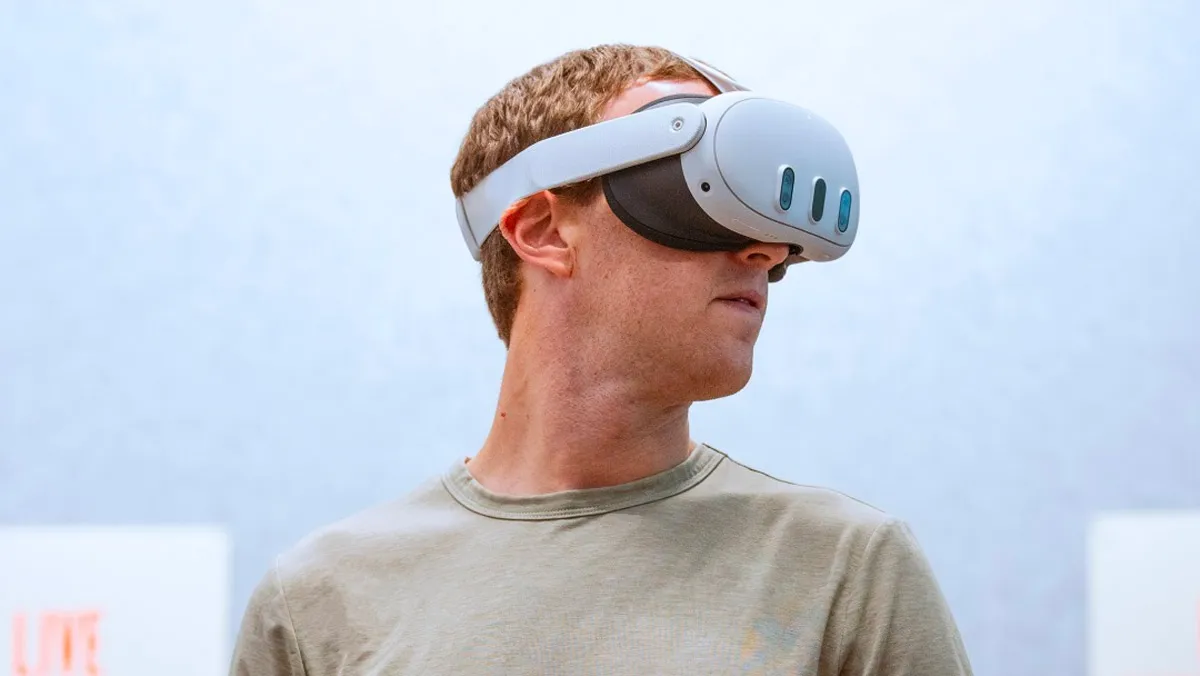
Meta and Microsoft are taking another step toward the long-promised vision of virtual workspaces. With the latest Horizon OS update, Meta Quest 3 and Quest 3S users can now link their headsets directly to Windows 11 PCs through a new feature called Mixed Reality Link—turning an ordinary desk into a sprawling, customizable 3D workspace.
The idea is straightforward but surprisingly practical: plug in your Quest 3 or 3S, and instead of being confined to a single monitor, you’ll see several massive virtual screens suspended around you. Each functions as part of your Windows desktop, letting you open documents, code, or browse across multiple displays without any physical hardware beyond your headset and controller. The setup transforms the Quest from a gaming device into a portable multi-monitor workstation.
Mixed Reality Link also integrates with Microsoft’s cloud computing platforms, including Windows 365 and Azure Virtual Desktop. That means professionals can access full Windows environments, company software, or remote servers inside a headset, no matter where they are. For freelancers and hybrid workers, it’s effectively a portable office that fits in a backpack.
The timing and pricing make this launch especially notable. Apple’s Vision Pro offers similar “spatial computing” features, but at around $3,500, it remains out of reach for most consumers. The Meta Quest 3S, by contrast, starts at roughly $300—a tenth of that price. This cost gap positions Meta’s headset as a far more accessible entry point for anyone curious about using mixed reality for productivity rather than play.
In practice, the experience resembles having three or four floating monitors that can be resized and rearranged with simple gestures. For remote workers, digital artists, and developers who want focus without the clutter of physical screens, the feature could be transformative. It also blurs the line between the metaverse and the modern workplace, offering a hint at how virtual collaboration might evolve from novelty to routine.
Meta’s broader strategy is clear: to normalize immersive computing beyond games and social hangouts. The company has been steadily layering its ecosystem—integrating AI-powered Ray-Ban glasses, advancing Horizon Workrooms for team collaboration, and now tying its headsets directly into Windows productivity tools. The goal is to make mixed reality as familiar and frictionless as opening a laptop.
While there are still open questions about comfort, long sessions, and software compatibility, Mixed Reality Link could mark the moment Meta’s headsets begin to feel like actual work tools, not just futuristic gadgets. As home offices become the new norm, a virtual desk that expands as far as your field of view might be the most practical “metaverse” idea yet.