
Whoop is trying to move beyond its reputation as a niche fitness tracker for elite athletes and position itself as a broader health monitoring platform, but that shift comes with both technical and regulatory challenges.
For years, the company leaned heavily on high-profile athletes to establish credibility. Early adoption by figures like LeBron James and Michael Phelps helped frame the wearable as a performance tool designed for people operating at the highest level. That positioning worked: the Boston-based company now operates globally and, according to its founder Will Ahmed, recently achieved both rapid revenue growth and positive cash flow.
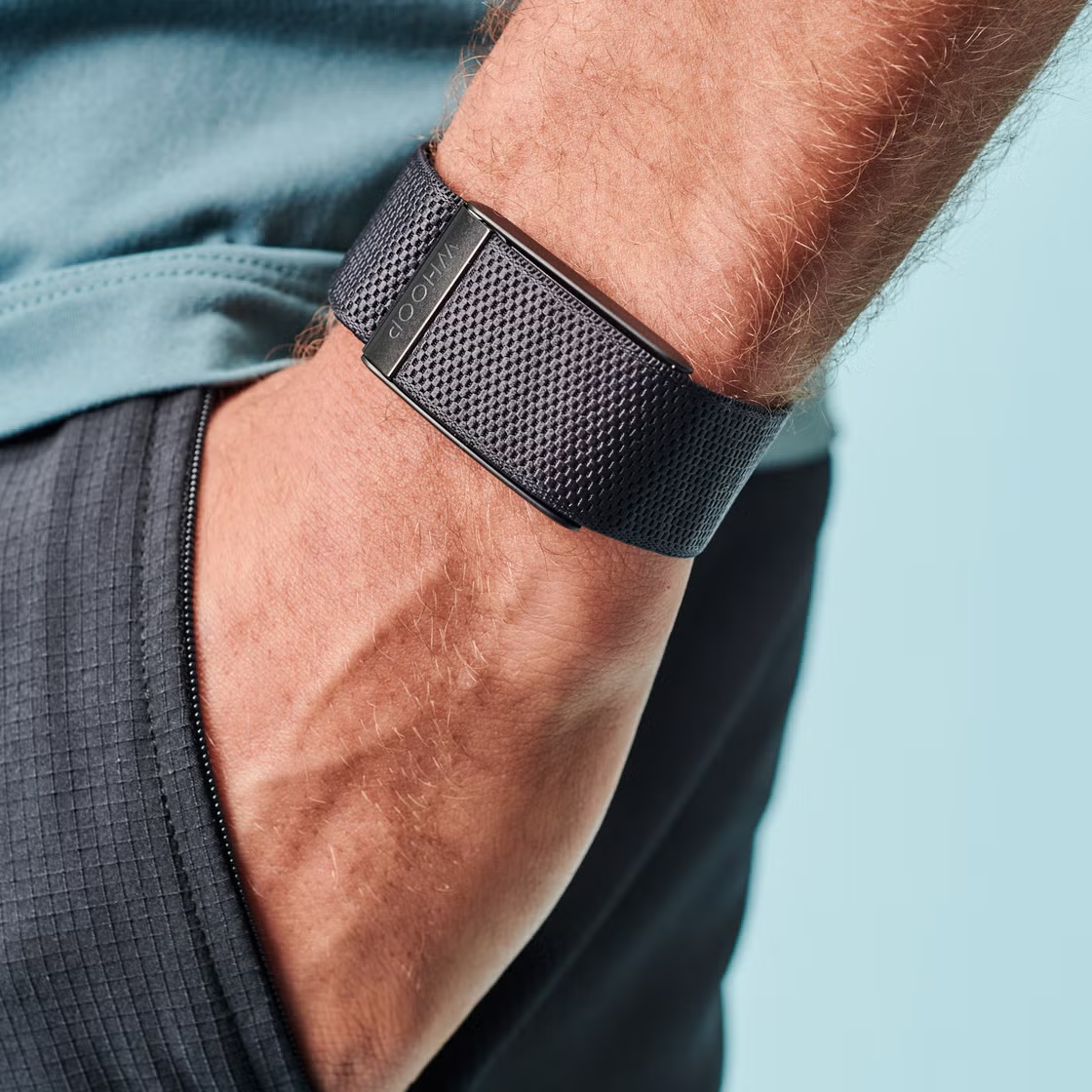
The product itself is relatively simple in form but extensive in data collection. The wearable band tracks metrics such as sleep, recovery, and heart rate variability, and is paired with a subscription that bundles hardware and software into an annual fee. The model has proven effective at keeping users engaged, with the company claiming a high rate of daily app usage.
What’s changing is the ambition behind the data. Ahmed is now framing Whoop less as a performance optimizer and more as a continuous health monitoring system. The company has already introduced features like ECG tracking and atrial fibrillation detection, and is experimenting with blood pressure insights—though that particular feature has drawn scrutiny from the U.S. Food and Drug Administration, which questioned whether it crosses into medical diagnosis.
A newer model involves integrating blood test results through a partnership with Quest Diagnostics, allowing users to upload lab data into the app for review alongside wearable metrics. Another feature, Health Span, attempts to estimate biological age based on collected data. These additions suggest a push toward more clinically relevant insights, though the extent to which they can reliably predict or prevent serious conditions remains uncertain.
The hardware design reflects a deliberate choice to avoid competing directly with smartwatches. The device has no screen and can be worn in less visible ways, including integrated into clothing. This allows it to coexist with other devices rather than replace them, but it also limits its appeal for users who expect more immediate feedback on-device.
Competition is intensifying. Oura, a key rival, follows a different model—selling its ring upfront and charging a smaller subscription fee. Both companies report strong retention and are expanding into similar areas, including women’s health and biomarker tracking.
Despite its broader ambitions, Whoop’s user base still reflects its origins, skewing toward performance-focused users. Expanding beyond that audience will likely require clearer evidence that its health features offer actionable value beyond general wellness tracking.
The company’s direction also raises a familiar question in wearable tech: how far can consumer devices go before they are treated as medical tools? As Whoop adds more advanced monitoring capabilities, it may face increasing regulatory oversight, particularly if it continues to frame its product as capable of identifying serious health risks in advance.