


WhatsApp is preparing to introduce a username reservation system that will allow users to claim personalized handles — a major departure from the platform’s long-standing reliance on phone numbers as primary identifiers. First reported by WABetaInfo, the update aims to strengthen privacy and give users greater control over how they share contact details.
The system will function similarly to those on Telegram and Instagram, where usernames serve as alternative handles for communication. Once active, users will be able to connect without revealing their phone numbers, reducing exposure to spam and unwanted messages. The feature is currently in beta and expected to roll out gradually to users worldwide through 2025.
An early reservation option will appear under WhatsApp’s profile tab, giving users a limited window to secure their desired usernames ahead of the full launch. Each handle will be unique across the platform and linked directly to a user’s account, ensuring no duplicates. The move also addresses concerns about username squatting by allowing fair access before general release.
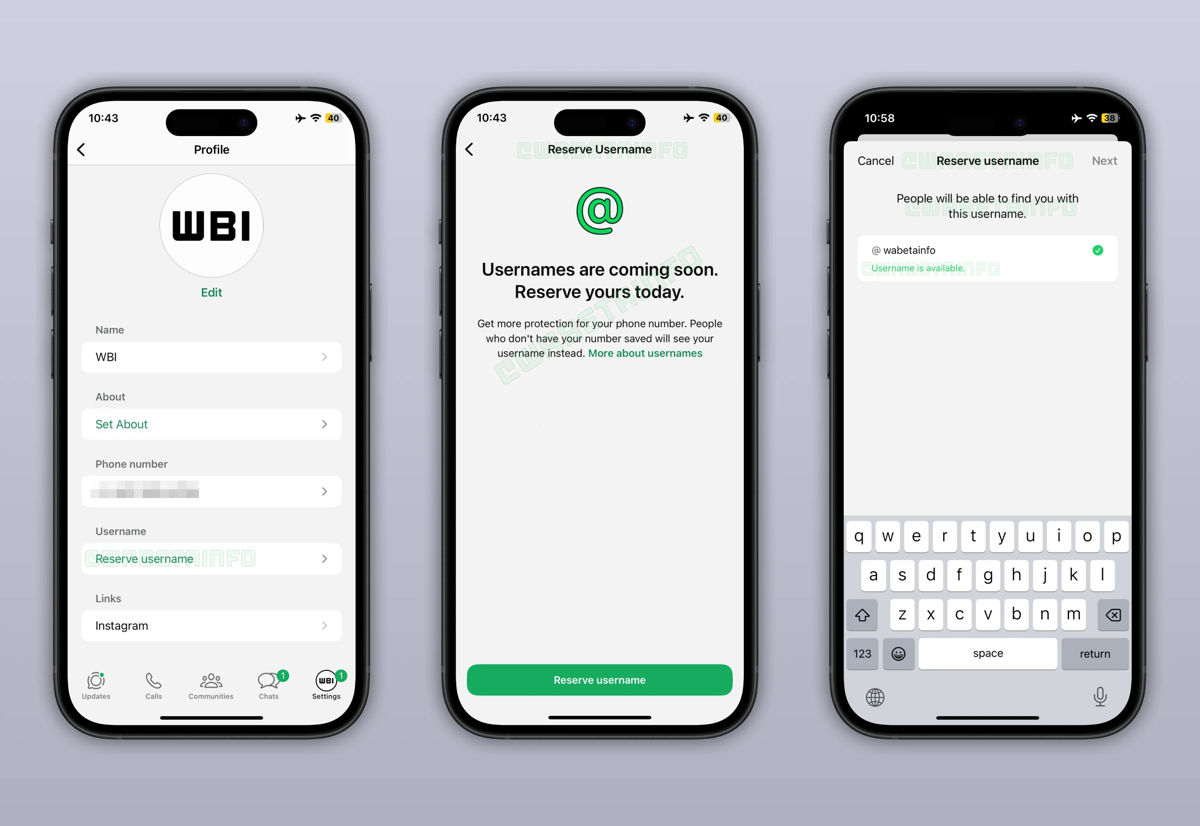
WhatsApp’s guidelines specify that usernames must be between 3 and 30 characters long and can include lowercase letters (a–z), numbers, periods, and underscores. They cannot begin with “www.” or end with extensions such as “.com” or “.net,” nor can they start or end with a period. Each username must also include at least one letter to prevent confusion or impersonation through number-only identifiers.
Adding to privacy protections, WhatsApp is also testing a four-digit “username key.” This feature works as an additional security layer — similar to a PIN — requiring anyone who wants to message a user to know both the username and the corresponding key. This step should help reduce spam, fake accounts, and unauthorized contact attempts.
By decoupling communication from phone numbers, WhatsApp is aligning more closely with how other major messaging platforms handle identity. It’s a practical shift for users who prefer a measure of anonymity, especially in public or professional contexts where sharing a phone number is less desirable.
While still in beta, the username system represents one of the most significant changes to WhatsApp’s user structure since its launch. Once it becomes widely available, it could redefine how users connect on the app — turning WhatsApp into a more flexible, privacy-conscious platform without altering its core messaging experience.