
Samsung Electronics has introduced the Galaxy S26 series, with the Galaxy S26 Ultra positioned as its most privacy-focused device to date. The company is shifting its approach by embedding privacy features directly into the hardware, rather than relying primarily on software controls or external accessories. This move reflects a broader industry trend where devices are becoming more context-aware through AI, raising new expectations around how personal data is handled and protected.
At the center of the Galaxy S26 Ultra is a built-in Privacy Display, a feature designed to limit screen visibility from unintended angles. Unlike traditional privacy screen protectors that often reduce brightness or interfere with touch responsiveness, this system operates at the display level. It uses a “Black Matrix” structure to control how light is emitted from each pixel. In practical terms, the screen remains clear for the person holding the device, while appearing significantly dimmed or obscured to anyone viewing it from the side or from above and below. This type of hardware-based approach suggests a shift toward integrating privacy into the physical design of devices rather than treating it as an optional add-on.
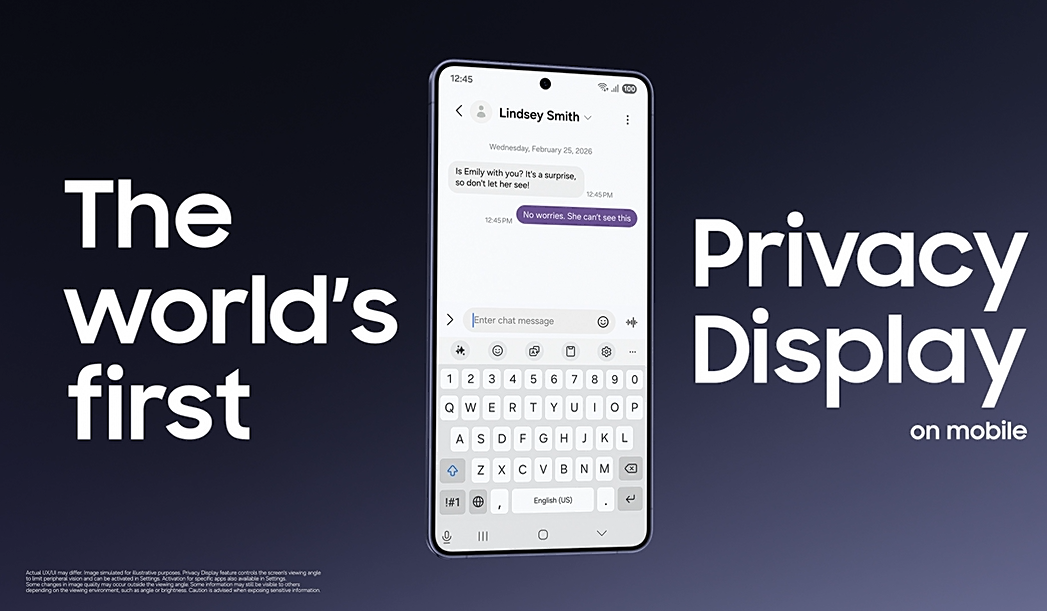
The device runs on One UI 8.5 and includes several software features that complement the display technology. A Private Album allows users to store sensitive photos and videos within the standard gallery app, secured by the device’s existing lock system. Proactive Privacy Alerts notify users when apps attempt to access sensitive data such as precise location or call logs, offering more visibility into background activity. There is also an Intelligent Call Screening function, where the device can answer unknown calls, identify the caller, and provide a summary before the user decides whether to engage.
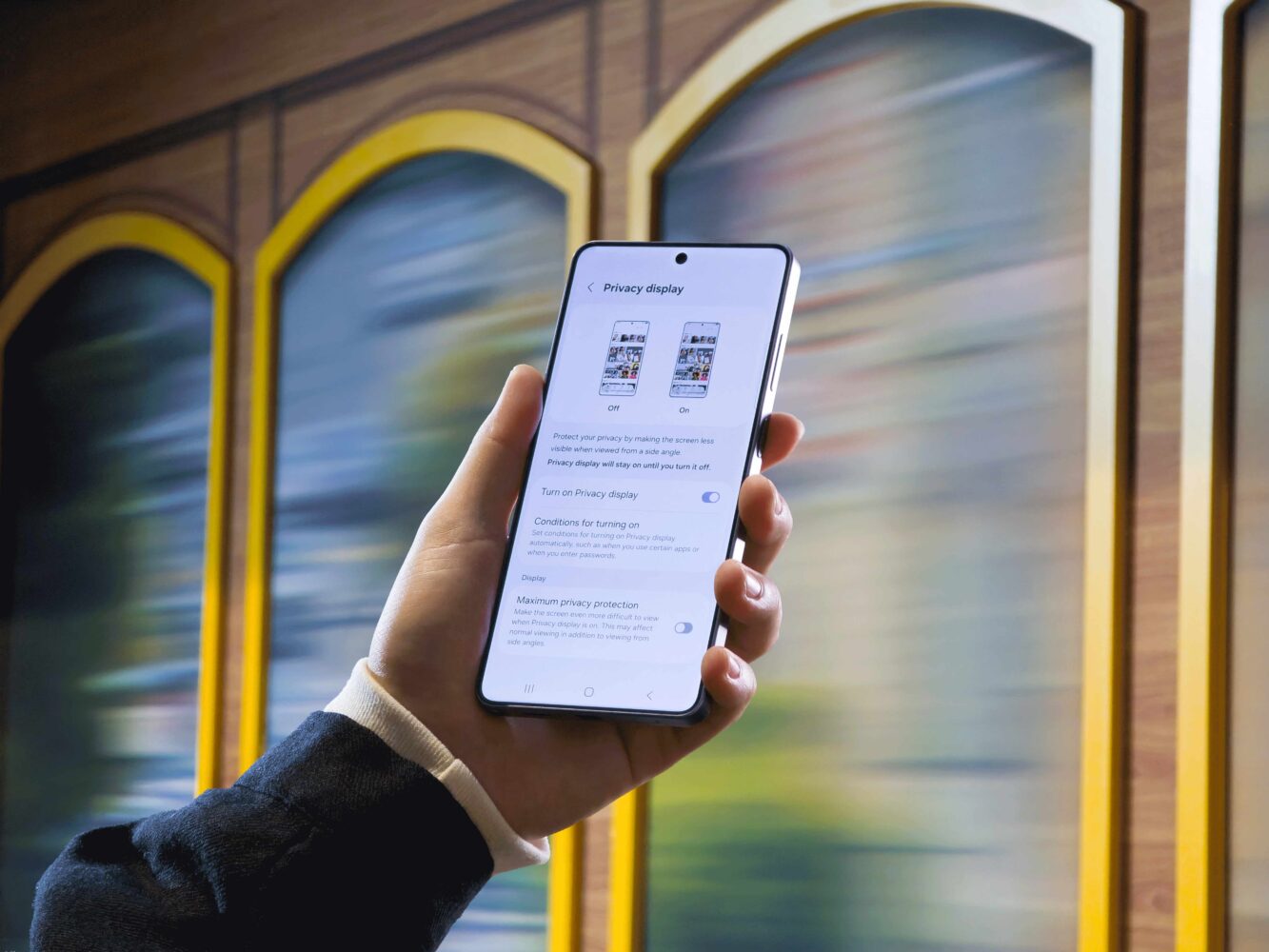
The Privacy Display itself includes adjustable settings. Users can switch between different levels of privacy depending on their environment, automate activation when using specific apps, or limit visibility for certain on-screen elements like notifications while keeping the rest of the display accessible. This flexibility suggests an attempt to balance usability with protection, particularly in public or shared spaces.
Beyond these features, the Galaxy S26 Ultra is supported by a broader security framework. Sensitive data such as biometric information is stored in isolated hardware through Knox Vault, while encrypted data handling is managed so that individual apps can only access their own information. Samsung has also committed to providing seven years of security updates for the Galaxy S26 series, aligning with a growing expectation for longer device support cycles.
Taken together, the Galaxy S26 Ultra reflects a more integrated approach to mobile privacy, combining hardware and software measures in response to increasingly personalized and data-driven user experiences. While the long-term effectiveness of these features will depend on real-world use and adoption, the direction points toward privacy becoming a core design consideration rather than a secondary feature.